Utility worker points to an upward arrow amid coins, calculator, and charts, illustrating rising energy costs and profits for homes and industry.

Electrical Service Upgrade Cost Explained

If your lights dim when the AC starts, your panel is full, or you are planning to add an EV charger, generator, or new equipment, electrical service upgrade cost quickly becomes a real question. For homeowners and property managers in coastal Alabama, this is not just about adding capacity. It is about safety, code compliance, and making sure the property can handle the way people live and work now.

What affects electrical service upgrade cost?

The biggest factor is the size of the upgrade. Moving from 100-amp service to 200-amp service is one of the most common residential projects, but the total price depends on far more than the panel itself. The existing wiring, meter base, grounding system, disconnects, and utility requirements all play a role.

On a straightforward home, the work may involve replacing the panel, updating the meter equipment, improving grounding, and coordinating inspection and reconnect. On a more complex property, the electrician may also need to relocate equipment, repair damage, replace outdated service entrance components, or correct code issues that were hidden until the old system was opened up.

That is why two homes on the same street can have very different upgrade costs. One may have clean access, modern wiring, and space to work. The other may have corrosion, undersized conductors, older breaker brands, or service equipment mounted in a location that no longer meets code.

Typical electrical service upgrade cost ranges

For many homes, electrical service upgrade cost falls somewhere in the low thousands to several thousand dollars, depending on scope. A basic 100-amp to 200-amp service upgrade may land around the lower end of that range when conditions are favorable. A more involved project with meter changes, service mast replacement, panel relocation, or additional corrective work will cost more.

For larger homes, condos, mixed-use properties, and commercial spaces, pricing can climb further because the electrical demand is higher and the equipment is more complex. Three-phase service, multiple disconnects, tenant considerations, and business downtime can all affect the budget.

The best way to think about pricing is this: the panel is only one piece of the job. Labor, permits, utility coordination, code upgrades, and site conditions often make up a significant part of the final number.

A basic residential upgrade

A simpler residential upgrade usually means replacing aging service equipment with a modern panel sized for current household demand. If access is easy and there are no major corrections needed, this is the most budget-friendly type of project.

A more involved residential project

Costs increase when the electrician finds outdated grounding, damaged components, aluminum branch wiring concerns, water intrusion, or a need to move the panel to a compliant location. Homes near the coast may also see more wear from humidity and salt air, which can affect exterior equipment.

Commercial and multi-unit properties

For commercial properties and condo buildings, upgrades often involve more planning. There may be tenant scheduling, after-hours work, utility coordination, and load calculations tied to HVAC, lighting, kitchen equipment, or specialized systems. The price reflects that added complexity.

Why some upgrades cost more than expected

Property owners are often surprised when an estimate includes work beyond the panel replacement. That usually happens because the service upgrade exposes parts of the system that no longer meet current code or are not safe to leave in place.

For example, the grounding system may need to be brought up to current standards. The meter base may be deteriorated or not approved for reuse. The service mast or weatherhead may be damaged. In some cases, the utility requires specific upgrades before it will reconnect power.

This does not mean the estimate is inflated. It means the job is being done correctly. A service upgrade should not create a new bottleneck or leave critical safety issues untouched.

When an upgrade makes financial sense

Not every property needs a service upgrade right away. If your electrical system is performing well and there is room for planned additions, a full upgrade may not be necessary yet. But there are times when it makes clear sense.

If you are relying on extension cords, dealing with tripped breakers, or avoiding certain appliances because the system cannot handle them together, the service is likely undersized. The same is true if you are adding high-demand equipment such as an EV charger, hot tub, pool equipment, generator connection, or major HVAC improvements.

A service upgrade can also make sense before a renovation. It is often more efficient to increase capacity before walls are closed up and new loads are installed. For rental properties and commercial buildings, it can help prevent repeated service calls and improve reliability for occupants.

Electrical service upgrade cost vs. panel replacement

These terms get used interchangeably, but they are not always the same. A panel replacement means swapping out the panel itself. An electrical service upgrade usually means increasing the service capacity and updating the equipment that delivers power into the building.

If the home already has adequate amperage and the issue is simply an old or unsafe panel, replacement may be enough. If the property needs more power, the service size has to change, and that usually means a broader scope of work.

This distinction matters because the cost difference can be significant. A customer might ask for a panel change and later learn the better solution is a full service upgrade. That is why a proper evaluation matters before any pricing is finalized.

Local factors that can influence cost in coastal Alabama

In Gulf Shores, Orange Beach, and surrounding Baldwin County communities, local conditions can affect both equipment selection and labor. Coastal weather and salt exposure can be hard on exterior electrical components. If your meter base, disconnect, or service hardware has corrosion, replacing only part of the system may not be the best long-term choice.

Storm preparation also changes the conversation. Many property owners are adding generators, surge protection, and other improvements that place new demands on the electrical system. If a service upgrade is already under consideration, it can be smart to plan for those future needs at the same time rather than paying for separate electrical modifications later.

How to budget for the project

The most practical approach is to get a detailed estimate based on the actual property, not a generic online number. A reliable estimate should account for the service size, equipment needed, permit requirements, utility coordination, and any known corrections that affect safety or code compliance.

It also helps to think one step ahead. If you know an EV charger, generator, or addition is likely in the near future, bring that up during the estimate. Sizing the upgrade correctly the first time can save money compared to doing a smaller job now and another upgrade later.

For larger projects, financing may also be worth considering. Spreading out the cost can make it easier to move forward on an upgrade that improves safety and supports long-term property value.

Choosing the right contractor for a service upgrade

Price matters, but this is not a project to shop by the lowest number alone. Service upgrades involve permitting, inspections, utility coordination, and critical safety work. A low estimate that leaves out code-related items or uses the wrong equipment can create bigger costs later.

Look for a licensed electrical contractor that can clearly explain what is included, what may change if hidden issues are found, and how the work will be scheduled to minimize disruption. Good communication matters, especially when the property will be without power during part of the job.

For local owners who want dependable results, MNE Electric approaches service upgrades with the same focus that matters on any electrical project: safe work, accurate sizing, and getting it done right the first time.

Is the cost worth it?

In many cases, yes. A service upgrade is not the kind of project most people get excited about, but it solves real problems. It can reduce overload issues, support modern appliances and equipment, improve safety, and prepare the property for future needs.

The exact electrical service upgrade cost depends on your building, your goals, and what the existing system can safely support. That is why the smartest first step is not guessing from a price range. It is getting the system evaluated by a qualified electrician who can show you what the property needs now and what makes sense for the years ahead.

If your panel is outdated or your power demands are growing, a well-planned upgrade is often less about spending money and more about preventing the next problem before it interrupts your home or business.

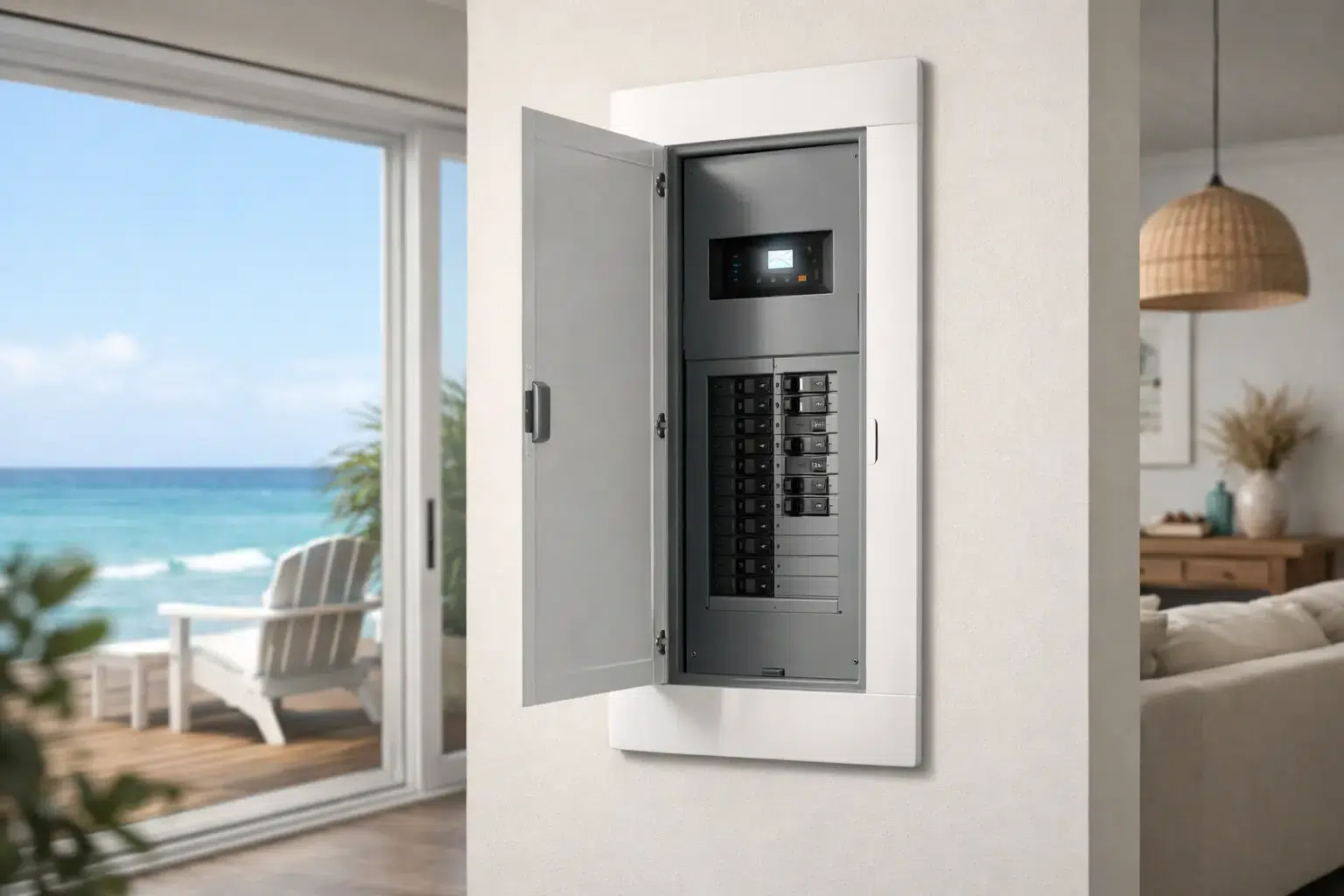
Hand flipping a circuit breaker in an electrical panel with a house, light bulb, and energy gauges in the background.

When to Upgrade Electrical Panel at Home

If your breakers trip when the microwave and hair dryer run at the same time, your electrical system is already telling you something. Knowing when to upgrade electrical panel service is less about guessing and more about recognizing clear signs that your home or property no longer has the capacity, safety features, or reliability you need.

Along the Alabama coast, that question comes up often in older homes, condos, and commercial spaces that were built for a very different electrical load. Years ago, a panel only had to support lights, a few kitchen appliances, and basic HVAC equipment. Now many properties are adding larger air conditioning demands, tankless water heaters, EV chargers, backup generators, home offices, and more electronics than the original system was ever designed to handle.

When to Upgrade Electrical Panel Service

The most obvious time to upgrade is when your current panel cannot safely support your property’s power use. That may show up as nuisance breaker trips, flickering lights, warm breakers, or a panel that is simply full with no room for additional circuits.

Sometimes the issue is age. If your panel is decades old, uses outdated components, or has signs of corrosion, wear, or water exposure, replacement may be the safer choice even if the power still works most of the time. In coastal areas like Gulf Shores and Orange Beach, salt air and moisture can speed up deterioration, especially on exterior equipment.

Another common trigger is remodeling. If you are renovating a kitchen, adding square footage, replacing an HVAC system, installing a hot tub, or planning an EV charger, your electrician may determine that the existing service is undersized. In that case, waiting can create ongoing performance problems and may also limit what can be permitted or installed correctly.

Warning Signs You Should Not Ignore

A panel upgrade is not always urgent, but some symptoms should move it higher on your list. If breakers trip repeatedly, that is usually not just an inconvenience. It often means a circuit is overloaded, a breaker is failing, or the panel is no longer managing demand as it should.

Flickering or dimming lights can also point to trouble, especially when they change as large appliances turn on. One flickering fixture may be a simple repair. Widespread dimming across the property suggests a larger issue with the service, panel, or connections.

You should also pay attention to heat and smell. A panel should not feel hot, and it should never produce a burning odor. Buzzing sounds, visible rust, scorch marks, or breakers that will not reset are all signs that you need a licensed electrician to inspect the system promptly.

For some properties, the biggest clue is just lack of space. If your panel is full and every new project requires workarounds, tandem breakers, or moving circuits around, you may be at the practical limit of what that equipment should handle.

Older Panels and Outdated Equipment

Some electrical panels raise concern because of their age, brand history, or obsolete design. Not every older panel is automatically unsafe, but older equipment is more likely to have wear, weak breaker performance, or limited capacity by current standards.

Homes with 60-amp or 100-amp service are a good example. That level may have been acceptable years ago, but many modern homes function better with 150-amp or 200-amp service, depending on square footage and electrical demand. The right size depends on the actual load calculation, not a one-size-fits-all rule.

If your home still has a fuse box, that is another strong reason to consider an upgrade. Fuses are not inherently unsafe when properly used, but they are less convenient, less flexible, and often tied to older systems that were not designed for today’s loads.

Capacity Matters More Than Most People Think

A lot of panel upgrades happen not because something failed, but because the property has changed. Electrical demand has climbed quietly over time. You may have added a second refrigerator, larger kitchen appliances, outdoor lighting, security systems, smart home devices, or a new HVAC setup. Each change adds to the load.

That matters even more if you are planning a major installation. EV chargers, whole-home surge protection, standby generators, pool equipment, workshop tools, and commercial-grade refrigeration can all affect whether your current panel is adequate. A new device may be the project that exposes a panel that was already near its limit.

This is where a proper evaluation matters. Some homeowners assume they need a full upgrade when a subpanel or dedicated circuit may solve the issue. Others think a single new breaker is enough when the service itself is undersized. The right answer depends on the age of the equipment, the condition of the panel, available space, and how much electrical capacity the property actually needs.

Remodeling, Additions, and Modern Upgrades

If you are planning improvements, it is smart to ask about the panel early rather than after the project is underway. Kitchen remodels often add higher-powered appliances and more required circuits. Bathroom upgrades may involve dedicated circuits for heaters or improved ventilation. Room additions increase lighting, receptacle, and HVAC demand.

The same goes for generator and EV charger installations. These upgrades are increasingly common in coastal Alabama, where storm preparedness and transportation changes are shaping electrical needs. A charger or generator connection may be straightforward in one home and require a panel or service upgrade in another.

That does not mean every new upgrade turns into a major electrical project. It means your system should be evaluated as a whole so the work is safe, code-compliant, and built for long-term use.

Safety, Insurance, and Code Compliance

There is also a broader reason to think carefully about when to upgrade electrical panel equipment: safety and liability. An aging or overloaded panel can increase the risk of overheated conductors, breaker failure, arcing, and property damage. Even if no major issue has happened yet, visible wear or recurring electrical problems should not be treated as normal.

Insurance can become part of the conversation too. Some carriers ask about panel age, service type, or outdated equipment during underwriting or renewal. If a panel has known issues or no longer meets current expectations, an upgrade may help protect both the property and the owner’s ability to insure it properly.

For commercial properties and multifamily buildings, the stakes are even higher. Downtime, tenant complaints, operational interruptions, and code deficiencies all carry real costs. In those cases, panel upgrades are often part of a larger effort to improve reliability and reduce future service calls.

What to Expect From a Panel Upgrade

A panel upgrade usually begins with an inspection and load assessment. The electrician looks at the age and condition of the existing equipment, the size of the current service, the number of circuits, grounding and bonding, and the power demands of the property. From there, the recommendation may be a panel replacement, a service upgrade, a subpanel, or targeted corrections to related components.

Timing can vary. Some upgrades are scheduled around remodels or planned installations. Others move quickly because the panel is failing, unsafe, or already affecting daily use. Utility coordination and permitting may also be part of the process, depending on the scope of work.

For homeowners concerned about budget, it helps to look at the upgrade as infrastructure. A panel is not cosmetic, but it supports almost every comfort and convenience in the building. It also creates room for future improvements instead of forcing piecemeal fixes every time a new electrical need comes up.

At MNE Electric, these conversations are grounded in what the property actually needs – not in overselling equipment that does not make sense for the job. For homes and businesses in Gulf Shores, Orange Beach, and nearby Baldwin County communities, local conditions, age of construction, and coastal exposure all play a role in what a safe upgrade should look like.

The Best Time Is Before the Panel Becomes the Problem

If you are asking when to upgrade electrical panel equipment, there is a good chance your property has already given you a reason to look into it. Maybe the lights flicker. Maybe the panel is outdated. Maybe a new EV charger, generator, or renovation is on the horizon.

The best time to act is usually before a small warning turns into a larger repair, outage, or safety issue. A qualified inspection gives you a clear answer, and that clarity is worth a lot when you are responsible for a home, condo, or commercial property that needs dependable power every day.

A good electrical system should not make you work around it. It should support how you live, how you run your property, and what you plan to add next.

Electrician plugging in a white electric car at a charging station outdoors, with solar panels and a wind turbine in the background

Home EV Charger Installation Done Right

Pulling into your driveway with 20 miles left and knowing your vehicle will be ready by morning is the real advantage of home EV charger installation. Public charging still has a place, but most EV owners quickly realize that charging at home is what makes daily driving easier. The key is making sure the charger, circuit, and electrical service are matched to your home and your driving habits.

For homeowners in Gulf Shores, Orange Beach, and nearby Baldwin County communities, that decision often involves more than just picking a charger off the shelf. Coastal homes, older panels, condo parking setups, and growing household power demands can all affect the scope of the job. A proper installation is about safety, code compliance, and dependable performance over time.

Why home EV charger installation matters

A standard wall outlet can charge an EV, but it is slow. For some drivers, especially those with short daily commutes, Level 1 charging may be enough for a while. For many households, though, it becomes limiting fast. If you drive farther, own a larger battery EV, or share charging between multiple vehicles, waiting on a basic outlet is not practical.

Home EV charger installation usually means adding a Level 2 charger on a dedicated 240-volt circuit. That setup can cut charging time dramatically and make overnight charging realistic. It also gives you a more consistent, purpose-built solution than relying on an extension cord or an outlet that was never intended for frequent, high-load use.

There is also a long-term value question. Installing a charger can make a home more functional for current owners and more appealing for future buyers as EV adoption continues to grow. It is not the right upgrade for every property at the same moment, but for many households it becomes one of the most useful electrical improvements they make.

What to expect during home EV charger installation

The first step is usually a site evaluation. That means looking at your main electrical panel, available capacity, charger location, parking layout, and the distance between the panel and where the charger will be mounted. Those details affect labor, materials, permitting, and whether additional upgrades are needed.

A straightforward installation might involve mounting the charger in a garage near the panel and adding a new dedicated breaker. That is often the simplest and most cost-effective version of the job. If the charger needs to be installed on an exterior wall, at a carport, or farther from the electrical service, the project can require more conduit, longer wire runs, weather-rated equipment, and additional labor.

Some homes also need panel work before the charger can be added safely. If your electrical service is already close to capacity, the right answer may be a load calculation, a panel upgrade, or a load management solution. That is where working with a qualified electrical contractor matters. A charger should not be added by guesswork.

Choosing the right charger and amperage

Bigger is not always better. Many homeowners assume they need the fastest charger available, but the best charger depends on your vehicle, driving routine, and electrical system. A 40-amp or 48-amp charger is a strong fit for many households, but that does not mean every home should be set up the same way.

If your EV sits parked overnight for eight to ten hours, you may not need the highest charging speed possible. On the other hand, if you have a long commute, limited charging windows, or more than one EV at home, a higher-capacity setup may make sense. The charger also needs to match what the vehicle can accept. Installing beyond that point may add cost without delivering much practical benefit.

There is also the question of hardwired versus plug-in chargers. A hardwired unit often provides a cleaner, more permanent installation and can support higher amperage in some cases. A plug-in charger offers flexibility if you plan to replace or relocate the unit later. The right choice depends on your goals, your panel capacity, and the installation location.

Panel capacity, service upgrades, and older homes

One of the most common surprises during home EV charger installation is learning that the charger itself is not the only part of the project. The home has to be able to support the added load. If you already have electric water heating, a pool pump, HVAC equipment, a range, dryer, and other high-demand appliances, your available capacity may be tighter than expected.

That does not automatically mean you need a full service upgrade, but it does mean the numbers need to be checked. In some homes, a load calculation shows there is enough capacity for the charger as planned. In others, the safer path may involve upgrading the panel or coordinating usage with an energy management system.

Older homes deserve extra attention here. Panels may be full, grounding may need correction, or previous electrical work may not meet current standards. This is especially relevant in a market with a mix of long-standing homes, remodeled properties, and investment properties. A charger installation can be a good time to address electrical issues that would eventually need attention anyway.

Coastal conditions and outdoor charger placement

In coastal Alabama, environment matters. Salt air, humidity, wind-driven rain, and storm exposure can all influence equipment selection and placement. If your charger will be installed outdoors or in a semi-exposed area, the materials and mounting approach need to fit those conditions.

That usually means using properly rated equipment, weather-resistant enclosures where needed, and installation methods designed for long-term durability. It also means choosing a location that is convenient without exposing the charger and cable to unnecessary wear. A charger mounted in the wrong spot may still work, but it can be less secure, less convenient, and more vulnerable over time.

For condos, multi-unit properties, and shared parking areas, the planning can be more involved. Questions about ownership, meter access, approvals, and routing power to the assigned parking space often need to be addressed early. The electrical work is only part of the equation.

Permits, code, and why professional installation matters

A home EV charger is not a plug-and-play appliance in the way many people assume. It is a continuous electrical load, and that matters for circuit sizing, breaker selection, conductor sizing, disconnect requirements in some setups, and overall code compliance. Skipping those steps can create overheating risks, nuisance tripping, or equipment damage.

Professional installation helps make sure the charger is installed to code, permitted when required, and inspected as needed. It also helps protect the investment in both the charger and the home. If something goes wrong with a DIY or improvised install, the cost of correcting it can easily exceed what was saved upfront.

Reliable workmanship matters even more when the charger is tied into broader electrical work such as a service upgrade, subpanel addition, or parking area expansion. This is the kind of project where doing it correctly the first time saves time and frustration.

Cost factors and what can change the price

Homeowners naturally want to know what home EV charger installation will cost, and the honest answer is that it depends on the property. The charger model is only one part of the price. Panel capacity, wire length, wall access, conduit routing, permit requirements, and whether any upgrades are needed all affect the final cost.

A simple garage installation near the electrical panel is usually more affordable than an exterior install with a long run across the property. If the panel is undersized or outdated, costs rise because the job becomes a broader electrical upgrade. That is not bad news by itself. In many cases, that added work improves the safety and usefulness of the home beyond just EV charging.

For larger projects, financing can also make sense. When a charger install overlaps with a service upgrade or other major electrical improvements, spreading out the cost may be more practical than delaying the work.

Planning for how you actually live

The best charger setup is the one that fits your day-to-day routine. If you back into the garage every night, charger placement should reflect that. If your household may add a second EV in the next few years, it is smart to think ahead now rather than redo work later. If you own a rental or vacation property, the charging setup may need to balance convenience, access, and control.

This is where local experience helps. A contractor who regularly works in Gulf Shores and Orange Beach will understand the housing mix, the environmental conditions, and the practical concerns property owners face here. MNE Electric approaches these projects with that local perspective, along with the technical side needed to install chargers safely and correctly.

A good EV charger should feel easy to use from day one. When the circuit is sized properly, the equipment is placed where it makes sense, and the installation is built for the property, charging becomes one less thing to think about – which is exactly the point.

Blue electric car charging at a home driveway, with a calculator, coins, and documents in the foreground. The scene suggests home energy costs and maintenance.

Level 2 Charger Installation Cost Explained

If you are planning to charge an EV at home, the first question is usually not about the charger itself. It is the level 2 charger installation cost, because that number can vary quite a bit depending on your electrical system, the location of the charger, and whether your panel is ready for the added load.

For some homes, installation is straightforward. For others, the charger is only part of the project, and the real cost comes from the electrical upgrades needed to support it safely. That is why estimates for one house can look very different from the next, even when the same style of charger is being installed.

What affects level 2 charger installation cost?

A Level 2 charger uses a 240-volt circuit, which is similar to what large appliances like dryers and ovens use. The charger may be mounted in a garage, under a carport, on an exterior wall, or in a parking area for a condo or commercial property. Each setup changes the labor, materials, and planning involved.

The biggest factor is usually distance. If your electrical panel is close to the charger location, installation may only require a dedicated circuit, breaker, wiring, and mounting. If the panel is on the opposite side of the house or far from the parking area, the job can require more wire, more labor, and sometimes conduit to protect the run.

Panel capacity also matters. Many newer homes can support a Level 2 charger without much trouble, but older homes may already be near their electrical limit. If the panel is full, undersized, or outdated, the installation may require a subpanel, load management equipment, or a full service upgrade.

Permits and code requirements are another part of the cost. A charger installation is not just a convenience upgrade. It is an electrical project that needs to be done correctly, inspected when required, and matched to both the charger and the home’s power capacity.

Typical price ranges homeowners can expect

A simple Level 2 charger installation often falls in the lower end of the range when the panel has space, the parking area is close by, and there are no unusual site conditions. In those cases, homeowners may be looking at a relatively manageable project cost.

A mid-range installation is more common. That usually means a standard charger install plus a longer wire run, surface-mounted conduit, or minor panel work. This is where many residential projects land, especially in established neighborhoods where homes were not originally designed with EV charging in mind.

Higher-end costs usually show up when the electrical service needs to be upgraded. If your home needs a new panel, a service change, or substantial rewiring to support the charger, the total can rise quickly. For condo properties, shared parking, detached garages, and commercial locations, planning and infrastructure often add another layer.

As a general guide, homeowners often see level 2 charger installation cost range from around several hundred dollars for the simplest jobs to several thousand dollars when service upgrades are involved. The only dependable way to know where your property falls is to have the existing electrical system evaluated.

The charger itself is not the whole project

One common misunderstanding is assuming the charger price and the installation price are basically the same thing. They are not. The charging unit is only one part of the total investment.

You still have to account for the dedicated 240-volt circuit, breaker sizing, wiring, conduit if needed, mounting hardware, permit requirements, and labor. If the chosen charger has smart features, Wi-Fi setup, or manufacturer-specific installation requirements, that can also affect the final scope.

Hardwired chargers and plug-in chargers can also change the cost. A plug-in model may require a properly rated receptacle, while a hardwired model is wired directly into the circuit. Hardwired installations are often preferred for durability and clean appearance, especially in garages or outdoor settings, but the best option depends on how the charger will be used and what the manufacturer requires.

Why panel capacity can change everything

If there is one issue that most often shifts a charger project from simple to complex, it is panel capacity. A Level 2 charger draws much more power than a standard wall outlet, and that load has to be considered alongside the rest of the home.

An electrician will look at your service size, the available breaker space, and the home’s overall load. A house with electric HVAC, a pool, a water heater, and other large appliances may not have room for an additional high-demand circuit without some adjustment.

Sometimes the answer is simple, such as reorganizing circuits or adding a subpanel. In other cases, a load calculation may show that the service needs to be upgraded. That adds cost, but it also protects the home from overloaded equipment and gives you a safer foundation for future electrical needs.

This matters in coastal communities as well, where many properties include added electrical demands like outdoor lighting, elevators, pool equipment, detached storage, and storm-related backup systems. The charger has to fit into the full picture.

Location of the charger matters more than most people expect

Where you park is not always where the electrical panel is, and that gap affects labor and material costs. A charger mounted right next to the panel is naturally less involved than one installed across the house, outside, or in a detached structure.

Garages are often the easiest locations, but not every home in Gulf Shores or Orange Beach has an enclosed garage. Carports, driveway-side walls, parking pads, and under-home parking areas are all possible charger locations, but they may require weather-rated equipment, conduit, and more detailed routing.

For condos and multi-unit properties, the project may also involve shared electrical rooms, HOA coordination, access planning, and longer circuit runs. Commercial properties can face similar issues if chargers are being added for employees, tenants, or fleet use.

Permits, inspections, and code compliance

A proper EV charger installation should be treated like any other meaningful electrical upgrade. It needs to be installed to code, matched to the equipment rating, and protected by the right breaker and wiring method.

Skipping permits or using an improvised setup may look cheaper at first, but it can create safety issues, inspection problems, and expensive corrections later. That is especially true if you plan to sell the property, make insurance claims, or add more electrical equipment down the road.

The right installation protects more than the charger. It protects the panel, the wiring, the vehicle, and the building itself.

How to keep level 2 charger installation cost under control

The best way to manage cost is to start with a site-specific estimate instead of guessing from online averages. Generic price ranges can be useful for context, but they do not tell you whether your panel has room, whether your preferred charger location is practical, or whether upgrades are likely.

It also helps to think through how you will actually use the charger. A higher-amperage unit is not always necessary. In many homes, a moderate charging rate is more than enough for overnight charging and may reduce installation complexity.

If you are already planning other electrical work, it can be smart to combine projects. A panel replacement, service upgrade, or garage electrical improvement may be more efficient when handled together rather than in separate visits. For larger projects, financing can also make the upgrade easier to schedule without delaying needed work.

Choosing the right installer matters

A Level 2 charger is not a handyman add-on. It is a dedicated electrical installation that should be sized correctly, installed cleanly, and evaluated with the rest of the property in mind.

That is why local experience matters. Coastal properties can present unique conditions, and residential, condo, and commercial projects all come with different practical requirements. A qualified electrical contractor should be able to explain what is driving the price, whether upgrades are truly needed, and what setup makes the most sense for your daily use.

At MNE Electric, that approach means looking beyond the charger itself and making sure the installation is safe, code-conscious, and built to last.

If you are considering home EV charging, the smartest next step is not to chase the lowest number. It is to find out what your property actually needs so you can install it once, use it confidently, and know the work was done right the first time.

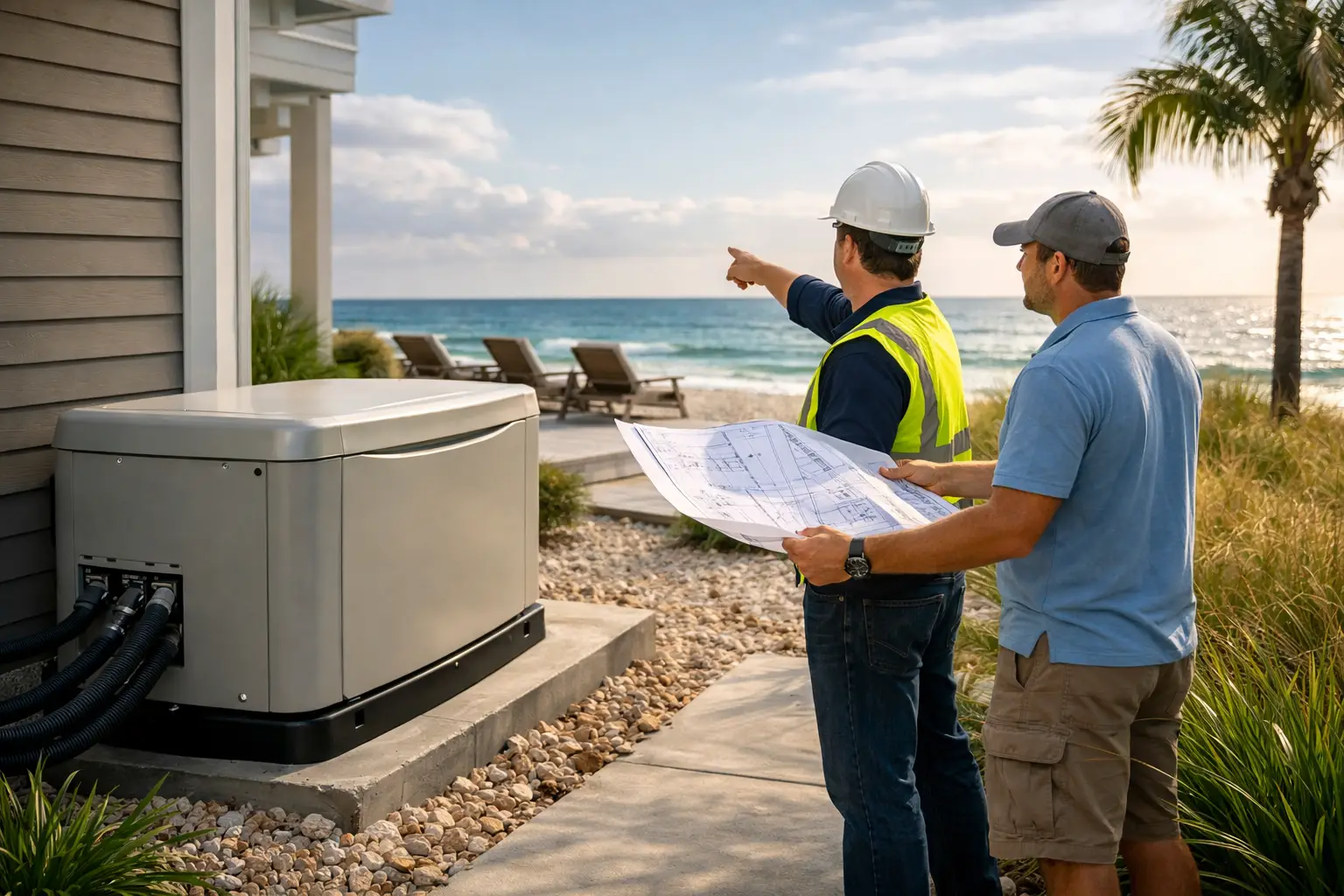
Technician kneels beside an outdoor generator near a house while a couple watches and points, illustrating home power work and evaluation.

Generator Installation for Home: What Matters

When the power goes out on the Alabama coast, the inconvenience adds up fast. Refrigerators warm up, HVAC systems stop, sump and lift systems may be affected, and for many homeowners, generator installation for home becomes less of a luxury and more of a practical step toward keeping the property safe and livable.

Why generator installation for home is different on the coast

In Gulf Shores, Orange Beach, and surrounding Baldwin County communities, backup power planning has to account for more than occasional outages. Storm activity, salt air, humidity, seasonal occupancy, and the demands of larger homes or condos all influence what type of generator system makes sense.

A portable unit may cover a few basics during a short outage, but it does not offer the same level of convenience or protection as a permanently installed standby generator. For full-time residents, second-home owners, and property managers, the real question is usually not whether backup power is useful. It is how much of the property needs to stay operational and how reliably the system needs to perform when no one wants to troubleshoot in bad weather.

That is where proper planning matters. The best generator setup is not simply the biggest unit available. It is the one that matches the home, the electrical load, the fuel source, and the owner’s priorities.

What a proper home generator installation includes

A complete standby generator system is made up of more than the generator itself. There is the generator unit, the fuel connection, the electrical connection, and the transfer equipment that shifts the home from utility power to backup power when an outage occurs.

The transfer switch is one of the most important parts of the system. It isolates the home from the utility line during an outage and allows power to be restored safely. Without the right transfer setup, a generator can create serious hazards for utility crews, the property, and the home’s electrical system.

Installation also includes site selection, pad placement, code compliance, permitting, and final testing. If the home has older electrical equipment, limited panel space, or service issues, those may need to be addressed before the generator can be connected correctly. This is one reason generator projects vary in price and complexity from one home to the next.

Choosing the right size generator

Generator sizing is where many homeowners either overspend or end up with a system that does not meet expectations. A generator should be sized based on the loads the homeowner wants to run during an outage, not on guesswork.

Some homeowners want essential circuits only. That typically includes refrigeration, lighting, internet, a few outlets, and possibly part of the HVAC system. Others want near-whole-home coverage so the transition during an outage feels almost unnoticeable. In a larger coastal home, that may include multiple HVAC systems, water heaters, kitchen appliances, elevators, security systems, and pool or outdoor equipment.

There is a trade-off. A larger generator supports more equipment, but it also increases equipment cost, installation cost, and fuel consumption. A smaller generator can be a smart choice if the goal is to keep the basics running and control project cost. The right answer depends on how the home is used, whether it is occupied year-round, and what the owner considers essential.

Load calculations should be handled carefully. Starting loads for air conditioners, compressors, and pumps can be significantly higher than their running loads. If those details are ignored, a generator may appear adequate on paper but struggle in actual use.

Fuel source and placement both matter

For standby systems, natural gas and propane are the most common fuel options. If natural gas is available and reliable at the property, it can be a convenient choice because there is no on-site refueling during an extended outage. Propane is often used where natural gas is not available or where the property owner prefers a dedicated fuel supply.

Each option has pros and cons. Natural gas offers convenience, but performance depends on utility availability and system capacity. Propane provides independence from the gas utility, but it requires tank sizing, placement, and refill planning. For seasonal homes or properties that may sit vacant, fuel management should be part of the conversation from the start.

Placement is not just about finding open space in the yard. Standby generators must be installed with attention to clearance requirements, ventilation, manufacturer specifications, noise considerations, and local code. In a coastal environment, placement should also account for exposure to salt air, flooding concerns, and long-term service access. A generator tucked into a hard-to-reach corner may look fine at first, but it can create maintenance and repair problems later.

The electrical side is where experience counts

A standby generator is tied directly into the home’s electrical system, which means the installation needs to be done with a clear understanding of service equipment, grounding, load management, and code requirements. This is not a basic plug-in project.

In some homes, the existing electrical panel is generator-ready. In others, the panel may need upgrades, reconfiguration, or added equipment to support a safe and reliable installation. Older homes may have service limitations that need to be corrected first. Multi-structure properties can also add complexity if detached garages, guest spaces, or accessory buildings are part of the backup power plan.

This is also where homeowners should think beyond the immediate outage. A generator should work well with the home as it exists now, but it should also make sense if the owner later adds equipment like EV chargers, additional HVAC capacity, or other major electrical loads. A properly planned installation avoids creating bottlenecks that lead to more rework later.

Permits, inspections, and safety should never be shortcuts

Generator installation for home involves real safety issues, and the permitting process exists for a reason. Improper installation can lead to fire risk, carbon monoxide hazards, backfeeding, fuel issues, and damage to appliances or electrical equipment.

A qualified electrical contractor will evaluate the full scope of the project, coordinate the electrical side correctly, and ensure the installation is done to current code. Depending on the property and the type of generator, there may also be utility, gas, or local jurisdiction requirements that need to be addressed before final approval.

For homeowners, this is not the part of the project to rush. Fast service matters, but so does doing the work correctly the first time. A generator only proves its value when the power fails, and that is a poor moment to discover that corners were cut during installation.

What homeowners should expect during the process

A good generator project starts with a site visit and a real discussion about priorities. The contractor should ask what absolutely needs to stay on, how the home is occupied, what fuel options are available, and whether the existing electrical system can support the installation as planned.

From there, the scope becomes clearer. The proposal may include the generator, transfer switch, electrical labor, site preparation, permitting, startup, and testing. Some projects move quickly. Others take more coordination if panel upgrades, service changes, or fuel work are involved.

Homeowners should also ask about maintenance. Standby generators need routine service, periodic testing, and manufacturer-recommended upkeep to stay dependable. Even the best installation is only part of the equation. Long-term performance depends on keeping the unit ready for the next outage, not assuming it will take care of itself.

For local property owners, working with a contractor who understands coastal conditions and regional permitting can make the process smoother. MNE Electric serves Gulf Shores, Orange Beach, and nearby Baldwin County communities with practical electrical solutions built around safety, reliability, and responsive service.

When a generator is worth the investment

Not every home needs whole-house backup power, but many homes benefit from some level of permanent standby protection. If the property experiences repeated outages, houses critical systems, includes vulnerable occupants, or functions as a second home that may be unattended during storms, the value becomes easier to measure.

There is also the issue of convenience versus disruption. Some homeowners are comfortable managing extension cords and portable equipment. Others want automatic operation, cleaner integration, and less stress during bad weather. Neither choice is automatically right or wrong, but they serve different needs.

A professionally installed standby generator is usually worth it when the homeowner wants dependable backup power without improvising during an emergency. That is especially true in areas where weather events are part of life, not a rare exception.

The best next step is to treat generator planning like any other major electrical upgrade. Ask practical questions, understand the trade-offs, and choose a system that fits the home instead of forcing the home to fit the system. A little planning now can make the next outage feel a lot more manageable.

Businesspeople review a resume on a clipboard as construction workers inspect tools and equipment in the background, illustrating project staffing and field work.

Choosing Commercial Electrical Contractors

When a breaker keeps tripping in a retail space, a panel is overdue for an upgrade, or a new build needs power planned the right way from day one, the contractor you hire matters. Commercial electrical contractors do more than install wiring. They help protect your property, keep operations moving, and make sure your electrical system can support how your business actually runs.

For business owners and property managers along the Alabama coast, that matters even more. Salt air, storm exposure, aging equipment, tenant turnover, and rising power demands all put stress on commercial systems. A quick fix may solve today’s issue, but if the larger system is undersized, outdated, or not code-ready, the problem usually comes back.

What commercial electrical contractors actually handle

Commercial work is broader than many people expect. It can include troubleshooting power loss, replacing damaged equipment, upgrading service, installing dedicated circuits, improving lighting, adding surge protection, and preparing buildings for modern needs like EV charging or backup power.

It also often involves planning. In offices, restaurants, retail centers, condo properties, and mixed-use buildings, electrical decisions affect safety, uptime, operating costs, and future tenant needs. A contractor with commercial experience is looking at the whole picture – not just the immediate repair.

That matters during remodels and tenant improvements. New equipment loads, revised layouts, signage, HVAC changes, and code updates can all affect what your system needs. If those details are missed early, projects get delayed later.

Why experience in commercial properties matters

Residential and commercial electrical work are not the same. Commercial systems are often larger, more complex, and more tightly connected to business operations. A minor error in a home can be inconvenient. In a commercial setting, it can mean downtime, failed inspections, damaged equipment, or safety issues for staff and customers.

Experienced commercial electrical contractors understand how to work around operating hours, coordinate with other trades, and minimize disruption. They know that a repair in a storefront, restaurant, office, or condo common area is not just a technical task. It affects revenue, schedules, and occupant experience.

They also understand that not every property starts from the same place. Some buildings need a simple repair. Others need a phased upgrade because the electrical system has fallen behind current demand. The right contractor will tell you which is which instead of pushing a one-size-fits-all answer.

What to look for before you hire

The first thing to look for is licensing, certification, and a clear commitment to code-compliant work. That should be a baseline, not a bonus. Commercial electrical systems need to be installed and repaired correctly the first time because rework costs money and often interrupts business.

Response time matters too. If you manage a property or operate a business, electrical issues are rarely convenient. A contractor who communicates clearly, shows up when expected, and gives you a realistic timeline is far more valuable than one who gives a vague promise and disappears for days.

You should also pay attention to how they approach estimates and scope. Good commercial electrical contractors ask detailed questions about the building, usage, equipment load, access, and future plans. That is usually a sign they are trying to solve the right problem, not just price the most obvious one.

It is also worth asking whether they can support both immediate service calls and larger projects. Many property owners prefer one dependable contractor who can handle repairs, upgrades, inspections, design input, and expansion work over time.

Common commercial electrical needs in coastal Alabama

Along Gulf Shores, Orange Beach, and nearby areas, commercial buildings face a mix of routine and regional challenges. Weather exposure is part of the equation. Storms and surges can damage equipment, interrupt operations, and expose weak points in older systems.

That is one reason surge suppression and backup power planning come up often. Not every property needs the same level of protection, but many benefit from evaluating where outages or voltage issues could create major business problems.

Service upgrades are also common. A building that once supported basic lighting and office equipment may now need to handle larger HVAC demands, upgraded appliances, security systems, tenant improvements, or EV charging infrastructure. If the electrical service was sized for yesterday’s needs, today’s upgrades can strain the system.

Inspections and preventative repairs also matter in coastal environments. Corrosion, wear, and moisture exposure can affect components over time. Catching those issues early is usually less expensive than waiting for a shutdown or emergency repair.

When repairs are enough – and when they are not

A good contractor should be honest about whether a repair is the right move. In some cases, replacing a breaker, repairing a connection, or addressing a damaged component is all that is needed. In other cases, repeated issues are a sign of a larger system problem.

If lights flicker regularly, circuits are overloaded, panels are outdated, or key equipment lacks adequate dedicated power, patching one part may not solve the real issue. This is where commercial electrical contractors add value. They can identify whether the failure is isolated or whether the system needs a broader correction.

There is always a balance between short-term cost and long-term value. A lower-cost repair may look attractive today, but if it leads to repeat service calls, interrupted operations, or premature equipment failure, it may not be the cheaper option after all.

Planning for growth and modernization

Many business owners wait until electrical issues become urgent. That is understandable, but planned upgrades are usually easier to schedule and manage than emergency work. If you are renovating, expanding, replacing major equipment, or preparing a property for new tenants, electrical planning should happen early.

Modernization can take several forms. It might mean upgrading lighting for better efficiency and maintenance savings. It might mean adding EV charging to support employees, guests, or residents. It might mean generator installation for critical continuity or redesigning parts of the system to support changing occupancy needs.

These decisions are not only about adding capacity. They are also about making sure the work fits your property, budget, and operating goals. Sometimes the right answer is a full upgrade. Sometimes it is a phased plan that addresses the highest-risk items first and spreads costs over time.

The value of a contractor who can do more than basic installs

Some projects need more than field labor. They need design input, load planning, coordination, and a clear understanding of how one electrical decision affects the rest of the building. That is especially true for larger upgrades, renovations, and properties with multiple units or complex usage patterns.

Working with a full-service contractor can simplify that process. If the same team can handle troubleshooting, service upgrades, inspections, energy management solutions, and newer technologies like EV chargers, you spend less time coordinating between providers and more time moving the project forward.

For many local businesses and property owners, that kind of consistency matters. MNE Electric serves Gulf Shores, Orange Beach, and surrounding Baldwin County communities with that practical, start-to-finish approach.

Why communication matters as much as technical skill

Electrical work is technical, but the service experience should still be clear. You should know what the problem is, what the recommended fix is, what the timeline looks like, and whether there are other issues worth addressing now.

That does not mean every job needs a major overhaul. In fact, one of the best signs of a trustworthy contractor is restraint. They explain the trade-offs, point out what is urgent versus what can wait, and help you make informed decisions based on your property and budget.

For larger projects, financing can also make a difference. If a service upgrade, generator installation, or major improvement is needed, flexible payment options can help property owners move forward sooner instead of delaying necessary work.

A practical way to choose the right partner

If you are comparing contractors, focus on a few questions. Do they have real commercial experience? Are they responsive? Do they explain the scope clearly? Can they handle both immediate problems and longer-term improvements? And do they understand the demands of properties in your local area?

The best commercial electrical contractors are not just there to fix a wire and leave. They help you protect the building, support the people using it, and plan for what comes next. When you find a contractor who values safety, workmanship, and follow-through, you are not just solving an electrical issue. You are putting your property on firmer ground.

If your building has outgrown its electrical system or you are tired of dealing with repeat issues, the smartest next step is often a clear assessment from a qualified local professional. A well-powered property is easier to manage, safer to operate, and better prepared for whatever your business needs next.

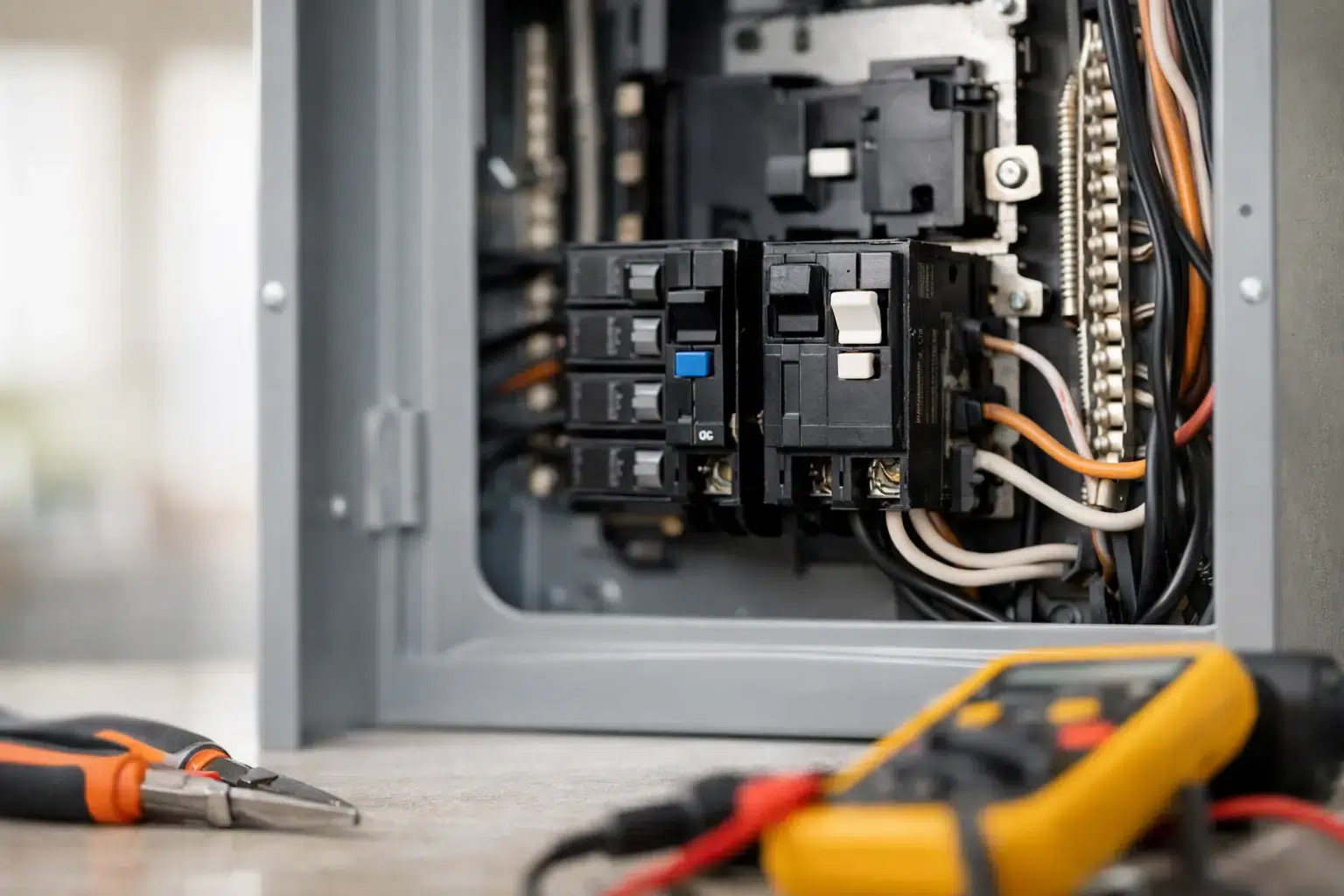
Electrical breaker panel with sparks flying from a switch, cords and a lit light bulb nearby.

What Causes Circuit Breaker Tripping?

A breaker that trips once during a storm or while running too many appliances might not seem like a big deal. But when the same breaker keeps shutting off power, it is usually telling you something useful about the condition of your electrical system. If you have been asking what causes circuit breaker tripping, the short answer is that the breaker is doing its job – stopping electrical flow when it detects a condition that could damage wiring, equipment, or create a fire risk.

What causes circuit breaker tripping most often?

In homes and commercial buildings, most breaker trips come back to a few common issues. The first is an overloaded circuit. This happens when more electrical demand is placed on a circuit than it was designed to handle. A bedroom circuit running a few lamps is one thing. That same circuit powering space heaters, gaming equipment, and a window AC unit is another.

The second common cause is a short circuit. A short happens when hot and neutral wires touch where they should not, causing a sudden surge in current. The third is a ground fault, which is similar but involves electricity taking an unintended path to ground. Ground faults are especially common in kitchens, bathrooms, garages, outdoor areas, and other locations where moisture is present.

There are also cases where the breaker itself is the problem. Breakers can wear out over time, especially in older panels or in coastal environments where humidity and salt air can contribute to corrosion. In Baldwin County properties near the water, that is not something to ignore.

Overloaded circuits are the most common reason

An overloaded circuit is often the simplest explanation, but not always the easiest to solve long term. Every circuit has an amp rating, and once the connected load goes beyond that limit, the breaker trips to prevent overheating. This can happen instantly or after several minutes, depending on how much demand is being placed on the circuit.

You may notice this when a microwave and coffee maker run at the same time, or when a hair dryer trips a bathroom breaker. In commercial settings, it might show up when office equipment, refrigerators, point-of-sale systems, or lighting are all sharing one branch circuit.

The trade-off here is convenience versus capacity. Many properties were built for a lower electrical demand than what people use now. Large TVs, dedicated home office equipment, EV chargers, tankless water heaters, and modern kitchen appliances all add up. Resetting the breaker may restore power, but it does not increase the circuit’s capacity.

Signs your breaker is tripping from overload

If the breaker trips only when certain appliances are used together, overload is a strong possibility. The same is true if the trip happens after the circuit has been under load for a little while rather than the instant a device turns on.

Warm outlets, flickering lights, or frequent trips on the same breaker are signs the circuit may need to be evaluated. In some cases, redistributing loads helps. In others, the better solution is adding a dedicated circuit or upgrading part of the electrical system.

Short circuits and ground faults are more serious

When people ask what causes circuit breaker tripping, they often assume it is just too many things plugged in. That does happen often, but short circuits and ground faults deserve more attention because they can point to damaged wiring, failing devices, or unsafe conditions inside walls, outlets, fixtures, or equipment.

A short circuit usually causes the breaker to trip immediately. You might hear a pop, notice a burnt smell, or find that the trip happens every time a specific light switch or appliance is used. Damaged insulation, loose connections, pinched wires, and internal equipment failure can all cause this kind of problem.

Ground faults are common where water and electricity are close together. A bathroom receptacle, an outdoor outlet, a pool-related circuit, or a garage device exposed to moisture may trigger a trip because current is escaping its intended path. On the Gulf Coast, humidity, weather exposure, and salt air can make these issues more likely over time.

When moisture is part of the problem

Coastal properties deal with conditions that can affect electrical systems differently than inland homes. Outdoor equipment, disconnects, receptacles, and panels may be exposed to moisture and corrosion for years. Even when everything was installed correctly, age and environment matter.

If a breaker trips after heavy rain, high humidity, or storm activity, moisture intrusion should be considered. That does not mean the breaker is faulty. It may be detecting a real hazard.

Appliance and equipment problems can trip a breaker

Sometimes the issue is not the wiring in the building but the device connected to it. A breaker may trip because an appliance has a failing motor, a compressor pulling too much current, or internal wiring damage. This is common with HVAC equipment, refrigerators, disposal units, washing machines, and older commercial equipment.

A useful clue is whether the breaker trips only when one specific item is running. If the circuit stays on until that appliance starts, the load or the appliance itself may be the trigger. That still needs proper diagnosis. Replacing the breaker without checking the equipment can miss the real issue.

There is also an it-depends factor here. Some motors have a high startup draw that may be normal, while others are signaling wear. A licensed electrician can test the circuit and determine whether the breaker is responding correctly or whether the equipment needs repair.

Arc fault and GFCI protection can trip for safety reasons

Newer homes and updated electrical systems often include AFCI and GFCI protection. These devices are designed to trip under conditions that standard breakers may not catch as quickly. That is good for safety, but it can confuse property owners who are used to thinking only in terms of overloads.

An AFCI breaker looks for dangerous arcing that can happen with damaged cords, loose connections, or deteriorating wiring. A GFCI trips when it senses current leaking where it should not. In both cases, nuisance trips are possible, but repeated trips should never be dismissed without inspection.

If one of these protective devices keeps tripping, the answer is not to bypass it. The better approach is to find out whether the problem is with the connected device, the wiring, or the breaker.

Could the breaker panel itself be the issue?

Yes. Breakers and panels are not meant to last forever. Loose bus connections, aging components, overheating, corrosion, and outdated equipment can all lead to tripping problems. In older homes, you may also run into undersized service, crowded panels, or prior modifications that no longer match present-day electrical demand.

This is especially relevant for homes and businesses that have added major loads over time. If your property now includes updated kitchen equipment, more HVAC demand, a generator connection, or EV charging, the panel may need to be reviewed as part of the bigger picture.

A breaker that feels loose, smells burnt, trips without a clear pattern, or will not reset consistently should be checked promptly. Those are signs that go beyond ordinary overload.

What you can do before calling an electrician

Start with what changed. Think about whether a new appliance was added, whether the trip happens only in wet weather, or whether it is tied to one switch, outlet, or room. That information can help narrow down the cause.

You can also unplug portable devices on the affected circuit and reset the breaker once. If it holds, reconnect items one at a time. If it trips again immediately, or if you notice burning odor, buzzing, discoloration, or heat, stop there and have the system inspected.

The one thing you should not do is force the breaker to stay on or keep resetting it repeatedly. A breaker that trips over and over is reacting to something, and repeated resets can make a bad situation worse.

When to bring in a licensed electrician

If the same breaker trips more than once, if the cause is not obvious, or if the issue involves a panel, wiring, outdoor equipment, or moisture, professional diagnosis is the safe next step. Electrical problems are not always visible from the outside, and guessing can be expensive.

For homeowners, condo owners, and property managers in Gulf Shores, Orange Beach, and surrounding areas, fast service matters when power problems affect comfort, operations, or safety. MNE Electric handles breaker issues, panel evaluations, repairs, and upgrades with the goal of getting it fixed correctly the first time.

A tripping breaker is inconvenient, but it is also one of the clearest warning signs your electrical system can give you. Paying attention to it now is often the best way to prevent a larger repair later.