
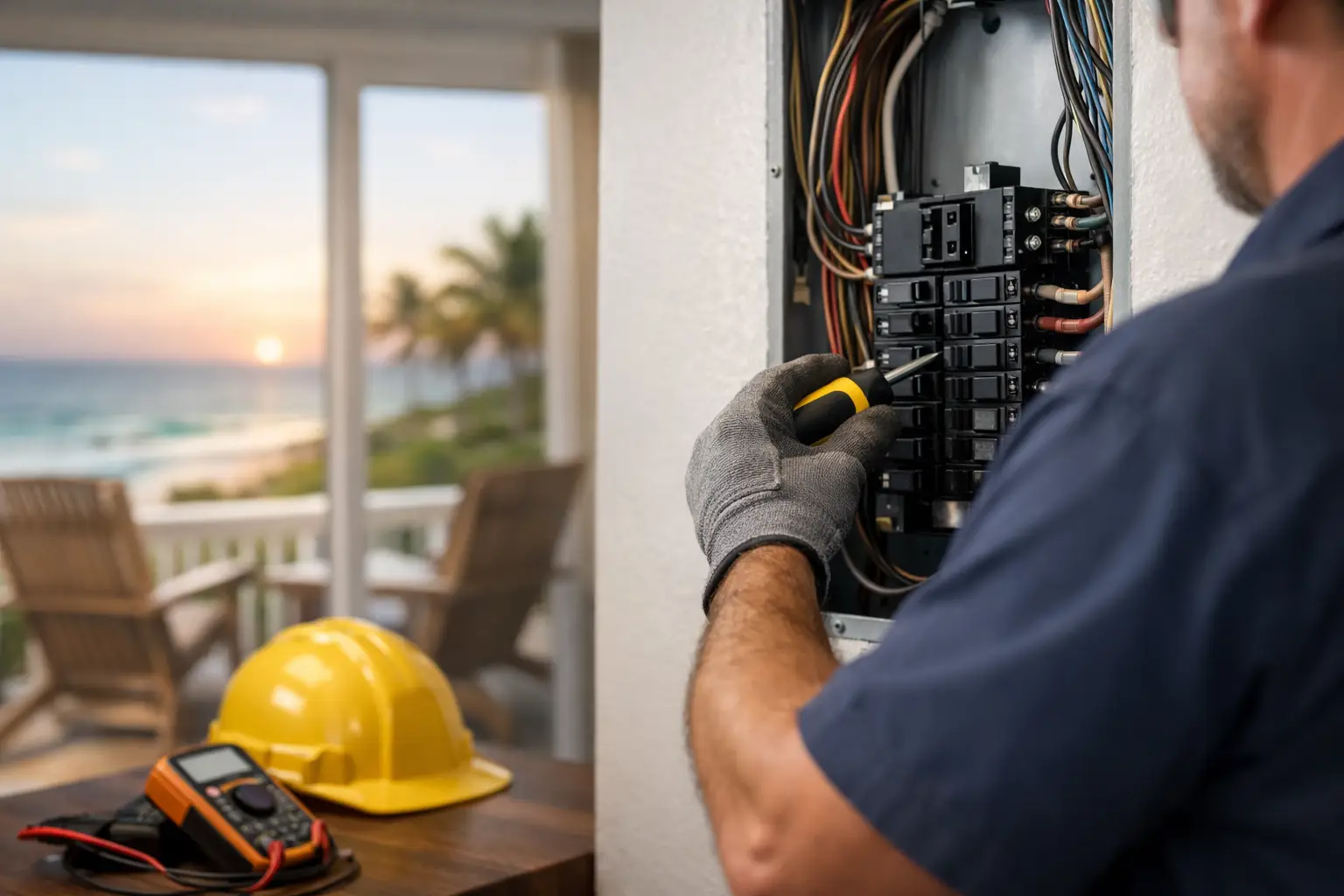
Electrical Panel Upgrade Gulf Shores: 7 Key Signs
A breaker that trips when the microwave and coffee maker run at the same time is more than an inconvenience. It can be a sign that your home’s electrical system is working beyond the capacity it was designed to handle. Searches for electrical panel upgrade Gulf Shores services often begin with a small annoyance, but the right time to act is before that annoyance becomes a safety concern, a failed inspection, or a disruption to your property.
Gulf Shores homes, condos, rental properties, and businesses face changing electrical demands. Older properties may have panels built for a time before central air conditioning, large kitchen appliances, home offices, EV chargers, and whole-home surge protection were common. A qualified electrical assessment can determine whether the panel is the problem, whether a repair is sufficient, or whether an upgrade is the safer long-term choice.
What an Electrical Panel Upgrade Actually Does
Your electrical panel is the control center for the property’s power. It receives electricity from the utility service and distributes it safely through individual circuits. Breakers are designed to shut off power when a circuit is overloaded or a fault occurs, helping protect wiring, equipment, and people.
An electrical panel upgrade may involve replacing an outdated panel, increasing the service capacity, installing modern breakers, correcting grounding and bonding issues, or adding circuit space for future needs. The exact scope depends on the age of the property, the condition of the existing equipment, local code requirements, and what you plan to power.
Not every panel that looks old needs immediate replacement. Conversely, a newer panel may still be undersized if the property has added high-demand equipment. The goal is not simply to install a larger panel. It is to provide a properly designed electrical system that safely supports how the building is used now and how it may be used later.
7 Signs You May Need an Electrical Panel Upgrade in Gulf Shores
Some warning signs require prompt attention, particularly if they involve heat, damaged equipment, or repeated loss of power. Others point to a system that may be functional today but is nearing its practical limit.
- Breakers trip regularly. An occasional trip can happen when a single circuit is overloaded. Repeated tripping, especially across multiple circuits, deserves professional evaluation.
- Lights dim or flicker when appliances start. A brief change can occur with heavy loads, but frequent dimming may signal a circuit, connection, or service-capacity issue.
- The panel feels warm, smells burnt, or makes unusual sounds. Heat, buzzing, crackling, scorch marks, or a burning odor are not normal. Turn off power if it is safe to do so and contact a qualified electrician promptly.
- You rely on extension cords or power strips for permanent use. These are temporary tools, not substitutes for enough properly installed circuits where you need them.
- There is no room for additional breakers. A full panel can make it difficult to add a dedicated circuit for an appliance, workshop, HVAC equipment, or an EV charger.
- The property still has aging or obsolete equipment. Some older panels and electrical components have known reliability concerns or may no longer meet current safety expectations.
- You are planning a major electrical addition. Renovations, a new heat pump, generator connection, hot tub, kitchen upgrade, or electric vehicle charger can require more capacity and dedicated circuits than the existing panel can provide.
These signs do not automatically mean you need a complete service upgrade. A licensed electrician should inspect the panel, circuits, service equipment, and load requirements before recommending a solution. That assessment prevents spending money on an oversized upgrade when a targeted repair or subpanel may better fit the property.
Why Coastal Properties Need Careful Electrical Planning
Along the Alabama coast, electrical equipment works in a demanding environment. Humidity, salt air, wind-driven rain, and storm exposure can accelerate corrosion around exterior service equipment, meter bases, disconnects, conduits, and connections. Vacation homes and rental properties can also go unoccupied for periods of time, allowing small issues to remain unnoticed.
A panel upgrade is an opportunity to examine the complete path of power into the building, not only the breakers inside the panel. An electrician may identify corroded fittings, damaged weatherproofing, inadequate grounding, or exterior components that need attention. Addressing these conditions early can help reduce the chance of unreliable operation when the property is under heavy use.
For condos and commercial properties, the planning process can involve additional coordination. Owners may need to work with an HOA, property manager, utility provider, or building management team. A professional contractor can help define the scope clearly, identify access needs, and plan the work to minimize disruption to occupants or guests.
Choosing the Right Capacity for Your Property
Many homeowners ask whether they should move from 100-amp service to 200-amp service. In some homes, that is a sensible step. In others, the existing service may support the home after circuit improvements, or the project may require a different design because of the building layout and anticipated loads.
The answer depends on a load calculation. This calculation looks at fixed equipment such as HVAC systems, water heaters, ranges, dryers, pool equipment, and pumps, along with general lighting and receptacle demand. It also considers planned additions. A property preparing for an EV charger and electric appliances may have different needs than a home using gas appliances with no major expansion planned.
It is wise to think a few years ahead. If you are remodeling, adding a detached garage, converting space to a rental unit, or considering backup power, discuss those plans during the estimate. Adding capacity or pathways during a panel project can be more cost-effective than reopening finished walls later.
What to Expect During a Panel Upgrade Project
A properly planned project begins with an on-site evaluation. The electrician reviews the existing panel, service size, wiring condition, grounding, available circuit space, and the loads you want to add. They should explain what they found in clear language and provide a scope that distinguishes necessary safety work from optional improvements.
Depending on the project, permits and inspections may be required. Service upgrades can also require coordination with the utility because power may need to be disconnected temporarily. The length of the outage varies by scope, utility scheduling, equipment condition, and whether related work is discovered. Your electrician should help you prepare by identifying what needs to be shut down and how to protect sensitive electronics, refrigerated items, or business operations.
Once work is complete, the panel should be clearly labeled so occupants know which breaker controls each area or appliance. Clear labeling matters in an emergency and makes future maintenance much easier. It is also a good time to ask about whole-home surge protection, particularly for properties with HVAC controls, appliances, electronics, and smart-home equipment.
Avoid the Cheapest-Quote Trap
Electrical panel work affects the entire property, so the lowest quote is not always the best value. A vague estimate may leave out permit work, utility coordination, grounding corrections, replacement of damaged exterior equipment, circuit labeling, or the equipment needed to meet the actual load requirements.
Look for a contractor who assesses the full system, communicates the scope plainly, and uses certified technicians. Ask what is included, what conditions could change the price, and whether the quoted panel capacity supports your planned improvements. If the project exceeds $1,000, financing can also make it easier to address essential upgrades without postponing them.
MNE Electric provides local electrical evaluations and upgrades for homeowners, property managers, and businesses throughout Gulf Shores and nearby coastal communities. The focus should always be a safe, code-conscious solution that fits the property rather than a one-size-fits-all recommendation.
If your breakers are becoming part of your daily routine, do not wait for a major appliance installation or a storm-related outage to learn where the system falls short. A professional panel assessment gives you a clear picture of what your property can safely handle and a practical plan for what comes next.