
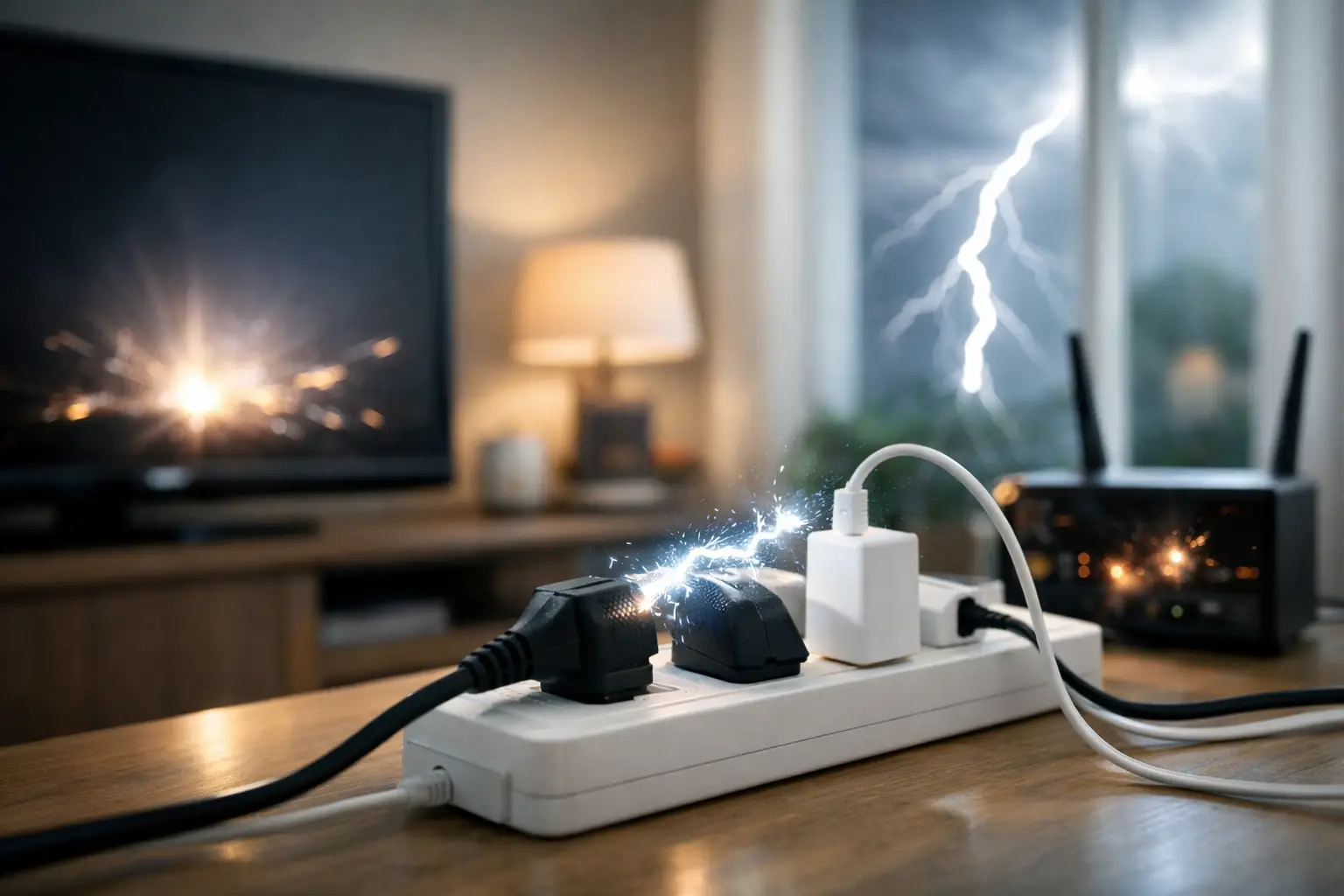
How to Prevent Power Surge Damage at Home
A summer thunderstorm rolls through Gulf Shores, the power flickers for a second, and everything appears normal. Then the next day, a refrigerator control board, Wi-Fi router, television, or HVAC component stops working. That is the frustrating reality behind many electrical surges: the damage is not always immediate or obvious. Knowing how to prevent power surge damage helps protect the equipment your home or business depends on every day.
Surge protection is not just about plugging electronics into a power strip. Effective protection starts at the electrical panel, continues at individual outlets and equipment, and depends on a properly maintained electrical system. For coastal Alabama properties, where thunderstorms, utility interruptions, and salt-air exposure can all affect electrical reliability, a layered approach is the practical choice.
What Causes a Power Surge?
A power surge is a brief spike in voltage that travels through an electrical system. Standard household power is designed to operate at a steady voltage. When that voltage suddenly rises, sensitive electronics and appliance control boards can be damaged, weakened, or shortened in lifespan.
Lightning is the cause most people think of, but it is not the only concern. Surges can also come from utility switching, power restoration after an outage, problems on nearby electrical lines, or large motors inside the property. Air conditioners, pumps, refrigerators, elevators, and commercial equipment can create smaller internal surges as they cycle on and off.
A major lightning event may cause immediate failure. Smaller, repeated surges are often harder to identify because they gradually wear down electronic components. A device may keep working for months before it fails, making the original cause easy to miss.
How to Prevent Power Surge Damage With Layered Protection
The strongest approach combines whole-home or whole-building protection with point-of-use protection for valuable electronics. One device alone rarely provides complete coverage.
Start at the Electrical Panel
A whole-home surge protective device is installed at or near the main electrical panel. It is designed to redirect excess voltage away from branch circuits before it reaches outlets, appliances, and hardwired equipment throughout the property.
This is especially useful for equipment that cannot be placed on a plug-in surge protector, including HVAC systems, water heaters, garage door openers, well pumps, kitchen appliances, and lighting controls. For commercial properties, panel-mounted protection can also help protect systems such as refrigeration equipment, office electronics, access controls, and network infrastructure.
The right device depends on the building’s service size, panel condition, electrical load, and the type of equipment being protected. An electrician should also confirm that the panel has proper grounding and bonding. A surge protector cannot perform as intended if the electrical system has underlying grounding or connection problems.
Protect Electronics at the Outlet
Use quality plug-in surge protectors for electronics that are particularly sensitive or expensive to replace. Televisions, computers, gaming systems, routers, modem equipment, audio systems, and point-of-sale equipment are common examples.
Not every power strip is a surge protector. A basic strip simply gives you more outlets. Look for a product specifically labeled as a surge protective device and choose one with enough capacity for the connected equipment. Replace units that show warning lights, visible damage, scorching, loose outlets, or signs that their protection status has ended.
For computers and network equipment, an uninterruptible power supply can add another level of protection. It may provide short-term battery power during an outage, giving users time to save work and shut equipment down correctly. It is not a replacement for whole-panel surge protection, but it can be valuable where downtime matters.
Do Not Forget Data, Cable, and Communication Lines
Electrical surges do not always enter through a standard power cord. Cable, phone, internet, and outdoor data lines can also carry damaging voltage into connected devices. This is particularly relevant for properties with security cameras, gate systems, Wi-Fi access points, satellite equipment, or wired network connections.
If your home or business has important communication equipment, ask an electrician to evaluate the full path into the building. Protection may be needed at the electrical service and at low-voltage entry points. The goal is to avoid leaving a path where a surge can bypass the protection installed at the panel.
Keep Grounding and Electrical Panels in Good Condition
Grounding gives excess electrical energy a safe route to dissipate. It is a critical part of surge protection, but it is not the same thing as surge protection itself. Both are needed.
Older homes, remodeled properties, and buildings with additions may have grounding issues that are not apparent from a quick walk-through. Corroded connections, outdated panels, loose wiring, damaged meter equipment, or improperly completed prior work can all reduce reliability. In coastal environments, moisture and salt air can accelerate corrosion around outdoor electrical equipment, panels, disconnects, and service components.
A professional electrical inspection can identify problems before they become a safety concern or contribute to equipment damage. It may also reveal that a panel upgrade is the better long-term answer, especially if the property has added high-demand equipment such as an EV charger, a larger HVAC system, a hot tub, or new commercial machinery.
Plan for Storms, Outages, and Generator Power
Before a severe storm, unplug nonessential sensitive electronics if it is safe and practical to do so. This is a sensible extra step when lightning is frequent, but it should not be your only strategy. Refrigerators, HVAC systems, security equipment, and hardwired appliances still need protection when no one is present.
If your property uses a portable or standby generator, make sure the installation includes an appropriate transfer method. A professionally installed transfer switch or interlock helps isolate generator power from utility power and supports safe operation during outages. Improvised generator connections can create serious shock, fire, and utility hazards.
Power restoration can also be a surge event. After an outage, wait for power to stabilize before turning on large loads if possible. For businesses, a simple restart plan can reduce stress on equipment by bringing systems back online in stages rather than all at once.
Avoid Common Surge Protection Mistakes
The most common mistake is assuming one inexpensive strip protects the entire property. It does not. Another is plugging high-demand appliances into extension cords or overloaded strips. Space heaters, microwaves, refrigerators, window air conditioners, and similar equipment should be connected according to manufacturer requirements, usually directly to a properly rated wall outlet.
It is also a mistake to install a panel surge protector and never think about it again. Many surge protective devices include indicator lights that show whether protection is still active. Check them periodically, especially after a major storm or electrical event. Like any protective component, surge devices can wear out after absorbing repeated voltage spikes.
Finally, do not ignore repeated breaker trips, flickering lights, buzzing outlets, warm receptacles, or equipment that fails more often than expected. These symptoms do not automatically mean a surge problem, but they do warrant an electrical evaluation.
Consider the Needs of Condos and Commercial Properties
Condo owners and tenants may have limited access to the main service equipment, but they can still protect electronics at the unit level and ask the association or property manager about building-wide surge protection. Common-area systems such as elevators, access controls, pool equipment, lighting, and fire-related equipment deserve careful planning at the property level.
For commercial facilities, downtime can cost more than the damaged device itself. A failed router, refrigeration controller, payment terminal, or security system can interrupt operations quickly. Property owners should consider critical equipment, replacement cost, and operational downtime when deciding where to add layered protection.
When to Call an Electrician
A licensed electrician can assess the main panel, grounding system, service equipment, and the loads connected to your property. This is the right step after lightning damage, repeated utility outages, appliance control-board failures, a service upgrade, or before adding a generator or EV charger.
MNE Electric can evaluate surge suppression options for homes and businesses in Gulf Shores and surrounding Baldwin County communities, then install protection that matches the property’s electrical system and actual needs. The goal is not to sell more equipment than necessary. It is to protect the systems you rely on with correctly installed, code-conscious electrical work.
A few minutes spent checking your panel, surge protectors, and critical electronics now can prevent an inconvenient failure when you need those systems most.