
Generator Installation for Home: What Matters
When the power goes out on the Alabama coast, the inconvenience adds up fast. Refrigerators warm up, HVAC systems stop, sump and lift systems may be affected, and for many homeowners, generator installation for home becomes less of a luxury and more of a practical step toward keeping the property safe and livable.
Why generator installation for home is different on the coast
In Gulf Shores, Orange Beach, and surrounding Baldwin County communities, backup power planning has to account for more than occasional outages. Storm activity, salt air, humidity, seasonal occupancy, and the demands of larger homes or condos all influence what type of generator system makes sense.
A portable unit may cover a few basics during a short outage, but it does not offer the same level of convenience or protection as a permanently installed standby generator. For full-time residents, second-home owners, and property managers, the real question is usually not whether backup power is useful. It is how much of the property needs to stay operational and how reliably the system needs to perform when no one wants to troubleshoot in bad weather.
That is where proper planning matters. The best generator setup is not simply the biggest unit available. It is the one that matches the home, the electrical load, the fuel source, and the owner’s priorities.
What a proper home generator installation includes
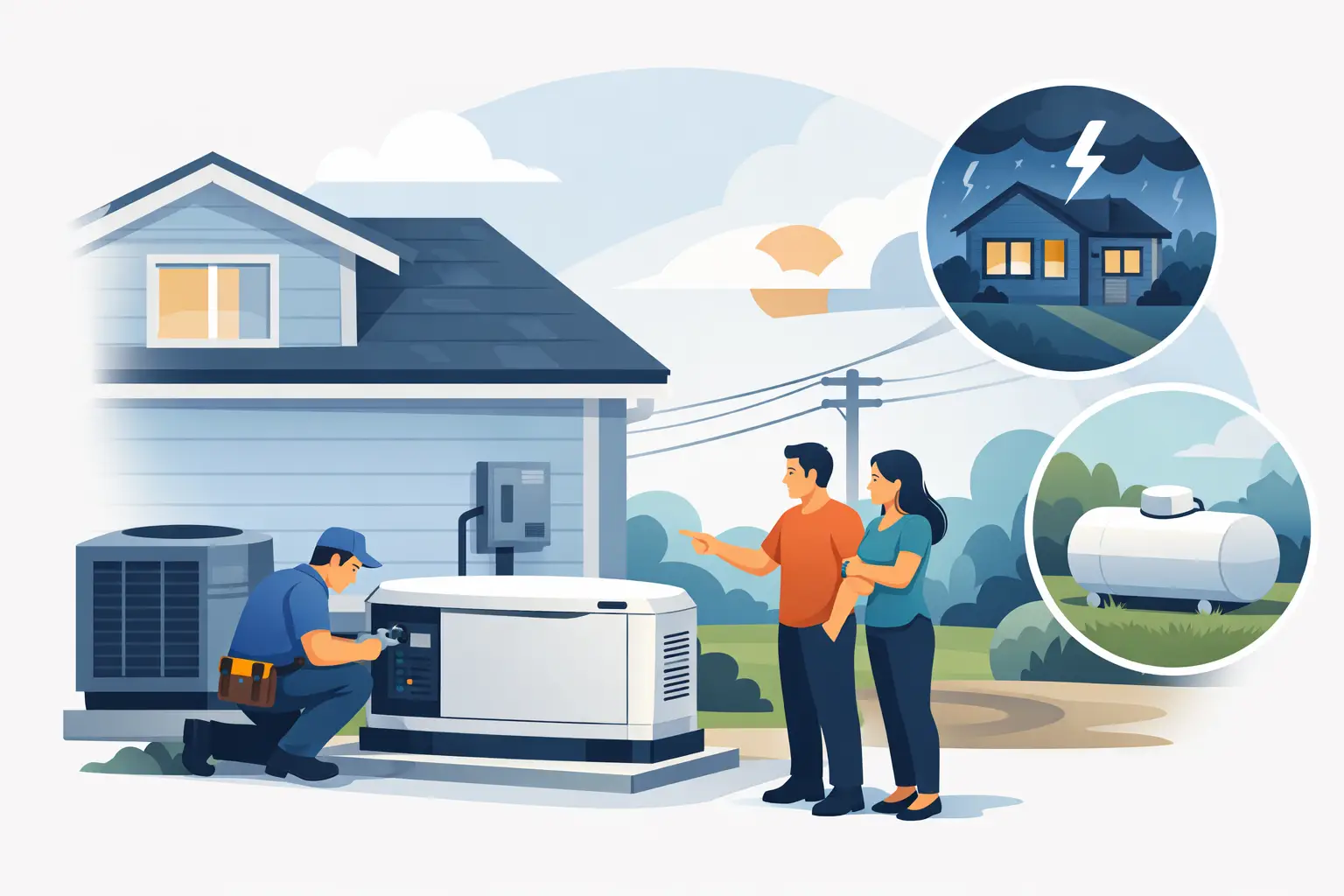
A complete standby generator system is made up of more than the generator itself. There is the generator unit, the fuel connection, the electrical connection, and the transfer equipment that shifts the home from utility power to backup power when an outage occurs.
The transfer switch is one of the most important parts of the system. It isolates the home from the utility line during an outage and allows power to be restored safely. Without the right transfer setup, a generator can create serious hazards for utility crews, the property, and the home’s electrical system.
Installation also includes site selection, pad placement, code compliance, permitting, and final testing. If the home has older electrical equipment, limited panel space, or service issues, those may need to be addressed before the generator can be connected correctly. This is one reason generator projects vary in price and complexity from one home to the next.
Choosing the right size generator
Generator sizing is where many homeowners either overspend or end up with a system that does not meet expectations. A generator should be sized based on the loads the homeowner wants to run during an outage, not on guesswork.
Some homeowners want essential circuits only. That typically includes refrigeration, lighting, internet, a few outlets, and possibly part of the HVAC system. Others want near-whole-home coverage so the transition during an outage feels almost unnoticeable. In a larger coastal home, that may include multiple HVAC systems, water heaters, kitchen appliances, elevators, security systems, and pool or outdoor equipment.
There is a trade-off. A larger generator supports more equipment, but it also increases equipment cost, installation cost, and fuel consumption. A smaller generator can be a smart choice if the goal is to keep the basics running and control project cost. The right answer depends on how the home is used, whether it is occupied year-round, and what the owner considers essential.
Load calculations should be handled carefully. Starting loads for air conditioners, compressors, and pumps can be significantly higher than their running loads. If those details are ignored, a generator may appear adequate on paper but struggle in actual use.
Fuel source and placement both matter
For standby systems, natural gas and propane are the most common fuel options. If natural gas is available and reliable at the property, it can be a convenient choice because there is no on-site refueling during an extended outage. Propane is often used where natural gas is not available or where the property owner prefers a dedicated fuel supply.
Each option has pros and cons. Natural gas offers convenience, but performance depends on utility availability and system capacity. Propane provides independence from the gas utility, but it requires tank sizing, placement, and refill planning. For seasonal homes or properties that may sit vacant, fuel management should be part of the conversation from the start.
Placement is not just about finding open space in the yard. Standby generators must be installed with attention to clearance requirements, ventilation, manufacturer specifications, noise considerations, and local code. In a coastal environment, placement should also account for exposure to salt air, flooding concerns, and long-term service access. A generator tucked into a hard-to-reach corner may look fine at first, but it can create maintenance and repair problems later.
The electrical side is where experience counts
A standby generator is tied directly into the home’s electrical system, which means the installation needs to be done with a clear understanding of service equipment, grounding, load management, and code requirements. This is not a basic plug-in project.
In some homes, the existing electrical panel is generator-ready. In others, the panel may need upgrades, reconfiguration, or added equipment to support a safe and reliable installation. Older homes may have service limitations that need to be corrected first. Multi-structure properties can also add complexity if detached garages, guest spaces, or accessory buildings are part of the backup power plan.
This is also where homeowners should think beyond the immediate outage. A generator should work well with the home as it exists now, but it should also make sense if the owner later adds equipment like EV chargers, additional HVAC capacity, or other major electrical loads. A properly planned installation avoids creating bottlenecks that lead to more rework later.
Permits, inspections, and safety should never be shortcuts
Generator installation for home involves real safety issues, and the permitting process exists for a reason. Improper installation can lead to fire risk, carbon monoxide hazards, backfeeding, fuel issues, and damage to appliances or electrical equipment.
A qualified electrical contractor will evaluate the full scope of the project, coordinate the electrical side correctly, and ensure the installation is done to current code. Depending on the property and the type of generator, there may also be utility, gas, or local jurisdiction requirements that need to be addressed before final approval.
For homeowners, this is not the part of the project to rush. Fast service matters, but so does doing the work correctly the first time. A generator only proves its value when the power fails, and that is a poor moment to discover that corners were cut during installation.
What homeowners should expect during the process
A good generator project starts with a site visit and a real discussion about priorities. The contractor should ask what absolutely needs to stay on, how the home is occupied, what fuel options are available, and whether the existing electrical system can support the installation as planned.
From there, the scope becomes clearer. The proposal may include the generator, transfer switch, electrical labor, site preparation, permitting, startup, and testing. Some projects move quickly. Others take more coordination if panel upgrades, service changes, or fuel work are involved.
Homeowners should also ask about maintenance. Standby generators need routine service, periodic testing, and manufacturer-recommended upkeep to stay dependable. Even the best installation is only part of the equation. Long-term performance depends on keeping the unit ready for the next outage, not assuming it will take care of itself.
For local property owners, working with a contractor who understands coastal conditions and regional permitting can make the process smoother. MNE Electric serves Gulf Shores, Orange Beach, and nearby Baldwin County communities with practical electrical solutions built around safety, reliability, and responsive service.
When a generator is worth the investment
Not every home needs whole-house backup power, but many homes benefit from some level of permanent standby protection. If the property experiences repeated outages, houses critical systems, includes vulnerable occupants, or functions as a second home that may be unattended during storms, the value becomes easier to measure.
There is also the issue of convenience versus disruption. Some homeowners are comfortable managing extension cords and portable equipment. Others want automatic operation, cleaner integration, and less stress during bad weather. Neither choice is automatically right or wrong, but they serve different needs.
A professionally installed standby generator is usually worth it when the homeowner wants dependable backup power without improvising during an emergency. That is especially true in areas where weather events are part of life, not a rare exception.
The best next step is to treat generator planning like any other major electrical upgrade. Ask practical questions, understand the trade-offs, and choose a system that fits the home instead of forcing the home to fit the system. A little planning now can make the next outage feel a lot more manageable.