
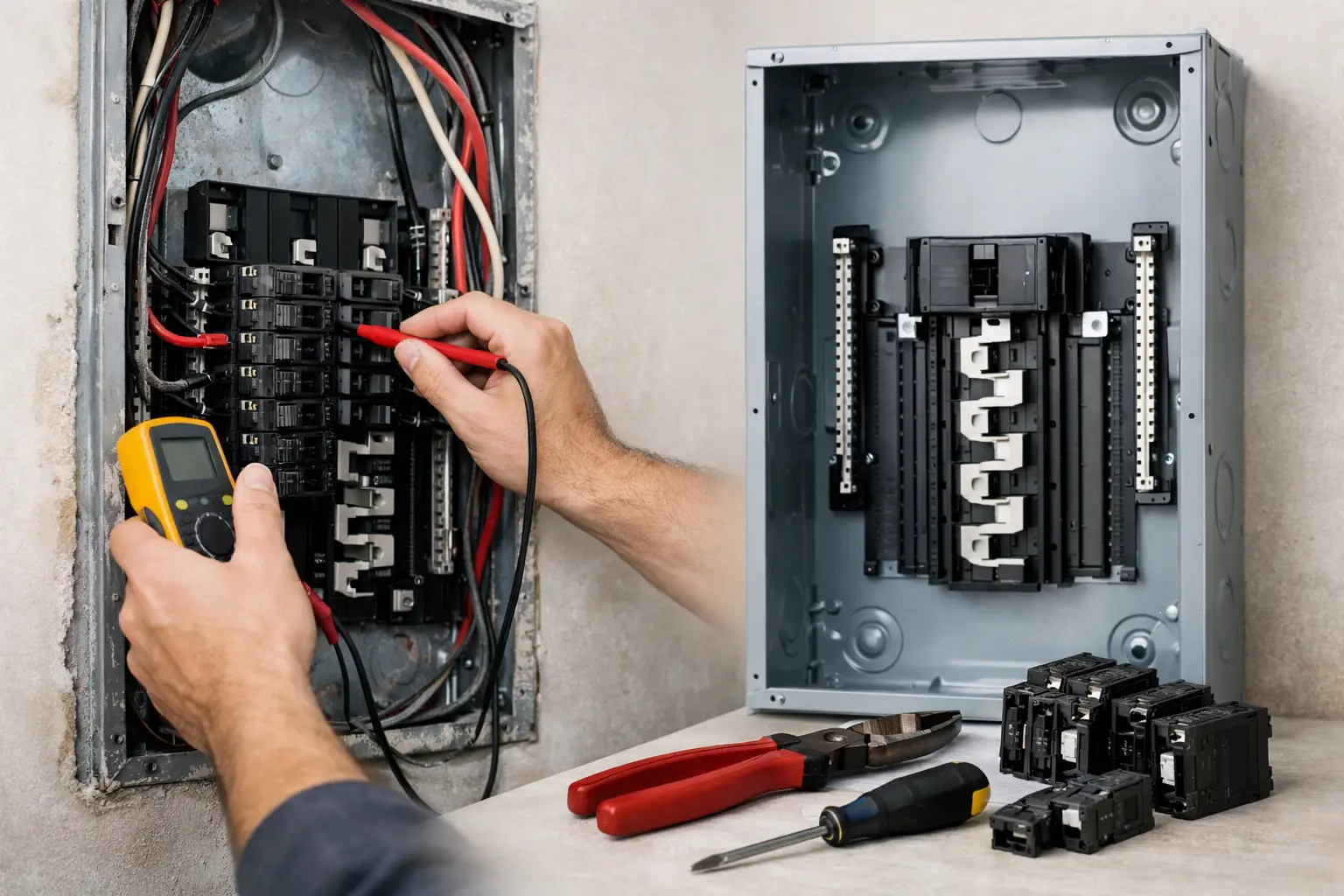
Repair or Replace Electrical Panel?
A breaker trips during dinner, the lights flicker when the AC starts, or you open the panel door and see rust where there should be clean metal. That is usually the point when property owners start asking the real question: should you repair or replace electrical panel equipment, and how do you know which choice is actually safer?
The answer depends on more than one symptom. Some panel problems are isolated and repairable. Others point to age, overload, water exposure, or internal damage that makes replacement the better long-term move. If you own a home, condo, rental property, or commercial space, the right decision comes down to safety, capacity, code compliance, and how much life the existing panel realistically has left.
When repair or replace electrical panel becomes a real decision
Not every electrical problem starts at the panel. A bad breaker, a loose connection, or a failing circuit can mimic a panel issue. That is why a proper inspection matters before anyone jumps straight to a full upgrade.
Repair makes sense when the panel itself is still in good condition and the issue is limited. A single breaker may have failed. A connection may have loosened over time. There may be minor wear that can be corrected without replacing the entire enclosure or service equipment. In those cases, a targeted repair can restore safe operation without turning a manageable service call into a larger project.
Replacement makes more sense when the panel shows broader signs of failure or no longer matches the electrical demands of the property. If the bus bars are damaged, breakers are no longer holding properly, corrosion is present, or the panel brand has a known history of reliability concerns, patchwork repairs can become a short-term fix to a larger problem.
Signs your electrical panel may only need repair
A repair is often the right path when the problem is specific, visible, and limited in scope. For example, one breaker that trips repeatedly may simply be worn out. A panel with one loose lug, one damaged neutral connection, or a clearly identified fault may be serviceable if the rest of the equipment is sound.
In newer panels, repairs are especially common. If the panel has modern capacity, no signs of overheating, no moisture intrusion, and no structural damage, replacing individual components may be the most practical solution. That is also true when the issue is related to a recent event, such as a power surge or a failed appliance that affected one circuit instead of the whole system.
Still, even a simple repair should never be based on guesswork. Replacing the wrong breaker or overlooking heat damage inside the panel can leave the underlying hazard in place.
Repair is usually more reasonable if:
The panel is relatively modern, the amperage still fits the property, replacement parts are available, and there is no evidence of widespread deterioration. In that situation, a focused repair can be safe, cost-effective, and durable.
Signs it is time to replace the panel
There are situations where replacement is not just the better option but the responsible one. If breakers trip often across multiple circuits, the panel feels hot, there is buzzing, scorch marks appear around breakers, or the interior shows corrosion, the equipment may be deteriorating beyond a practical repair.
Age is another factor. Many older homes and buildings were not designed for today’s electrical loads. Air conditioning, tankless water heaters, kitchen upgrades, home offices, EV chargers, and backup power systems all put more demand on the panel than older systems were built to handle. Even if the panel is still functioning, it may be undersized.
Panels in coastal areas can face an additional challenge: moisture and corrosion. In places like Gulf Shores and Orange Beach, salt air and humidity can shorten the life of electrical equipment, especially if the panel is installed in a garage, exterior location, or other less-controlled environment. A corroded panel may still work for a while, but that does not make it dependable.
Replacement is often the safer choice if:
The panel is outdated, damaged, undersized, corroded, or tied to recurring electrical problems throughout the property. At that point, spending money on repeated repairs can cost more over time and still leave you with limited capacity.
Safety matters more than short-term cost
It is understandable to ask about price first. Panel replacement is a larger investment than swapping a breaker or tightening a connection. But electrical panel decisions should be based on risk as much as cost.
A failing panel can create real hazards, including overheating, arcing, unreliable breaker protection, and increased fire risk. It can also affect other upgrades you may want to make. If you are planning to add an EV charger, generator connection, or major appliance, an old or undersized panel may hold the entire project back.
This is where cheap fixes can become expensive. If the panel cannot safely support the property, a series of minor repairs may only delay the inevitable. On the other hand, replacing a panel too soon when a repair would have solved the issue is not the right answer either. Good electrical work starts with an honest diagnosis.
How capacity changes the answer
One of the most common reasons to replace rather than repair is lack of capacity. A panel can be in fair physical condition and still be the wrong fit for the building.
Older homes may still have 100-amp service, and some have even less. That may have worked years ago, but many properties now run larger HVAC systems, more kitchen equipment, electronics, washers and dryers, and charging equipment than they once did. Commercial spaces and condo units can face similar issues when usage changes over time.
If breakers trip because circuits are overloaded, replacing the breaker alone will not solve the real problem. The demand on the system has to be evaluated. In many cases, a panel upgrade gives you more room, better reliability, and a safer foundation for future improvements.
Code compliance and insurance concerns
Another factor is whether the panel meets current standards and whether it will create issues during a sale, renovation, or insurance review. Some older panels are known in the industry for poor performance or safety concerns. Others may have been modified over the years in ways that no longer meet code.
That does not always mean the system must be replaced immediately, but it can affect your options. If the panel is obsolete, difficult to service, or flagged during an inspection, replacement may be the most practical path. This is especially true for rental properties and commercial buildings, where liability and reliability matter every day.
What a professional inspection should look for
A real panel evaluation goes beyond asking whether the lights flicker. The inspection should look at breaker condition, heat damage, conductor terminations, grounding and bonding, moisture exposure, panel labeling, available capacity, and overall compatibility with the property’s electrical needs.
It should also consider what you plan to do next. If you are thinking about a generator, surge protection, a remodel, or an EV charger, that changes the recommendation. A panel that can survive another year is not necessarily a panel worth investing around.
That practical view matters. The right recommendation is not just about what is broken today. It is about whether the equipment can safely support the property tomorrow.
Repair or replace electrical panel for your property type
For a single-family home, the choice often comes down to age, condition, and growing power demand. For condo owners and property managers, shared infrastructure and inspection requirements can also affect the decision. In commercial settings, downtime, equipment sensitivity, and tenant needs may push replacement higher on the priority list.
That is why there is no one-size-fits-all answer. A small repair in one building can be the correct call. The same symptom in another building may point to a panel that is already past its useful life.
MNE Electric sees this often with homes and properties that have been updated in stages. New appliances and modern electrical additions are installed, but the panel was never upgraded to support them properly. When that happens, the panel becomes the weak point in an otherwise improved property.
The best next step
If you are trying to decide whether to repair or replace electrical panel equipment, the smartest move is to stop treating the panel like a mystery box. Warning signs tend to get worse, not better, and waiting can narrow your options.
A good inspection should give you a straight answer: repair if the issue is isolated and the panel is still sound, replace if the equipment is aging out, showing damage, or no longer fits the property’s needs. Either way, the goal is the same – safe, dependable power you do not have to second-guess every time the AC kicks on or a storm rolls through.