
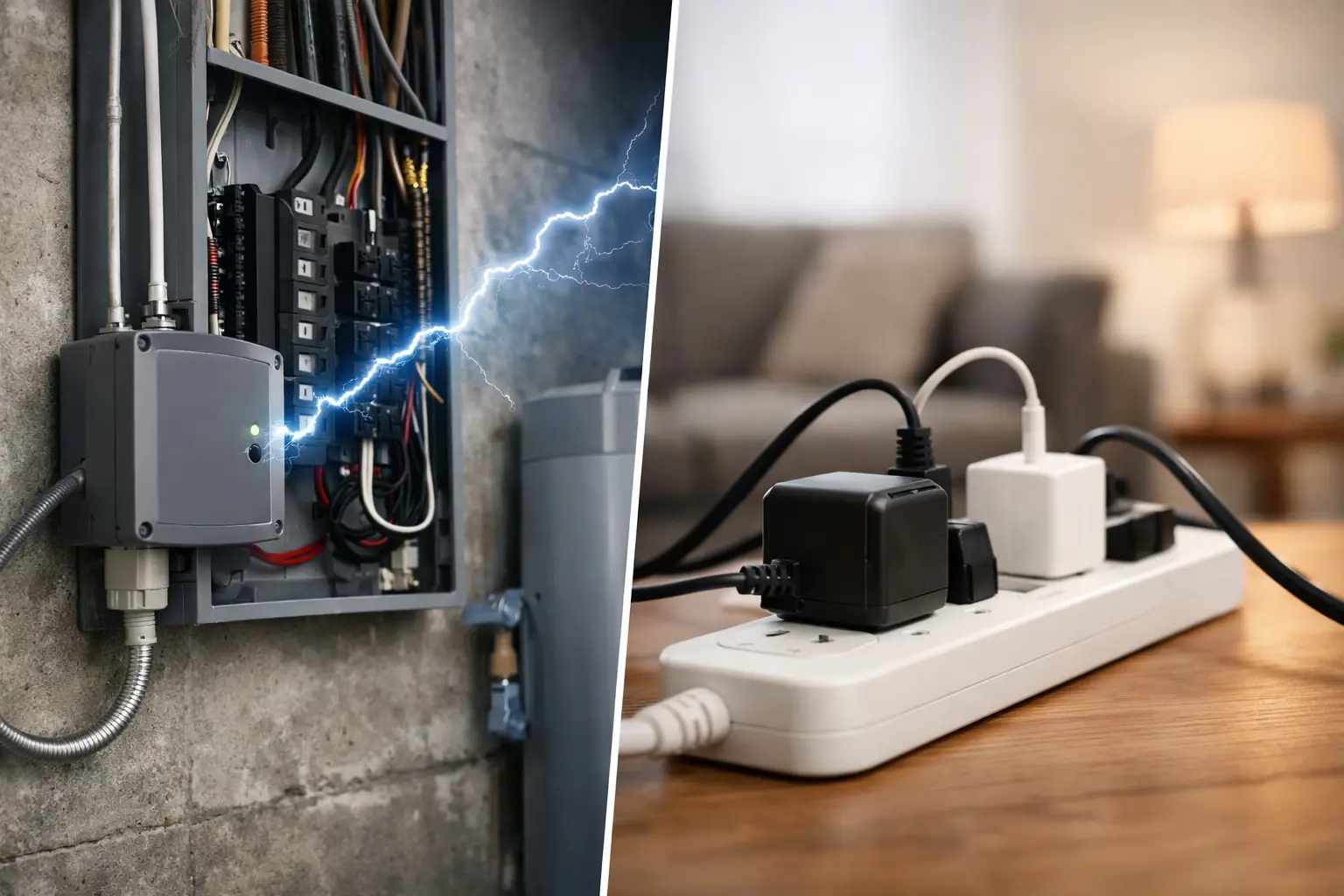
Whole Home Surge Protector vs Power Strip
That expensive TV, the Wi-Fi system your whole house depends on, the refrigerator, the HVAC equipment, the garage door opener – most homeowners do not think about surge protection until one power event takes out something they use every day. When comparing a whole home surge protector vs power strip, the real question is not which one is better in every case. It is which one protects the right equipment, at the right point in your electrical system, for the risks your property actually faces.
For homes along the Alabama coast, that question matters even more. Storm activity, utility switching, and heavy electrical demand can all create surges that move through a home in seconds. Some are large and obvious. Others are smaller, repeated hits that slowly shorten the life of electronics and appliances.
Whole home surge protector vs power strip: what is the difference?
A whole home surge protector is installed at the electrical panel or meter location and is designed to intercept surges before they spread through the branch circuits in your home. It protects the electrical system more broadly, including hardwired equipment and appliances that never plug into a strip.
A power strip, even one marketed with surge protection, works at the outlet level. It protects only the devices plugged into that strip, and only within the strip’s design limits. It does not protect your panel, your built-in lighting, your air conditioner, your water heater, or other permanently connected equipment.
That is the core difference. A whole home device protects the house as a system. A surge-protecting strip protects a small group of plug-in devices at a single location.
What a whole home surge protector actually protects
A whole home surge protector is often the better first layer because many of the most expensive electrical components in a house are not plugged into a strip at all. Think about your HVAC system, dishwasher, refrigerator, microwave, washer and dryer, garage equipment, and newer smart-home controls. In many homes, these systems represent far more value than the electronics sitting on a desk.
The device works by diverting excess voltage away from your electrical system when a surge comes in from the utility side or is generated internally. It is not a magic shield against every electrical problem, and it does not replace proper grounding or code-compliant wiring. But it does reduce the amount of damaging surge energy that reaches your equipment.
That broader coverage is why whole home protection is often recommended for homeowners making panel upgrades, generator installations, or major electrical improvements. If you are already investing in your electrical system, surge protection is one of the upgrades that can help protect that investment.
Where a power strip helps – and where it falls short
A surge-protecting power strip still has a place. It is useful for sensitive electronics like computers, televisions, gaming systems, and office equipment. These devices can be especially vulnerable to small voltage spikes, and a quality strip can provide an added layer of defense right where the equipment is connected.
But homeowners often overestimate what a strip can do. First, not every power strip is actually a surge protector. Some are only multi-outlet extenders. Second, even true surge strips wear out over time. After enough surge events, the protection components inside can degrade, sometimes without obvious signs.
There is also a coverage problem. A strip only protects what is plugged into it. If a surge affects your air handler, range, pool equipment, or built-in appliances, that strip under the TV stand does nothing for those systems.
Why whole home and point-of-use protection often work best together
For many properties, this is not really a whole home surge protector vs power strip choice where only one should exist. The best setup is often layered protection.
A whole home surge protector handles larger incoming surges at the panel. Then, a quality point-of-use surge protector helps guard especially sensitive electronics downstream. That combination gives you better coverage than either option alone.
This matters because surges do not all come from the same source. Some come from outside the home through utility lines. Others can be created inside the home when large appliances cycle on and off. Layering protection addresses both the scale of the event and the sensitivity of the equipment involved.
What a whole home surge protector does not do
It helps to be clear about limits. A whole home surge protector does not guarantee zero damage under every condition. A very large event, improper grounding, an outdated panel, or a direct lightning strike can still cause damage. Surge protection lowers risk. It does not eliminate it.
It also does not fix existing electrical issues. If your property has loose connections, old wiring, overloaded circuits, or grounding problems, those conditions need to be addressed directly. Surge protection works best as part of a healthy electrical system, not as a substitute for one.
That is one reason professional installation matters. The device needs to be sized, selected, and installed correctly for the system it is protecting.
When a power strip alone may be enough
There are cases where a strip is a reasonable short-term or limited solution. If you rent, live in a condo where panel modifications are controlled by an association, or only need added protection for a home office setup, a quality surge strip may be the practical move for now.
The key is understanding that you are protecting a specific zone, not the entire property. If your concern is a desktop computer and monitor, a strip can make sense. If your concern is protecting your refrigerator, HVAC system, microwave, and smart appliances during storm season, it is not enough by itself.
Signs your home should have whole home surge protection
If your home has newer appliances, smart devices, connected security systems, or expensive HVAC equipment, whole home protection is worth serious consideration. The same goes for homes with standby generators, EV chargers, or recent electrical upgrades.
You should also pay attention if you have experienced flickering lights, nuisance equipment failures, or repeated replacement of electronics and appliances without a clear cause. Those symptoms do not always mean surges are the problem, but they are good reasons to have the system evaluated.
In Gulf Shores, Orange Beach, and nearby coastal communities, weather exposure and utility disturbances can be part of normal life. For many homeowners and property managers, surge protection is less about convenience and more about reducing avoidable repair costs.
Cost vs risk: how to think about the decision
A power strip is cheaper up front. That is true. But it protects a very limited set of devices. A whole home surge protector costs more because it requires a properly installed device at the electrical service, yet it also protects much more of the property.
The better comparison is not purchase price alone. It is installation cost versus the value of the equipment at risk. One damaged control board in an HVAC system or one failed kitchen appliance can quickly exceed the cost of adding panel-level surge protection.
This is especially relevant for homeowners planning other electrical work. If you are already scheduling service for a panel update, generator connection, or service improvement, adding surge protection may be far more cost-effective than treating it as a separate project later.
How to choose the right setup for your property
If you want broad protection for your home, start with a whole home surge protector. If you also have computers, entertainment equipment, or office electronics, add quality surge-protecting strips at those outlets.
If you are not sure whether your panel can accept the right device, or whether your grounding and bonding are in good shape, have a licensed electrician inspect the system first. That step matters because surge protection is only as dependable as the electrical system it is connected to.
For homeowners, condo owners, and commercial property operators, the right answer usually comes down to the value of the equipment being protected, the age and condition of the electrical system, and the level of storm and utility exposure at the property. There is no one-size-fits-all answer, but there is a clear pattern: strips are useful for local protection, while whole home devices are built for system-wide defense.
If you are weighing a whole home surge protector vs power strip, think beyond the outlet by the TV or desk. Look at the full cost of the equipment your building depends on every day, and protect the electrical system accordingly. A small upgrade now can prevent a much bigger disruption later.