
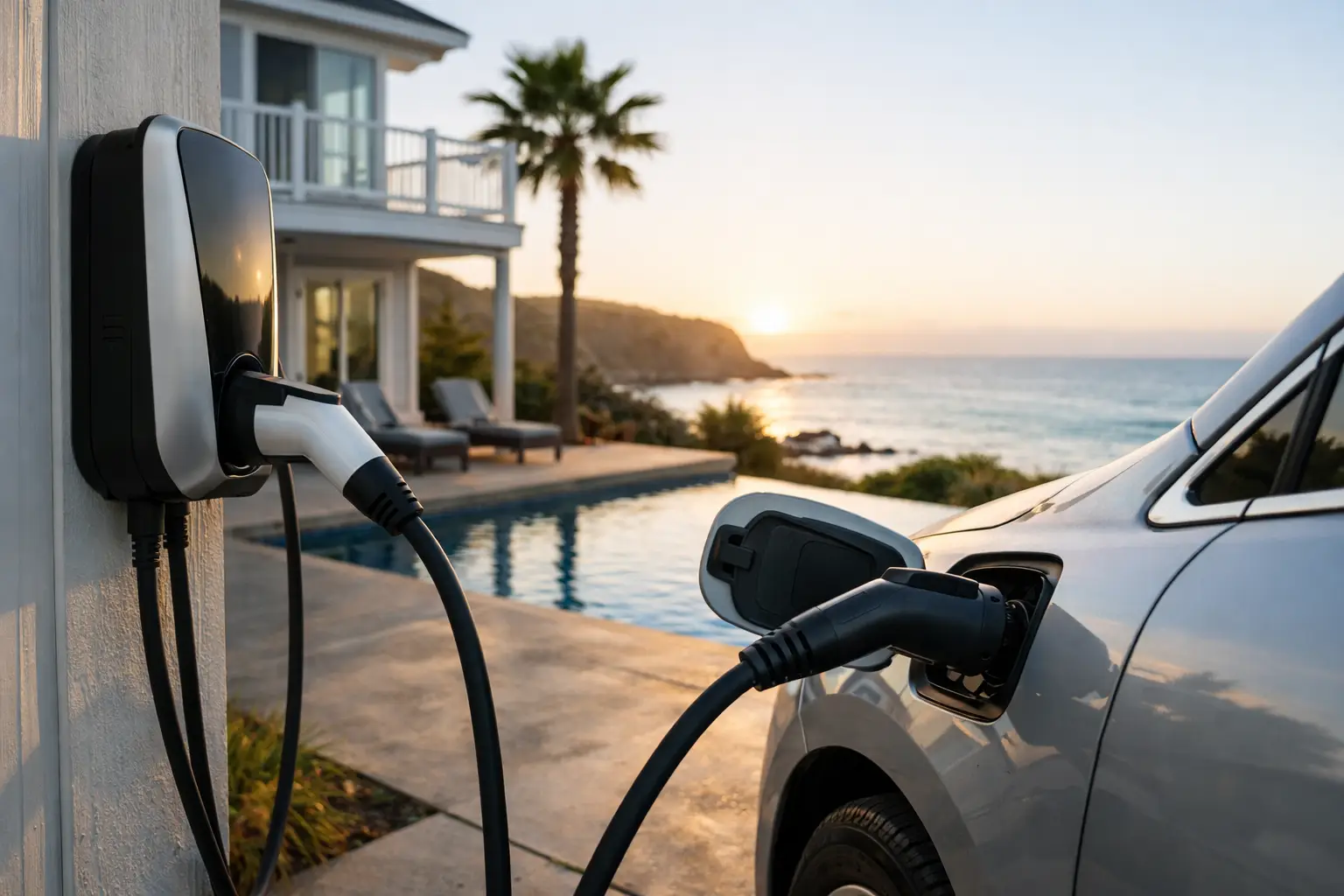
EV Charger Permitting Guide for Coastal Homes
A home EV charger is more than a wall-mounted device and a new convenience in the driveway. It is a dedicated electrical load that must be sized, installed, permitted, and inspected correctly. This EV charger permitting guide explains what property owners in Gulf Shores and nearby coastal Alabama communities should expect before installation begins.
Permitting is not simply paperwork. It confirms that the charger circuit, wiring, breaker, disconnects, and electrical panel can safely support the added demand. It also creates a record that can matter when selling a property, filing an insurance claim, managing a condo unit, or planning future electrical upgrades.
Why EV Charger Permits Matter
Most Level 2 EV chargers require a new 240-volt dedicated circuit. Depending on the charger and vehicle, that circuit may add a significant continuous load to the home or building’s electrical system. A permit and inspection help verify that the installation meets applicable electrical and local building requirements.
The inspector is generally looking beyond the charger itself. They may verify conductor size, breaker size, grounding, equipment listing, physical protection for wiring, mounting location, and available capacity in the electrical service. If a charger is installed outdoors, they will also consider whether the equipment and installation method are appropriate for the location.
Skipping the permit can create problems later. An unpermitted installation may be flagged during a home sale, rejected by a property manager, or require costly correction if the work does not meet code. More importantly, an overloaded panel or improperly sized circuit can create a real safety concern.
Start With the Electrical Capacity, Not the Charger
The first question is not always, “Which charger should I buy?” It is, “Can the existing electrical system support it?” A qualified electrician should perform a load calculation before finalizing the charger size and circuit design.
Many homes have enough available capacity for a Level 2 charger, but not every home does. Older panels, smaller services, electric water heaters, HVAC equipment, pool equipment, hot tubs, and electric ranges can all affect the calculation. A home with a 100-amp service may need a service upgrade or a different charging approach, while a newer home with a 200-amp service may have room for the charger without major changes.
There are practical alternatives when capacity is limited. A lower-amperage charger may still provide more than enough overnight charging for many drivers. Load-management equipment can also be an option in some situations. The right answer depends on the vehicle, daily driving distance, existing electrical demand, and future plans for the property.
For businesses and multifamily properties, planning becomes even more important. One charger may be straightforward, but several chargers can change the building’s demand profile. A thoughtful design can allow for future expansion without unnecessarily oversizing the first phase.
What the EV Charger Permitting Process Usually Includes
Permit requirements can vary by jurisdiction, property type, and project scope. In general, the process starts with documenting the planned installation and submitting the required permit application to the local authority with jurisdiction.
For a straightforward residential installation, the permit information may include the property address, the electrical contractor’s information, charger specifications, circuit size, panel details, and the planned wiring method. If the project includes a service upgrade, trenching, a pedestal-mounted charger, or significant changes to the electrical system, additional drawings or review may be required.
Once the permit is issued, the electrician completes the work according to the approved scope. The final step is the inspection. The installation should not be considered complete until it has passed inspection and the charger has been tested for proper operation.
A professional installer can usually coordinate the permit and inspection process as part of the project. Property owners should still ask who is responsible for filing the permit, scheduling inspections, and addressing any corrections if the inspector identifies an issue. Clear responsibility at the start prevents delays near the end of the job.
Information to Have Ready Before Requesting an Estimate
A site visit provides the most accurate answer, but a few details can make the initial planning conversation much more productive. Know the vehicle you own or expect to purchase, the charger model if one has already been selected, and where you want to park while charging.
Photos of the electrical panel, the proposed charger location, and the path between them can also help. The electrician will need to consider the distance of the wire run, wall construction, attic or crawlspace access, and whether the charger will be installed indoors or outdoors.
For outdoor installations, coastal conditions deserve extra attention. Salt air, humidity, wind-driven rain, and direct sun can shorten the life of poorly selected equipment or exposed components. The charger enclosure, mounting hardware, weatherproof fittings, and wiring method should be suited to the installation environment. A charger placed close to the beach may need a more careful material and location review than one installed inside a protected garage.
If the charger will be located away from the home, such as at a detached garage or parking area, trenching may be necessary. That can add permitting, utility-marking, depth, and restoration requirements. It is better to identify these conditions during the estimate than after work is underway.
Condo, HOA, Rental, and Commercial Considerations
A single-family homeowner may be able to move directly from estimate to permit. Other property types often have another approval step.
Condo owners should review association rules before purchasing equipment. The parking space may be assigned to the unit but still be part of a common electrical system or common building structure. The association may require approved plans, proof of insurance, a specific equipment location, or an agreement covering maintenance and electricity use.
For rental properties, the owner should determine whether the charger will remain with the property, how electricity will be billed, and who is responsible for maintenance. A properly permitted installation can add value, but it should be installed with the next tenant or owner in mind.
Commercial properties need a clear operating plan. Will the charger be for employees, customers, fleet vehicles, or tenants? Will access be controlled? Is payment processing needed? These decisions affect equipment selection, circuit planning, parking layout, signage, and the number of chargers needed now versus later.
Common Reasons Permits and Inspections Get Delayed
Most delays are avoidable. The most common issue is discovering late in the project that the existing service or panel does not have the required capacity. A proper load calculation early in the process helps prevent that surprise.
Another common problem is choosing equipment before evaluating the site. A high-output charger may sound appealing, but it can require a larger circuit, larger conductors, and more panel capacity than the property can reasonably provide. Selecting the charger after the electrical assessment often produces a better balance of cost, charging speed, and long-term reliability.
Inspection issues may also arise from incorrect breaker sizing, undersized conductors, missing labeling, inadequate weather protection, or wiring that is not properly secured and protected. These details are exactly why EV charging work should be handled as a complete electrical installation, not a simple device swap.
In coastal areas, poor placement can also cause trouble. Installing equipment where it is exposed to vehicle impact, standing water, excessive corrosion, or difficult access can lead to corrections or future maintenance problems. A careful location decision protects both the charger and the investment behind it.
Questions to Ask Your Electrical Contractor
Before authorizing the work, ask whether a load calculation is included and whether the current panel has adequate capacity. Confirm the planned charger amperage, the expected charging rate, and whether the proposed equipment is suitable for indoor or outdoor use.
You should also ask whether the estimate includes permit fees, inspection coordination, trenching if needed, panel upgrades, and any drywall or surface repairs that may fall outside the electrical scope. If the project is larger than expected, ask about lower-amperage charging or load-management options before assuming a full service upgrade is the only path.
For a home that may add a second EV, a generator, pool equipment, or an addition later, mention those plans. Electrical decisions made now can make future work simpler and less expensive.
A permitted EV charger installation should leave you with more than faster charging. It should leave you with a properly sized system, clear documentation, and confidence that the work was completed safely. For Gulf Shores-area property owners, a local electrical assessment is the practical first step toward charging at home or at work without guesswork.