
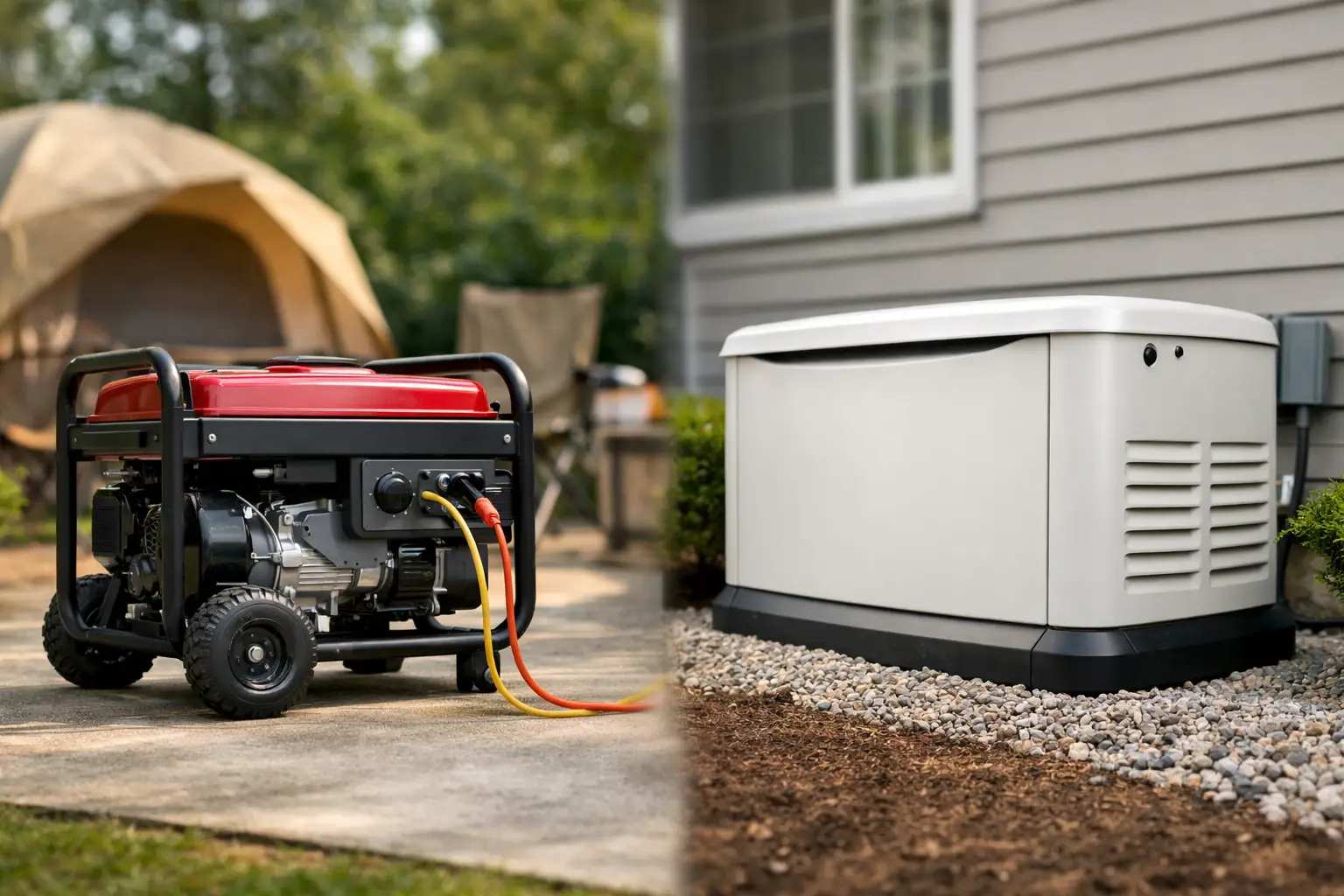
Portable Generator vs Standby Generator Choices
A power outage at a coastal home is rarely just an inconvenience. It can mean a refrigerator full of food at risk, a sump or well pump that cannot run, no air conditioning during humid weather, and interrupted operations for a rental property or business. When weighing a portable generator vs standby generator, the right choice comes down to what you need to keep running, how often outages occur, and how much hands-on work you want during an emergency.
Both options can provide valuable backup power. They serve very different purposes, though, and choosing based on price alone can leave a property underpowered or unnecessarily complicated when the next storm arrives.
Portable Generator vs Standby Generator: The Main Difference
A portable generator is a movable, engine-powered unit that is typically stored in a garage, shed, or other dry location until it is needed. During an outage, someone must move it outdoors, add fuel, start it, and connect it safely to selected appliances or to a properly installed generator inlet and transfer switch.
A standby generator is permanently installed outside the home or building. It connects to the electrical system through an automatic transfer switch and usually runs on natural gas or propane. When utility power fails, the system detects the outage, starts the generator, and transfers selected circuits or the entire electrical load to backup power automatically.
The practical difference is simple: portable generators require action from the owner, while standby generators are designed to respond on their own. That distinction matters when a property is vacant, when an outage begins overnight, or when an owner cannot safely set up equipment in heavy rain or high winds.
When a Portable Generator Makes Sense
A portable generator is often a reasonable fit for homeowners who experience occasional, shorter outages and want to protect a few essential loads. Depending on the generator size and connection method, those loads might include a refrigerator, freezer, a few lights, internet equipment, phone chargers, a microwave, and perhaps a small window air conditioner.
It can also be a practical choice for a property owner who needs backup power for a specific purpose rather than the whole house. For example, keeping refrigeration operating at a small office, powering tools during a repair, or running a few key circuits at a secondary property may not justify the investment in a permanently installed system.
The initial equipment cost is usually lower than a standby installation, but that does not mean setup should be informal. A portable generator should not be connected by plugging it into a wall outlet or attempting to backfeed a panel. That can energize utility lines, create a serious shock hazard for line workers, and damage electrical equipment when power returns.
The safer approach is to have a qualified electrician install a generator inlet and transfer switch or interlock that is compatible with the property’s electrical panel. This lets you select approved circuits and use the generator without unsafe extension-cord runs through doors, windows, or walkways.
Portable generator responsibilities
Portable power comes with a few non-negotiable responsibilities. The unit must run outdoors, well away from doors, windows, vents, and enclosed spaces. Carbon monoxide is colorless and odorless, and using a generator in a garage, under a carport, or near an open window can quickly become dangerous.
Fuel management is another consideration. Gasoline has a limited storage life, requires safe storage, and may be difficult to find after a widespread storm. Owners also need to check oil, maintain the generator, test it periodically, and be prepared to refuel it during an extended outage. A unit that sits untouched for years may not start when it is needed most.
When a Standby Generator Is Worth It
A standby generator is built for households and businesses where losing power creates a larger risk or disruption. That can include full-time coastal residents, properties with medical equipment, homes with multiple refrigerators and freezers, businesses that rely on refrigeration or communications, and rental properties where an outage can affect guests and operations.
For many Gulf Shores and Orange Beach property owners, automatic operation is the strongest reason to consider standby power. If a storm causes an outage while you are away, the generator can keep critical systems running without someone being present to set it up. This is especially useful for second homes, condos where permitted, and commercial properties that cannot wait for staff to arrive.
A properly designed standby system can support either essential circuits or a broader portion of the property. Essential-load systems often cover refrigeration, lighting, internet, security equipment, selected outlets, and one HVAC system. Whole-home systems can support more equipment, but they require careful load calculations. Large loads such as central air conditioning, electric water heaters, pool equipment, ovens, and EV chargers may need to be managed rather than all operated at once.
Standby generators do cost more because the project includes more than the generator itself. Installation may involve a concrete or composite pad, fuel connection, transfer switch, electrical wiring, permits, load calculations, and coordination with local requirements. The result is a permanent system that starts automatically and is exercised regularly to help confirm it is ready.
Fuel supply and long-duration outages
Fuel is a major advantage of standby systems, but the best fuel source depends on the site. Natural gas can provide ongoing supply where service is available, although major weather events can still affect infrastructure. Propane is common in areas without natural gas, but the tank size and existing household propane demand need to be considered.
A professional assessment should account for generator size, fuel pipe sizing, available fuel pressure, expected runtime, and other gas appliances. An undersized fuel line or inadequate propane supply can prevent a generator from delivering the power it was selected to provide.
Choosing the Right Size Is More Than Adding Watts
Generator sizing should begin with the loads you truly need during an outage, not just the square footage of the building. A small portable unit may handle a refrigerator and lights easily but struggle with the starting demand of an air conditioner, pump, or large motor. Likewise, a standby generator can be oversized for the essential loads or undersized if every appliance is expected to operate normally.
An electrician can evaluate the electrical panel, identify priority circuits, and calculate running and starting loads. For standby systems, the plan may include load-shedding controls that temporarily limit lower-priority equipment. This can allow a more practical generator size without sacrificing the circuits that matter most.
For coastal properties, equipment placement also deserves attention. Generators need required clearances for exhaust, airflow, service access, and safety. Salt air, wind-driven rain, flooding risk, and corrosion exposure can affect where equipment should be located and how it should be maintained. A site-specific plan is better than placing a generator wherever there appears to be open space.
Cost, Convenience, and Maintenance Trade-Offs
The portable generator vs standby generator decision is often a decision between lower upfront cost and greater automatic protection. A portable unit can be economical, especially when paired with a professionally installed transfer solution. It does, however, require fuel, setup, supervision, and a person who knows how to operate it safely.
A standby system involves a larger initial investment, but it offers convenience during the moments when convenience matters most. It can also reduce the risk of food loss, interruption to business operations, or damage caused by a loss of power to critical equipment. For some property owners, that reliability justifies the cost. For others, a portable unit that covers essential needs is the better value.
Neither choice is maintenance-free. Portable generators need regular exercise, oil changes, fuel checks, and seasonal inspection. Standby systems typically perform scheduled test runs, but they still need professional maintenance, battery checks, oil and filter service, and inspection of the transfer switch and fuel system.
A Safer Way to Plan Backup Power
Before buying a generator, identify what must stay on during an outage and what can wait. Consider how long outages have lasted at your property, whether anyone will be present to operate a portable unit, and whether the building needs power automatically. Then have the electrical system and fuel options evaluated before equipment is selected.
MNE Electric can help homeowners and businesses in Gulf Shores and surrounding Baldwin County plan a safe generator connection or a permanent standby installation sized for their actual needs. The best backup-power system is not necessarily the largest one. It is the one that starts safely, supports the right loads, and gives you confidence when utility power is unavailable.