
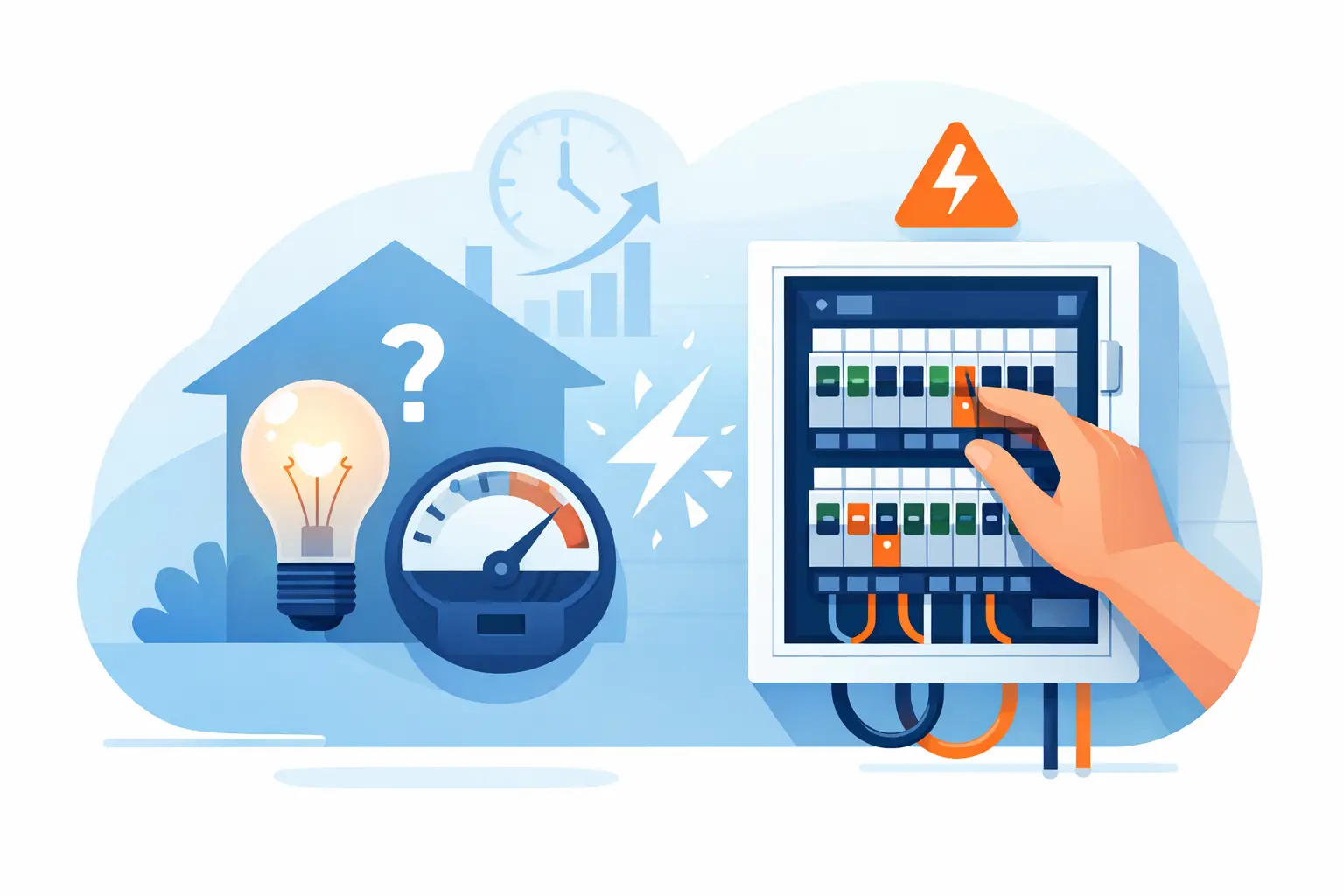
When to Upgrade Electrical Panel at Home
If your breakers trip when the microwave and hair dryer run at the same time, your electrical system is already telling you something. Knowing when to upgrade electrical panel service is less about guessing and more about recognizing clear signs that your home or property no longer has the capacity, safety features, or reliability you need.
Along the Alabama coast, that question comes up often in older homes, condos, and commercial spaces that were built for a very different electrical load. Years ago, a panel only had to support lights, a few kitchen appliances, and basic HVAC equipment. Now many properties are adding larger air conditioning demands, tankless water heaters, EV chargers, backup generators, home offices, and more electronics than the original system was ever designed to handle.
When to Upgrade Electrical Panel Service
The most obvious time to upgrade is when your current panel cannot safely support your property’s power use. That may show up as nuisance breaker trips, flickering lights, warm breakers, or a panel that is simply full with no room for additional circuits.
Sometimes the issue is age. If your panel is decades old, uses outdated components, or has signs of corrosion, wear, or water exposure, replacement may be the safer choice even if the power still works most of the time. In coastal areas like Gulf Shores and Orange Beach, salt air and moisture can speed up deterioration, especially on exterior equipment.
Another common trigger is remodeling. If you are renovating a kitchen, adding square footage, replacing an HVAC system, installing a hot tub, or planning an EV charger, your electrician may determine that the existing service is undersized. In that case, waiting can create ongoing performance problems and may also limit what can be permitted or installed correctly.
Warning Signs You Should Not Ignore
A panel upgrade is not always urgent, but some symptoms should move it higher on your list. If breakers trip repeatedly, that is usually not just an inconvenience. It often means a circuit is overloaded, a breaker is failing, or the panel is no longer managing demand as it should.
Flickering or dimming lights can also point to trouble, especially when they change as large appliances turn on. One flickering fixture may be a simple repair. Widespread dimming across the property suggests a larger issue with the service, panel, or connections.
You should also pay attention to heat and smell. A panel should not feel hot, and it should never produce a burning odor. Buzzing sounds, visible rust, scorch marks, or breakers that will not reset are all signs that you need a licensed electrician to inspect the system promptly.
For some properties, the biggest clue is just lack of space. If your panel is full and every new project requires workarounds, tandem breakers, or moving circuits around, you may be at the practical limit of what that equipment should handle.
Older Panels and Outdated Equipment
Some electrical panels raise concern because of their age, brand history, or obsolete design. Not every older panel is automatically unsafe, but older equipment is more likely to have wear, weak breaker performance, or limited capacity by current standards.
Homes with 60-amp or 100-amp service are a good example. That level may have been acceptable years ago, but many modern homes function better with 150-amp or 200-amp service, depending on square footage and electrical demand. The right size depends on the actual load calculation, not a one-size-fits-all rule.
If your home still has a fuse box, that is another strong reason to consider an upgrade. Fuses are not inherently unsafe when properly used, but they are less convenient, less flexible, and often tied to older systems that were not designed for today’s loads.
Capacity Matters More Than Most People Think
A lot of panel upgrades happen not because something failed, but because the property has changed. Electrical demand has climbed quietly over time. You may have added a second refrigerator, larger kitchen appliances, outdoor lighting, security systems, smart home devices, or a new HVAC setup. Each change adds to the load.
That matters even more if you are planning a major installation. EV chargers, whole-home surge protection, standby generators, pool equipment, workshop tools, and commercial-grade refrigeration can all affect whether your current panel is adequate. A new device may be the project that exposes a panel that was already near its limit.
This is where a proper evaluation matters. Some homeowners assume they need a full upgrade when a subpanel or dedicated circuit may solve the issue. Others think a single new breaker is enough when the service itself is undersized. The right answer depends on the age of the equipment, the condition of the panel, available space, and how much electrical capacity the property actually needs.
Remodeling, Additions, and Modern Upgrades
If you are planning improvements, it is smart to ask about the panel early rather than after the project is underway. Kitchen remodels often add higher-powered appliances and more required circuits. Bathroom upgrades may involve dedicated circuits for heaters or improved ventilation. Room additions increase lighting, receptacle, and HVAC demand.
The same goes for generator and EV charger installations. These upgrades are increasingly common in coastal Alabama, where storm preparedness and transportation changes are shaping electrical needs. A charger or generator connection may be straightforward in one home and require a panel or service upgrade in another.
That does not mean every new upgrade turns into a major electrical project. It means your system should be evaluated as a whole so the work is safe, code-compliant, and built for long-term use.
Safety, Insurance, and Code Compliance
There is also a broader reason to think carefully about when to upgrade electrical panel equipment: safety and liability. An aging or overloaded panel can increase the risk of overheated conductors, breaker failure, arcing, and property damage. Even if no major issue has happened yet, visible wear or recurring electrical problems should not be treated as normal.
Insurance can become part of the conversation too. Some carriers ask about panel age, service type, or outdated equipment during underwriting or renewal. If a panel has known issues or no longer meets current expectations, an upgrade may help protect both the property and the owner’s ability to insure it properly.
For commercial properties and multifamily buildings, the stakes are even higher. Downtime, tenant complaints, operational interruptions, and code deficiencies all carry real costs. In those cases, panel upgrades are often part of a larger effort to improve reliability and reduce future service calls.
What to Expect From a Panel Upgrade
A panel upgrade usually begins with an inspection and load assessment. The electrician looks at the age and condition of the existing equipment, the size of the current service, the number of circuits, grounding and bonding, and the power demands of the property. From there, the recommendation may be a panel replacement, a service upgrade, a subpanel, or targeted corrections to related components.
Timing can vary. Some upgrades are scheduled around remodels or planned installations. Others move quickly because the panel is failing, unsafe, or already affecting daily use. Utility coordination and permitting may also be part of the process, depending on the scope of work.
For homeowners concerned about budget, it helps to look at the upgrade as infrastructure. A panel is not cosmetic, but it supports almost every comfort and convenience in the building. It also creates room for future improvements instead of forcing piecemeal fixes every time a new electrical need comes up.
At MNE Electric, these conversations are grounded in what the property actually needs – not in overselling equipment that does not make sense for the job. For homes and businesses in Gulf Shores, Orange Beach, and nearby Baldwin County communities, local conditions, age of construction, and coastal exposure all play a role in what a safe upgrade should look like.
The Best Time Is Before the Panel Becomes the Problem
If you are asking when to upgrade electrical panel equipment, there is a good chance your property has already given you a reason to look into it. Maybe the lights flicker. Maybe the panel is outdated. Maybe a new EV charger, generator, or renovation is on the horizon.
The best time to act is usually before a small warning turns into a larger repair, outage, or safety issue. A qualified inspection gives you a clear answer, and that clarity is worth a lot when you are responsible for a home, condo, or commercial property that needs dependable power every day.
A good electrical system should not make you work around it. It should support how you live, how you run your property, and what you plan to add next.