
Electrical Inspection for Home Purchase Checklist
A beautiful kitchen, a new roof, and a favorable inspection report can make a home feel like a sure thing. But an electrical inspection for home purchase may uncover issues that are easy to miss during a showing: an overloaded panel, aging wiring behind finished walls, missing GFCI protection, or equipment that cannot support the way you plan to use the property.
For buyers in Gulf Shores, Orange Beach, and nearby coastal communities, the electrical system deserves close attention. Salt air, moisture, storm exposure, rental use, and additions built over time can all affect a home’s wiring and equipment. A qualified electrical inspection gives you clearer information before your contingency period ends and before unexpected repair costs become your responsibility.
Why a Standard Home Inspection May Not Be Enough
A general home inspector provides a valuable overview of the property, including visible electrical components. They may identify an older panel, exposed wiring, missing covers, nonfunctional outlets, or apparent safety concerns. However, a home inspection is not the same as a detailed electrical evaluation by a licensed electrician.
Home inspectors generally do not remove panel covers, trace circuits, calculate load capacity, or diagnose the condition of concealed wiring. Their report may correctly recommend further evaluation, but it often cannot tell you whether the issue is minor, urgent, code-related, or expensive to correct.
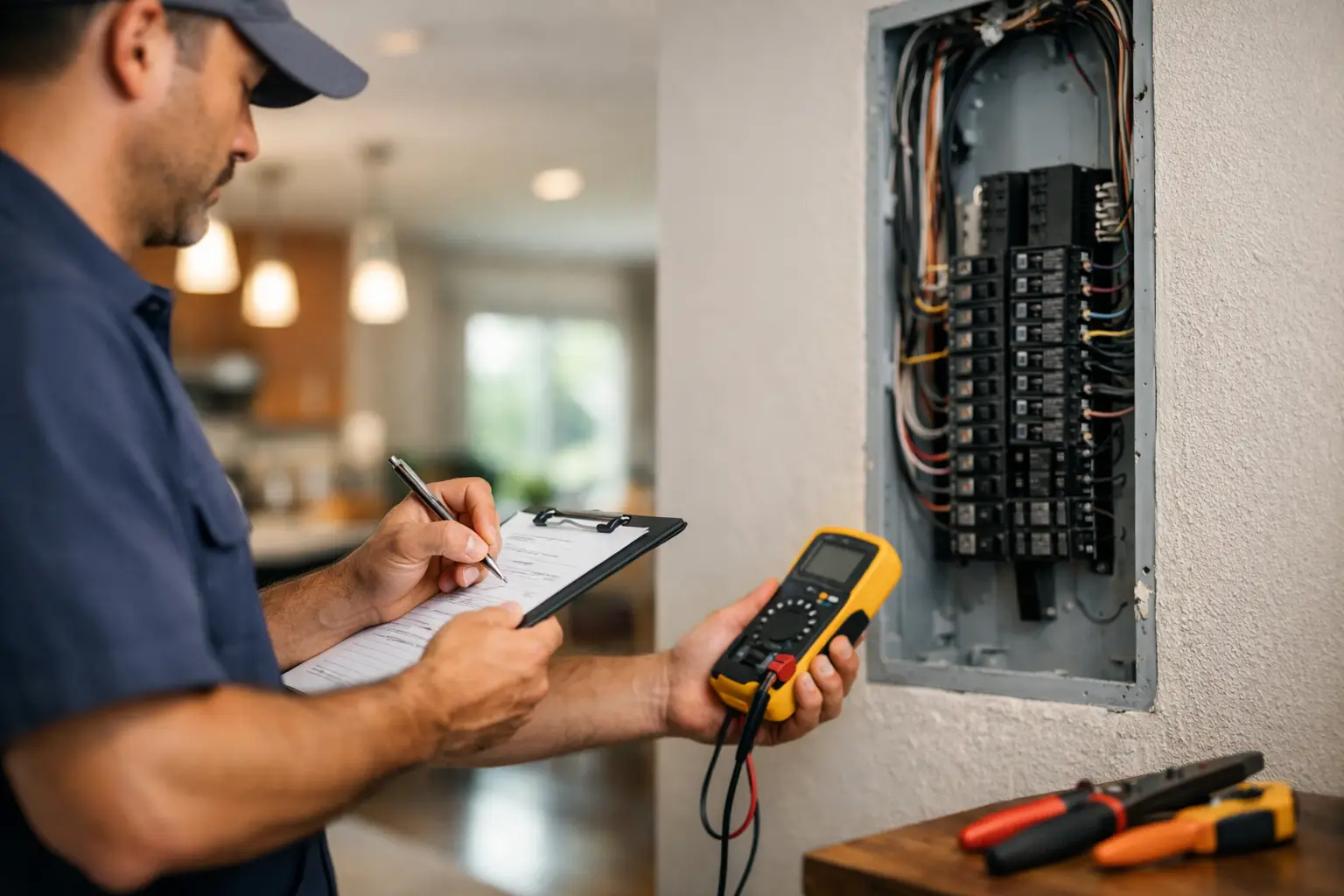
An electrician can take the next step. They can evaluate the service equipment, panel condition, grounding and bonding, outlet protection, circuit loading, visible wiring methods, and signs of previous improper work. This is especially useful when the home is older, has been remodeled, includes a pool or outdoor living area, or will need major new electrical loads.
What an Electrical Inspection for a Home Purchase Covers
The exact scope depends on the home’s age, condition, and available access. No inspection can see through every wall or predict every future failure, but a thorough evaluation focuses on the components most likely to affect safety, reliability, and upgrade planning.
Electrical panel and service capacity
The panel is the control center of the home’s electrical system. An electrician checks its manufacturer, age, visible condition, labeling, breaker arrangement, corrosion, heat damage, and available space for future circuits. Some older panel brands and damaged equipment may need prompt replacement because of known reliability or safety concerns.
Service capacity matters as much as panel condition. A home that once handled basic lighting and appliances may not have enough capacity for central air conditioning, a hot tub, an EV charger, an electric range, or a whole-home generator. A 100-amp service is not automatically inadequate, but it may be limiting depending on the home’s size and planned electrical use.
Wiring condition and signs of past alterations
Older homes can contain wiring methods that require careful evaluation, including cloth-insulated wiring, aluminum branch-circuit wiring, ungrounded circuits, or damaged insulation. These conditions do not always mean a purchase should end. They do mean you need a clear understanding of the risk, the appropriate repair, and likely cost before moving forward.
An electrician also looks for signs that previous renovations were completed without proper electrical work. Junction boxes hidden behind drywall, open splices, mismatched wire sizes, unsupported cables, and crowded panel wiring are common examples. A newly remodeled room can look finished while the electrical work behind it remains a concern.
Grounding, bonding, and shock protection
Grounding and bonding help reduce shock and fire risks by providing a safe path for fault current. An electrical inspection can identify missing or improper grounding connections at the service, panel, water piping, and other applicable systems.
Modern homes also rely on GFCI protection in locations where water and electricity can meet, such as bathrooms, kitchens, garages, laundry areas, exterior outlets, crawl spaces, and pool-related areas. AFCI protection may also be required or advisable for certain living spaces. These devices do not solve every electrical problem, but they are important layers of protection.
Outdoor, storm-exposed, and coastal equipment
In coastal Alabama, exterior electrical equipment works in demanding conditions. Moisture intrusion, rust, corrosion, damaged weatherproof covers, loose service components, and worn outdoor outlets deserve attention. These issues may be more likely near the beach, but they can occur anywhere in Baldwin County after years of humidity and severe weather.
A property with a generator inlet, transfer switch, outdoor kitchen, dock equipment, pool equipment, or landscape lighting needs additional review. These systems often involve higher electrical loads, specialized protection, and more exposure to water and weather.
Red Flags That Deserve a Licensed Electrician’s Review
Some findings should move the electrical evaluation from optional to necessary. If a general inspection identifies any of the following, ask for an electrician’s assessment before finalizing the purchase:
- Frequent breaker trips, flickering lights, buzzing sounds, or outlets that feel warm
- Corrosion inside or around the panel, meter base, disconnect, or exterior electrical equipment
- A recalled, obsolete, damaged, or improperly installed panel
- Two-prong outlets, ungrounded receptacles, or evidence of aging wiring
- Aluminum wiring, fabric-covered wiring, or visible damaged insulation
- DIY additions, unfinished wiring, open junction boxes, or missing electrical covers
- A planned EV charger, generator, pool, workshop, or major remodel with uncertain service capacity
These conditions vary in severity. A missing cover plate may be a simple correction. A panel replacement, service upgrade, or full rewiring project requires more planning. The value of an inspection is separating manageable repairs from issues that could significantly change the cost of ownership.
When to Schedule the Inspection
Schedule the electrical inspection during the due-diligence or inspection contingency period whenever possible. This gives you time to receive findings, request estimates, and make informed decisions while your contract options remain open.
It is usually most efficient to begin with the general home inspection. If that report raises electrical concerns, arrange a follow-up with a licensed electrical contractor promptly. In a competitive market, buyers sometimes waive inspections to strengthen an offer. That choice can carry real risk when the home’s electrical history is unknown.
If you are buying a condo, clarify what belongs to the unit and what is maintained by the association. The unit panel, branch wiring, outlets, and appliances may be your responsibility, while service equipment and common-area systems could fall under association control. Ask for available maintenance records, recent electrical upgrades, and any known storm-related repairs.
How to Use the Findings During a Purchase
An electrical inspection report is not only a repair list. It is a decision-making tool. Ask the electrician to distinguish between immediate safety concerns, repairs that should be completed soon, and improvements that can be planned after closing.
For significant work, request a written estimate with a clear scope. This helps you decide whether to ask the seller to make repairs, request a credit, adjust your offer, or accept the condition with a realistic budget. Sellers may prefer credits over managing repairs themselves, but that depends on the contract and negotiation.
Do not assume every older component must be brought up to current code immediately. Electrical code requirements often apply differently to existing installations than to new work or major renovations. Still, unsafe conditions should be addressed, and upgrades may be required when replacing equipment, adding circuits, or remodeling parts of the home.
Plan for the Home You Intend to Own
A purchase inspection should account for your plans, not only the seller’s current setup. If you expect to install an EV charger, add a generator, convert gas appliances to electric, build an outdoor kitchen, or renovate the home, mention it during the inspection. A load calculation and panel review can show whether the existing system can support those plans.
This is where early electrical guidance can save money. Coordinating a panel upgrade with a renovation or generator installation may be more cost-effective than addressing capacity in separate projects. It also helps prevent a new owner from discovering that a desired upgrade requires more extensive work than expected.
MNE Electric helps homeowners across the Gulf Shores area evaluate electrical concerns, explain practical repair options, and plan upgrades with safety and long-term use in mind. A clear assessment before closing gives you better leverage now and a more dependable home after the keys are in your hand.
Before you commit, make sure the home is not just attractive on the surface but properly powered for the life you plan to build there.