
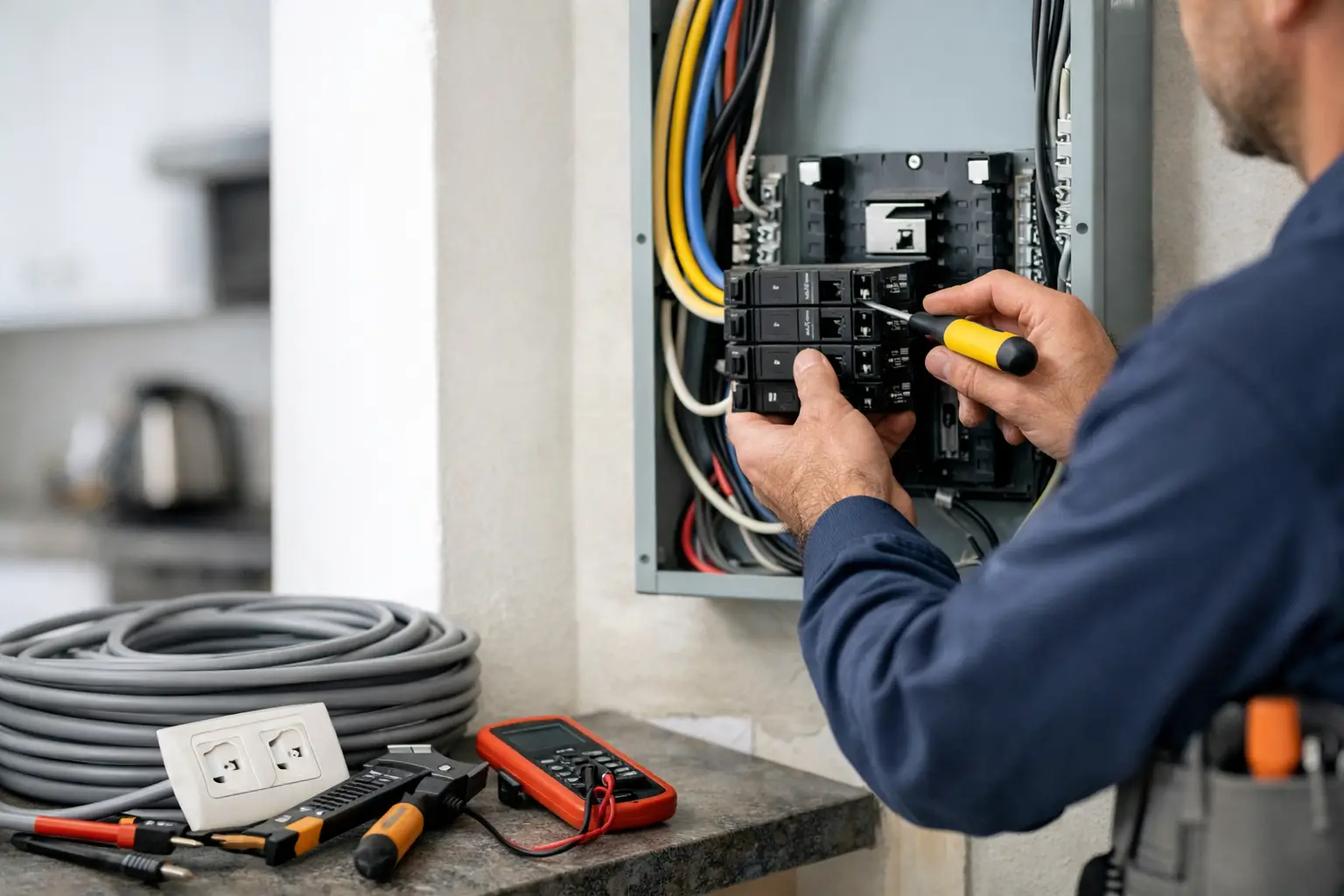
Dedicated Circuit Installation Explained
That tripped breaker behind the microwave, garage freezer, or new EV charger is usually not a random nuisance. It is often a sign that the equipment is sharing power with too many other devices. In many homes and commercial spaces, dedicated circuit installation is the right fix because it gives one appliance or load its own protected electrical path.
A dedicated circuit is exactly what it sounds like. One circuit serves one specific piece of equipment, or one clearly defined load, without feeding lights, outlets, or unrelated devices along the way. That matters because some equipment draws a large amount of power, some runs for long periods, and some has manufacturer requirements that call for a separate circuit to operate safely and correctly.
What dedicated circuit installation actually means
Every electrical circuit has limits. The breaker, wire size, outlet or disconnect, and the connected equipment all need to match. When an appliance that demands a lot of current is placed on a general-purpose circuit, the system can become overloaded. In the best case, the breaker trips. In the worst case, heat builds up where it should not.
Dedicated circuit installation means adding or reworking a circuit so that the load has its own breaker and wiring sized for that equipment. Depending on the application, that could be a 120-volt circuit for a refrigerator or sump pump, or a 240-volt circuit for an oven, dryer, water heater, condenser, or EV charger. The exact setup depends on the equipment rating, the distance from the panel, local code requirements, and whether the existing service can handle the added demand.
This is why the phrase “just adding an outlet” can be misleading. If the equipment needs a dedicated circuit, the work usually starts at the electrical panel, not just at the wall.
When a dedicated circuit is usually needed
Some loads almost always require their own circuit. Large kitchen appliances, HVAC equipment, electric water heaters, clothes dryers, ovens, ranges, and EV chargers are common examples. In commercial settings, dedicated circuits are often needed for refrigeration equipment, office machines, specialty lighting, point-of-sale systems, and tenant-specific equipment.
There are also situations where a dedicated circuit is not strictly optional because the manufacturer requires it. That detail matters more than many people realize. If equipment is installed on a shared circuit against the manufacturer instructions, it can create safety issues, performance problems, and warranty concerns.
Then there are gray-area situations. A garage refrigerator, deep freezer, microwave, window unit, treadmill, or home office setup may not always require a dedicated circuit by name, but the real-world power use may make one the smart choice. If the breaker trips repeatedly, lights dim when the equipment starts, or an outlet gets warm, the electrical system is telling you something.
Why dedicated circuits matter for safety and performance
The first benefit is overload protection. A properly sized dedicated circuit helps prevent nuisance tripping and reduces the chance of overheating conductors from loads that should never have been sharing a line.
The second benefit is equipment performance. Motors and compressors often run better when they are not competing with other devices on the same circuit. Voltage drop and startup strain can affect how reliably equipment operates, especially in coastal properties where air conditioning, dehumidification, and refrigeration are doing a lot of work.
The third benefit is troubleshooting. When one appliance has one circuit, diagnosing problems is simpler. If the breaker trips, you know where to start. If there is an issue with the equipment, the wiring, or the breaker itself, the source is easier to isolate.
There is also a practical property-management angle. In condos, rentals, restaurants, and retail spaces, electrical reliability affects more than convenience. It affects tenant comfort, food storage, daily operations, and service calls. A properly planned dedicated circuit can prevent avoidable downtime.
What happens during a dedicated circuit installation
The first step is identifying the load. That means checking the equipment nameplate, manufacturer specifications, voltage, amperage, and whether the load is continuous or intermittent. From there, the circuit can be sized correctly.
Next comes panel evaluation. A contractor needs to verify that the electrical panel has space for the new breaker and that the service has the capacity for the added circuit. This is where older homes and renovated properties can become more complicated. Sometimes the requested circuit is straightforward. Other times, the panel is full, the service is undersized, or previous work has left little room for safe expansion.
Then comes routing the wiring. In some buildings this is simple. In others, especially finished homes, condos, or commercial spaces, access can be the hardest part of the job. The goal is to install the circuit cleanly, protect the wiring properly, and meet code without unnecessary disruption.
The final setup may include a receptacle, hardwired connection, disconnect, GFCI or AFCI protection where required, labeling, and testing. Good installation is not just about getting power there. It is about making sure the circuit is safe under real operating conditions.
Dedicated circuit installation for common upgrades
One of the most common reasons people call for this work is a new appliance or equipment upgrade. An EV charger is a good example. Charging equipment often needs a dedicated 240-volt circuit, and the amperage can vary based on the charger and the vehicle. The circuit has to be matched to the charger, the breaker, and the home’s available electrical capacity.
Generators are another example. Backup power systems involve more than adding a circuit, but dedicated circuits can play a role in determining which loads are supported and how the system is configured.
Kitchen remodels also bring this issue to the surface quickly. A new microwave, wall oven, cooktop, wine cooler, or disposal may need more than the original kitchen wiring can provide. The same goes for laundry rooms, workshops, and home additions.
In commercial spaces, equipment changes happen often. A new ice machine, copier, server rack, display cooler, or tenant improvement package may require dedicated circuits to support normal operation without overloading existing branch circuits.
It depends on the building you have
This is where online advice often falls short. Two homes can have the same new appliance and need very different installation approaches. A newer home with ample panel space may only need a breaker, wire run, and receptacle. An older property may need panel changes, service upgrades, or correction of pre-existing wiring issues before the new circuit can be installed safely.
Distance matters too. A detached garage, a top-floor condo unit, or a commercial suite far from the electrical room can increase labor and material needs. Coastal properties also bring environmental considerations. Corrosion resistance, weather exposure, and equipment location all matter more near the water than they might inland.
That is why pricing can vary. The appliance might be the same, but the path to power is not.
Why this is not a DIY job
Dedicated circuits involve load calculations, code compliance, correct conductor sizing, breaker selection, grounding, bonding, and protection requirements that change based on the location and use of the equipment. Mistakes are easy to make and can stay hidden until they create heat, equipment damage, or breaker failure.
There is also the permitting and inspection side. For many installations, especially larger loads, permits and inspections are part of doing the work correctly. That protects the property owner and helps ensure the system is safe and documented.
For homeowners and property managers in Gulf Shores and nearby coastal communities, this matters even more when electrical systems are already dealing with high HVAC demand, storm preparedness concerns, and aging infrastructure in some buildings. Reliable power is not just about convenience. It is part of protecting the property and the people using it.
Signs it is time to ask about a dedicated circuit installation
If a breaker trips when a specific appliance runs, that is a clear sign to investigate. The same goes for flickering lights, warm outlets, buzzing sounds, extension cord workarounds, or a new appliance that the installer says needs its own line.
You may also want to ask before problems show up. Planning a remodel, adding an EV charger, replacing HVAC equipment, or upgrading commercial equipment is the right time to verify what the electrical system can support. Catching the issue early is almost always easier than troubleshooting after the fact.
A good contractor will look at the full picture, not just the outlet you want added. That includes the panel, the load, the route, and whether the finished installation will serve you well long term.
When dedicated circuit installation is done correctly, the result is simple in the best way. The equipment gets the power it needs, the rest of the system works the way it should, and you spend less time dealing with tripped breakers and avoidable electrical headaches. If a new appliance or recurring electrical problem has been pushing your system past its limits, getting the circuit right the first time is the smart next step.