
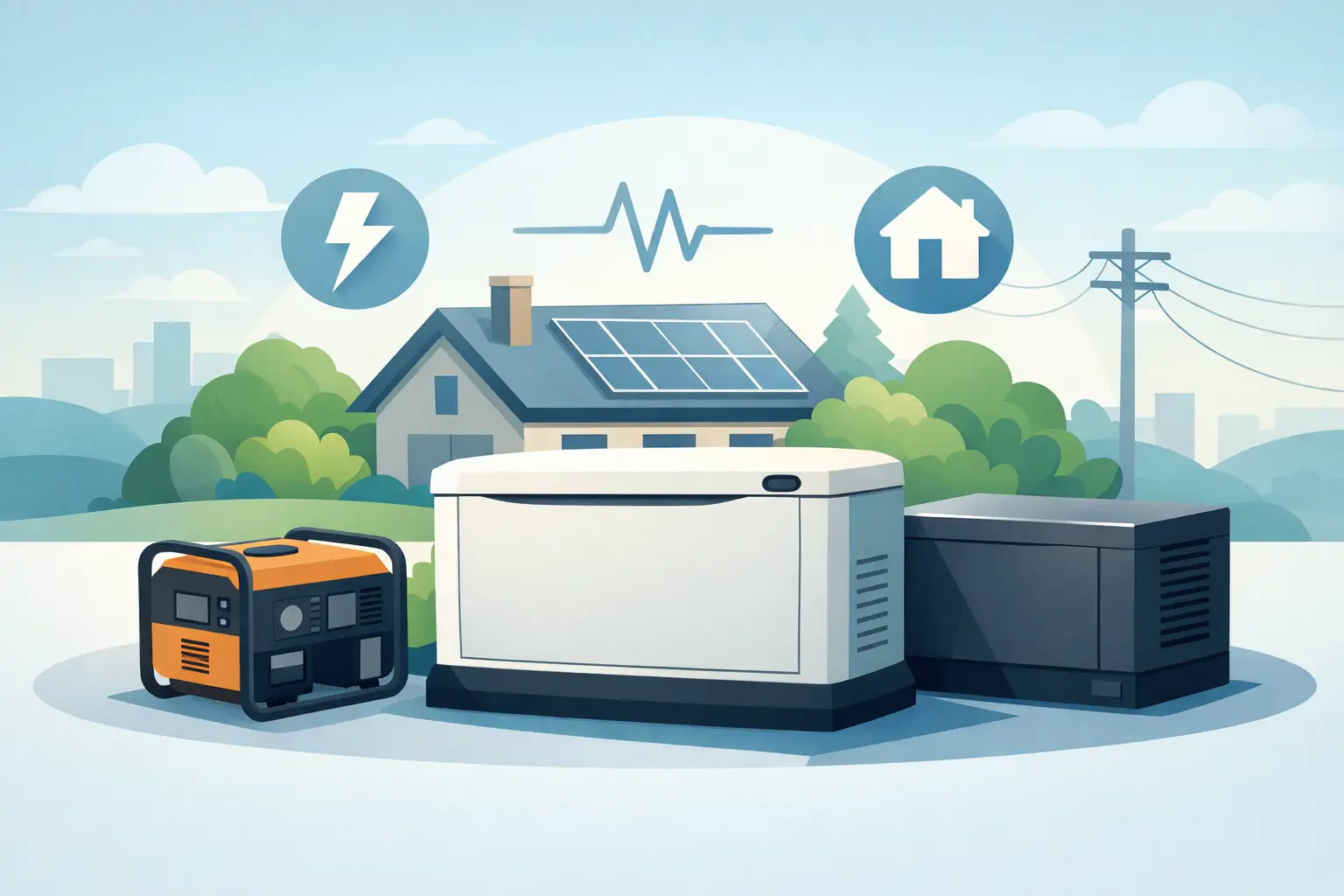
9 Best Standby Generators for Homes
When the power goes out during a summer storm, most homeowners are not thinking about generator specs. They are thinking about the refrigerator, the air conditioning, the well pump, the garage door, and whether the outage will last two hours or two days. That is why choosing among the best standby generators for homes starts with one practical question: what do you need your house to keep doing when the grid goes down?
A standby generator is different from a portable unit in one major way. It is permanently installed, tied into your electrical system, and set up to start automatically when utility power fails. For homeowners in coastal Alabama and other storm-prone areas, that automatic response is often the feature that matters most. You do not need to drag a machine out of the garage, refuel it in the rain, or run extension cords through the house.
How to judge the best standby generators for homes
The right unit is not always the biggest one. In many cases, a properly sized mid-range generator does a better job than an oversized model that costs more to install and operate. The best fit depends on your home’s square footage, HVAC load, fuel source, and whether you want whole-home coverage or just essential circuits.
Power output is the first filter. Smaller standby generators in the 10kW to 14kW range can often cover basics such as refrigeration, lights, internet, and a smaller HVAC system. Once you move into larger homes or want to run multiple air conditioning systems, electric water heaters, or larger appliances at the same time, the conversation usually shifts to 20kW, 24kW, or higher.
Fuel type matters just as much. Natural gas is convenient if your home already has service because you do not need on-site fuel storage. Propane gives more flexibility in areas without natural gas, but tank size and refill planning become part of the equation. Diesel exists in the standby market too, though it is more common in commercial settings than in single-family residential installations.
Noise, service access, enclosure quality, and transfer switch compatibility also matter. In a coastal environment, corrosion resistance and placement are especially important. Salt air is hard on outdoor equipment, so installation details can make a real difference in how long a system holds up.
9 best standby generators for homes to consider
Generac Guardian 14kW
This is a common entry point for homeowners who want automatic backup power without stepping into whole-home pricing. A 14kW unit can be a strong option for smaller to mid-sized homes or for essential-load coverage. It is often enough for lights, refrigeration, internet, security systems, and selected appliances.
The trade-off is capacity. If you expect it to run multiple large loads at once, especially central air and electric heat, you may run into limits. It works best when the electrical plan is intentional.
Generac Guardian 22kW
For many households, this is the size where standby power starts to feel less like emergency coverage and more like normal living. A 22kW generator can handle a larger share of the house, and in some homes it can support near whole-home operation depending on load management.
This model is popular for a reason. It hits a middle ground between power, availability, and overall value. Still, installation quality matters as much as the badge on the enclosure.
Generac Guardian 24kW
If your home has heavier electrical demand, the 24kW class deserves attention. Larger HVAC systems, more square footage, and higher appliance loads often push homeowners into this range. It can provide more breathing room during outages, especially when comfort and convenience are both priorities.
The main downside is cost. The generator itself is more expensive, and installation may require more planning around gas supply and electrical integration.
Kohler 14RCA
Kohler has a strong reputation for engine quality and reliable startup. The 14RCA is often considered by homeowners who want a premium-feeling machine for essential backup coverage. It is compact, well regarded, and a solid fit for homes that do not need every circuit energized.
Kohler equipment is often praised for build quality, but that can come with a higher price point than some competing models. For some homeowners, that is worth it. For others, the better value may be elsewhere.
Kohler 20RESCL
The 20kW range is one of the most practical categories in residential standby power, and this Kohler model sits comfortably there. It is a strong option for homeowners who want broad coverage and dependable performance, especially if they prefer a brand known for premium residential and commercial power systems.
Like any 20kW unit, it still needs proper load planning. Whole-home backup is possible in some houses, but not in every house.
Cummins QuietConnect 13kW
Cummins brings a name many people associate with serious power equipment, and the QuietConnect residential line has earned attention for sound control and dependable operation. The 13kW model is best suited to essential systems rather than full-house power.
Its appeal is straightforward. If you want a known power brand, reasonable noise performance, and a unit sized for practical backup rather than excess, this one belongs in the conversation.
Cummins QuietConnect 20kW
This is where Cummins becomes more competitive for larger residential needs. A 20kW unit can cover a lot of ground, especially in homes with smart load shedding or selective circuit planning. It is a solid choice for homeowners who want a more premium equipment profile.
Availability and service support can vary by market, so local installer familiarity is worth asking about before making a decision.
Briggs & Stratton 20kW PowerProtect
Briggs & Stratton is often known for small engines, but its residential standby line has become a realistic option for homeowners comparing major brands. The 20kW PowerProtect model is aimed at the same general sweet spot as other mid-to-large residential units.
It may not have the same immediate name recognition in standby systems as Generac for some buyers, but it can be a good value when paired with the right installation and service support.
Champion 12.5kW Home Standby
Champion has built a presence in the backup power market by offering more budget-conscious options. A 12.5kW standby generator can work well for smaller homes or backup plans focused on essentials.
The trade-off is expectations. This is not typically the pick for a large coastal home with multiple air conditioning systems and high load demands. It is better viewed as an accessible path into automatic backup power.
What matters more than brand
Homeowners often spend a lot of time comparing manufacturers and not enough time looking at the electrical plan. That is backwards. Even the best standby generators for homes will disappoint if the system is undersized, poorly placed, or connected without a smart load strategy.
Generator sizing should be based on actual demand, not guesswork. That includes startup loads, HVAC requirements, water heaters, pumps, kitchen appliances, and whether the home has features like elevators, pool equipment, or EV charging. A proper load calculation helps avoid both overspending and underpowering.
Transfer switch design matters too. Some homes do well with a whole-house automatic transfer switch. Others benefit from managed loads, where the system prioritizes major circuits so the generator is not overloaded. This is often the difference between a generator that feels reliable and one that constantly bumps into its limits.
Coastal installation factors homeowners should not ignore
In places like Gulf Shores and Orange Beach, standby generators face conditions that inland installations may not. Salt air, humidity, wind exposure, and storm debris all add stress to outdoor equipment. That does not mean you should avoid a standby system. It means you should install one with those realities in mind.
Placement is a code and performance issue. The generator needs proper clearances from windows, doors, vents, and combustible surfaces. It also needs a location that supports airflow, maintenance access, and long-term durability. In flood-prone or storm-sensitive areas, elevation and pad construction deserve close attention.
Fuel supply is another local consideration. Propane works well in many homes, but tank size should match realistic outage expectations. Natural gas is convenient where available, though supply pressure and utility conditions should still be reviewed. A generator is only as dependable as the fuel system feeding it.
Which standby generator is best for your home?
If you want the shortest answer, a 20kW to 24kW model from a major manufacturer is often the most practical range for larger homes and families who want strong coverage during outages. If your goal is essential circuits only, a 12kW to 14kW system may be the smarter investment.
Generac tends to win on market presence and broad homeowner familiarity. Kohler often appeals to buyers focused on premium build quality. Cummins can be attractive for those who want a power-equipment brand with a strong reputation. Briggs & Stratton and Champion can make sense when budget and basic backup needs are higher priorities.
The right answer depends on your house, your fuel source, and your expectations during an outage. A well-installed generator that matches your load profile is better than a bigger unit chosen on assumption alone. If you are planning a standby generator installation, work with a licensed electrical contractor who can evaluate the service, calculate the load, and design the system around how your home actually uses power. That is what turns backup power from a product purchase into a dependable part of the house.