
Can Salt Air Corrode Wiring? Coastal Warning Signs
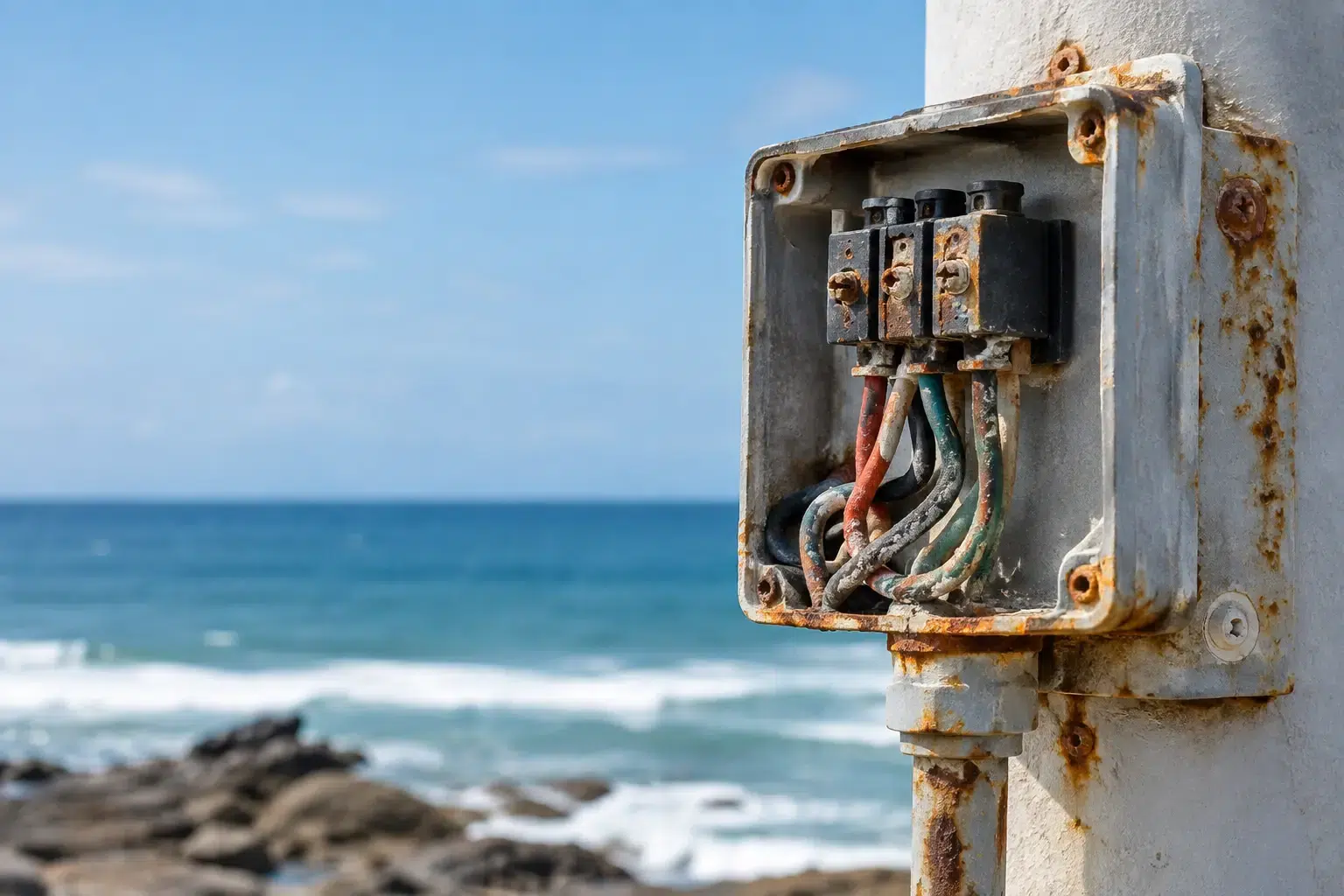
A beach house can look perfectly maintained while corrosion is developing in places no one sees: behind an exterior outlet cover, inside an HVAC disconnect, or at a panel connection. So, can salt air corrode wiring? Yes. Coastal salt and humidity can damage electrical components over time, especially exposed metal connections and equipment installed outdoors or in damp areas.
For homeowners, condo owners, and property managers along the Gulf Coast, this is not just a cosmetic concern. Corrosion can create poor electrical connections, equipment failures, nuisance tripping, overheating, and, in some cases, a serious fire or shock hazard. The key is knowing what salt air affects, what conditions make it worse, and when a qualified electrician should inspect the system.
Take advantage of our free inspection offer! Click here for details!!
How Salt Air Corrodes Electrical Wiring and Components
Salt air does not usually eat through the insulated copper wire inside a properly sealed wall overnight. The bigger concern is the metal around the wiring: terminals, splices, breaker connections, grounding points, outlet contacts, switch contacts, conduit fittings, disconnects, and equipment enclosures.
Near the coast, microscopic salt particles settle on surfaces. When humidity, rain, condensation, or sea spray adds moisture, those particles form a conductive film that speeds up corrosion. This is particularly hard on copper, aluminum, steel, and brass components. Even stainless steel hardware can corrode in a harsh marine environment, depending on its grade and exposure.
Electrical resistance rises when a connection becomes corroded or loose. That added resistance produces heat when the circuit carries a load. A corroded connection may start as an intermittent problem, then progress to a burned terminal, failed receptacle, damaged breaker, or nonworking piece of equipment.
The distance from the shoreline matters, but it is not the only factor. Gulf Shores and Orange Beach properties close to open water, bays, canals, and marsh areas typically see more exposure. However, salt-laden moisture can travel inland, and outdoor equipment at any coastal Alabama property needs appropriate protection and regular attention.
Where Salt-Air Damage Usually Shows Up First
Exterior electrical equipment takes the most direct exposure. Weatherproof outlets, pool equipment connections, landscape lighting, outdoor panels, meter equipment, and HVAC disconnects all deserve regular checks. The same applies to boat lifts, dock power, marine lighting, gate operators, and outdoor kitchen circuits.
Inside, problems can appear in areas where humid air gets trapped. Garages, carports, utility rooms, unconditioned storage areas, crawl spaces, and mechanical closets can all expose electrical connections to moisture. Condos and vacation properties may be more vulnerable if they sit closed for long periods with limited climate control.
HVAC equipment is a frequent trouble spot. The disconnect box near the outdoor condenser contains electrical connections that are exposed to heat, rain, salt, and humidity. Corrosion there can lead to air-conditioning failures at the worst possible time. Generator transfer equipment, EV charger connections, and whole-home surge protection devices also need installations designed for the environment and checked as part of routine electrical maintenance.
Warning Signs of Corroded Electrical Connections
Corrosion is not always visible, but your electrical system often gives early warnings. A single issue may have a simple cause. Repeated symptoms or anything involving heat, odor, or moisture deserves prompt professional attention.
Watch for these signs:
- Outdoor outlets that stop working, trip often, or show green, white, orange, or rusty discoloration
- Flickering lights, intermittent power, or appliances that lose power when a circuit is under load
- Breakers that trip repeatedly or a panel that makes buzzing, crackling, or popping sounds
- A warm outlet, switch, plug, disconnect box, or electrical panel cover
- Black marks, melted plastic, a burning odor, or visible moisture inside an electrical enclosure
- Corroded screws, damaged gaskets, cracked covers, or missing weatherproof outlet covers
Do not keep resetting a breaker that trips repeatedly. A breaker is doing its job by responding to an unsafe condition, overload, short circuit, ground fault, or failing equipment. Repeated resets can allow damage to worsen and make the underlying issue harder to diagnose.
What Makes Coastal Electrical Corrosion Worse?
Salt air alone is only part of the picture. The fastest deterioration usually happens when salt combines with direct moisture, poor drainage, heat, and inadequate enclosure protection.
Improperly sealed outdoor boxes are a common example. A standard outlet cover may not keep out wind-driven rain, especially when something is plugged in. Outdoor receptacles should have properly installed weather-resistant components and an in-use cover where required. The box, conduit entries, mounting hardware, and gasket all need to work together.
Age matters as well. Older homes and commercial properties may have equipment that was acceptable when installed but no longer offers the same level of protection after years of sun, storms, vibration, and corrosion. Renovations can also introduce issues if new equipment is connected to aging wiring or if connections are made without suitable materials for a damp or corrosive location.
Storm conditions add another layer of risk. Wind-driven rain can enter damaged enclosures, and floodwater can contaminate electrical equipment with salt, silt, and debris. Electrical components affected by flooding should not be assumed safe once they dry out. An inspection is the right next step before putting damaged equipment back into service.
Can Salt Air Corrode Wiring Inside the Walls?
It can, but it is less common than corrosion at accessible connection points. Modern building wire has insulation that protects the conductor, and wiring in dry, sealed interior wall cavities is generally well shielded from salt exposure.
Problems become more likely when moisture enters the building envelope, a junction box is located in a damp area, wiring is installed in a poorly protected exterior location, or a connection was not made correctly in the first place. Copper conductors can develop oxidation, while aluminum wiring and aluminum connections require especially careful installation methods to prevent overheating and connection failure.
The practical takeaway is that electricians often find the first damage at terminals and splices, not in the middle of a wire run. That is good news because early inspection and repair can often address the affected components before a larger rewiring project is needed.
Practical Ways to Protect Coastal Electrical Systems
The best protection is a combination of proper installation and routine inspection. Outdoor circuits should use equipment rated for the location, with correctly fitted weatherproof covers, corrosion-resistant hardware, secure conduit connections, and properly protected grounding and bonding components.
For owners of rental homes, condos, and commercial properties, scheduled checks are especially valuable. High turnover, vacant periods, heavy HVAC use, and frequent storms can hide a developing issue until a guest, tenant, or employee loses power. A professional inspection can identify loose or corroded connections, water intrusion, panel concerns, and equipment that is nearing the end of its service life.
It also helps to keep electrical equipment accessible. Avoid blocking panels, disconnects, or exterior outlets with storage, landscaping, or permanent fixtures. After a major storm, walk the property and look for damaged covers, bent conduit, standing water near equipment, or anything that appears loose or discolored. Do not open energized panels or attempt to clean internal corrosion yourself.
When to Call a Licensed Electrician
Call an electrician promptly if you notice heat, burning smells, sparking, a buzzing panel, repeated breaker trips, visible corrosion inside equipment, or power loss affecting more than one circuit. If water has entered a panel, disconnect, meter base, or other electrical enclosure, treat it as a safety issue rather than a maintenance task.
A qualified electrician can inspect the full path of the circuit, test connections, identify damaged components, and determine whether repair, replacement, or a broader upgrade makes the most sense. The right solution depends on the age of the system, the degree of corrosion, the equipment’s location, and how much electrical load the circuit carries.
For coastal properties, a small repair handled early is often far less disruptive than waiting for an air conditioner, dock circuit, exterior outlet, or electrical panel connection to fail. MNE Electric helps Gulf Coast property owners address these issues with practical, code-conscious electrical service. When salt, moisture, or storm exposure raises a question about your wiring, getting a professional set of eyes on it is a sensible way to protect the property and the people who use it.
Take advantage of our free inspection offer! Click here for details!!