
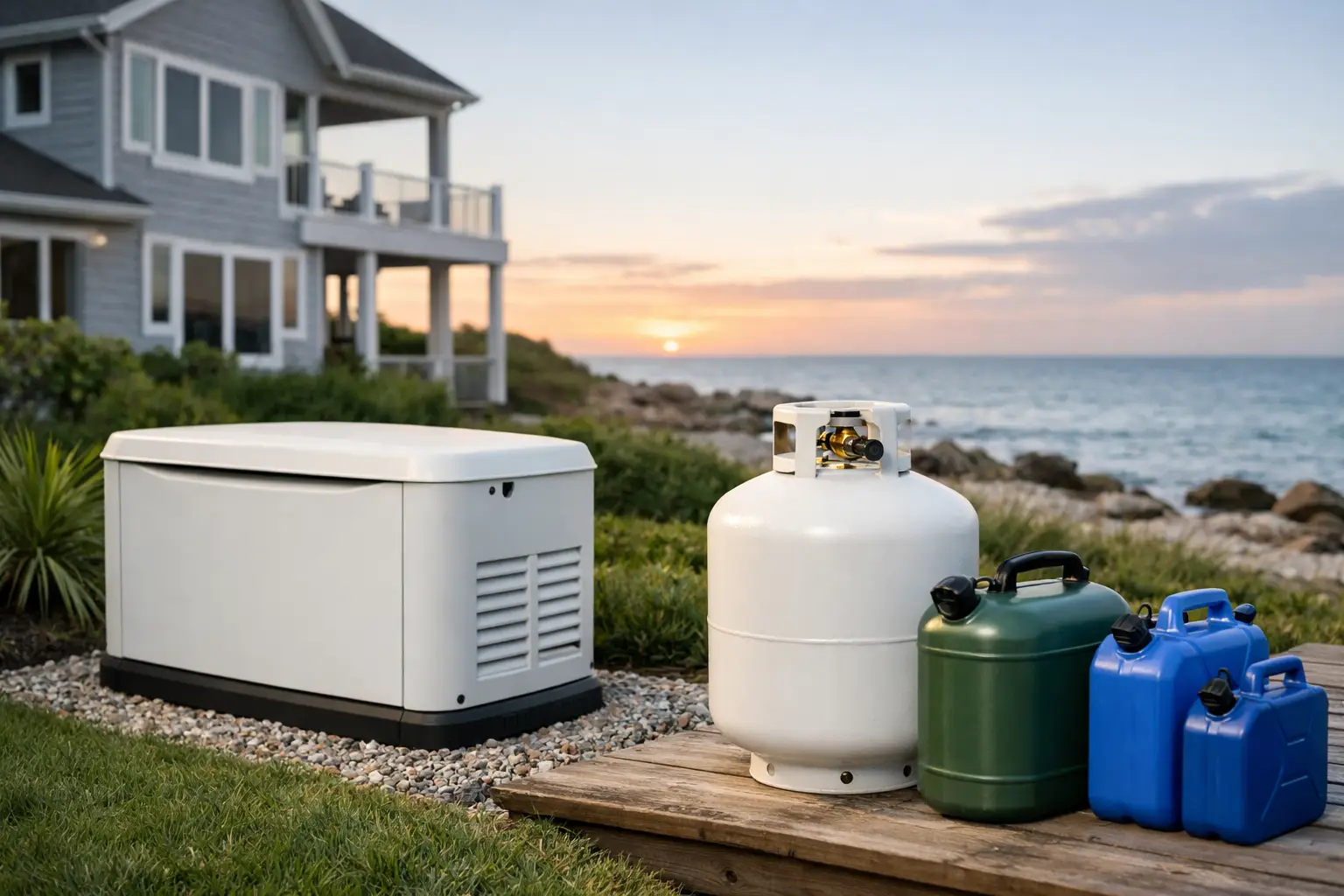
Standby Generator Fuel Options for Coastal Homes
A standby generator is only as dependable as the fuel available when the utility power goes out. For Gulf Shores and Orange Beach property owners, choosing among standby generator fuel options means looking beyond the generator itself. Storm outages, flood exposure, fuel deliveries, home load requirements, and the location of the equipment all affect whether backup power performs when it is needed.
The right fuel is not the same for every home, condo, rental property, or business. Natural gas may offer the simplest long-term supply for one property, while propane may be the more practical answer for another. Diesel can be a strong fit for larger commercial applications, but it brings different storage and maintenance responsibilities. A proper generator plan starts with the property, the expected outage duration, and the systems that must remain powered.
Standby Generator Fuel Options at a Glance
Most permanently installed standby generators run on natural gas, liquid propane, or diesel. Gasoline is common for portable generators, but it is generally not the preferred fuel for an automatic standby system. It has a shorter storage life, requires more frequent refueling, and creates greater fuel-handling concerns during a major outage.
Natural gas and propane are especially common for residential standby generators because many generator models are designed to use one or both fuels. Diesel is more common in commercial settings, larger properties, and applications where high electrical loads or longer operating periods are expected.
Fuel selection should happen early in the project. It affects generator sizing, placement, permitting, fuel-line work, tank location, safety clearances, and the cost of installation.
Natural Gas: Convenient Where Service Is Reliable
Natural gas is a practical choice when a property already has dependable gas utility service and sufficient capacity at the meter. Because the fuel is supplied through a utility line, there is no on-site tank to monitor or schedule for refills. For homeowners who want automatic backup power without managing fuel deliveries, that convenience is a major benefit.
Natural gas does have limits. The gas line and meter must be sized to supply the generator along with other gas appliances, such as water heaters, furnaces, ranges, pool heaters, or dryers. A line that works fine during normal use may not have enough capacity when a generator starts and runs under load. An installer should calculate the available gas capacity rather than assuming an existing line will work.
Natural gas also depends on the utility system remaining operational. Gas service is often reliable during electrical outages, but no fuel source is guaranteed in every event. For properties in areas with limited natural gas infrastructure, extending service may be costly or impractical.
For a coastal home with established natural gas service, this option is often a clean, low-maintenance path to whole-home or essential-load backup power.
When Natural Gas Makes Sense
Natural gas is often a good fit when outages are occasional, utility gas service is readily available, and the owner wants minimal fuel management. It can also work well for rental homes and second homes where a tank level cannot be checked regularly.
Propane: Flexible, Independent On-Site Fuel
Propane, also called LP gas, is stored in an on-site tank and delivered by a fuel supplier. It is one of the most flexible standby generator fuel options for homes that do not have natural gas service. It burns cleanly, stores well, and allows the property owner to maintain a dedicated supply of fuel for outages.
The main decision with propane is tank capacity. A small tank may support a generator for a limited time, while a larger tank provides more runtime but requires additional space, planning, and upfront expense. Generator fuel use changes significantly based on the unit size and the electrical load being carried. Running a generator at partial load consumes less fuel than running a whole-house system with multiple air conditioners, electric appliances, and pool equipment operating.
Propane tanks can be aboveground or underground, subject to site conditions, local requirements, and supplier policies. In coastal Alabama, placement deserves special attention. The tank and associated equipment should be located outside areas vulnerable to vehicle damage, excessive standing water, or difficult service access after a storm. Clearances from the generator, building openings, ignition sources, and property lines also matter.
Unlike diesel, propane does not degrade in storage the same way. That is a meaningful advantage for seasonal homes, vacation properties, and owners who may go months without using generator fuel.
What to Ask Before Choosing Propane
Ask how many gallons the generator will use per hour at typical and maximum loads, how many days of runtime the tank should support, and whether other appliances share the same tank. A generator that must operate critical systems for several days needs a fuel plan built around realistic outage conditions, not a guess based on a tank’s total capacity.
Diesel: Strong for Larger Loads and Commercial Needs
Diesel standby generators are known for durability, efficiency under heavier loads, and suitability for many commercial applications. They are often considered for businesses, multifamily properties, larger facilities, and systems that need to power substantial equipment. Depending on the application, diesel may be appropriate for fire pumps, elevators, refrigeration, office operations, or critical electrical loads.
The trade-off is fuel storage and maintenance. Diesel must be stored properly, protected from water contamination, and monitored over time. Fuel can degrade, especially in humid coastal conditions, and tanks may need treatment, testing, polishing, or periodic replacement of stored fuel. A generator can be mechanically sound but still fail to start if the fuel quality has been neglected.
Diesel also requires thoughtful tank placement, spill prevention, and compliance with applicable codes. For commercial properties, these details should be coordinated with the electrical design, site plan, and any required inspections.
Diesel is not automatically better because it is associated with larger equipment. For a typical home that needs lights, refrigeration, communications, a few outlets, and selected HVAC loads, natural gas or propane is often simpler to own. Diesel becomes more compelling as electrical demand, runtime expectations, and operational priorities increase.
Dual-Fuel Generators: Understand What “Dual Fuel” Means
Some standby generators are designed to operate on either natural gas or propane. These are often described as dual-fuel systems, though they do not necessarily run on both fuels at the same time. The generator is typically configured for one fuel source during installation.
This flexibility can be useful for homeowners who may add natural gas later or who need a generator model compatible with propane today. It does not eliminate the need to choose, size, and install the fuel supply correctly. Fuel type can affect the generator’s output rating, so the electrical load calculation should be based on the actual fuel the unit will use.
Portable generators marketed as dual fuel may run on gasoline and propane, but that is a different category from a permanently installed automatic standby generator. Portable equipment should never be connected to a home electrical system without an approved transfer method installed by a qualified electrician.
Fuel Supply Is Only One Part of Generator Reliability
A dependable standby system needs more than a generator and fuel tank. It requires an automatic transfer switch, correctly sized electrical connections, proper grounding and bonding, safe equipment placement, and a clear plan for which circuits or appliances will operate during an outage.
A whole-home generator may be appropriate for a full-time residence with significant comfort and safety needs. An essential-load system may be the more economical choice for a condo, vacation home, or smaller property. It can keep refrigeration, lighting, internet equipment, security systems, garage doors, and selected outlets operating without the cost and fuel demand of powering every circuit.
Coastal conditions add another layer of planning. Generator enclosures, connections, fasteners, and outdoor equipment are exposed to humidity, salt air, wind-driven rain, and storm debris. Placement should allow for manufacturer-required airflow and service access while reducing exposure to flooding and physical damage. Routine maintenance matters, including exercise cycles, battery checks, oil and filter service, and periodic inspection of the fuel system.
Choose Based on Your Property, Not Just the Generator Price
The lowest initial equipment price is not always the lowest-cost backup power plan. A generator that is too small can leave essential systems unavailable. One that is oversized can add unnecessary fuel use and installation expense. A fuel tank that offers only a short runtime may create stress during an extended outage, while a tank that is much larger than needed can raise project costs without providing meaningful value.
Before making a decision, identify the loads that matter most, estimate how long you want to operate during an outage, and evaluate the fuel service available at the property. Then have the electrical system, fuel supply, and generator location assessed together. This is particularly important for older homes, properties with service upgrades planned, and commercial sites with specialized loads.
MNE Electric can help property owners evaluate generator capacity, transfer equipment, electrical requirements, and installation considerations so the backup-power plan fits the property instead of forcing the property to fit the generator. The best fuel choice is the one that gives you a safe, maintainable source of power when coastal weather has made normal service anything but certain.