
How to Protect Electronics From Surges Safely
A single surge can damage more than a television or laptop. It can shorten the life of HVAC controls, refrigerators, smart home equipment, security systems, and business electronics without leaving an obvious sign. Knowing how to protect electronics from surges means looking beyond a power strip and building protection into the electrical system itself.
For homes, condos, rental properties, and businesses along the Alabama coast, surge protection deserves extra attention. Storm activity, utility interruptions, lightning, and power restoration after an outage can all create electrical events that place sensitive equipment at risk. Salt air and humidity are separate maintenance concerns, but they also make it worthwhile to keep the entire electrical system inspected and in good condition.
What a Power Surge Can Do
A power surge is a brief spike in voltage traveling through an electrical system. Most equipment is designed to operate at a steady voltage. When voltage rises beyond what its internal components can handle, the extra energy can damage circuit boards, wiring, motors, and control modules.
Lightning gets most of the attention because it can create an extreme surge. But many damaging surges begin inside the property. Large appliances such as air conditioners, refrigerators, pumps, and power tools can create smaller switching surges when their motors turn on or off. Utility grid changes and power returning after an outage can do the same.
Not every surge causes immediate failure. A device may keep working after repeated low-level events, yet its components can gradually weaken. That is why a television that seems fine today may fail earlier than expected, or an appliance control board may stop working with little warning.
How to Protect Electronics From Surges With Layers
The most dependable approach is layered surge protection. Each layer handles a different part of the problem, and no single device can protect every circuit and every type of equipment.
Start at the electrical panel
A whole-home surge protective device is installed at or near the main electrical panel. It is designed to divert excess voltage from surges entering through the utility line before that energy spreads through branch circuits in the home or building.
This is the foundation for protecting hardwired equipment that cannot be plugged into a standard surge strip, including HVAC systems, well or pool equipment, garage door openers, appliances, lighting controls, and many connected devices. For commercial properties, panel-level protection can also help protect equipment distributed across offices, retail areas, kitchens, and common spaces.
Whole-home protection is not a substitute for point-of-use protection. It reduces the surge energy entering the system, but sensitive electronics can still benefit from another layer at the outlet.
Use quality point-of-use surge protectors
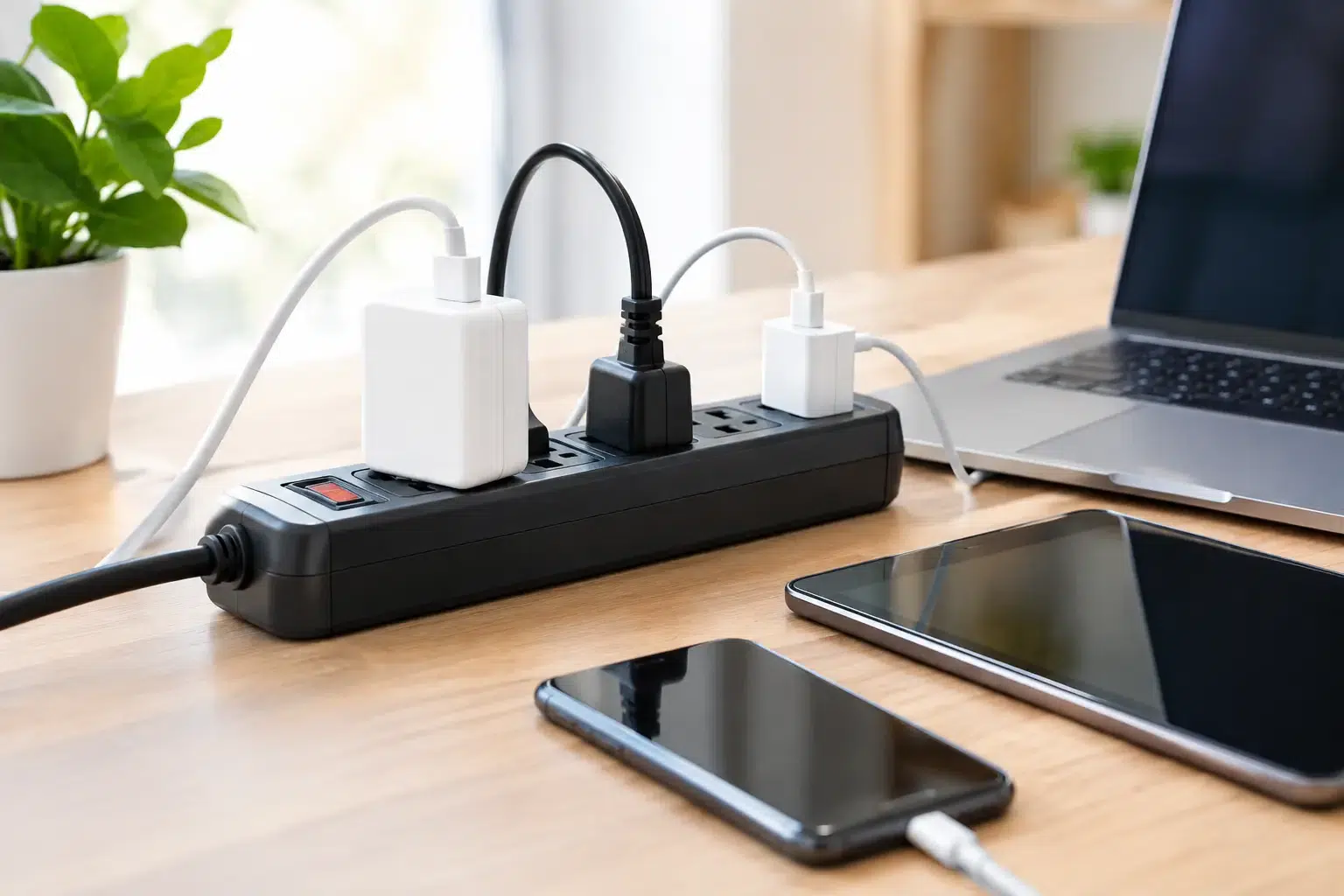
Plug-in surge protectors are useful for televisions, computers, routers, gaming systems, audio equipment, and similar devices. The key word is surge protector. An ordinary power strip may give you more outlets, but it may provide no surge suppression at all.
Choose products that are clearly labeled as surge protective devices and are appropriate for the equipment connected to them. A higher joule rating generally means the device can absorb more energy over its service life, but joules are not the only consideration. Look for a visible protection-status indicator, enough spacing for power adapters, and a rating suited to the intended location.
For a home office or business workstation, connect the computer, monitor, dock, and network equipment to the same quality surge protector when practical. This helps reduce the chance of a voltage difference between connected devices. A battery backup system, often called a UPS, can be a better fit for computers, point-of-sale equipment, medical devices where appropriate, and network hardware because it also provides short-term power during an outage.
Do not forget data and communication lines
Surges do not enter only through electrical outlets. Cable, phone, internet, satellite, and outdoor antenna lines can carry damaging voltage into connected equipment. A television protected at the wall outlet may still be exposed through a coaxial cable. A router may be affected through a network or communication line.
Modern service installations should have proper bonding and grounding for these systems. Depending on the equipment and service arrangement, additional protection for coaxial, telephone, or data lines may be appropriate. This is especially relevant for properties with security cameras, gate controls, internet-based business systems, or equipment installed in detached buildings.
Grounding Is Part of the Protection System
Surge protective devices need a properly installed grounding and bonding system to work as intended. Grounding provides a controlled path for fault current and surge energy, while bonding helps keep metal components and electrical systems at the same electrical potential.
A surge protector cannot correct an outdated, damaged, or improperly configured electrical system. Older homes may have ungrounded receptacles, deteriorated panel components, undersized service equipment, or previous work that does not meet current requirements. Commercial buildings and condos can have their own challenges, particularly after renovations, additions, or changes in equipment load.
If outlets test as ungrounded, breakers trip frequently, lights flicker when equipment starts, or you see corrosion around panel equipment, schedule an electrical evaluation rather than relying on plug-in devices. These symptoms do not always mean a surge issue, but they are worth investigating.
Protect Major Equipment Where It Is Most Vulnerable
Some of the most expensive electronics in a property are built into appliances and mechanical systems. HVAC equipment is a prime example. Modern systems use control boards, thermostats, variable-speed motors, and other sensitive components that can be affected by electrical disturbances.
Dedicated surge protection may be recommended for an air conditioner, heat pump, pool pump, irrigation controller, generator control system, or other high-value equipment. The right approach depends on the system, its age, the manufacturer’s requirements, and how the circuit is installed. A qualified electrician can coordinate with HVAC or equipment contractors when needed.
For properties with standby generators, transfer equipment should be installed correctly and evaluated as part of the overall surge protection plan. Generators improve continuity during an outage, but the transfer between utility and generator power is not a reason to overlook surge protection.
Replace Protection Devices Before They Fail You
Surge protectors do not last forever. Each event they absorb uses some of their protective capacity. After a significant lightning event or major utility disturbance, a device may no longer provide its original level of protection even if its outlets still deliver power.
Check the status light on plug-in surge protectors periodically. If the protection indicator is off, replace the unit. Replace any device that is cracked, discolored, warm during normal use, damaged by moisture, or missing a grounding pin. In rental and commercial settings, include this check in routine maintenance rather than waiting for a tenant or employee to report a problem.
Avoid overloading strips or connecting one power strip to another. These practices create heat and fire risks and do not improve surge protection. If there are not enough outlets where equipment is used, the better solution is often to have properly located receptacles installed.
Practical Steps During Storm Season
No installed device can guarantee survival from a direct lightning strike. When severe weather is approaching, unplugging nonessential sensitive electronics provides the strongest physical separation from the electrical and communication systems. This may be practical for spare televisions, computer equipment, and small appliances, but it is not realistic for every device or every property.
Focus on equipment that is expensive, portable, and easy to disconnect. Do not handle cords or electrical equipment if water is present, and do not attempt electrical work during a storm. After an outage, allow utility power to stabilize before restarting sensitive equipment when possible.
For vacation homes, condos, and businesses that sit vacant at times, installed whole-home protection is particularly valuable because no one may be there to unplug equipment before a storm. It also protects systems that need to stay connected, such as refrigeration, security, internet equipment, and HVAC controls.
When It Is Time for a Professional Assessment
A professional surge protection plan begins with the property’s electrical panel, grounding system, service equipment, and the devices you most need to protect. The recommendation for a newer single-family home will not necessarily match the needs of an older coastal condo, a restaurant with refrigeration equipment, or a business with computers and electronic payment systems.
MNE Electric can evaluate existing electrical equipment and recommend properly installed panel-level and equipment-specific surge protection for properties in Gulf Shores and nearby coastal communities. An assessment is also a good time to identify aging panels, grounding concerns, inadequate outlet capacity, or service upgrades that could affect long-term reliability.
The best time to protect electronics is before the next storm, outage, or unexplained equipment failure. A few well-chosen improvements can help keep the systems you rely on working when you need them most.