
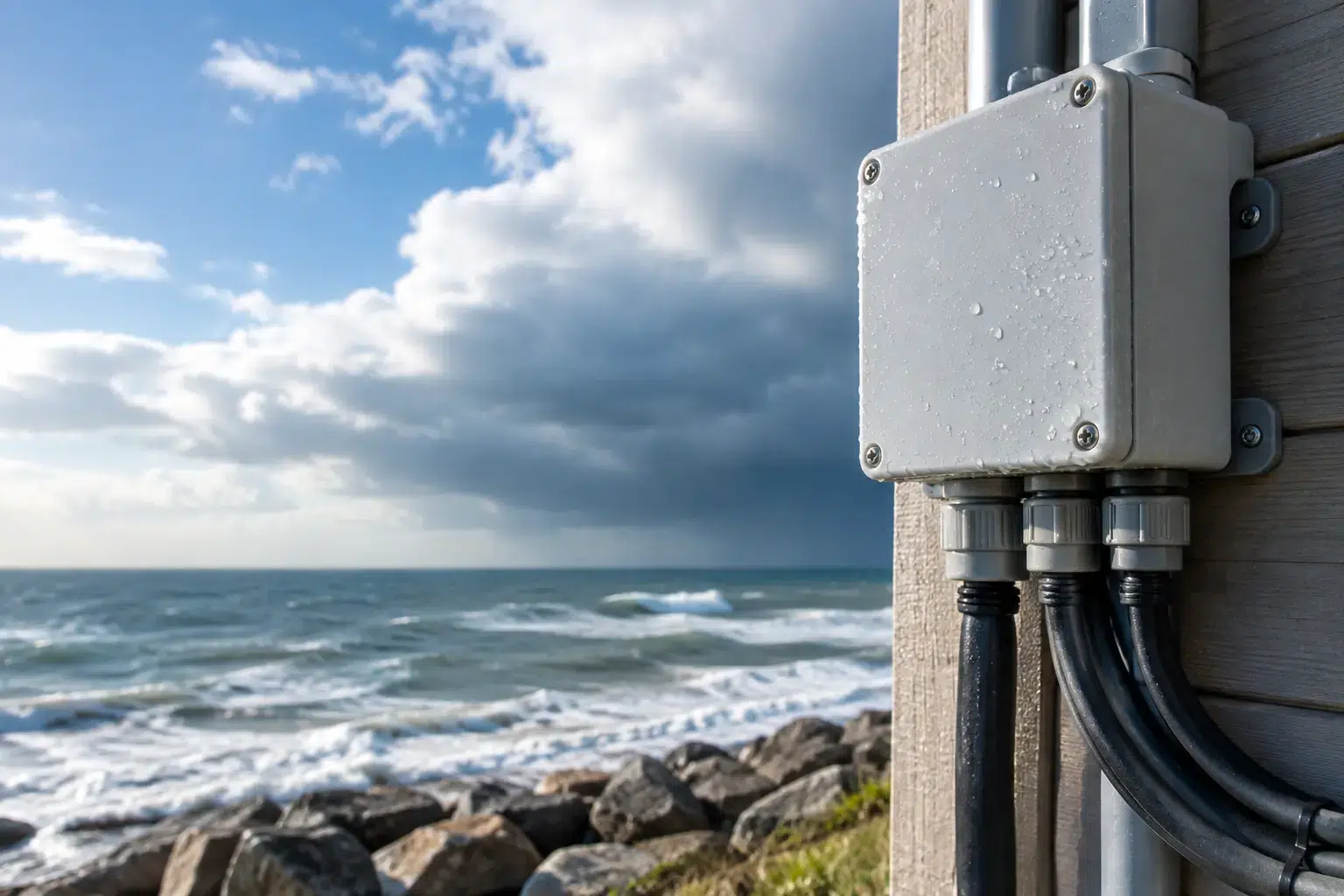
Coastal Wiring That Holds Up to Salt and Storms
A light switch that worked perfectly last season can start sticking, corroding, or tripping a breaker after months of salt air and humidity. That is the reality of coastal wiring: electrical systems near the water face conditions that inland properties may never encounter. In Gulf Shores, Orange Beach, and nearby communities, the right electrical work is not simply about getting power where it needs to go. It is about helping that system continue to operate safely through moisture, corrosion, heat, heavy use, and severe weather.
For homeowners, condo owners, and commercial property operators, that difference affects everyday reliability. It also affects when a small repair becomes a larger safety or replacement project.
Why Coastal Wiring Requires a Different Approach
Salt air is one of the most persistent threats to electrical components near the coast. Even when equipment is not directly exposed to spray, salt-laden moisture can settle on metal parts, connections, enclosures, and outdoor equipment. Over time, that exposure can accelerate corrosion. A corroded connection can create resistance, heat, intermittent performance, or complete equipment failure.
Humidity adds another layer of concern. Electrical boxes, outdoor receptacles, pool equipment, HVAC disconnects, dock power, and exterior lighting all need protection from water intrusion. A cover that is cracked, missing, or not rated for the location may allow moisture to reach energized components. The result may be a nuisance trip, a damaged device, or a genuine shock hazard.
Storms also change the equation. High winds can damage service equipment and exterior fixtures, while lightning and utility interruptions can send damaging surges through a property. The goal is not to make a building invulnerable to a major storm. It is to use sound installation methods, appropriate equipment, and practical protection so the electrical system is better prepared for normal coastal wear and unexpected events.
The Parts of a Coastal Electrical System That Need Attention
Not every electrical component needs the same level of protection. An indoor bedroom receptacle has a very different exposure level than an outlet under an elevated beach house, an air-conditioning disconnect, or a parking-area light at a commercial property. A qualified electrician evaluates the location, the equipment, and how the space is actually used.
Outdoor outlets and covers
Outdoor receptacles should be properly protected with ground-fault circuit interrupter, or GFCI, protection where required. GFCIs are designed to shut off power quickly when they sense an imbalance that can indicate electricity is traveling through an unintended path. They are especially valuable around wet locations, exterior spaces, garages, pools, and similar areas.
The cover matters as much as the receptacle. For outlets that may be used while something is plugged in, a weather-resistant in-use cover helps protect the connection from rain and blowing moisture. Replacing a worn outlet with a new one is helpful, but it does not solve the full problem if the box, cover, wiring connection, or mounting hardware is damaged or corroded.
Service panels and electrical connections
A panel should stay dry, accessible, properly labeled, and in good condition. Rust around the panel enclosure, discoloration near breakers, recurring breaker trips, or a burning odor all warrant prompt professional attention. These are not issues to cover up with paint or postpone until a renovation.
Connections throughout the system deserve attention as well. Salt exposure can affect terminals and hardware long before a problem is obvious from the outside. During an inspection or repair, an electrician can look for corrosion, loose connections, improper previous work, and equipment that is no longer appropriate for its environment.
Exterior lighting, signs, and common-area equipment
Commercial properties, condo associations, and vacation rentals often rely heavily on exterior lighting, landscape lighting, signage, gate systems, and common-area amenities. These systems are exposed more frequently than a typical residential fixture and may be used for long hours. Equipment selection, mounting, wiring methods, and maintenance planning all influence how well they hold up.
It depends on the application. A fixture suitable for a protected porch may not be suitable for an open beachfront walkway. Higher-rated or corrosion-resistant equipment can cost more initially, but may reduce premature replacements and service interruptions. Choosing the least expensive fixture without considering exposure can become more expensive over time.
HVAC, pool, dock, and specialty equipment
Air-conditioning equipment, pool systems, irrigation controls, lifts, and dock-related equipment all create their own electrical demands. These are not areas for improvised repairs. Water, metal structures, high-amperage equipment, and frequent use can create serious risks when the installation is damaged or incorrectly modified.
If a property has added equipment over time, it is also worth confirming that the electrical system can support it. A renovated rental, a pool heater, a new hot tub, or expanded outdoor amenities can increase load well beyond what the original panel and service were designed to handle.
Plan for Power Needs, Not Just the Immediate Repair
Coastal homes and businesses often evolve. A homeowner may add an EV charger, standby generator, outdoor kitchen, workshop, or elevator. A property manager may need upgraded parking-lot lighting, new HVAC units, or improved power distribution for common areas. Each addition can be reasonable on its own, but electrical capacity must be considered as a whole.
That is why load calculations and service evaluations matter. Adding a circuit is not always the same as having enough overall capacity. In some cases, a panel upgrade, service upgrade, subpanel, or redesigned distribution plan is the safer long-term choice. In other cases, the existing system has adequate room and only needs a properly installed dedicated circuit.
A professional evaluation avoids two common mistakes: overbuilding a system for a small need or adding equipment to a panel that is already near its practical limit. The best answer depends on the property, existing equipment, planned additions, and applicable code requirements.
Surge Protection Is Worth Considering Near the Coast
Whole-home or whole-building surge protection is a practical consideration for coastal properties. Lightning activity, utility switching, and power restoration after outages can create voltage events that affect electronics and appliances. A plug-in power strip may help protect the items connected directly to it, but it does not provide the same level of protection as a properly installed surge protective device at the electrical panel.
Surge protection is not a guarantee against every electrical event, especially a direct lightning strike. It is one part of a layered approach that may also include proper grounding, quality wiring, point-of-use protection for sensitive electronics, and prompt repairs when storm damage is suspected.
For rental properties and businesses, the value is often broader than replacing a television or computer. Protecting network equipment, access controls, point-of-sale systems, appliances, and smart controls can help reduce downtime when guests, residents, or customers depend on those systems.
Warning Signs You Should Not Ignore
Coastal wear is often gradual, which makes it easy to overlook. Schedule an electrical evaluation if you notice breakers that trip repeatedly, lights that flicker, outlets that feel warm, corrosion on exterior equipment, buzzing sounds, water near electrical components, or a persistent burning smell.
After a storm, check only from a safe distance for damaged service equipment, fallen lines, broken fixtures, flooded outlets, or exposed wiring. Do not touch damaged equipment, stand in water near electrical components, or attempt a temporary repair with tape, extension cords, or improvised covers. Call the utility company for downed lines and contact a licensed electrical contractor for property-side damage.
Older properties deserve particular attention. Aging panels, aluminum branch wiring, inadequate grounding, overloaded circuits, and unpermitted additions can all complicate a coastal electrical system. An inspection can identify priorities before a failure occurs during peak rental season, a holiday weekend, or severe weather.
Choosing the Right Electrical Work for Coastal Conditions
Good coastal electrical work starts with an accurate assessment, not a one-size-fits-all product recommendation. The electrician should understand whether the equipment is indoors, under cover, directly exposed, used occasionally, or running every day. They should also consider corrosion resistance, weather ratings, code requirements, access for future service, and the total electrical load on the property.
For a small repair, the right fix may be replacing a weather-damaged receptacle and cover. For a larger project, it may involve correcting outdated wiring, upgrading a panel, adding surge protection, or preparing a property for a generator or EV charging. Clear estimates and a careful explanation of the work help owners make decisions based on safety and long-term value rather than urgency alone.
MNE Electric helps coastal Alabama property owners address both everyday electrical issues and planned upgrades with work tailored to the conditions around the property. A timely inspection of exposed equipment can often prevent a minor coastal wiring concern from becoming an inconvenient and costly failure.