
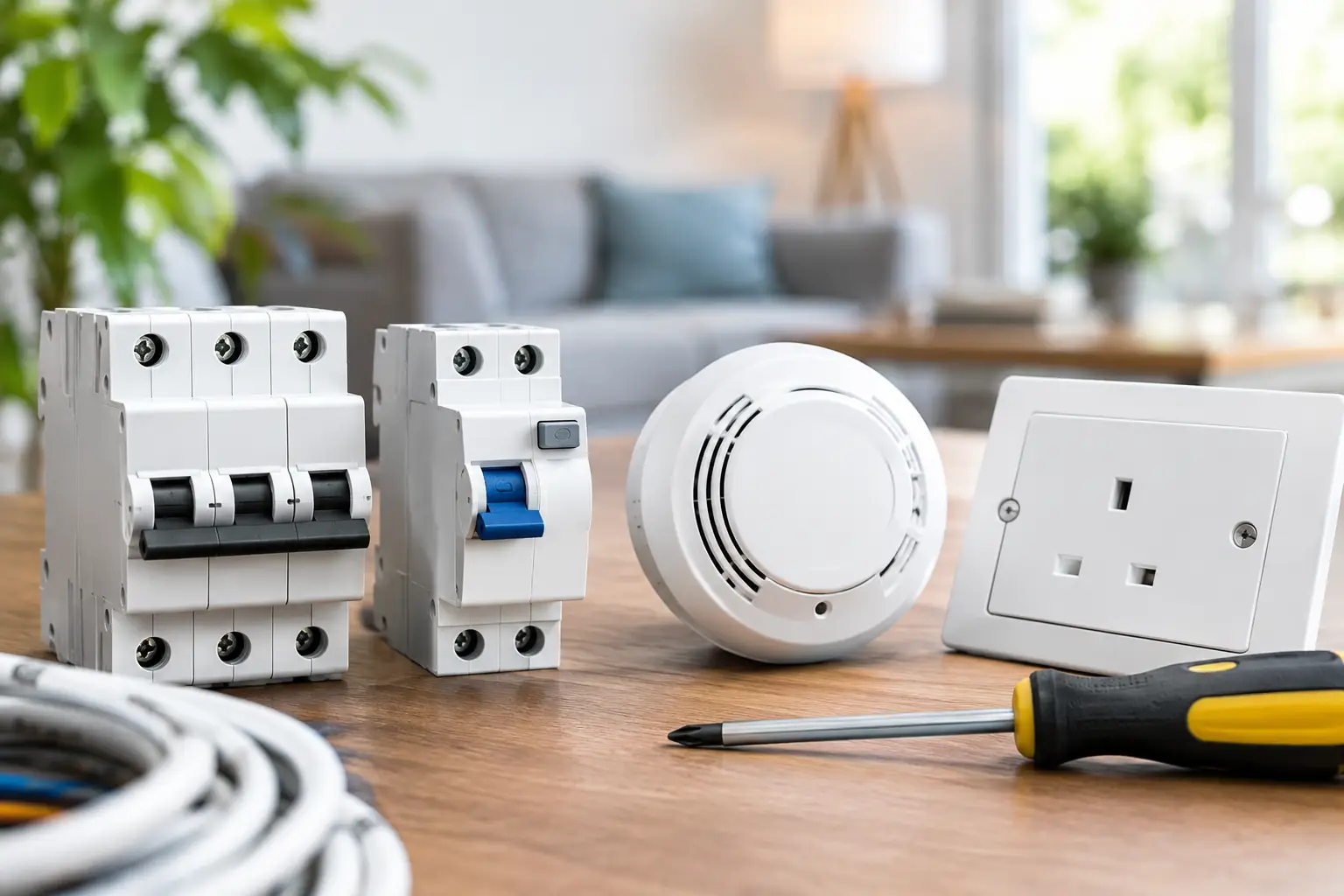
Electrical Safety Devices That Protect Your Property
A breaker that trips when the microwave and toaster run together is frustrating. A breaker that does not trip when wiring overheats is dangerous. Electrical safety devices are designed to recognize problems that ordinary switches and outlets cannot, cutting power or directing it safely before a fault becomes a shock, fire, or expensive equipment failure.
For homeowners, condo owners, and commercial property operators along Alabama’s coast, the right protection matters for more than convenience. Salt air, humidity, storms, aging panels, heavy air-conditioning loads, and modern additions such as EV chargers can all put extra demands on an electrical system. The best combination of safety devices depends on the building, its age, the equipment being used, and the condition of the wiring.
Click/Tap here to get a free electrical system inspection!
Start With the Devices Inside Your Electrical Panel
The electrical panel is the control center for most of a property’s safety protection. If the panel is outdated, damaged, undersized, or showing signs of corrosion, even well-chosen devices may not perform as intended. A qualified electrician should evaluate the panel and the circuits before adding major loads or protection equipment.
Circuit Breakers and Fuses
Circuit breakers and fuses protect conductors from overheating when a circuit carries more current than it was designed to handle. When a breaker trips, it is responding to an overload or a short circuit. Resetting it once after reducing the load may be reasonable. Repeated tripping is a signal to investigate, not a reason to keep resetting the breaker.
Older fuse panels and obsolete electrical panels deserve particular attention. They may not have capacity for current household demands, and improvised fixes such as oversizing a fuse can defeat the very protection the system was built to provide. A service upgrade can improve both safety and capacity when a property needs additional circuits, central HVAC equipment, a generator, or EV charging.
GFCI Protection for Shock Hazards
Ground-fault circuit interrupters, commonly called GFCIs, protect people from electrical shock. They monitor the flow of electricity and shut off power quickly when current takes an unintended path, such as through water or a person.
GFCI protection is especially important in bathrooms, kitchens, garages, laundry areas, crawl spaces, outdoor locations, pool-adjacent areas, and other damp or wet environments. It may be provided by a GFCI receptacle, a GFCI circuit breaker, or a device that protects outlets downstream on the same circuit.
A GFCI outlet has test and reset buttons, but those buttons are not decoration. Property owners should test accessible GFCI devices periodically according to the manufacturer’s instructions. If a device will not reset, trips repeatedly, feels warm, or has visible damage, it should be inspected rather than bypassed. In coastal properties, weather exposure and moisture intrusion can shorten the service life of outdoor electrical components.
AFCI Protection for Fire Prevention
Arc-fault circuit interrupters, or AFCIs, address a different risk. They are designed to detect dangerous arcing conditions that can occur when a conductor, connection, cord, or damaged cable creates an electrical arc. These arcs can generate enough heat to ignite nearby materials without necessarily drawing enough current to trip a standard breaker.
AFCI protection is commonly required in many living areas of newer homes. It is particularly valuable where wiring runs behind walls, beneath floors, or through attics where a developing problem may not be visible. An AFCI breaker that trips should not automatically be labeled a nuisance. Sometimes the cause is a failing appliance, a damaged extension cord, a loose connection, or a wiring condition that needs correction.
Whole-Home Surge Protection Is Not Optional for Many Properties
A plug-in power strip can help protect a few electronics, but it is not a substitute for a whole-home surge protective device installed at the electrical panel. Panel-level surge protection helps reduce the impact of voltage spikes caused by lightning activity, utility switching, and large equipment cycling on and off.
Surges do not always arrive as a dramatic lightning strike. Smaller, repeated surges can gradually damage sensitive circuit boards in refrigerators, HVAC systems, televisions, network equipment, appliances, and smart-home devices. In Gulf Shores and Orange Beach, where thunderstorms and severe weather are part of life, whole-home surge protection is a practical layer of defense.
Surge protectors do have limits. They do not repair poor wiring, prevent every lightning-related loss, or replace proper grounding and bonding. A qualified installation includes checking that the electrical system is correctly grounded, because a surge device needs a safe path to direct excess energy.
Grounding and Bonding Keep Faults From Becoming Shocks
Grounding and bonding are not always visible devices, but they are essential electrical safety measures. Grounding connects the electrical system to the earth. Bonding connects metal components so they remain at the same electrical potential and allow a fault to travel back to the source in a controlled way, helping protective devices operate.
Problems with grounding and bonding can show up in older homes, remodels, detached buildings, docks, and properties that have had equipment replaced over time. They can also occur after storm damage or corrosion affects connections. Improper grounding may leave metal equipment energized during a fault, while improper bonding can interfere with breaker operation.
This is not a do-it-yourself diagnosis. Testing and correcting grounding requires knowledge of the electrical system, local code requirements, and the condition of the service equipment.
Safety Devices for Outlets, Outdoor Areas, and Families
Not every safety improvement begins at the panel. Tamper-resistant receptacles have built-in shutters that help prevent children from inserting objects into outlet slots. They are a sensible upgrade when replacing worn or damaged outlets, especially in homes with young children or visiting family.
Outdoor outlets need weather-resistant components and covers rated for use while a cord is plugged in. A basic flip cover may protect an unused outlet, but it does not adequately shield a connected cord and receptacle from rain. Exterior outlets should also have appropriate GFCI protection.
For rental homes, condos, and commercial spaces, damaged receptacles, loose plugs, cracked cover plates, and cords run under rugs deserve prompt attention. These conditions may look minor, but they can create heat, arcing, or trip hazards. A safe property is often the result of addressing small issues before they become large ones.
Generator and EV Charger Safety Requires the Right Equipment
Backup generators and EV chargers add useful capability, but they also increase the importance of correct electrical design. A portable or standby generator must be connected through approved transfer equipment. Without a properly installed transfer switch or interlock, generator power can backfeed into utility lines, creating a serious hazard for utility workers and damaging electrical equipment.
An EV charger needs a dedicated circuit sized for the equipment and the electrical load calculation for the property. The charger, wiring method, breaker type, and panel capacity all need to work together. Simply adding a higher-rated breaker to an existing circuit is not a safe solution.
For both generators and EV chargers, installation choices depend on the building’s service size, available panel space, anticipated loads, and the equipment manufacturer’s requirements. A professional assessment can identify whether a straightforward installation is appropriate or whether a panel or service upgrade should come first.
When Should You Schedule an Electrical Safety Inspection?
An inspection is a practical next step when breakers trip repeatedly, lights flicker, outlets feel warm, or you notice a burning odor. It is also wise before purchasing a home, renovating a kitchen or bath, adding high-demand equipment, or reopening a property after storm damage.
Property managers may benefit from periodic inspections of common-area panels, exterior lighting, pool equipment, emergency systems, and vacant units. These areas often receive heavier use or exposure than a typical interior circuit and can be overlooked until a failure occurs.
MNE Electric helps Gulf Coast property owners evaluate existing protection, identify code-conscious upgrades, and complete repairs correctly. The goal is not to install every device available. It is to make sure the protection matches the property, the electrical system, and the way the space is used.
If an outlet is hot, a breaker will not stay on, or water has reached electrical equipment, turn off power if it can be done safely and arrange for a qualified electrician to assess the issue. Acting early protects the people who use the property and helps prevent a manageable electrical problem from becoming an emergency.