
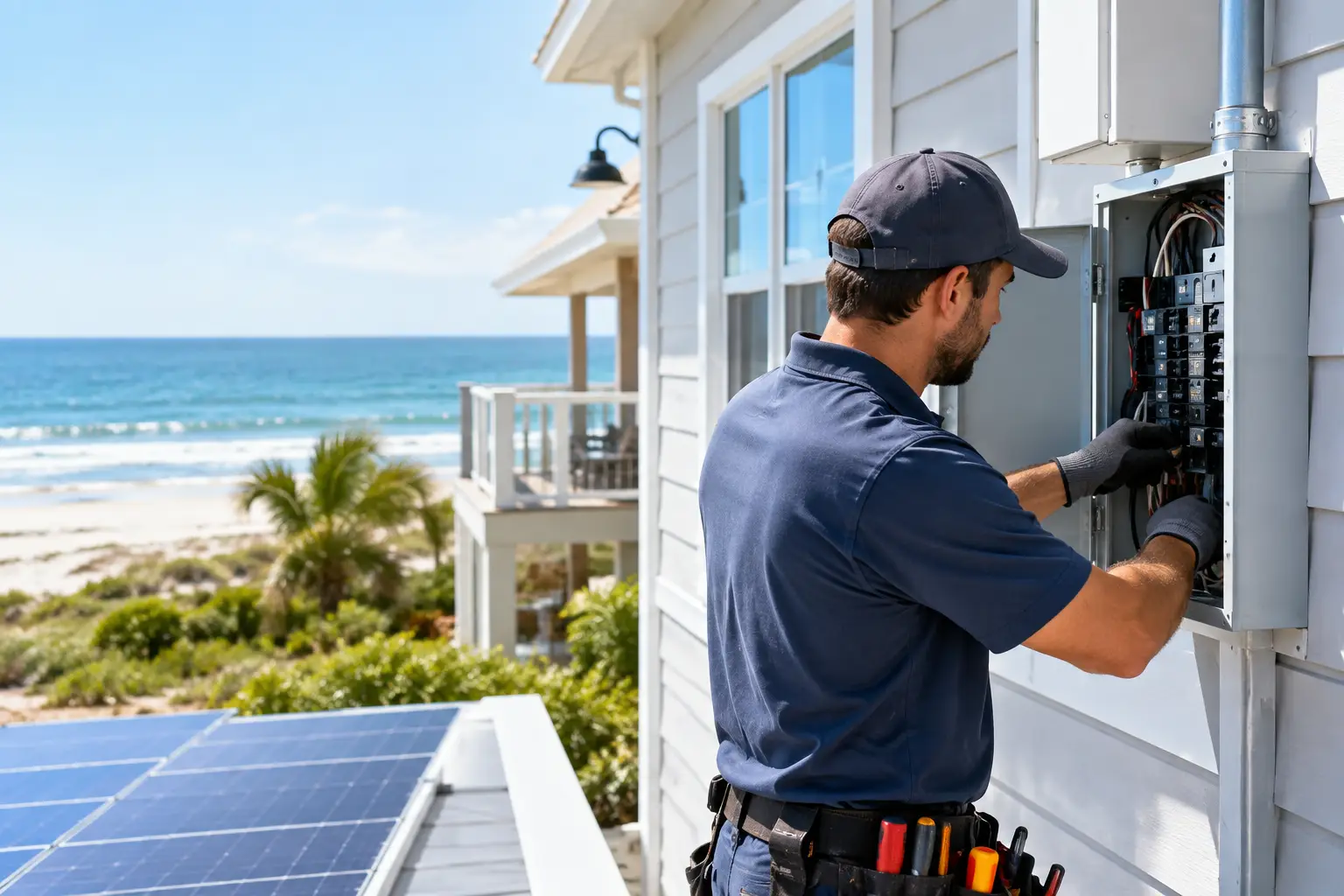
Best Electrical Upgrades for Coastal Homes
Salt air does not stay politely outside. In Gulf Shores and Orange Beach, it works its way into outdoor equipment, connections, panels, and electrical devices over time. The best electrical upgrades for coastal homes address that reality while also giving your property the capacity to handle modern appliances, storm outages, EVs, and everyday family life.
The right project depends on the age of the home, the condition of the existing wiring, whether it is a primary residence or rental property, and how close it sits to the water. A newer home may only need stronger surge protection and weather-resistant exterior equipment. An older beach house may need a panel upgrade, grounding improvements, and a careful inspection before any new loads are added.
Start With the Electrical Service and Panel
Your electrical panel is the distribution center for the entire home. If it is outdated, crowded, corroded, or regularly tripping breakers, adding a generator, EV charger, hot tub, or additional HVAC equipment can create more problems than it solves.
A service or panel upgrade can provide more available capacity, properly sized breakers, room for future circuits, and safer operation. This is especially valuable in coastal homes that have accumulated additions over the years, such as outdoor kitchens, pool equipment, elevators, dehumidifiers, or renovated living spaces.
Not every home needs a larger service. Sometimes the existing service is adequate, but the panel needs repair, replacement, or better circuit organization. A qualified electrical evaluation identifies the actual limitation instead of treating a panel upgrade as a one-size-fits-all answer.
For condo owners, the work may also involve building rules, meter configurations, common electrical rooms, and association approvals. Property managers should plan ahead, since panel and service work can require coordination that is harder to arrange during peak rental season.
Whole-Home Surge Protection Is a Coastal Essential
Power surges do not only come from lightning strikes. They can also occur when power is restored after an outage, when large equipment cycles on and off, or when the utility system experiences a disturbance. Along the Alabama coast, summer storms make this a concern worth taking seriously.
A whole-home surge protective device installed at the electrical panel helps reduce the risk to appliances and electronics throughout the house. It is not a replacement for point-of-use protection at sensitive equipment, but it creates an important first line of defense for HVAC controls, refrigerators, televisions, smart-home devices, and other expensive systems.
Surge protection is one of the most practical upgrades because it protects equipment you already own. It is also a sensible addition when replacing a panel, installing a generator, or completing a major remodel. In homes with extensive smart controls or high-end appliances, it is often a small investment compared with the cost of replacing damaged components.
Improve Outdoor Equipment and Weather Protection
Coastal electrical equipment needs to be selected and installed with the environment in mind. Salt-laden moisture can accelerate corrosion at disconnects, receptacles, conduit fittings, exterior panels, and lighting connections. Equipment that looks acceptable from a distance may have deteriorated internally or at connection points.
Exterior receptacles should have appropriate weather-resistant components and protective covers. Pool, spa, dock, outdoor kitchen, and landscape lighting circuits need particular attention because they combine exposure to water with frequent use. Ground-fault circuit interrupter protection, commonly called GFCI protection, is critical in these areas and should be tested regularly.
For homes near the beach, an electrician may recommend corrosion-resistant materials, improved enclosures, or changes to how wiring is routed and protected. The best choice depends on the specific location and exposure. A covered patio several miles inland faces a different level of wear than equipment exposed directly to wind-driven salt spray.
Regular inspection matters just as much as the initial installation. Catching corrosion early can prevent a minor repair from becoming a failed connection, damaged circuit, or safety issue during a storm.
Add Backup Power for Storm Readiness
When a storm interrupts power, the priority is usually simple: keep essential systems running safely. A standby generator can support selected circuits or, with the right design, much of the home. Common priorities include refrigeration, lighting, internet equipment, HVAC, sump or condensate pumps, security systems, and medical equipment.
The key decision is whether to power essential loads or pursue whole-home backup. Essential-load systems generally cost less and can be an excellent fit for a vacation home, rental property, or household focused on core needs. Whole-home generator systems offer greater convenience, but they require more generator capacity, fuel planning, electrical design, and budget.
A professionally installed transfer switch is a necessary part of any generator setup. It isolates the home from the utility during an outage and allows power to transfer safely. Portable generators also require safe connection methods. Running extension cords through doors or using improper backfeed methods creates serious fire and shock hazards.
Backup power is not only about hurricanes. Shorter outages from thunderstorms, vehicle accidents, and utility repairs can still affect refrigeration, security, and comfort. For coastal homeowners who spend part of the year away, a generator paired with reliable monitoring can provide added peace of mind.
Upgrade Grounding and Safety Protection
Electrical safety upgrades are often less visible than a new fixture or EV charger, but they are among the most valuable improvements a home can receive. Proper grounding helps provide a path for fault current and supports the performance of surge protection. In older homes, grounding systems may need evaluation as part of a panel upgrade or major renovation.
Modern safety devices can also help reduce the risk of shock and electrical fires. GFCI protection is especially important in bathrooms, kitchens, garages, outdoors, crawl spaces, laundry areas, and locations near water. Arc-fault circuit interrupter protection, or AFCI protection, can help detect dangerous arcing conditions in certain interior circuits.
Requirements vary by area, home age, and scope of work, so the appropriate upgrades should be determined during an inspection. The goal is not to replace every device unnecessarily. It is to correct safety gaps, bring altered areas up to current requirements, and make sure protective devices are functioning as intended.
Prepare for EV Charging Before You Need It
Electric vehicles are becoming more common in coastal Alabama, and a dedicated Level 2 charger can make ownership far more convenient than relying on a standard outlet. The charger itself is only part of the project. The home needs adequate electrical capacity, a properly sized circuit, correct wire sizing, and an installation location that works for daily parking.
For some homes, installing the charger is straightforward. For others, especially homes with full panels or detached garages, the work may require a panel upgrade, subpanel, trenching, or load calculation. Planning early is useful even if you are not buying an EV this year. Running conduit during a remodel or garage project can lower costs later.
Rental owners should think carefully before adding EV charging. It can be a desirable amenity, but the design should clarify access, metering, and responsibility for electricity use. The right approach for a single-family vacation rental may differ from a multi-unit condominium property.
Do Not Overlook Lighting, Ventilation, and Energy Use
Electrical upgrades can also make a coastal home easier to maintain and more comfortable to use. Well-planned exterior lighting improves entry safety and visibility around walkways, stairs, parking areas, and docks. Motion sensors, timers, and photocells can reduce unnecessary operation while keeping key areas lit when needed.
Dedicated circuits for dehumidifiers, attic ventilation, and HVAC accessories can support moisture management, which is a constant consideration near the coast. These additions should be evaluated as part of the home’s larger electrical load, not added casually to an already crowded circuit.
For homeowners looking to manage utility costs, an energy assessment can identify equipment or usage patterns that deserve attention. Electrical improvements do not always produce instant savings, but they can support more efficient HVAC operation, better controls, and smarter use of high-demand equipment.
Choose Upgrades Based on Risk and Daily Use
There is no single checklist that fits every coastal property. A recently built home with a dependable panel may benefit most from surge protection, generator planning, and exterior equipment maintenance. An older home may need foundational safety work before adding any modern convenience.
A professional inspection gives you a practical starting point: identify immediate safety concerns, document corrosion or capacity issues, and prioritize work based on what protects the property and supports how you live. MNE Electric helps Gulf Shores-area homeowners and property owners plan upgrades that fit the home, the local environment, and the budget.
The most useful next step is to look beyond the next repair. When you address capacity, protection, and backup power together, you give your coastal home a stronger electrical foundation for the next storm season and the years that follow.