
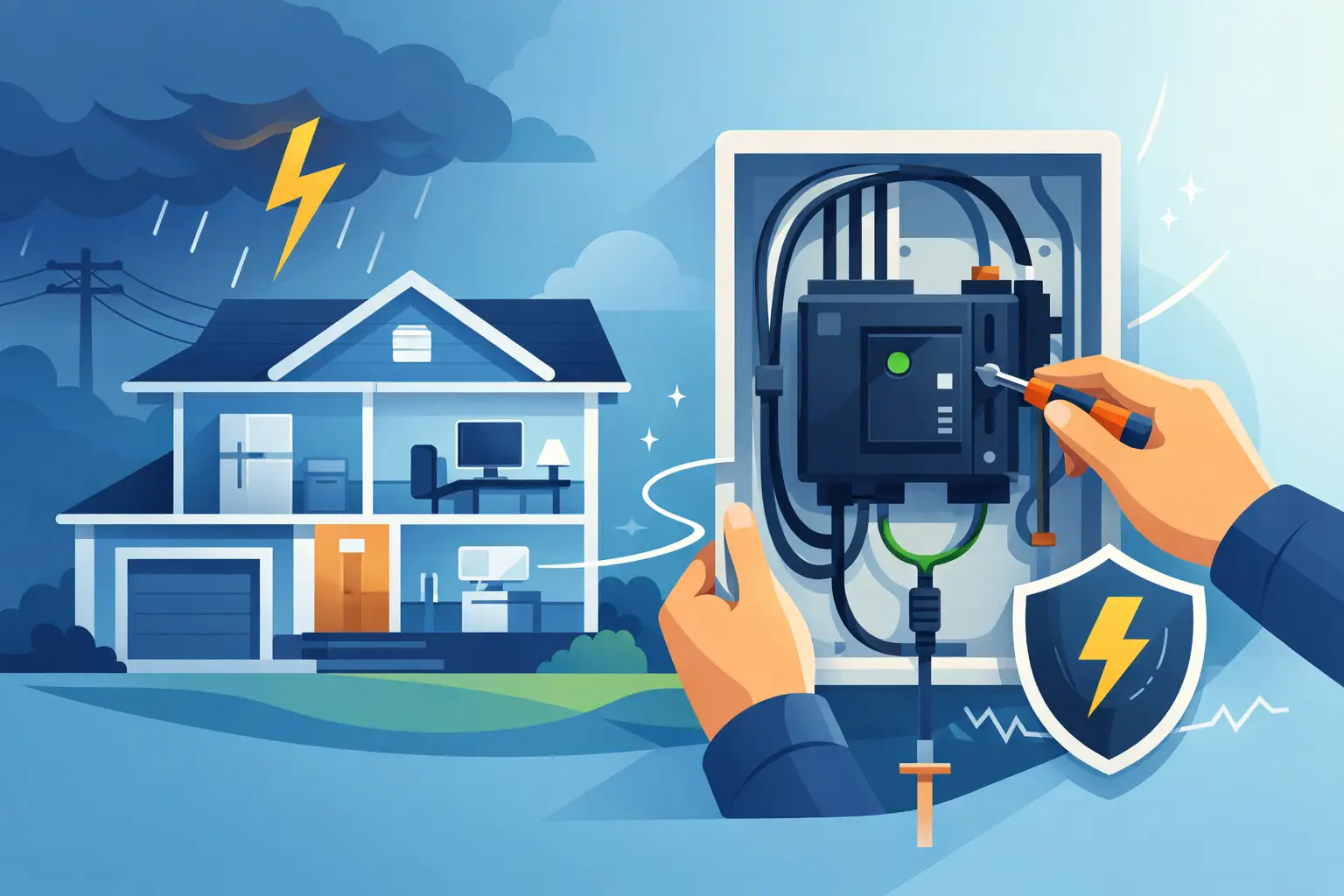
Whole House Surge Protector Installation
A single summer storm can do more than trip a breaker. In coastal Alabama, power disturbances, lightning activity, and utility switching events can send excess voltage through your electrical system in a split second. That is why whole house surge protector installation is not just a nice upgrade for many homes and properties in Gulf Shores and Orange Beach. It is a practical way to protect appliances, electronics, HVAC equipment, and other connected systems that cost far more to replace than the device itself.
A lot of people think of surge protection as the power strip behind the TV or computer. Those point-of-use devices still have a place, but they only protect what is plugged into them. They also do nothing for hardwired equipment like your air conditioner, pool equipment, refrigerator, dishwasher, garage door opener, or electrical panel itself. A whole-home device works at the source, helping reduce damaging voltage before it moves through branch circuits and into the equipment you rely on every day.
What whole house surge protector installation actually does
A whole-house surge protector is typically installed at the main electrical panel or service equipment. Its job is to divert excess voltage safely to ground when a surge occurs. That surge might come from lightning nearby, but it can also come from the utility grid, large motors cycling on and off, or heavy equipment inside the property.
The key point is that surges are not always dramatic events. Some are large and immediate. Others are small, repeated hits that slowly shorten the life of electronics and major appliances. You may not notice those smaller surges right away, but over time they can contribute to early equipment failure, erratic operation, and costly service calls.
For homeowners, this matters because modern homes contain more sensitive electronics than ever. Smart thermostats, Wi-Fi equipment, security systems, appliances with control boards, tankless water heaters, and charging equipment all depend on circuits that do not respond well to unstable voltage. For condo owners and property managers, the risk is similar, especially in buildings with shared infrastructure and multiple systems running year-round.
Why surge protection matters more on the Gulf Coast
In Baldwin County, weather is part of the calculation. Thunderstorms are common, and even when a direct strike does not occur, nearby lightning can create strong surges on utility lines. Coastal properties also tend to rely heavily on HVAC systems, dehumidification, pumps, and outdoor equipment. Those systems are expensive, and many contain electronic boards that are more vulnerable than older mechanical components.
There is also the reality of occupancy patterns. Vacation homes, rental properties, and condos may sit empty for stretches of time. If a surge damages equipment while no one is there, the issue can go unnoticed until a tenant arrives, the AC stops cooling, or refrigerated contents are lost. In those cases, a relatively modest electrical upgrade can help reduce a much larger interruption.
That said, surge protection is not a guarantee against every electrical event. No device can promise that absolutely nothing will ever be damaged, especially in the case of a direct lightning strike or a property with grounding issues. What it does offer is an important first line of defense that improves the odds in your favor.
Whole house surge protector installation is not one-size-fits-all
Not every property needs the exact same solution. The right setup depends on the age of the electrical service, the condition of the panel, the quality of the grounding and bonding system, and the type of equipment in the home or building.
In some cases, installation is straightforward because the panel has room and the service equipment is in good condition. In other cases, an electrician may find that the panel is outdated, overcrowded, or not ideal for adding modern protective devices. If grounding needs improvement, that should be addressed too, because surge protection works best as part of a properly installed and code-compliant electrical system.
This is where professional evaluation matters. A surge protector cannot make up for loose connections, deteriorated service equipment, or an improperly grounded system. If those issues exist, they should be corrected so the protection device can do its job effectively.
Where the device is installed
Most whole-home surge devices are mounted at or inside the main service panel. The closer the device is installed to the service equipment, the better it can respond to incoming surges. Some properties may also benefit from additional protection at subpanels or dedicated equipment, especially if there are long circuit runs or high-value systems such as HVAC equipment, elevators, gates, or specialty electronics.
For larger homes and commercial spaces, layered protection often makes more sense than relying on one device alone. That approach depends on the property and the value of the equipment being protected.
What it protects best
Whole-home surge protection is especially useful for major appliances, air conditioning systems, refrigerators, washers and dryers, ovens, microwave circuits, garage systems, and built-in electronics. It also helps support the protection of connected smart home devices and entertainment systems, though many electricians still recommend quality point-of-use protection for especially sensitive electronics.
That combination is often the most practical approach. The whole-home device handles larger incoming surges, while local surge strips or receptacle protection help with sensitive end-use equipment.
Why professional installation matters
Whole house surge protector installation involves working directly at the electrical panel. This is not a basic DIY task. The panel contains energized components that can cause serious injury, and the device must be selected and installed to match the service configuration and code requirements.
A qualified electrician will look at more than just where to mount the device. Proper installation includes checking panel compatibility, verifying grounding and bonding, using the right breaker configuration when required, and confirming that the overall system is safe. That is especially important in older homes, remodeled properties, and coastal environments where corrosion and wear can affect electrical equipment over time.
A professional installation also gives you a chance to evaluate the bigger picture. If your home has frequent breaker issues, an aging panel, generator plans, or an EV charger on the horizon, it makes sense to look at surge protection as part of a broader electrical strategy instead of a standalone add-on.
When it makes sense to install one
For some properties, the answer is simple – now. If you have newer appliances, smart home technology, a home office, or expensive HVAC equipment, the cost of a surge protector is usually small compared to the cost of replacing even one damaged component.
It also makes sense during other electrical upgrades. If you are replacing a panel, upgrading service, adding a generator connection, or installing an EV charger, that is often the ideal time to include surge protection. The work is already centered around the service equipment, which can make planning easier and more efficient.
For rental and vacation properties, the value is often in reducing avoidable downtime. Losing cooling, refrigeration, gate operation, or internet-connected systems can create immediate inconvenience for owners and guests. Surge protection will not solve every problem, but it can help reduce one common source of expensive disruption.
What to expect from the process
In most cases, installation begins with an assessment of the panel and service. The electrician will confirm what type of system you have, whether the panel is in suitable condition, and which protective device is appropriate for the property. If there are concerns about grounding, panel space, or code issues, those should be discussed before installation moves forward.
The actual installation is usually a relatively contained job, but the timing can vary depending on the panel layout and whether any corrections are needed. After installation, the device should be tested or verified according to manufacturer and code requirements, and you should understand what its status indicators mean. Many surge devices include indicator lights that show whether the protection module is still functioning properly.
That last detail matters. Surge devices do not last forever. After taking enough hits, a unit may need replacement even if the electrical system is otherwise fine. A good installer will explain how to monitor that and when to schedule service if the device shows it is no longer providing protection.
If you are considering whole house surge protector installation for a home, condo, or commercial property in the Gulf Shores area, it is worth having the panel, grounding, and overall service looked at by a licensed electrician who understands local conditions. The best electrical upgrades are the ones that prevent bigger problems, and surge protection is often one of them.