
How to Test GFCI Outlets Safely in Your Home
A GFCI outlet can look perfectly normal while its safety protection has stopped working. That is why knowing how to test GFCI outlets is a practical part of maintaining a home, condo, rental property, or business – especially in kitchens, bathrooms, garages, and outdoor spaces where moisture is common.
A quick test takes less than a minute. What matters is understanding what should happen, what a failed test means, and when not to keep pressing buttons and hoping the outlet comes back on.
What a GFCI Outlet Does
GFCI stands for ground-fault circuit interrupter. This device monitors the flow of electricity through a circuit. If it detects current taking an unintended path – potentially through water, damaged wiring, or a person – it shuts off power quickly to reduce the risk of serious shock.
Most modern GFCI outlets have two buttons on the face: TEST and RESET. The TEST button simulates a ground fault. The RESET button restores power after the outlet trips, provided the circuit is safe and the device is functioning.
You will commonly find them in bathrooms, kitchens near sinks, laundry rooms, garages, unfinished areas, pool equipment locations, exterior receptacles, and other damp or wet locations. In coastal Alabama, humidity, wind-driven rain, salt air, and outdoor living areas can put additional stress on exterior electrical devices and covers.
A GFCI outlet may also protect other standard outlets downstream on the same circuit. In other words, one GFCI in a garage or bathroom can control several outlets that do not have TEST and RESET buttons themselves.
How to Test GFCI Outlets With the Built-In Buttons
The built-in TEST and RESET buttons provide the simplest and most reliable routine check. Before you begin, plug a small lamp, phone charger, or other known-working device into the outlet. This makes it easy to confirm whether power turns off and returns as expected.
First, make sure the device is on. If the lamp lights or the charger works, press the TEST button firmly. You may hear or feel a click. The plugged-in device should immediately lose power.
Next, press the RESET button. It should click into place, and the lamp or charger should turn back on. When those steps work correctly, the GFCI has passed a basic functional test.
Some newer GFCI outlets have an indicator light rather than the familiar buttons alone. The light color or pattern varies by manufacturer, so check the label on the device or its instructions. A red light, no light, or a light that remains on after testing can indicate a tripped device, a wiring issue, an expired GFCI, or another fault depending on the model.
Do not test an outlet with wet hands, while standing on a wet surface, or during active water exposure. If the outlet, cover, or surrounding wall is wet, leave it alone and call an electrician.
What a Passing Test Looks Like
A passing test has three clear results: the outlet had power before the test, power stopped when TEST was pressed, and power returned after RESET was pressed. If any part of that sequence does not happen, do not assume the outlet is still providing GFCI protection.
For example, an outlet that supplies power but does not trip when TEST is pressed may be defective. An outlet that trips but will not reset may be responding to an active problem on the circuit, such as moisture intrusion, a damaged appliance, or a wiring fault. Both situations deserve attention.
How Often Should You Test GFCI Outlets?
For most homes and businesses, a monthly test is a good habit. The test itself is quick, and regular checks are particularly worthwhile for outlets exposed to weather, humidity, cleaning activities, pool areas, or heavy use.
If monthly testing is not realistic, set a recurring reminder and test them at least several times per year. Property managers may want to include GFCI checks in scheduled turnover, seasonal, or preventive maintenance routines. Before a busy rental season, checking bathroom, kitchen, balcony, garage, and exterior outlets is a sensible safety step.
A test is also appropriate after a major storm, flooding, a power surge, renovation work, or any event that may have exposed electrical equipment to water or physical damage. A GFCI that begins tripping more often than usual is giving you useful information. Resetting it repeatedly without finding the cause is not a fix.
Testing With a Plug-In GFCI Outlet Tester
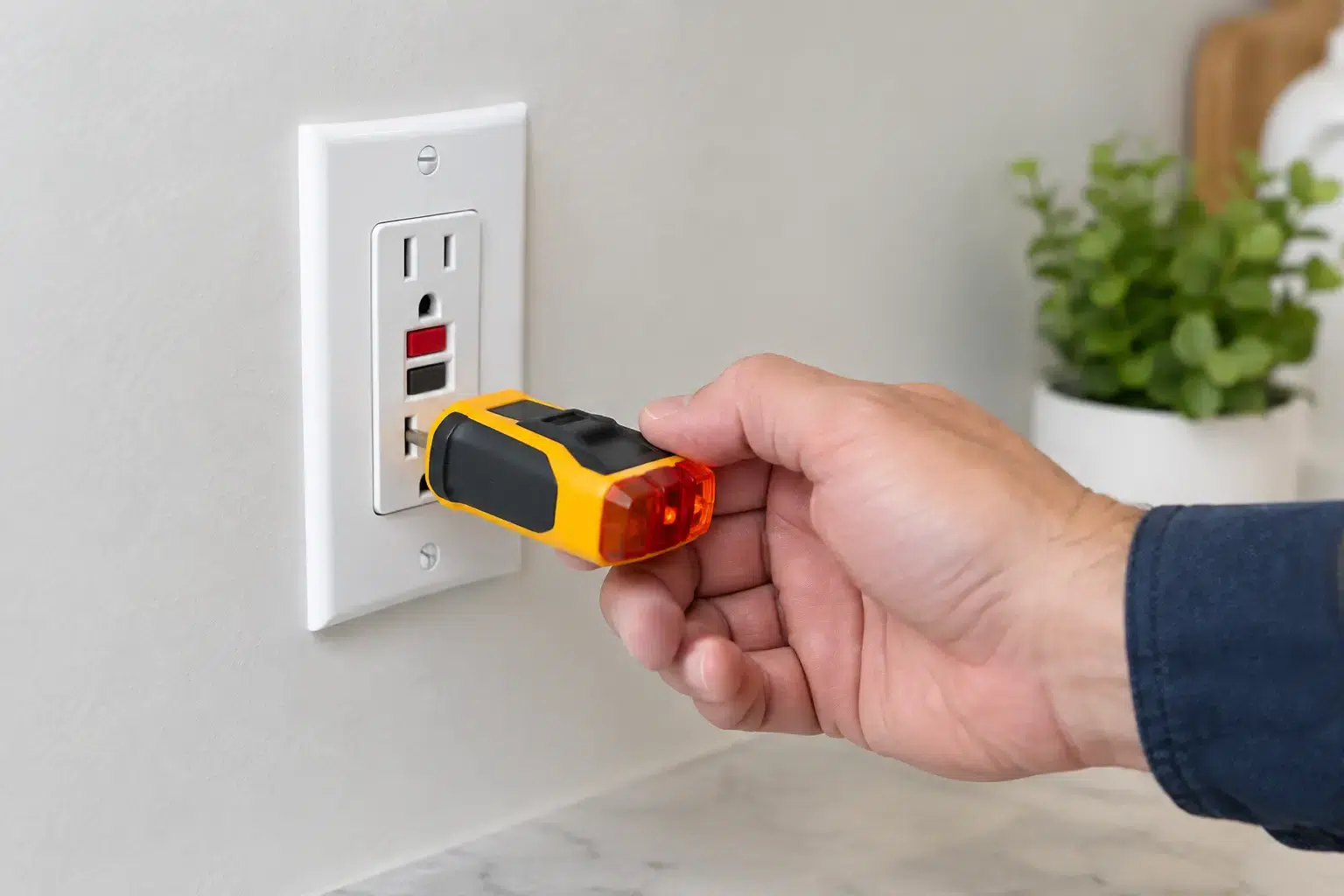
A plug-in receptacle tester can be helpful, especially when checking several outlets. These small tools use lights to show certain common wiring conditions, such as an open ground, reversed polarity, or an open neutral. Many include a button that attempts to trip GFCI protection.
Use the tester as an additional check, not as a replacement for the outlet’s built-in TEST button. Plug it in and compare the light pattern to the chart printed on the tester. If the tester has a test button, press it. The GFCI outlet or the upstream GFCI protecting that circuit should trip and cut power to the tester.
There are limits. A plug-in tester cannot identify every wiring defect, and its light pattern should not be treated as a complete electrical diagnosis. Some older homes, specialty circuits, and certain wiring conditions require professional testing equipment and inspection to determine what is actually happening.
What to Do When a GFCI Will Not Reset
If the RESET button will not stay in, start by unplugging everything connected to that outlet and any nearby outlets that may be on the same circuit. Then try resetting the GFCI once. A plugged-in appliance, extension cord, outdoor device, or moisture-damaged item may be causing the trip.
If it still will not reset, check whether a breaker has tripped at the electrical panel. Reset a tripped breaker fully by moving it to OFF first, then back to ON. If the breaker trips again, leave it off. That is a sign the circuit may have a fault or overload that needs to be evaluated.
Also look for another GFCI outlet in nearby bathrooms, the garage, laundry area, exterior wall, or under a kitchen sink. One upstream GFCI may have tripped and shut off power to the outlet you are trying to use. Reset only devices that are dry, undamaged, and safe to access.
Call a licensed electrician if the outlet will not reset, trips immediately after resetting, feels warm, has discoloration, makes buzzing sounds, smells burnt, or shows signs of water damage. Turn off power at the breaker if you can do so safely, and avoid using the affected circuit until it has been inspected.
Common GFCI Problems Around Coastal Properties
Exterior outlets are among the most common trouble spots around Gulf Shores and Orange Beach properties. A cracked in-use cover, loose gasket, corroded contacts, or water inside an outlet box can cause repeated trips and create a serious hazard. An exterior outlet should have an appropriate weather-resistant device and a cover designed to protect plugs while they are in use.
Garages, patios, decks, pool-adjacent spaces, and ground-level storage areas can also collect moisture and debris. Do not use an extension cord or a temporary cover as a long-term answer to an outlet that trips in wet weather. The right repair may involve replacing the GFCI, upgrading the cover, correcting the box or wiring, or locating a source of water intrusion.
Older properties can present another issue: a GFCI device may be worn out or may not have been installed where current safety standards would require it. A passing test is reassuring, but it does not replace a broader electrical inspection when a home has aging wiring, frequent breaker issues, recent water damage, or planned upgrades.
When to Leave the Testing to an Electrician
Homeowners can safely perform the basic button test on a dry, intact, accessible outlet. Beyond that, electrical troubleshooting becomes more involved quickly. Removing an outlet cover, testing live wiring, replacing a device, or working near a wet location carries risks that are not worth guessing through.
MNE Electric can inspect GFCI protection, identify upstream circuit issues, replace failed devices, and address outdoor or moisture-related electrical concerns for homes and businesses in Gulf Shores and surrounding Baldwin County communities. This is particularly useful when several outlets are out, a breaker keeps tripping, or the problem returns after storms.
A GFCI is a small device with a major safety job. Test it regularly, take repeat trips seriously, and treat any outlet exposed to water or damage as a reason to get qualified electrical help rather than a reason to keep resetting it.