
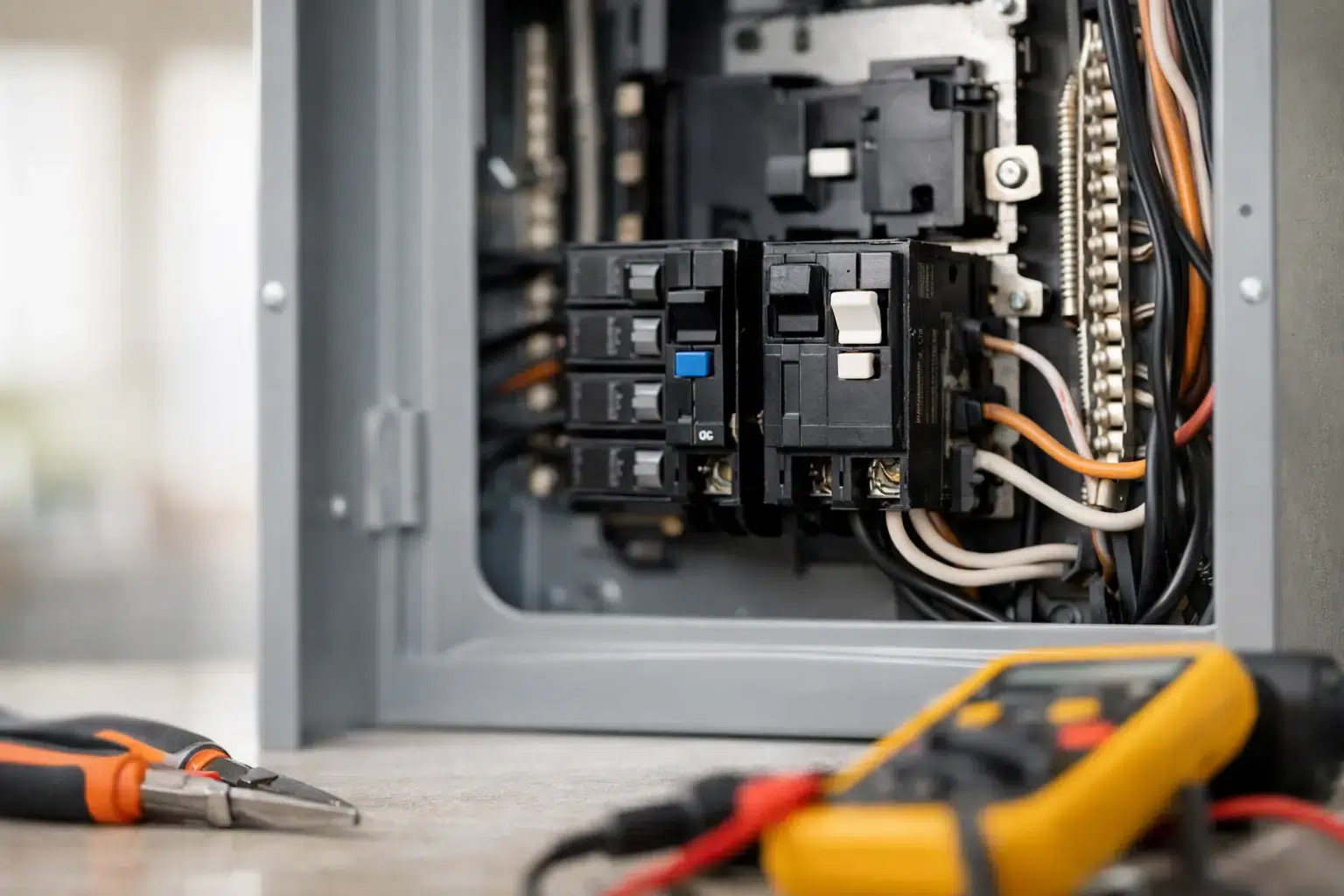
AFCI GFCI Protection: What Your Panel Needs
A breaker that trips when a hair dryer is running may feel like an inconvenience. In many cases, it is doing exactly what it was installed to do. AFCI GFCI protection is designed to recognize different electrical dangers before they become a shock, overheating, or fire problem – and knowing the difference helps property owners make better decisions about repairs and panel upgrades.
For homes, condos, rentals, and commercial spaces, the right protection is not simply about adding the newest breaker. It must match the circuit, the equipment it serves, the condition of the wiring, and the electrical code that applies to the project.
What AFCI and GFCI Protection Do
Although both are safety devices, AFCI and GFCI protection look for very different conditions.
A ground-fault circuit interrupter, or GFCI, is primarily intended to reduce the risk of electrical shock. It monitors the current leaving and returning to a circuit. If even a small amount of current is taking an unintended path – potentially through water, a damaged cord, an appliance casing, or a person – the device disconnects power quickly.
An arc-fault circuit interrupter, or AFCI, is intended to reduce fire risk from dangerous electrical arcing. Arcing can occur when a wire is loose, damaged, pinched, or deteriorated. It can create intense heat at a small point without drawing enough current to trip a standard breaker. AFCI technology looks for the electrical signature associated with those hazardous arcs and shuts down the circuit when it detects one.
In plain terms, GFCI protection is mainly about preventing shock hazards, while AFCI protection is mainly about detecting wiring conditions that can lead to fires. One does not replace the other.
Where AFCI GFCI Protection Is Commonly Needed
GFCI protection is commonly found where electricity and moisture may meet. Bathrooms, kitchens, garages, outdoor receptacles, laundry areas, crawl spaces, unfinished basements, and pool-related equipment are frequent examples. In coastal Alabama, outdoor and damp-location equipment deserves special attention because humidity, salt air, wind-driven rain, and corrosion can affect electrical components over time.
AFCI protection is commonly required for many 120-volt, 15- and 20-amp branch circuits in living spaces. Bedrooms were among the first locations where AFCI requirements became common, but modern code requirements often extend to many areas of a residence, including living rooms, hallways, dining rooms, closets, and similar spaces.
Some circuits need both forms of protection. A kitchen circuit, for example, may need GFCI protection because of countertop and sink-area use, while AFCI requirements may also apply depending on the circuit and the adopted code. This is where a dual-function AFCI/GFCI breaker may be the appropriate solution.
The exact requirements depend on the version of the National Electrical Code adopted by the local authority, the age and design of the building, and whether the work is new construction, a remodel, or a targeted repair. Existing homes are not automatically required to be brought entirely up to the newest code during every service call. However, replacing or extending wiring can trigger requirements that were not present when the property was built.
Breaker Protection vs. Receptacle Protection
GFCI protection can be provided by a GFCI receptacle or by a GFCI breaker in the panel. A receptacle can protect itself and, when wired correctly, downstream outlets on the same circuit. A breaker protects the entire circuit from the panel outward.
AFCI protection is commonly installed as a breaker, though certain outlet-type AFCI devices exist for specific applications. The best method depends on the panel, the wiring layout, accessibility, and what needs protection. A licensed electrician can identify whether a device at the receptacle, a breaker in the panel, or a dual-function breaker is the practical choice.
When a Dual-Function Breaker Makes Sense
A dual-function breaker combines AFCI and GFCI protection in one device. It is often used when a circuit requires both protections and the electrical panel is compatible with that breaker type.
This approach can simplify protection for a qualifying circuit, but it is not a universal answer. Breakers must be listed for the specific panel manufacturer and model. Installing a breaker that merely fits physically is not the same as installing a breaker approved for that panel. The wrong product can create reliability problems and may violate the equipment listing.
Older panels can add another layer of complexity. Some do not support modern dual-function breakers. Others have wiring issues, shared neutrals, damaged bus connections, or mislabeled circuits that should be corrected before new protective devices are installed. If a breaker begins tripping after an upgrade, that does not necessarily mean the breaker is defective. It may be identifying a problem that a standard breaker could not detect.
Why AFCI or GFCI Devices Trip
A GFCI trip can result from a wet or damaged outdoor outlet, a failing appliance, a deteriorated cord, moisture inside a fixture, or wiring that is allowing current to leak to ground. A single trip after a storm or after using a particular appliance can provide a useful clue. Repeated trips should not be ignored or bypassed.
An AFCI trip may be connected to a loose receptacle, damaged wiring, a failing plug or cord, a worn-out appliance, or a connection issue inside a junction box. Certain motors and electronic equipment can also create electrical patterns that require careful diagnosis. Modern AFCI devices are designed to distinguish normal operating arcs from dangerous ones, but a qualified technician should investigate persistent trips rather than treating them as a nuisance.
Do not replace a protective breaker with a standard breaker simply to keep power on. Do not repeatedly reset a breaker that immediately trips, either. Those actions can remove a warning sign while leaving the underlying hazard in place.
Warning Signs That Call for an Electrical Inspection
A protective device that trips once has not always identified a major repair. It may have responded to temporary moisture or a single faulty appliance. Still, several signs warrant a professional inspection:
- A GFCI or AFCI breaker trips repeatedly with normal use.
- A receptacle feels warm, looks discolored, or makes crackling sounds.
- Outdoor outlets have broken covers, corrosion, or visible moisture.
- Lights flicker when an appliance starts or a switch is used.
- A breaker panel has unlabeled circuits, rust, loose components, or frequent unexplained trips.
- A renovation, appliance upgrade, EV charger installation, or generator project is increasing demand on an older electrical system.
These issues are especially relevant in rental properties and condos, where damage may go unreported until it becomes disruptive. Regular inspections help property managers address safety concerns before guests or tenants lose power at an inconvenient time.
Testing and Maintaining Protective Devices
Most GFCI and AFCI devices include a test button. Manufacturers commonly recommend periodic testing, often monthly, but the instructions printed on the device should guide the process. Pressing TEST should disconnect power; pressing RESET should restore it if there is no fault and the device is operating properly.
A failed test, a device that will not reset, or a breaker that trips immediately after resetting deserves attention. Avoid testing circuits when critical equipment could be affected, such as refrigeration, medical equipment, security systems, or business operations. Plan the test or have an electrician assess the circuit safely.
For exterior receptacles, confirm that weather-resistant devices and properly installed in-use covers are present where required. Covers that are cracked, missing, or unable to close around a cord leave the equipment more exposed to moisture and corrosion.
A Safer Approach to Panel Upgrades and Repairs
AFCI GFCI upgrades can be straightforward when the panel, wiring, and circuit layout are in good condition. They can also reveal problems that have been hidden for years. That is why the work should begin with diagnosis, not assumptions.
At MNE Electric, a technician can evaluate the circuit, panel compatibility, grounding and neutral connections, and the condition of devices exposed to moisture or wear. For Gulf Shores-area property owners, that local perspective matters when outdoor equipment and coastal conditions place extra demands on an electrical system.
If a breaker is tripping, treat it as useful information. A timely inspection can identify whether the answer is a worn receptacle, a damaged appliance, a wiring repair, or the right AFCI/GFCI protection for the circuit – before a small electrical issue becomes a larger safety concern.