
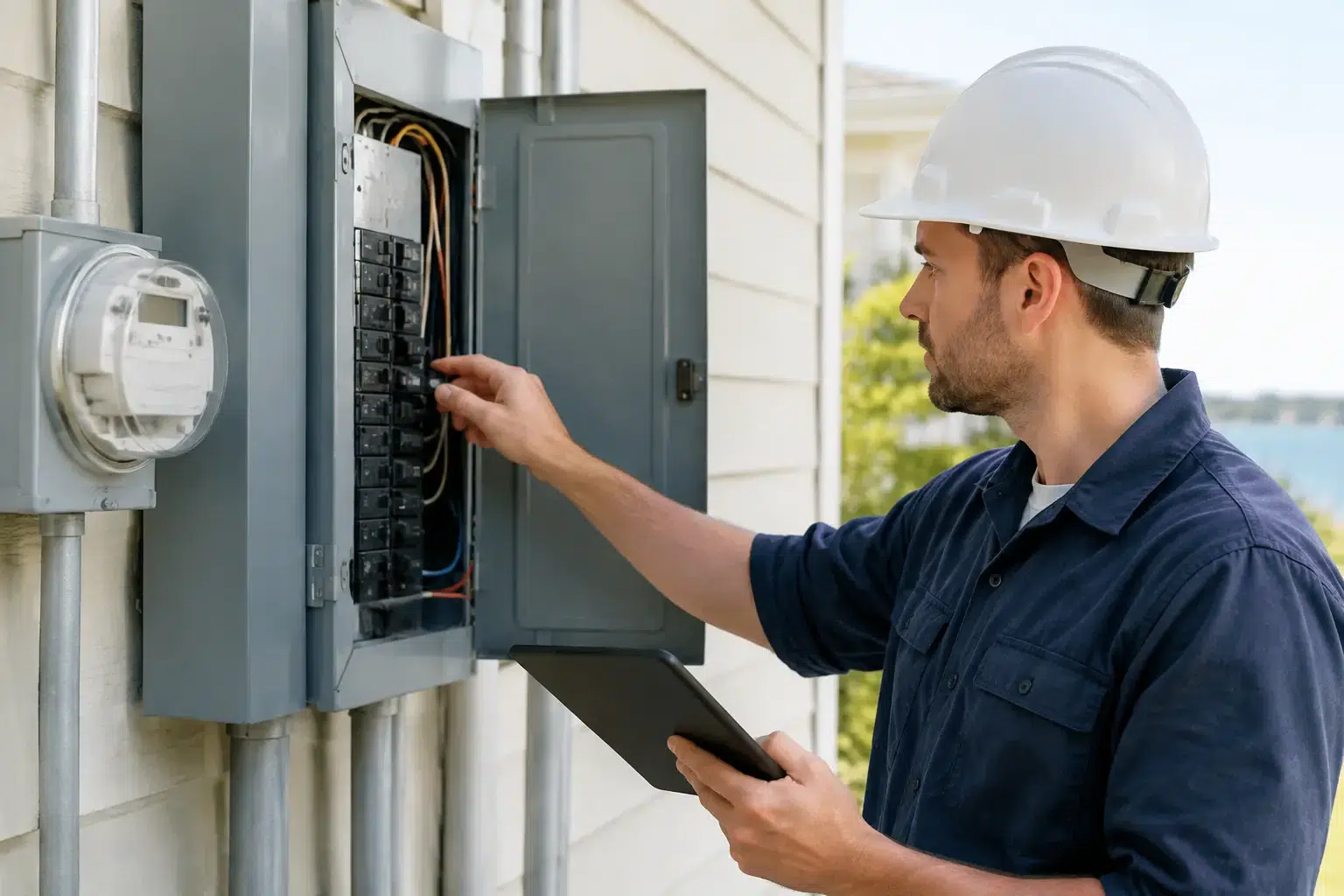
Electrical Permit Requirements in Baldwin County
A new outlet may be a small job. A panel upgrade, standby generator, or EV charger is not. Electrical permit requirements exist to make sure the wiring, equipment, and protective devices serving your property are installed safely and inspected before they are placed into regular use. For homeowners and property operators in Baldwin County, understanding the process before work begins can prevent delays, failed inspections, and expensive corrections.
The practical question is rarely, “Do I want a permit?” It is whether the scope of work changes your electrical system enough that the local authority requires one. The answer depends on the project, the property type, and the jurisdiction with authority over the location.
What an electrical permit does
An electrical permit is the local government’s record that a planned electrical project is subject to review and inspection. It helps confirm that the work follows the applicable electrical code, local amendments, and safety rules for the property.
The permit process is not designed to make a straightforward project difficult. It creates a checkpoint for work that can affect shock protection, fire safety, utility connections, emergency power, and the capacity of your electrical system. In many cases, it also protects a property owner by creating inspection documentation that may matter during a sale, an insurance review, or a commercial property assessment.
For a properly managed project, the permit is typically part of the contractor’s process. The contractor identifies the scope, submits the needed information, coordinates inspections, and corrects any issues identified by the inspector. Property owners should still ask who is pulling the permit and whether permit and inspection costs are included in the estimate.
Electrical permit requirements by project type
Requirements vary by municipality and county jurisdiction, so no article can replace a check with the local permitting office. Still, certain kinds of work commonly require a permit because they add, alter, or extend electrical equipment.
Panel replacements and service upgrades
Replacing an electrical panel, upgrading service capacity, installing a new meter base, or changing the main disconnect generally calls for a permit. These projects affect the heart of the electrical system and may involve utility coordination.
A service upgrade is often needed when a home adds large electrical loads such as central HVAC equipment, an electric water heater, an EV charger, or a pool system. The panel itself may have open spaces, but that does not automatically mean the existing service has sufficient capacity. A qualified electrician should evaluate the load before new equipment is selected.
Generators and transfer equipment
Permanent standby generators and manual or automatic transfer switches commonly require permits and inspections. The critical issue is safe separation between generator power and utility power. Incorrect generator connections can energize utility lines during an outage, putting utility workers and others at risk.
Portable generators deserve caution as well. Even when the generator itself does not involve a building permit, a properly installed inlet, interlock, or transfer switch may. Extension cords are not a long-term substitute for a safe backup-power connection, particularly where a property needs to support refrigeration, medical equipment, pumps, or essential business operations.
EV chargers
Level 2 EV charger installation usually requires a permit because it adds a continuous, high-demand electrical load. The electrician may need to install a dedicated circuit, verify panel capacity, select the correct breaker and conductor size, and provide the required ground-fault protection.
For condos, townhomes, and commercial sites, the decision is more involved. The owner may need association approval, landlord approval, a parking plan, meter allocation, or electrical engineering review. A charger can be simple at a single-family home but become a larger infrastructure project when several residents or employees need access.
New circuits, additions, and major renovations
Adding circuits for kitchens, bathrooms, garages, outdoor spaces, workshops, HVAC equipment, or new construction commonly requires a permit. Remodeling work may uncover older wiring methods, missing grounding, overloaded circuits, or panels that no longer match the property’s needs.
A renovation can also trigger safety upgrades in the area being remodeled. Requirements for arc-fault, ground-fault, tamper-resistant, and weather-resistant protection depend on the location and scope. That is why a quote based only on the visible portion of the work can change after an electrician evaluates the existing system.
Commercial electrical work
Commercial projects often have broader permitting needs. Tenant build-outs, lighting upgrades, equipment connections, signage, new circuits, service changes, and emergency systems may require plans, load calculations, inspections, or coordination with other trades.
The larger the project, the more important it is to establish the permit path early. A restaurant, retail space, condominium common area, or office renovation may have deadlines tied to occupancy, opening dates, or lease commitments. Work that is complete but waiting on a required inspection can still hold up the project.
Work that may not need a permit
Minor repairs can sometimes be completed without a permit, depending on local rules. Examples may include replacing an existing switch, receptacle, light fixture, or breaker with a like-for-like component when no wiring is extended and no circuit is altered.
But “simple replacement” has limits. A repeatedly tripping breaker, a warm receptacle, flickering lights, or damaged wiring is a symptom, not a routine replacement job. Replacing the visible device without finding the underlying issue can leave the hazard in place. If the repair turns into new wiring, a circuit modification, or equipment replacement, permit requirements may apply.
Do not assume a prior owner’s unpermitted work is grandfathered or safe. If an electrician finds unsafe conditions during a new project, corrections may be needed before the new work can be approved.
How the permit and inspection process usually works
The process begins with a clear scope of work. For a larger project, that can include equipment specifications, panel information, load calculations, a site plan, or electrical drawings. The permitting authority reviews the application and issues the permit when its requirements are met.
Once work begins, inspections may occur at more than one stage. New wiring that will be covered by drywall may need a rough-in inspection before walls are closed. A final inspection generally occurs after devices, equipment, labeling, and protective covers are installed and the work is ready for use.
The timing matters. Scheduling an inspection too early can lead to a failed visit because the project is incomplete. Waiting too long can delay the utility, the general contractor, or the next trade. An experienced local electrical contractor plans the work sequence so the inspection supports progress instead of interrupting it.
Questions to ask before hiring an electrician
Permit responsibility should be clear before you approve an estimate. Ask whether a permit is expected, who will obtain it, what inspections are anticipated, and whether the estimate includes permit fees. For service upgrades, generators, and other projects involving utility power, ask whether utility coordination is included as well.
It is also reasonable to ask what could change the price after work begins. Older coastal properties can have equipment corrosion, aging panels, undersized services, or previous alterations that are not visible during an initial walkthrough. A dependable contractor will explain the known scope, identify likely variables, and communicate promptly if field conditions require a change.
For commercial and condominium projects, confirm who has authority to approve the work. The property owner, manager, association, tenant, insurer, and local jurisdiction may all have separate requirements. Addressing those approvals before equipment is ordered is usually far less costly than changing course after installation.
Why permits are worth handling correctly
Skipping a required permit can create more than a paperwork problem. Uninspected work can complicate property sales, insurance claims, financing, tenant improvements, and future repairs. More importantly, electrical defects are often hidden behind walls or inside panels until they create a real safety issue.
The right approach is to treat permitting as part of getting the job done correctly the first time. MNE Electric can evaluate the planned work, explain the likely permit path, and complete electrical projects with the care expected for homes and businesses across the Gulf Shores area. Before adding significant equipment or changing existing wiring, a quick conversation with a qualified electrician can turn an uncertain project into a safe, well-documented improvement.