
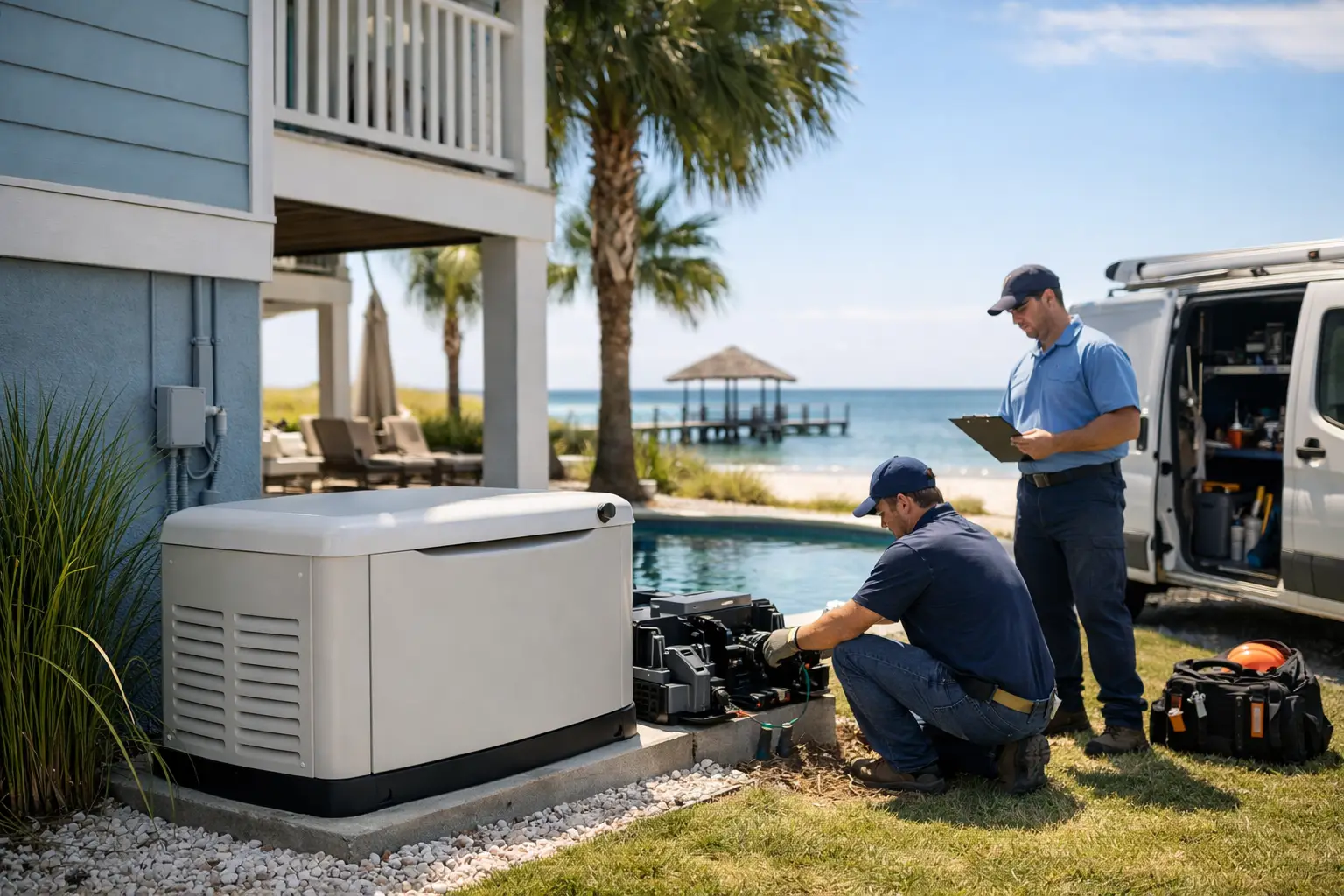
Generator Installation Orange Beach Home Guide
A power outage at the beach is more than an inconvenience. It can mean a warm home without air conditioning, a spoiled refrigerator, a dark stairwell in a condo, or a business unable to serve customers. A properly planned generator installation Orange Beach property owners can depend on starts well before a storm appears in the Gulf.
The right system must match the property, the equipment that needs backup power, local installation requirements, and the realities of a coastal environment. A generator should provide confidence when utility power is interrupted, not create new safety or electrical problems.
Start With the Power You Actually Need
The first question is not, “What is the biggest generator available?” It is, “What must keep running when the power goes out?” That answer looks different for every home and commercial property.
For some homeowners, essential backup power may cover the refrigerator, a few lights, internet equipment, garage door access, select outlets, and a small HVAC system. Others want whole-home coverage, including central air conditioning, electric appliances, pool equipment, and every circuit in the panel. A whole-home system offers more convenience, but it requires a larger generator, more fuel capacity, and a greater upfront investment.
A qualified electrician evaluates the electrical load rather than relying on guesswork. Air conditioners, heat pumps, well pumps, refrigerators, freezers, and other motor-driven equipment can require substantially more power at startup than they use while running. Correct load calculations help prevent an undersized generator from overloading or an oversized system from adding unnecessary cost.
Commercial needs require the same careful review. A restaurant may prioritize refrigeration, lighting, point-of-sale equipment, and ventilation. A rental property manager may need backup power for common-area lighting, security systems, gates, elevators where applicable, and communications equipment. The priority circuits should reflect how the building is used during an outage.
Generator Installation Orange Beach Requires Smart Placement
Orange Beach properties face salt air, humidity, heavy rain, wind, and flooding concerns that may not be as significant farther inland. Generator location matters for safety, equipment life, noise, access, and local code compliance.
A standby generator is typically installed outdoors on a stable pad with required clearances from doors, windows, vents, combustible materials, and property features. It needs adequate airflow for operation and a location where exhaust cannot enter the home or building. The unit also must remain accessible for service, fuel connections, and future repairs.
Coastal conditions add another consideration: corrosion. Enclosures, hardware, electrical connections, and mounting methods should be selected and installed with the environment in mind. Routine inspections are especially valuable near the water because salt exposure can shorten the life of components if small issues are left unaddressed.
For condos and attached properties, placement can be more complicated. Property rules, shared electrical systems, limited exterior space, noise concerns, and association approval may all affect the project. An early site evaluation helps identify these issues before equipment is ordered.
The Transfer Switch Is the Safety Center of the System
The generator gets much of the attention, but the transfer switch is just as important. It controls how the generator connects to the electrical system and prevents generator power from feeding back into utility lines.
Backfeeding is dangerous. It can place utility workers at risk, damage equipment, and create serious fire hazards. A properly installed transfer switch separates generator power from the utility supply before backup power serves the selected circuits or the entire electrical panel.
Automatic transfer switches are common with permanently installed standby systems. When utility power fails, the generator starts automatically and the switch transfers the load. When utility power returns and stabilizes, the switch returns the property to utility service and allows the generator to shut down after its programmed cool-down period.
Manual transfer arrangements can work for certain portable generator applications, but they require someone to be present and operate the equipment correctly. For owners who travel, manage vacation rentals, or want protection during overnight outages, an automatic standby generator is often the more practical choice.
Fuel Planning Should Match Your Outage Expectations
Most permanently installed residential generators operate on natural gas or propane. The best option depends on what is available at the property, the generator size, local fuel arrangements, and how long the owner expects to operate during an outage.
Natural gas can provide continuous fuel where utility service is available, but the gas line must be properly sized for the generator’s demand. A line that is too small may cause poor generator performance, especially when other gas appliances are operating.
Propane offers a dependable option for properties without natural gas service, but tank size and refill planning become part of the decision. Longer outages require more stored fuel. Diesel is more common for some commercial and larger-capacity applications, where fuel storage, testing, and maintenance need careful management.
Fuel should be considered early, not after electrical work is planned. Generator location, fuel supply routing, and equipment clearances all need to work together.
Permits, Panels, and Existing Electrical Conditions
A generator project often reveals the condition of the property’s existing electrical system. An older panel, limited service capacity, deteriorated wiring, or insufficient space for new equipment may need attention before the generator can be connected safely.
Permitting and inspections are not paperwork to work around. They help verify that wiring methods, grounding, overcurrent protection, transfer equipment, and clearances meet applicable requirements. Requirements can vary by jurisdiction and property type, which is one reason local electrical experience matters.
For a whole-home standby generator, the electrician may need to assess the main service panel, meter equipment, service entrance conductors, and load capacity. For essential-circuit backup, the project may involve a dedicated emergency panel or carefully selected circuits. The right approach depends on the property and the owner’s goals.
Do not assume a portable generator can simply plug into a dryer outlet, range outlet, or other existing receptacle. These unsafe connections can backfeed the electrical system and should never be used. A generator inlet and approved transfer equipment provide a controlled, code-conscious connection.
Choose a System You Can Maintain
A generator is mechanical equipment, and it needs regular attention even when it has not been used during a major outage. Most standby units perform scheduled exercise cycles, but an exercise run is not a substitute for maintenance.
Maintenance schedules vary by manufacturer and usage, but owners should plan for periodic oil and filter service, battery inspection, air filter checks, fuel-system review, and operational testing. A technician should also inspect electrical connections, transfer switch operation, and signs of corrosion or water intrusion.
There is a trade-off between purchasing the least expensive unit and investing in a system that is correctly sized, professionally installed, and supported over time. The lowest initial price can become costly if the generator cannot carry the needed loads, has fuel supply problems, or was installed without proper transfer equipment.
For rental homes and commercial properties, maintenance is particularly important. An outage is not the time to find out that a weak battery, old fuel, or neglected service issue has kept the generator from starting.
A Better Way to Plan Backup Power
The most useful generator plan begins with a site visit and a straightforward conversation about what must remain powered. Walk through the property, identify critical loads, review the electrical panel and fuel options, and discuss whether automatic operation is necessary. From there, the system can be sized and designed around real needs instead of assumptions.
MNE Electric helps homeowners and property operators throughout the Gulf Shores and Orange Beach area evaluate backup power with safety, reliability, and long-term service in mind. A professional assessment can also identify panel upgrades or electrical improvements that should be completed as part of the project.
When the next outage arrives, backup power should feel like a prepared decision, not an emergency workaround. Choosing the right equipment and installing it correctly gives your property a dependable source of power when it matters most.