
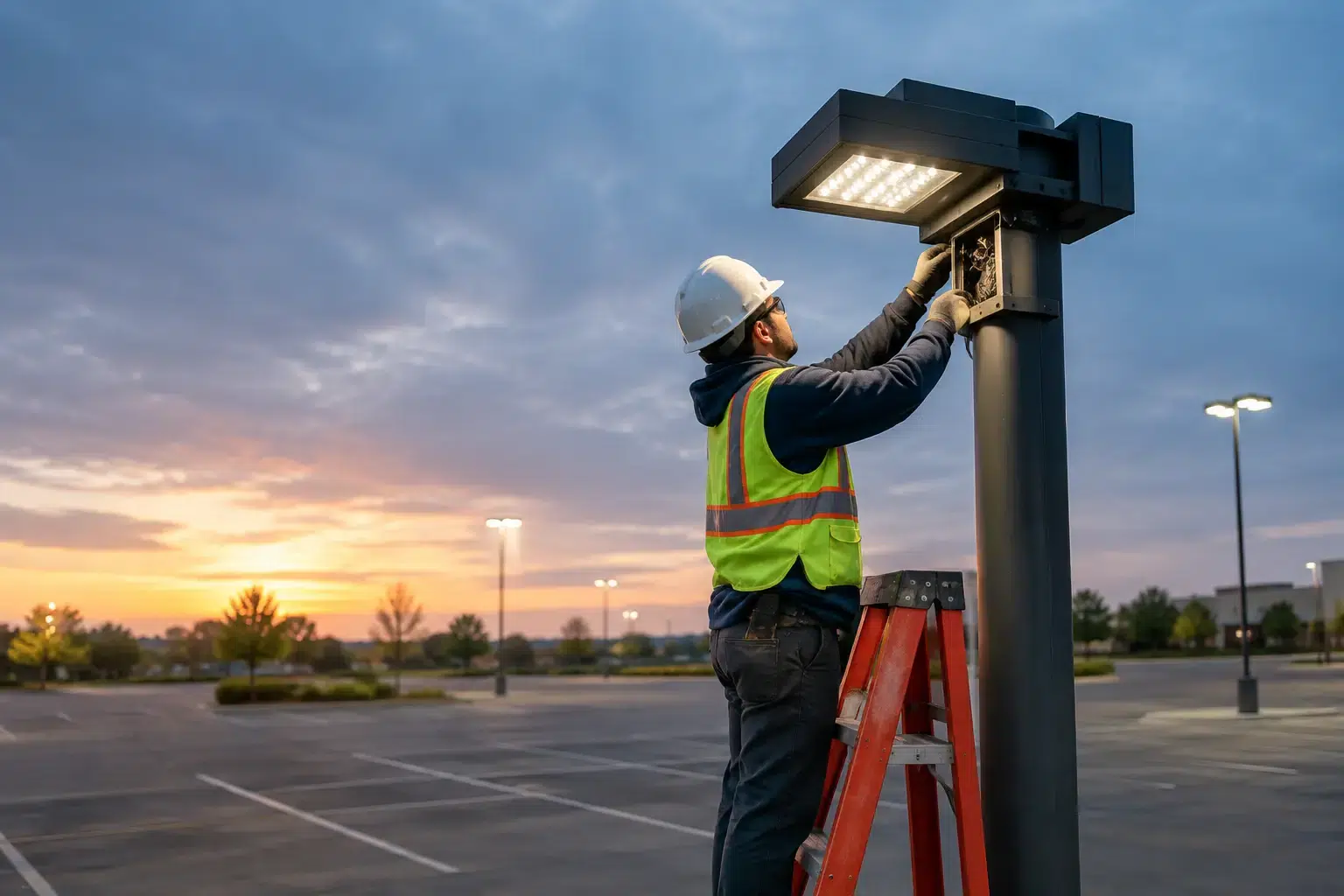
When Parking Lot Lighting Repair Cannot Wait
A dark section of pavement can change how people feel about a property before they ever reach the door. For retail centers, condos, offices, restaurants, and rental properties, parking lot lighting repair is not simply a maintenance item. It affects safety, security, visibility, curb appeal, and the confidence customers or tenants have in the property.
On Alabama’s coast, exterior electrical equipment also faces salt air, humidity, wind-driven rain, and storm activity. Those conditions can shorten the life of fixtures, photocells, wiring connections, poles, and underground components. Addressing a lighting issue early is usually safer and less disruptive than waiting until multiple lights fail or an electrical fault develops.
Why Parking Lot Lighting Matters to Your Property
Parking lot lights serve several practical purposes at once. They help drivers see curbs, medians, pedestrians, parked vehicles, and changes in pavement level. They give employees and customers a safer path between their cars and the building. They can also support security cameras by providing the consistent light those systems need to capture useful footage.
Poor lighting can create liability concerns when someone trips in an unlit area or a driver cannot see a hazard. It may also make a business appear closed, neglected, or unsafe after sunset. For a condominium association or property manager, repeated lighting outages often lead to resident complaints long before a full failure becomes obvious.
The right repair depends on the cause. A single burned-out fixture is different from a row of lights that no longer turns on, and both are different from lights that cycle on and off throughout the night. A qualified electrician can identify the source instead of replacing parts based on guesswork.
Signs You Need Parking Lot Lighting Repair
Some problems are easy to see, such as a fixture that is completely dark. Others develop gradually and can be missed during daytime property checks. A quick walk-through after dusk can reveal uneven illumination, shadows near walkways, and fixtures that are no longer operating as intended.
Call for service when lights flicker, brighten and dim unpredictably, stay on during daylight, fail to come on at night, or repeatedly trip a breaker. Physical damage also deserves attention. Bent poles, cracked fixture housings, exposed wiring, rust around mounting hardware, and water inside a lens can all point to conditions that need professional evaluation.
It is also worth investigating if several lights fail at the same time. The issue may be upstream of the fixtures, such as a failed photocell, timer, contactor, breaker, circuit connection, or damaged underground wiring. Replacing individual lamps will not solve a control or circuit problem.
Coastal weather can accelerate failures
Gulf Shores and Orange Beach properties experience environmental conditions that are hard on outdoor electrical systems. Salt-laden air can corrode metal components and electrical connections. Moisture can enter compromised gaskets or conduit, while storms may damage poles, fixtures, and wiring runs.
After severe weather, check for visible damage from a safe distance and report any concern promptly. Do not touch a leaning pole, exposed conductor, damaged electrical box, or standing water near electrical equipment. Those conditions should be evaluated by a licensed electrical professional.
Common Causes of Parking Lot Light Problems
Many parking lot lighting issues begin with normal wear. Older high-intensity discharge fixtures, including metal halide and high-pressure sodium systems, use lamps, ballasts, ignitors, and capacitors that eventually fail. A fixture may appear to be the problem when the actual issue is a failing ballast or poor connection inside the housing.
LED fixtures have a longer operating life and lower energy use, but they are not maintenance-free. Drivers, surge events, heat, moisture, and damaged photocells can still cause failure. In some cases, an LED driver can be replaced. In others, replacing the full fixture is the more reliable and cost-effective choice.
Lighting controls are another frequent source of trouble. Photocells can become blocked by dirt, fail due to age, or respond incorrectly to nearby light sources. Timers may be programmed improperly after a power outage or seasonal change. Networked controls and occupancy sensors can provide useful energy savings, but they also require proper setup and diagnosis when they stop communicating or operate at the wrong times.
Underground wiring requires particular care. Damage from landscaping, excavation, vehicle impact, water intrusion, or deteriorated conduit can affect one pole or an entire section of the lot. Locating and repairing an underground fault calls for proper testing and safe repair methods, not a temporary splice that may fail again during the next heavy rain.
Repair or Upgrade? How to Make the Right Call
A repair is often the right choice when a relatively new LED fixture has a failed driver, a photocell needs replacement, or a known wiring connection has deteriorated. It restores dependable operation without replacing equipment that still has useful service life.
An upgrade may make more sense when the property has older fixtures with recurring lamp and ballast failures, uneven light distribution, excessive operating costs, or hard-to-source replacement parts. LED retrofit or fixture replacement can improve visibility while reducing energy consumption and ongoing maintenance needs. It can also give property owners better control over color temperature and light levels.
The best choice depends on the age and condition of the existing system, the number of failed fixtures, access requirements, and the property’s long-term plans. Replacing one old fixture can be reasonable for a short-term repair. Replacing an entire failing system may be the better investment when repairs are becoming routine.
Before approving major work, ask for a clear assessment of what failed, why it failed, what repair is recommended, and whether an upgrade would solve recurring issues. A good estimate should help you compare immediate cost with expected maintenance and energy costs over time.
What a Professional Lighting Service Visit Should Include
Effective parking lot lighting repair starts with diagnosis. An electrician should inspect the affected fixtures, verify voltage, test controls, examine circuit protection, and look for signs of corrosion, moisture, overheating, or physical damage. If poles or underground circuits are involved, the inspection may extend beyond the fixture itself.
The repair process may include replacing lamps, LED drivers, photocells, contactors, breakers, damaged wiring, or fixture components. Where equipment is badly corroded or obsolete, full fixture replacement may be recommended. Pole-mounted work may require lift access, and the work area should be managed carefully to protect pedestrians and vehicles.
For commercial and multifamily properties, communication matters as much as the repair itself. Property managers need to know which areas will be affected, whether temporary parking changes are necessary, and when lighting will be restored. Planning repairs before peak business hours can reduce disruption for customers, guests, and residents.
Preventive Maintenance Reduces Surprise Outages
Waiting for complaints is an expensive way to manage exterior lighting. A scheduled inspection can identify early corrosion, loose hardware, water intrusion, dimming output, and control problems before they turn into widespread failures.
For properties with a large lot, a seasonal evening inspection is a practical starting point. Check that light coverage is consistent around entrances, pedestrian paths, dumpsters, loading areas, signage, and accessible parking spaces. Keep a record of fixture outages and repeat repairs. That history can show when isolated fixes are turning into a system-wide replacement decision.
Storm preparation also helps. Verify that pole bases, fixture mounts, and electrical enclosures remain secure. If your property has experienced electrical issues after lightning or power disturbances, ask an electrician whether surge protection and panel improvements could help protect lighting controls and other sensitive equipment.
Choosing a Contractor for Parking Lot Lighting Repair
Exterior commercial electrical work requires more than changing a bulb. The contractor should be qualified to troubleshoot circuits and controls, work safely around outdoor equipment, and address the code-conscious details that protect the property over time. Fast response matters, but so does finding the actual cause of the failure.
MNE Electric provides dependable electrical service for businesses, property managers, and communities throughout Gulf Shores and nearby Baldwin County areas. Whether the need is a single dark fixture, storm-related damage, or a planned LED lighting improvement, the goal should be a repair that restores safe, reliable light and holds up to local conditions.
A parking lot should feel clear and usable after dark, not like an area people rush through. If lighting has become inconsistent, damaged, or unreliable, scheduling a professional inspection now can help protect the people who use your property every evening.