
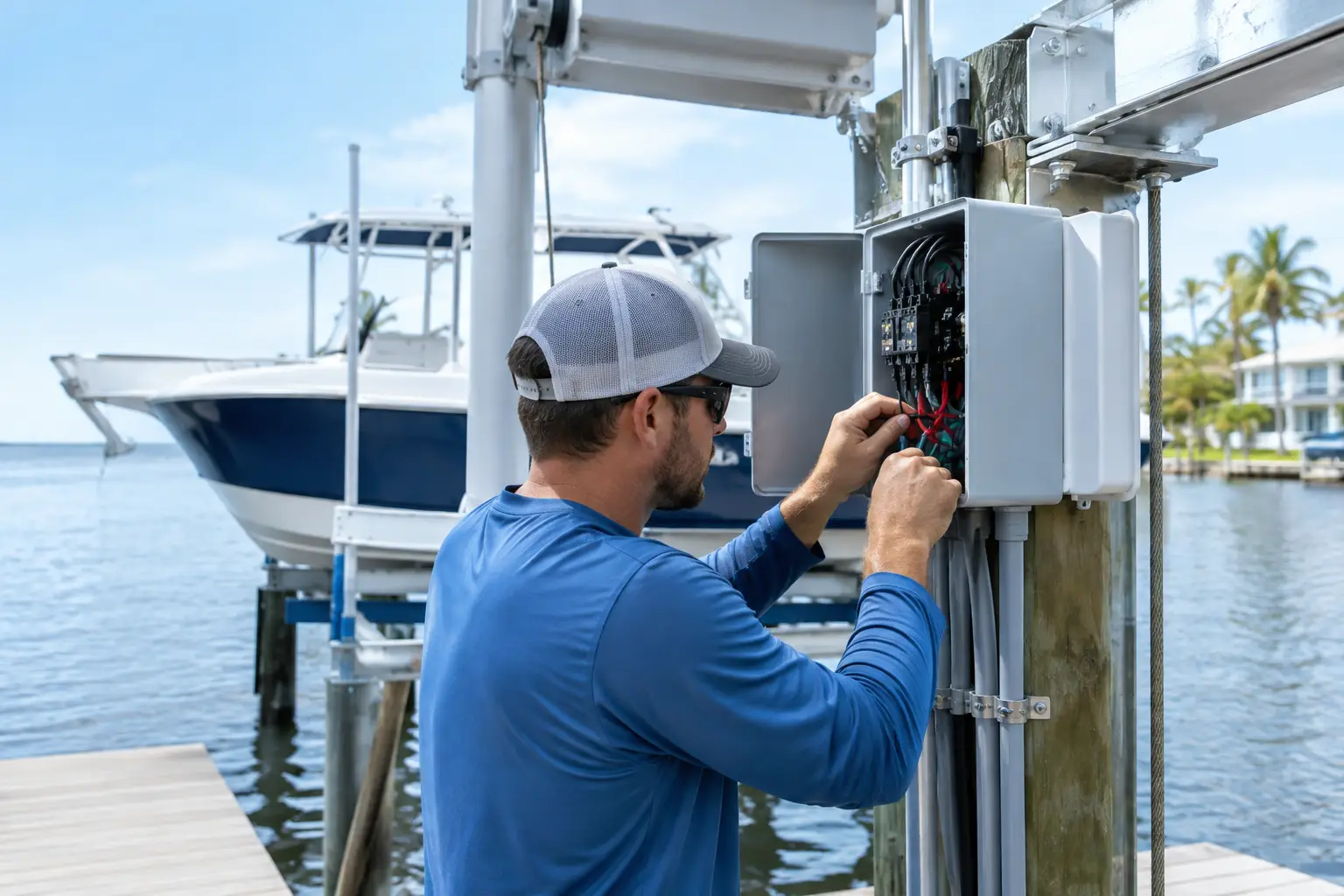
Boat Lift Wiring Safety for Coastal Properties
A boat lift should make time on the water easier, not introduce a hidden electrical hazard at the dock. Boat lift wiring safety matters because electricity, salt air, moisture, metal structures, and people in or near the water create a high-risk combination. A lift that operates normally can still have corroded connections, damaged insulation, inadequate grounding, or protection that no longer performs as intended.
For waterfront homeowners, condo associations, marinas, and property managers along the Alabama coast, the right approach is not simply getting the lift running again. It is making sure the entire electrical system serving it is designed, installed, and maintained for the environment.
Why boat lift wiring safety requires extra attention
A typical household outlet or indoor wiring method is not automatically suitable for a dock or lift. Waterfront electrical systems face conditions that accelerate wear: salt-laden air, rain, high humidity, wind-driven spray, sun exposure, vibration, and shifting dock structures. Even a protected connection can deteriorate faster near the coast than it would at a home farther inland.
The most serious risk is electric shock. Fault current can travel through water, dock components, lift equipment, or damaged wiring. The danger is especially severe around swimmers. Electrical current in the water can cause muscle paralysis and drowning, even when there is no visible sign of trouble.
There is also a practical cost to overlooking maintenance. Heat from a loose or corroded connection can damage a motor, controls, wiring, or a dock pedestal. Repeated breaker trips may seem inconvenient, but they are often a warning that deserves professional attention rather than a larger breaker or a quick reset.
Start with a properly designed power supply
A safe lift installation begins at the electrical source, not at the motor. The circuit must be sized for the lift motor, controls, starting load, distance from the panel, and any additional dock equipment on the same electrical service. Voltage drop can become a concern on long runs. When voltage at the lift is too low, the motor may struggle to start, overheat, or wear out prematurely.
The circuit should also use wiring and equipment rated for the location. Wiring installed outdoors, underground, in conduit, or near the water must be selected for wet-location exposure where applicable. Boxes, fittings, covers, disconnects, and receptacles should be rated for the conditions they face. A weatherproof cover alone does not make an unsuitable installation safe.
A dedicated circuit is often the right choice for a boat lift because it reduces the chance of overload and makes troubleshooting clearer. Whether a dedicated circuit is required depends on the equipment, the existing system, and applicable electrical requirements. A qualified electrician can evaluate the lift manufacturer specifications and the property’s available capacity before recommending the right setup.
Protection devices are not optional safeguards
Ground-fault protection is a critical part of dock electrical safety. Ground-fault circuit interrupters, commonly called GFCIs, are designed to shut off power quickly when they detect an imbalance that may indicate current is taking an unintended path. Requirements for waterfront systems can be more involved than those for a standard patio receptacle, particularly when equipment is installed at a marina or serves a dock.
Protection devices must be compatible with the equipment and installed correctly. If a GFCI or breaker trips repeatedly, do not bypass it, tape it in the on position, or replace it with a non-protected device. The trip may point to moisture intrusion, insulation damage, a failing motor, a wiring error, or another fault that needs diagnosis.
A properly located disconnect is another key safety feature. It provides a way to shut power off near the equipment for service or an emergency, while keeping people from working on a system that could become energized unexpectedly.
Common boat lift wiring problems to watch for
Many wiring issues begin quietly. A lift may still raise and lower the boat, but the electrical system is giving early signs of deterioration. Property owners should pay attention to breakers that trip, a motor that hums or starts slowly, flickering lights at the dock, discolored receptacles, hot covers, crackling sounds, or a burning odor.
Physical damage deserves the same attention. Look for conduit that has pulled loose, cracked boxes, missing weatherproof covers, frayed cords, exposed conductors, or cable supports that have failed. Wiring should not hang where it can be snagged by gear, rubbed by moving dock sections, damaged by rodents, or exposed to standing water.
Corrosion is especially common in Gulf Shores and Orange Beach waterfront environments. Green or white buildup on terminals, rusted enclosures, swollen cord jackets, and stiff or brittle insulation can all signal that water or salt exposure has compromised the system. Do not assume surface corrosion is cosmetic. It can increase resistance, create heat, and cause a connection to fail under load.
If anyone experiences tingling while touching dock equipment, notices a shock, or sees unusual behavior from electrical components, treat it as an emergency condition. Turn off power at a safe location if possible, keep people out of the water, and call a qualified electrician. Do not enter the water to investigate a suspected electrical issue.
Safe operating habits around your lift
Good equipment can still be defeated by unsafe use. Keep cords, tools, and portable appliances away from wet dock surfaces. Do not use an extension cord as permanent wiring for a lift, and do not run a lift from a temporary cord because the proper circuit is unavailable. Extension cords are more likely to be damaged, improperly sized, or used without the protection a fixed installation requires.
Before operating the lift, make sure the area is clear and the boat is positioned correctly. Keep children and guests away from moving lift components. Avoid operating the lift during lightning, severe storms, or flooding conditions. After a major storm, assume dock wiring may have been damaged or submerged until it has been inspected.
If your system includes a remote control, protect it from moisture and test its operation only when the lift area is clear. A remote should never replace visual awareness of the boat, cables, bunks, and people nearby.
Inspection and maintenance should fit the coastal environment
A visual check before boating season is helpful, but waterfront equipment benefits from more than an occasional glance. Routine professional inspection can identify deteriorated connections, incorrect breaker sizing, missing bonding or grounding components, failing GFCI protection, overloaded circuits, and equipment that no longer meets current safety expectations.
The exact inspection schedule depends on the lift’s age, use, location, and exposure. A covered lift on a protected canal may experience less wear than equipment on an open bay, but both are exposed to moisture. Properties that rent to guests, serve multiple boat slips, or operate as part of a commercial waterfront facility may need a more structured maintenance plan.
Testing a GFCI using its test button is a useful owner task when the manufacturer instructions allow it. However, a successful button test does not confirm every part of the dock wiring is safe. It cannot reveal every loose connection, damaged underground conductor, or problem inside a motor control system.
When to call a qualified electrician
Call for professional service when a boat lift is newly installed, relocated, upgraded, or connected to a new dock. An electrician should also evaluate any system that trips breakers, shows corrosion, has been affected by storm surge or flooding, or relies on aging wiring of uncertain condition.
This is not a place for trial-and-error repairs. Increasing breaker size, replacing a plug without addressing the cause, joining wires with non-rated connectors, or relying on a portable generator connection without proper transfer equipment can create a serious shock and fire hazard. The correct repair may be straightforward, but identifying it requires the right testing, materials, and understanding of waterfront electrical requirements.
For coastal Alabama property owners, MNE Electric can assess boat lift circuits and dock-related electrical concerns with the same focus applied to any high-risk electrical work: safe power, properly selected equipment, and workmanship that holds up in the conditions it serves.
A boat lift is an investment in your boat and your time on the water. Give its electrical system the same attention. When the wiring is properly installed and maintained, you can focus on launching safely, protecting your equipment, and enjoying the waterfront with greater confidence.