
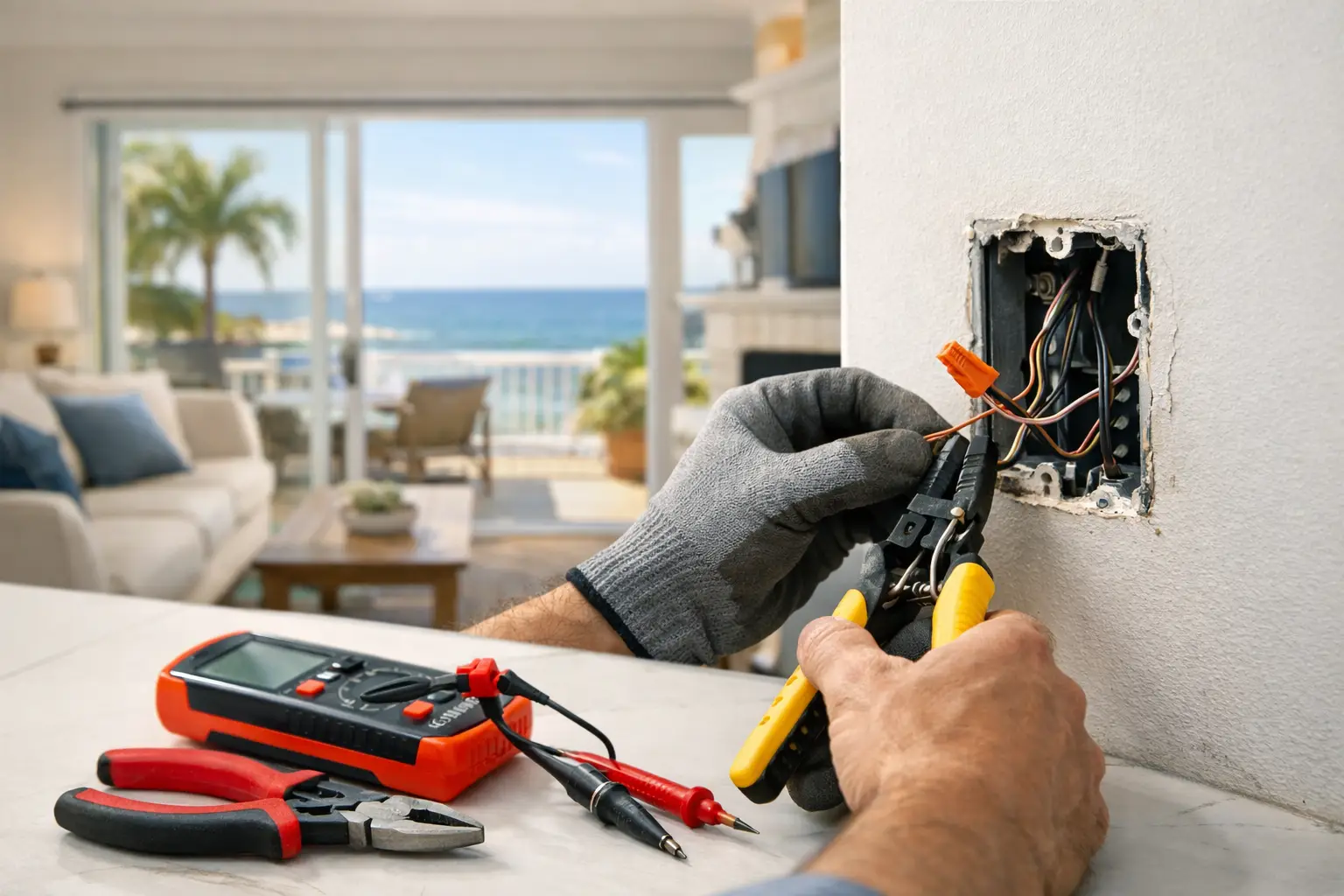
Aluminum Wiring Repair for Safer Coastal Homes
A receptacle that feels warm, lights that flicker when an appliance starts, or a faint burning odor are not problems to wait out. In homes with older branch circuits, aluminum wiring repair may be needed to correct connection issues before they become a fire hazard. The concern is rarely the wire hidden inside a wall by itself. It is how that wire connects to outlets, switches, breakers, fixtures, and other equipment.
Many Gulf Coast homes were built or renovated during periods when aluminum branch-circuit wiring was common. If you own an older home, condominium, rental property, or commercial space, a qualified electrical inspection can identify whether aluminum wiring is present and whether its connections are still performing safely.
Why Aluminum Wiring Can Become a Safety Issue
Aluminum was widely used for residential branch wiring during the late 1960s and early 1970s as copper prices increased. It can carry electricity effectively when it is installed with equipment and methods designed for aluminum conductors. Problems developed when aluminum wire was connected to devices and connectors intended primarily for copper.
Over time, aluminum can oxidize at connection points. It also expands and contracts more than copper as electrical loads heat and cool the conductor. That movement can loosen a poorly matched connection. A loose connection creates resistance, resistance creates heat, and heat can damage the outlet, switch, wire insulation, or electrical box.
Coastal conditions add another reason to take electrical maintenance seriously. Humidity, salt air, wind-driven moisture, and long periods of vacancy can affect electrical equipment, especially in garages, utility areas, exterior walls, and properties near the water. These conditions do not automatically mean an aluminum-wired home is unsafe, but they make a thorough evaluation more valuable.
Signs That Call for an Electrical Inspection
Most aluminum wiring is concealed, so homeowners often do not know it is present until an inspection, renovation, or electrical issue reveals it. You may see the letters “AL” or “ALUMINUM” printed on exposed wiring in the electrical panel, attic, crawl space, or unfinished area. Do not remove receptacles or open the panel to investigate if you are not qualified to do so.
Call a licensed electrician promptly if you notice recurring breaker trips, flickering or dimming lights, warm switch plates or outlets, discolored receptacles, crackling sounds, or a burning-plastic smell. A plug that fits loosely in an outlet also deserves attention, even if it does not necessarily confirm aluminum wiring.
These symptoms can result from several electrical problems, including an overloaded circuit, deteriorated device, damaged wiring, or a failing connection. That is why diagnosis matters. Replacing the visible outlet without addressing the conductor and connection behind it can leave the real issue in place.
Aluminum Wiring Repair Options
The right repair depends on the wiring type, circuit condition, accessibility, number of connection points, planned renovations, and the equipment serving the circuit. A professional evaluation should include representative checks of outlets, switches, light fixtures, junction boxes, the electrical panel, and other connections where aluminum conductors may terminate.
Complete Copper Rewiring
Replacing the existing aluminum branch wiring with new copper wiring is the most comprehensive option. It eliminates the older aluminum conductors and provides an opportunity to improve circuit capacity, add grounded receptacles where appropriate, update lighting, and plan for modern loads such as EV charging, HVAC equipment, appliances, or home-office circuits.
Rewiring is often the best long-term choice during a major renovation or when walls and ceilings are already open. The trade-off is cost and disruption. In finished homes, routing new circuits may require access through attics, crawl spaces, walls, or ceilings. For some condo units and occupied rental properties, that scope may need careful scheduling and coordination.
Approved Connector Repairs
Where full rewiring is not practical, an electrician may use a listed repair system to create a properly engineered copper connection at each affected device location. One established approach uses a specialized crimp connector to join the aluminum branch conductor to a short copper pigtail. The device then connects to the copper pigtail rather than directly to the aluminum wire.
This type of repair must be completed with the specific listed connector system, approved materials, and required installation tools. It is not the same as twisting wires together with a standard wire nut. The tools, training, and exact installation method are central to the repair’s safety and performance.
Another accepted approach may use a listed set-screw connector designed for aluminum-to-copper splicing. Whether this option is appropriate depends on the available box space, conductor size, number of wires, device configuration, and local code requirements. A qualified electrician can explain which system fits the property and document the work completed.
Compatible Devices in Limited Situations
Some outlets and switches are marked CO/ALR, meaning they are designed for use with certain aluminum wiring applications. These devices can be part of a repair plan in the right situation, but they are not a universal answer for every connection in a home. Lighting fixtures, dimmers, GFCI receptacles, junction boxes, panel terminations, and other equipment require their own compatible solutions.
A reliable repair plan looks beyond the outlets people can see. Every aluminum connection needs to be considered, including connections in inaccessible-looking places such as ceiling boxes, smoke alarm locations, hardwired appliances, and panel equipment.
What Not to Do With Aluminum Wiring
Aluminum wiring is not a good do-it-yourself project. The risks are not limited to shock. An incorrect connector, damaged conductor, improper torque, or overcrowded electrical box can create a hidden overheating point that may not show symptoms immediately.
Avoid using ordinary connectors simply because they appear to fit the wire. Do not apply antioxidant compound as a stand-alone fix, and do not assume a new breaker, GFCI outlet, surge protector, or arc-fault protection resolves defective aluminum connections. These products can be useful parts of a modern electrical system, but they do not replace properly repaired terminations.
Painting over discolored outlets, tightening a device without inspecting the conductor, or repeatedly resetting a tripped breaker can also delay a necessary repair. Electrical warning signs deserve a cause-based solution, not a cosmetic one.
What a Professional Evaluation Should Cover
A meaningful inspection starts with the home or building’s age, electrical history, recent renovations, known symptoms, and current power demands. The electrician should identify the type and extent of aluminum branch wiring, inspect representative connections, look for heat damage or unsuitable devices, and assess panel condition and circuit loading.
The result should be a clear recommendation rather than a vague warning. You should understand whether the property needs targeted connection repairs, a phased rewiring plan, panel work, additional circuits, or immediate correction of a specific hazard. For property managers and condo owners, written documentation can also help with maintenance planning, board discussions, tenant communication, and future renovation decisions.
In Gulf Shores and nearby coastal communities, access and occupancy can affect the repair plan. A vacation property may be easier to work in between guests, while a year-round home may benefit from a phased approach that keeps essential circuits available. MNE Electric can evaluate the condition of the electrical system and provide practical options based on the property, budget, and scope of work.
Plan Repairs Around Future Electrical Needs
If aluminum wiring repair is needed, it is worth considering what the property will need over the next several years. Adding a kitchen circuit, replacing an HVAC system, installing a generator connection, upgrading service equipment, or preparing for an EV charger can change the best path forward.
For example, a complete rewire may make more financial sense when combined with a renovation and service upgrade. In another home, a listed connection repair may address the immediate safety concern while new copper circuits are installed for high-demand equipment. There is no one-size-fits-all answer, but postponing an inspection because the lights still work is not a sound strategy.
If your home was built during the aluminum-wiring era, or you have noticed heat, flickering, or damaged devices, schedule an evaluation before a small connection problem becomes a larger repair. Safe electrical work starts with finding the actual condition of the system and correcting it the right way.