
Home Electrical Inspection Guide for Owners
A breaker that trips once may feel like a minor annoyance. A panel that hums, an outlet that feels warm, or lights that dim when the AC kicks on are different. Those are the kinds of warning signs this home electrical inspection guide is meant to help you understand before they turn into a larger safety problem or a costly repair.
For homeowners and property managers, an electrical inspection is not just about code language or checklists. It is about knowing whether your system can safely handle the way you actually live today. Between larger HVAC loads, kitchen appliances, home office equipment, EV chargers, backup power systems, and storm-related concerns along the Alabama coast, many properties are asking more from their electrical systems than they were designed to provide.
What a home electrical inspection guide should help you catch
A good inspection looks at both safety and capacity. Safety issues include damaged wiring, loose connections, overloaded circuits, outdated components, and moisture-related problems. Capacity issues are different. Your system may be technically working, but still undersized for modern use.
That distinction matters. A home with an older panel may not show obvious failure, yet still struggle under normal daily demand. In coastal areas like Gulf Shores and Orange Beach, salt air, humidity, and storm exposure can also shorten the life of certain components or create corrosion that is easy to miss unless someone knows what to look for.
An inspection is also useful when you are buying a property, renovating, adding major appliances, installing a generator, or planning an EV charger. In those situations, the question is not only whether the system works. The real question is whether it is ready for what comes next.
Start with the panel and service equipment
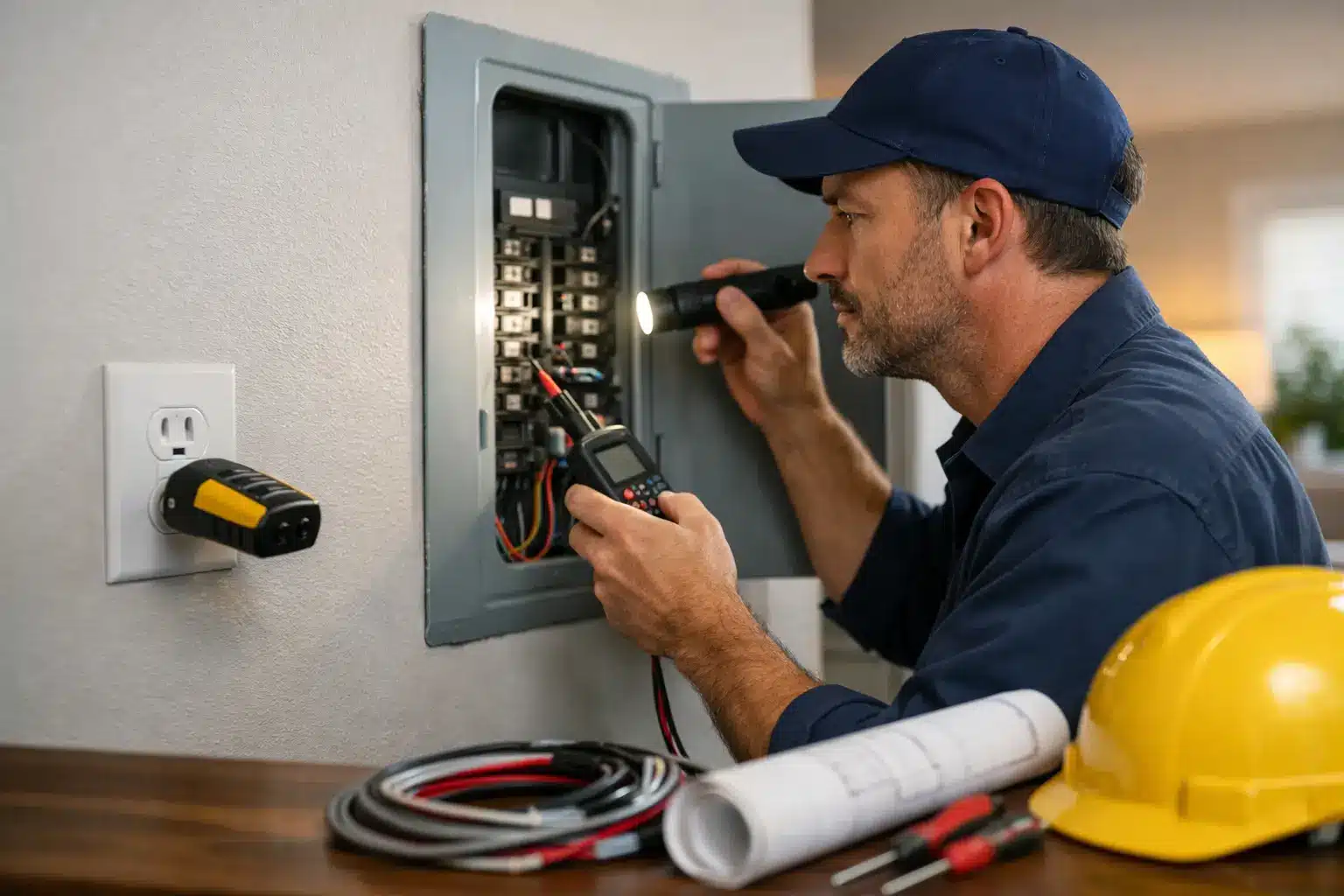
If there is one place that tells the story of an electrical system, it is the main panel. This is where a licensed electrician can see the age of the equipment, how circuits are organized, whether breakers are properly sized, and whether there are signs of overheating, corrosion, or unsafe modifications.
A panel inspection often reveals issues that homeowners never see in day-to-day use. Double-tapped breakers, missing knockouts, loose conductors, rust, or evidence of moisture intrusion can all point to bigger concerns. In some homes, labels are missing or inaccurate, which creates its own safety problem when circuits need to be shut off quickly.
Service size also matters. Older homes may still have electrical service that was acceptable decades ago but is no longer a good fit. If you are adding a hot tub, new HVAC equipment, a workshop, or vehicle charging, a service upgrade may be the right move. That does not mean every older panel needs replacement, but it does mean the system should be evaluated based on current and future demand.
Signs the panel needs professional attention
The most common warning signs are frequent breaker trips, flickering lights, buzzing sounds, scorch marks, a burning smell, or breakers that feel loose or unreliable. Some issues are dramatic. Others are subtle and build over time.
If your panel feels outdated but nothing seems wrong, that is still worth checking. Electrical problems are not always loud. Some of the most serious hazards begin with heat, wear, and connection problems hidden behind the cover.
Check outlets, switches, and visible wiring
After the panel, the next step in any practical home electrical inspection guide is the parts of the system you use every day. Outlets and switches often show early signs of trouble. A dead outlet may be a simple fix, or it may point to a wiring issue farther upstream. A switch that crackles, sticks, or gets warm should never be ignored.
Look for discolored cover plates, loose receptacles, missing faceplates, and two-prong outlets in areas where grounded protection would be safer. Kitchens, bathrooms, garages, laundry areas, and outdoor spaces deserve extra attention because they are higher-risk locations for shock exposure and should have proper GFCI protection.
Visible wiring in attics, garages, utility spaces, and exterior areas should also be checked. You want to know whether cable is secured correctly, protected from damage, and free from obvious wear. Rodents, moisture, age, and previous handyman work can all leave behind hidden electrical problems.
Pay close attention to moisture-prone and outdoor areas
Electrical systems near the coast face challenges that inland homes may not. Humidity, salt exposure, wind-driven rain, and storm events can accelerate wear on exterior fixtures, panels, disconnects, and receptacles. Even when equipment is rated for outdoor use, that does not mean it will stay problem-free without inspection and maintenance.
Exterior outlets should have proper covers and weather-resistant protection where required. Pool equipment, outdoor kitchens, dock-related power, lighting, and irrigation controls all need to be checked with extra care. Condos and rental properties also deserve regular review, especially when multiple occupants have added devices, extension cords, or temporary equipment over time.
This is one reason local experience matters. In coastal Alabama, electrical wear often shows up differently than it does in a dry inland environment. Corrosion, compromised connections, and weather exposure can affect performance long before a total failure occurs.
Older wiring is not always bad, but it does change the conversation
One of the more common misconceptions is that older wiring automatically means a house is unsafe. That is not always true. Some older systems continue to perform adequately when they have been well maintained and are not overloaded. But age does increase the odds of insulation breakdown, loose terminations, outdated grounding, and insufficient circuit capacity.
If a home has been renovated in stages, the inspection becomes even more important. Mixed-era electrical work can create inconsistencies between old and new components. A newer kitchen may be properly updated while bedrooms, exterior circuits, or subpanels still reflect much older standards.
That is where a professional inspection becomes more than a checklist. It helps identify which issues are urgent, which ones are upgrade opportunities, and which parts of the system may still be serviceable with the right repairs.
A home electrical inspection guide for upgrade planning
Many inspections happen because something is wrong. Just as many happen because a homeowner is trying to plan responsibly. If you are considering a generator, surge protection, service upgrade, or EV charger, an inspection tells you whether your current system can support the project safely.
This matters because electrical improvements are connected. Installing one modern system may expose another limitation. For example, an EV charger may require panel capacity that is already being stretched by HVAC, water heating, and kitchen loads. A whole-home generator may depend on transfer equipment and service conditions that need correction first.
The benefit of inspection-first planning is simple. You avoid guesswork, reduce surprise costs, and make upgrades in the right order.
When an inspection should move up your priority list
If you are buying an older home, managing a condo or rental property, recovering from storm activity, starting a remodel, or noticing recurring electrical symptoms, it makes sense to schedule an inspection sooner rather than later. The same goes for homes with heavy extension cord use, recently added major appliances, or unexplained changes in power quality.
You do not need to wait for a failure. In fact, waiting is usually what turns a manageable repair into a disruptive one.
What not to do during your own review
Homeowners can and should pay attention to warning signs, but there is a line between awareness and hands-on electrical work. Removing a panel cover, testing live components without proper equipment, or attempting repairs based on internet advice can create serious risk.
A visual walk-through is useful. You can note tripping breakers, flickering lights, damaged covers, or outdoor outlets that look exposed. You can also keep track of where power demand has changed, such as a new freezer in the garage or added office equipment. But diagnosing the cause, checking load calculations, and inspecting internal connections should be left to a licensed electrician.
That approach is not about being overly cautious. It is about accuracy. Electrical problems often have more than one symptom and more than one cause.
What to expect from a professional inspection
A professional inspection should give you more than a pass-or-fail answer. It should identify safety concerns, explain system limitations in plain language, and help you understand which repairs or upgrades deserve immediate action.
In some cases, the right solution is straightforward, such as replacing a damaged receptacle or correcting a breaker issue. In others, the best path may involve a panel upgrade, surge protection, rewiring specific areas, or preparing the home for future equipment. Good guidance is practical. It helps you make decisions based on risk, budget, and how you use the property.
For homeowners in Gulf Shores and nearby communities, that also means looking at resilience. Storm readiness, backup power options, and protection against power quality issues are increasingly part of the inspection conversation, not separate topics.
Electrical systems usually give warnings before they fail completely. The problem is that those warnings are easy to dismiss until they become urgent. A careful inspection gives you a chance to address issues while you still have options, which is always the better time to make electrical decisions.