
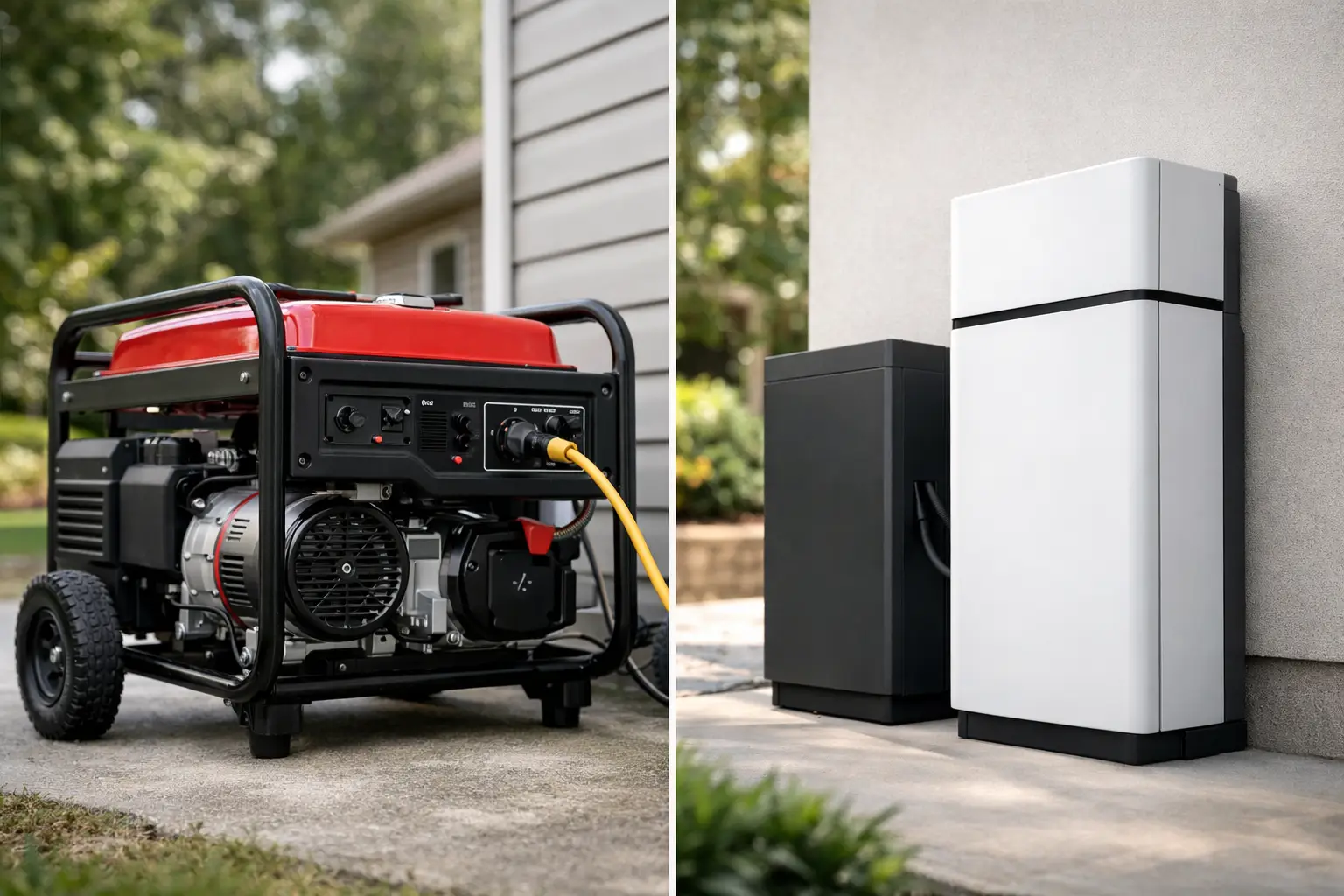
Generator vs Battery Backup: Which Fits?
When the power goes out on a humid summer night, the question stops being theoretical. Generator vs battery backup becomes a real decision about food in the fridge, medical devices, security systems, elevators, internet access, and whether your property can keep operating safely until utility power returns.
For homes and commercial properties along the Alabama coast, backup power is not one-size-fits-all. Storm exposure, flood risk, fuel availability, building size, and the loads you need to carry all matter. Some properties need whole-building coverage for long outages. Others only need enough backup to keep essentials running quietly for a few hours. The right answer depends on what you want protected, how long you need it, and how much involvement you want during an outage.
Generator vs battery backup: the basic difference
A generator creates electricity from fuel such as natural gas, propane, or gasoline. A battery backup stores electricity and delivers it when utility power fails. That difference affects almost everything else – runtime, noise, maintenance, installation requirements, and cost over time.
Generators are usually the better fit when you need higher power output or extended runtime. A standby generator connected to natural gas or a large propane tank can keep operating as long as fuel is available. That makes it a strong option for larger homes, vacation rentals, condo common areas, retail spaces, and businesses that cannot afford a long interruption.
Battery backup systems are usually the better fit when quiet operation, low maintenance, and short-term essential power are the priority. They switch on quickly, produce no on-site exhaust, and can work well for selective loads like lighting, refrigeration, communications equipment, and some medical devices. But storage is finite. Once the battery is depleted, you either need utility power restored or a way to recharge it.
What matters most during a real outage
The first issue is runtime. If your property regularly experiences outages that last several hours or more after severe weather, a battery-only system may not be enough unless your protected loads are very limited. Air conditioning, electric water heaters, ovens, dryers, and large commercial loads can drain battery storage quickly. A generator handles those longer events more effectively, especially when sized properly for the building.
The second issue is startup and convenience. Standby generators can start automatically within seconds of an outage and power selected circuits or the whole service, depending on system design. Battery systems also switch automatically and often feel even smoother for sensitive electronics because there is no engine startup delay. If uninterrupted power for network gear, point-of-sale equipment, cameras, or gate controls is critical, batteries have an advantage in transition quality.
The third issue is noise and placement. Generators make noise and need outdoor installation with proper clearances, ventilation, and code-compliant connections. Battery systems are much quieter and can be easier to place, though they still require careful electrical design, ventilation considerations, and space planning. For some neighborhoods, condos, and businesses where noise is a concern, that difference can carry real weight.
How each system handles heavy household loads
Homeowners often assume backup power means the whole house will work exactly as usual. Sometimes that is realistic. Sometimes it is expensive overkill.
If you want central air, well pumps, pool equipment, electric cooking, and water heating available during an outage, a generator is usually the more practical path. Those loads demand substantial power, especially during startup. A battery system large enough to run all of that for a meaningful period can become costly fast.
If your goal is narrower – refrigerator, freezer, a few lights, Wi-Fi, phone charging, a garage door opener, and selected outlets – battery backup becomes more attractive. The same applies to businesses that need the network closet, emergency lighting, security, and checkout systems but can shut down nonessential equipment until service is restored.
This is where load planning matters. A proper backup power proposal starts with identifying what truly needs to stay on. Once those circuits are defined, system size and cost become much clearer.
The cost question is not as simple as purchase price
People often compare generator and battery backup pricing as if it were just equipment versus equipment. In practice, installed cost depends on the electrical work, transfer equipment, service capacity, fuel setup, site conditions, and permit requirements.
Generators may involve concrete pads, gas piping or propane coordination, transfer switches, and enough capacity to handle motor loads safely. Battery systems may involve critical-load panels, inverter equipment, storage modules, and sometimes solar integration if the property owner wants recharge capability beyond the grid.
Operating cost is different too. Generators consume fuel during outages and need routine maintenance. Batteries have lower routine maintenance needs, but usable runtime is limited, and replacement planning matters over the long term. If you only lose power occasionally for short periods, batteries may be cost-effective. If you face frequent or extended outages, generator fuel use may be worth the trade for better endurance.
Generator vs battery backup for coastal properties
Along the Gulf Coast, backup power decisions should account for storm patterns and property type. A primary home, second home, rental property, restaurant, or condo building can each have very different priorities.
For a full-time residence, the main concern is often comfort and food preservation, along with medical equipment, communications, and basic security. For a vacation rental or second home, owners may care more about preventing spoilage, maintaining remote access, supporting dehumidification, and protecting the building between visits. For commercial spaces, the focus may be on revenue loss, tenant obligations, refrigeration, or electronic systems that cannot go down.
Storm-related outages also raise practical fuel questions. A portable generator can be useful in a pinch, but many owners underestimate the hassle of refueling during bad weather, storing fuel safely, and running extension cords or temporary connections. A permanently installed standby generator removes much of that friction. Battery backup removes fuel handling entirely, but again, only within the limits of stored energy.
Safety and code compliance are not optional
Backup power is not a DIY shortcut. Whether you choose a generator or battery backup, the system needs to be designed and installed correctly for the service, the loads, and the property layout.
Improper generator connections can create backfeed hazards, damage equipment, and endanger utility workers. Poor load calculations can leave you with a system that trips, stalls, or fails to support the circuits you expected. Battery systems also require proper overcurrent protection, disconnects, transfer equipment, and manufacturer-compliant installation.
That is especially important if the property has an older electrical panel, limited service capacity, or previous additions that changed the demand on the system. In many cases, backup power planning is also a good time to evaluate whether the service equipment, surge protection, or panel setup needs updating.
When a generator makes more sense
A generator is usually the better choice when outages are likely to last a long time, when the building has large mechanical loads, or when you want near-normal operation during an outage. It is also a strong fit for businesses where downtime is expensive and for homeowners who do not want to ration power use.
That does not mean every property needs a whole-home or whole-building system. Sometimes the smartest design is a smaller standby generator feeding a carefully selected group of essential circuits. That approach can control installation cost while still covering the equipment that matters most.
When battery backup makes more sense
Battery backup is often the better choice when quiet operation matters, when protected loads are modest, or when the main concern is keeping electronics and essentials online without the noise and maintenance of an engine-driven system.
It can also make sense for owners who want cleaner operation and a more limited but highly controlled backup strategy. If your outage plan is centered on lights, refrigeration, communications, and selected circuits for a few hours, a battery system may be a very practical solution.
Sometimes the best answer is both
There are cases where generator versus battery backup is the wrong framing because the best system uses both. A battery can cover the immediate transition and support critical electronics cleanly, while a generator provides longer-duration power for heavier loads. That hybrid approach is not necessary for every property, but it can be a smart answer for buildings with mixed needs.
For example, a business may want uninterrupted support for network equipment and security systems, but also need a generator to carry HVAC, refrigeration, or larger operational loads if the outage extends. The same thinking can work in larger homes with medical devices, home offices, or high comfort expectations.
The best backup power system is the one that matches your property, your outage history, and the loads you cannot afford to lose. If you are weighing generator vs battery backup in Gulf Shores or nearby coastal communities, start with a real load assessment instead of a guess. A properly planned system is safer, more reliable, and far more likely to perform the way you expect when the lights go out.
If you are not sure which direction makes sense, that is normal. Backup power is one of those upgrades where a little planning up front saves a lot of frustration later.