
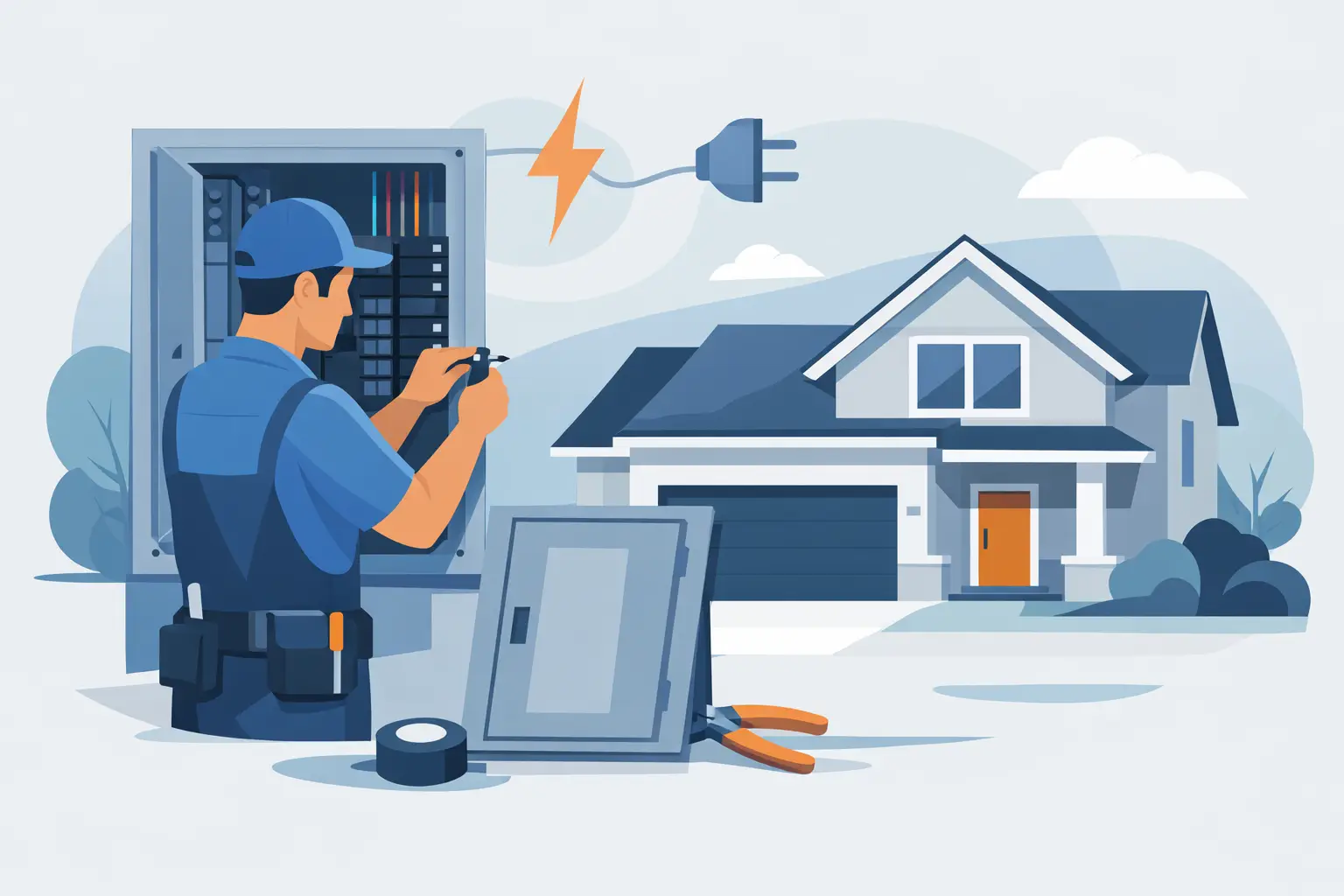
Electrical Panel Replacement Guide for Homeowners
A panel problem usually shows up before the panel itself gets your attention. Lights may flicker when the AC starts, breakers may trip more often, or you may realize your home was never designed to handle EV charging, newer appliances, or backup power. This electrical panel replacement guide is meant to help you understand when a replacement makes sense, what the process looks like, and where the real decisions are.
When an electrical panel replacement guide becomes relevant
Most property owners do not think about the electrical panel until something stops working or an inspection raises concerns. That is normal. The panel is not something you see every day, but it controls how power is distributed throughout the property and how circuits are protected.
A replacement is often worth considering when the panel is older, undersized, damaged, or no longer compatible with the way the building is used. In a home, that can mean adding a pool system, generator connection, hot tub, or EV charger. In a condo unit or commercial space, it may mean updated equipment, tenant improvements, or higher overall demand.
There are also clear warning signs that should not be ignored. Frequent breaker trips, heat at the panel, rust, water intrusion, buzzing, or a burned smell all point to a system that needs prompt professional attention. Sometimes the solution is a targeted repair. Other times, the panel itself is the limiting factor.
What an electrical panel replacement guide should help you decide
The first question is not simply, “Do I need a new panel?” It is, “Is my existing panel safe, serviceable, and large enough for current and future load?” Those are related issues, but they are not identical.
A panel may still function while being too small for modern needs. That is common in older homes that now have larger HVAC systems, kitchen upgrades, home offices, or electric vehicle charging. In those cases, people often live with nuisance tripping for years before deciding to upgrade.
A panel can also be unsafe even if it seems to be working. Corrosion, loose connections, obsolete equipment, and certain aging panel models can create risk that is not obvious during daily use. Coastal conditions can add another layer, especially where moisture and salt air speed up wear on electrical components.
That is why a proper assessment matters. An electrician should look at the panel condition, service size, grounding and bonding, breaker performance, circuit layout, and any planned additions to the property.
Common reasons panels get replaced
Age is a major factor, but age alone does not always settle the question. Some older panels continue to perform well if they have been maintained and are correctly sized. Others become problematic sooner because of brand history, environmental exposure, or poor past work.
Capacity is another major reason. Many older residential panels were installed before today’s power demands became standard. If you are adding a generator, major kitchen equipment, a workshop circuit, or an EV charger, your existing panel may not have enough capacity or available space.
Condition matters just as much. Signs of rust, heat damage, double-tapped breakers where they should not be, outdated fuse systems, or evidence of arcing are all reasons to consider replacement rather than patchwork repairs.
Insurance and real estate transactions also come into play. Buyers, insurers, and property inspectors may flag certain panels or service setups as concerns. In those situations, replacement is not only about convenience. It can affect insurability, financing, and the ability to close a sale.
Repair or replace depends on the actual problem
Not every panel issue means full replacement. A bad breaker, loose connection, damaged bus section, or isolated wiring problem may be repairable. If the panel is relatively modern, correctly sized, and in otherwise good condition, repair can be the practical choice.
Replacement becomes more likely when multiple issues are stacking up. If the panel is old, out of space, showing corrosion, and already struggling with added load, spending money on piecemeal repairs may not make sense. You can end up paying for temporary fixes on equipment that still needs to be replaced soon.
This is where straight answers matter. A dependable contractor should be able to explain why repair is sufficient, or why replacement is the better long-term option, without making it sound more complicated than it is.
What happens during panel replacement
The process starts with an evaluation of the existing service and the electrical demands of the property. That includes reviewing the panel, meter connection, grounding system, and branch circuits. If the upgrade involves a larger service size, additional coordination may be needed with the utility.
From there, the scope is defined. In some cases, the work is a like-for-like panel replacement. In others, it includes a service upgrade, grounding improvements, surge protection, generator integration, or provisions for future circuits.
Permits and inspections are typically part of the job. That matters because panel work is not just about swapping hardware. It needs to meet current code requirements, and those requirements may be different from what existed when the original equipment was installed.
On installation day, power is usually shut off for part of the work. The old panel is removed, circuits are transferred, the new panel is installed, and all connections are tested. Depending on the condition of the existing wiring and the complexity of the service, some jobs move quickly while others take longer.
Costs and the factors that move them
Panel replacement cost depends on more than the panel itself. The size of the service, condition of existing wiring, code upgrades, permit requirements, and whether the meter base or service entrance also needs work all affect the final number.
A straightforward panel change in a property with accessible wiring is one thing. A service upgrade with corrosion issues, grounding corrections, limited access, and utility coordination is another. That is why estimates can vary more than people expect.
Planning ahead can help. If you know you will likely add an EV charger, generator, or major equipment in the near future, it often makes sense to account for that now instead of installing a panel that fits only today’s needs. A slightly larger solution on the front end can be more economical than another round of upgrades later.
For larger projects, financing can also make the decision easier to manage. That can be useful when a panel replacement is tied to safety, storm preparedness, or a broader electrical upgrade that should not be delayed.
Questions to ask before approving the work
You do not need to know every technical detail, but you should get clear answers on a few practical points. Ask whether the existing service size is adequate, whether the replacement includes surge protection, whether grounding and bonding will be updated if needed, and whether the new panel leaves room for future expansion.
It is also worth asking how long the outage is expected to last and whether any existing wiring issues may be uncovered once the panel is opened and circuits are transferred. Good contractors do not promise that every older system will be perfect once the cover comes off. They explain what is known, what could show up, and how they would handle it.
For commercial properties or multifamily buildings, you may also need to think about tenant communication, scheduling, and business interruption. In those settings, planning matters just as much as the installation itself.
Why local conditions matter
Along the Alabama coast, electrical systems can face added stress from humidity, salt exposure, storms, and heavy seasonal demand. That does not mean every panel near the coast needs early replacement, but it does mean corrosion and weather-related wear deserve serious attention.
For homeowners and property managers in Gulf Shores and nearby communities, panel work is often connected to bigger reliability concerns. Backup power, surge protection, and service upgrades are part of the same conversation because they all affect how well the property holds up under real-world conditions.
MNE Electric approaches these projects with that local reality in mind. The goal is not just to install a new panel. It is to make sure the property is safely powered for the way it is actually used.
The best time to replace a panel is usually before it becomes urgent
Very few people schedule panel replacement because they were excited to do it. Most do it because the old system has become a question mark, and they want a clear answer before it turns into a shutdown, failed inspection, or safety issue.
If your panel is aging, overloaded, or showing signs of wear, getting it evaluated now gives you options. You can plan the work, budget for it, and make smart decisions about capacity, protection, and future upgrades instead of reacting when the problem gets harder to ignore.
A good panel should do its job quietly for years. If yours is asking for attention, that is usually reason enough to have it checked.