
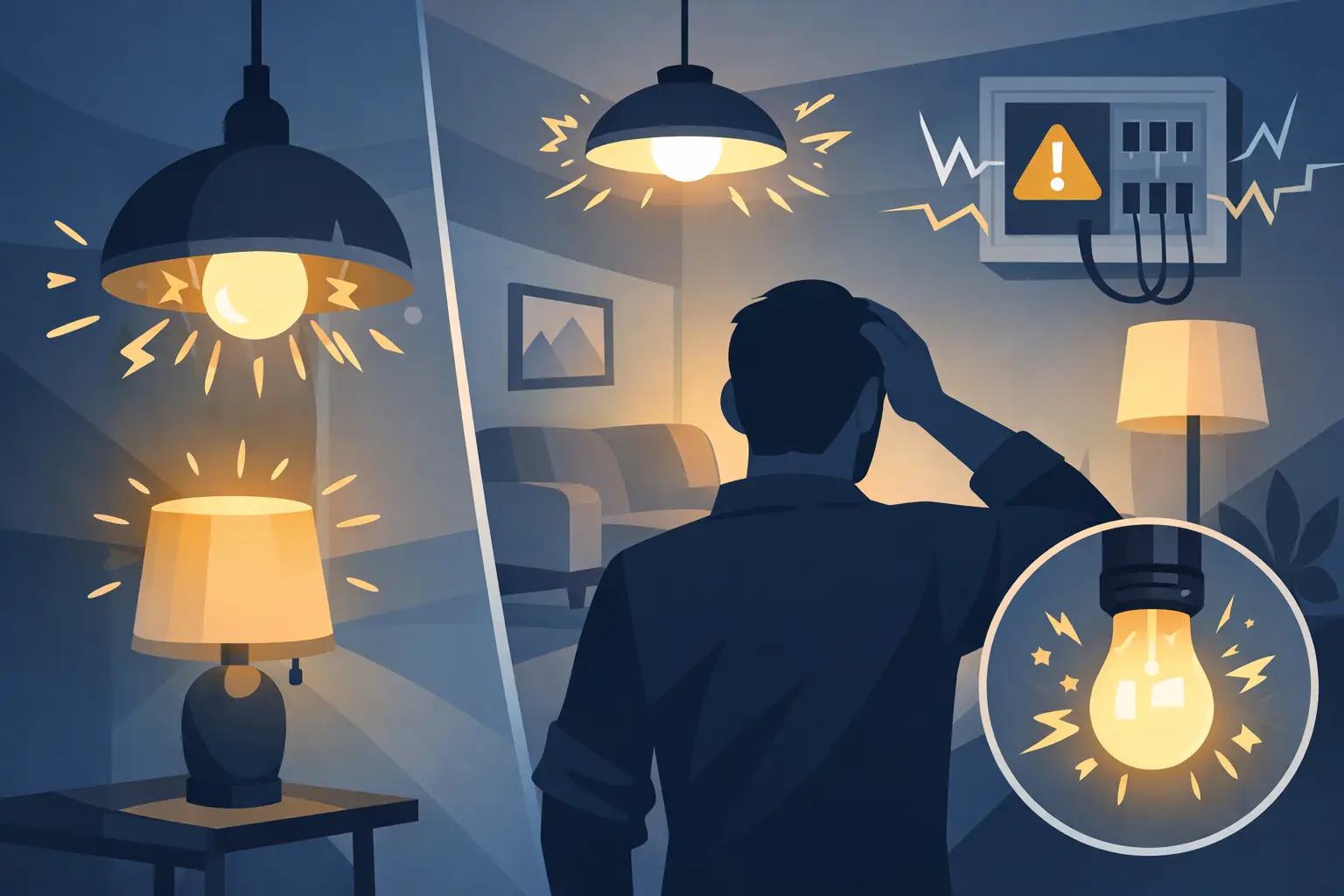
Why Do Lights Keep Flickering at Home?
A lamp that flickers once might not mean much. But when the same light keeps blinking, dimming, or pulsing, it gets your attention fast. If you have been asking, why do lights keep flickering, the answer can range from a simple bulb issue to a wiring problem that needs prompt professional repair.
The key is figuring out whether the flicker is isolated to one fixture, one room, or the whole property. That tells you a lot about what may be happening behind the walls.
Why do lights keep flickering in one fixture?
When flickering affects just one light, the cause is often local and relatively straightforward. A loose bulb is one of the most common reasons. If the bulb is not seated properly in the socket, the electrical connection can become inconsistent and cause visible flickering.
Bulb compatibility also matters more than many people realize. LED bulbs, for example, can flicker when paired with an older dimmer switch not designed for LED loads. In that case, the problem is not always the bulb itself. It may be the switch, the driver inside the bulb, or a mismatch between the two.
A failing socket is another possibility. Over time, the metal contacts inside a fixture can wear down, loosen, or become heat-damaged. If you replace the bulb and the flickering continues in that same fixture, the socket or fixture wiring may be the real issue.
This is where caution matters. Swapping a bulb is one thing. Opening up a fixture or handling damaged wiring is another, especially in older homes or properties exposed to coastal humidity and salt air.
When flickering affects one room or circuit
If several lights in the same room flicker together, the issue usually goes beyond a single bulb or fixture. At that point, the problem may be tied to the circuit serving that area.
A loose wire connection is a common culprit. Electrical connections can loosen over time from normal expansion and contraction, vibration, past repairs, or age. Even a small loose connection can interrupt current flow enough to cause lights to flicker. More importantly, loose connections can create heat, and that makes them a safety concern, not just an annoyance.
You may also notice flickering when larger appliances turn on. If your lights dim when the air conditioner starts, the refrigerator cycles, or a microwave runs, that can indicate a heavy load on the circuit. Some brief dimming can be normal, especially with motor-driven equipment. But frequent or severe flickering suggests the circuit may be overloaded, unbalanced, or not configured well for the actual demand on the home or building.
In condos, rental properties, and older commercial spaces, this is especially common after years of added devices, equipment, and upgrades. The electrical system may have been adequate at one point, but power needs change.
Why do lights keep flickering throughout the house?
Whole-house flickering points to a broader issue, and that is where the risk level can rise. If lights in multiple rooms flicker at the same time, you may be dealing with a service issue, a panel problem, or a failing main connection.
One possibility is a loose connection in the electrical panel. Another is a problem at the service mast, meter base, or utility connection. These issues can affect voltage consistency across the property. In some cases, lights may seem brighter than normal before dimming again, which can be a sign of unstable voltage and should be taken seriously.
This is not a wait-and-see situation if the flickering is frequent, widespread, or getting worse. The same applies if you notice buzzing sounds, a burning smell, warm outlets, or breakers tripping along with the flickering. Those are warning signs that call for a licensed electrician.
In some cases, the utility provider may be part of the issue. Problems with the incoming service line or transformer can cause flickering, especially after storms or weather-related damage. A qualified electrician can help determine whether the issue is inside the property or on the utility side.
Harmless flicker vs. dangerous flicker
Not every flicker means there is an emergency. A single problematic LED bulb, a dimmer compatibility issue, or a loose bulb can often be corrected without major repair. But the pattern matters.
A harmless flicker is usually isolated and predictable. It may happen with one fixture only, stop after a bulb replacement, or appear only when using a dimmer that is not matched to the bulb type.
A dangerous flicker tends to have other symptoms. It may affect multiple areas, happen more often over time, appear alongside tripped breakers, or come with signs of heat or odor. If lights flicker when there is no clear trigger, or if the problem extends across several circuits, it is worth getting inspected sooner rather than later.
Electrical issues are often progressive. The early sign may be a flickering light. The bigger problem may be hidden in a failing connection, outdated panel component, or overloaded circuit.
Common causes homeowners overlook
Some flickering problems come from places people do not think to check. One example is a switch with worn internal contacts. If a light flickers only when a switch is in a certain position, the switch itself may be failing.
Another overlooked cause is recent electrical work. A new fixture, ceiling fan, appliance, EV charger, or even an outdoor system can change how a circuit performs. That does not mean the new equipment is defective. It may mean the system needs adjustment, a dedicated circuit, or a service upgrade to support the load properly.
Surge-related wear can also play a role, especially in coastal areas where storms and power disturbances are part of life. Repeated surges may not cause an immediate outage, but they can shorten the life of sensitive electrical components and contribute to irregular performance.
Properties with aging panels deserve extra attention. If your home or building is several decades old and has not had meaningful electrical updates, flickering lights may be one of the first visible signs that the system is due for inspection.
What you can check safely
Before calling for service, there are a few safe observations you can make. Notice whether the flicker affects one light, one room, or the entire property. Pay attention to whether it happens when certain appliances start up. Try a new bulb in the affected fixture if the problem appears isolated.
You can also check whether the bulb type matches the fixture and dimmer. If you recently installed LED bulbs and the flicker started afterward, compatibility may be part of the problem.
What you should not do is open the panel, disassemble wiring, or keep resetting breakers without understanding the cause. If there is a loose or damaged connection, repeated use can make the problem worse.
When to call an electrician
If the flickering continues after a simple bulb replacement, it is time to move beyond guesswork. A licensed electrician can test the circuit, inspect connections, evaluate the panel, and identify whether the issue is local or system-wide.
This is especially important if your property has older wiring, recent remodeling, increased electrical demands, or signs of inconsistent power. Homes and businesses today rely on more equipment than they did years ago. HVAC systems, kitchen loads, office devices, charging equipment, and backup power setups all add to the demand on the electrical system.
For homeowners and property managers in Gulf Shores and surrounding coastal areas, moisture, storms, and aging infrastructure can add another layer to troubleshooting. Problems that seem minor on the surface may involve service equipment, corroded connections, or outdated components that need professional attention.
A dependable electrician should do more than stop the flicker. The goal is to identify the cause, correct it safely, and make sure the repair holds up under real-world use. That is the standard MNE Electric works to deliver on every service call.
If your lights are flickering, trust what you are seeing. Electrical systems usually give warnings before they fail completely, and a small symptom today is often easier to fix than a bigger problem later.