
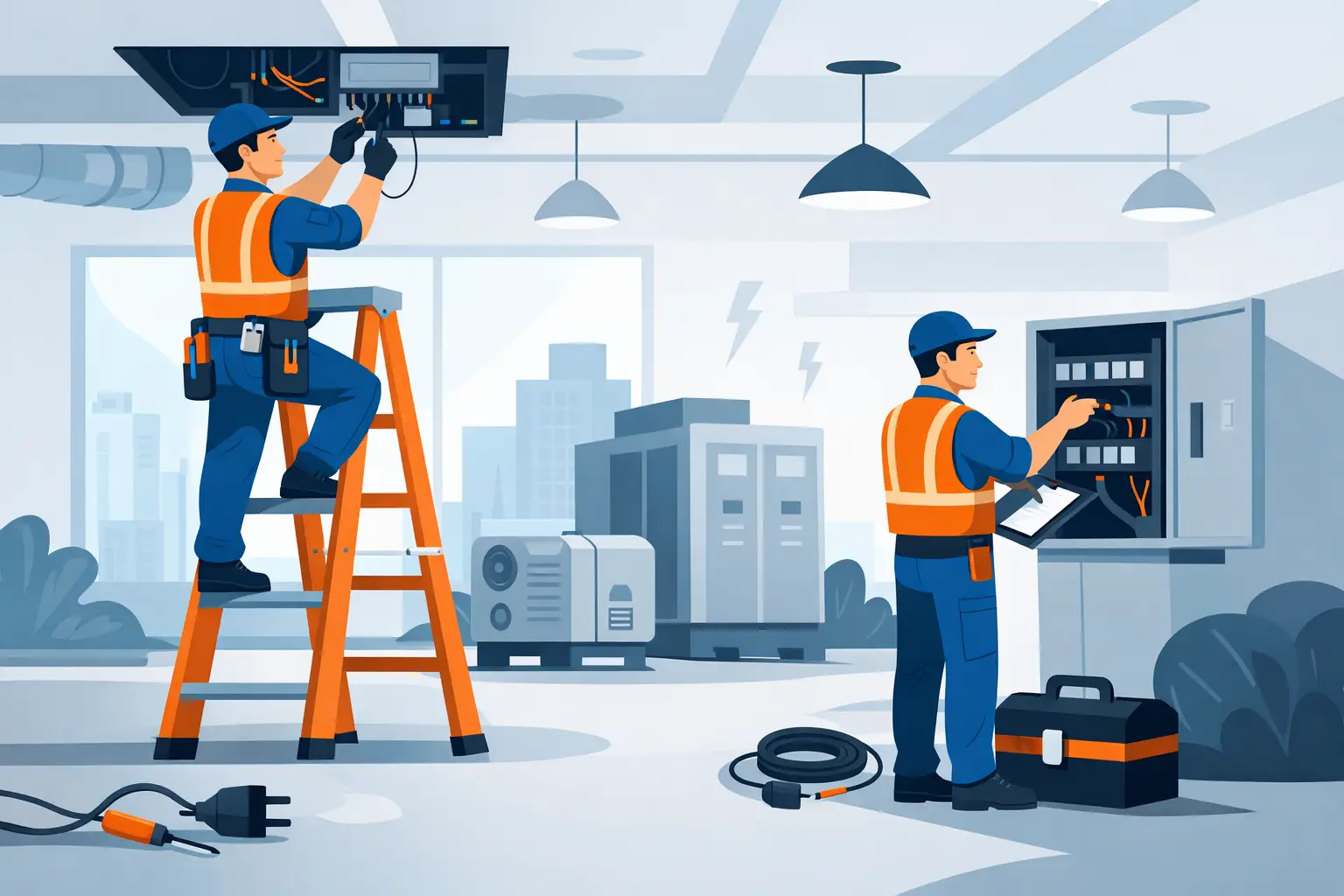
Commercial Electrical Maintenance Services
A flickering light in a break room is easy to ignore. A hot panel, recurring breaker trips, or equipment that keeps dropping offline is not. Commercial electrical maintenance services are meant to catch those problems early, before they turn into downtime, safety issues, or expensive emergency repairs.
For business owners and property managers, electrical maintenance is less about checking a box and more about protecting daily operations. When your building depends on reliable lighting, HVAC, refrigeration, office systems, security equipment, or specialized machinery, even a small electrical issue can affect tenants, customers, staff, and revenue.
What commercial electrical maintenance services actually cover
Commercial systems take more wear than most people realize. Loads change over time, equipment gets added, panels age, connections loosen, and coastal conditions can speed up corrosion in ways that are easy to miss until there is a failure.
That is why commercial electrical maintenance services usually involve more than a quick visual inspection. A qualified electrician may inspect panels and breakers, test circuits, look for signs of overheating, check disconnects and switchgear, evaluate interior and exterior lighting, inspect wiring conditions, verify grounding and bonding, and identify equipment that no longer fits the building’s electrical demand.
Maintenance can also include service work tied to business continuity. That might mean replacing worn components before they fail, correcting code concerns, addressing nuisance tripping, improving power distribution, or planning upgrades for new equipment. In some buildings, maintenance also overlaps with surge protection, backup power planning, and energy management improvements.
Why scheduled electrical maintenance matters for commercial properties
The most obvious reason is safety. Faulty connections, damaged insulation, overloaded circuits, and aging equipment can create fire risks, shock hazards, and unreliable operation. In a commercial setting, those problems do not just affect one room. They can impact employees, customers, tenants, and anyone else on the property.
There is also the cost side. Emergency service is sometimes unavoidable, but it is rarely the most efficient way to manage a building. A planned maintenance visit often costs far less than an unplanned outage, spoiled inventory, lost operating hours, or damage to connected equipment.
Scheduled maintenance also gives property owners better visibility. Instead of reacting to one failure after another, you get a clearer picture of what is in good shape, what needs attention soon, and what should be budgeted as a future upgrade. That matters for retail spaces, offices, restaurants, condo common areas, and multi-tenant commercial properties where reliability affects more than one occupant.
Signs your building may need commercial electrical maintenance services
Some issues are obvious. Others build slowly enough that they become part of the routine until a larger problem forces action. If breakers trip regularly, lights dim when equipment starts, outlets stop working, or electrical rooms show signs of heat or moisture, it is time to have the system evaluated.
Older buildings deserve extra attention, especially if they have added HVAC loads, new appliances, office equipment, signage, or EV charging stations over time. A system that was acceptable years ago may not be sized well for current demand.
It is also smart to schedule service if your property has recently gone through renovations, storm activity, tenant turnover, or repeated service calls for the same issue. Those situations often reveal underlying electrical problems rather than isolated defects.
Maintenance is not one-size-fits-all
A small office suite and a busy restaurant do not use power the same way, so they should not be maintained the same way. The right service plan depends on the age of the building, the type of occupancy, the hours of operation, the critical equipment involved, and how costly downtime would be.
For some businesses, an annual inspection may be enough to stay ahead of common wear. For others, especially properties with heavy usage, sensitive equipment, or multiple tenants, more frequent service makes sense. The goal is not to overcomplicate the process. It is to match the level of maintenance to the real risk and operational demands of the property.
This is where working with an experienced commercial electrician helps. A good contractor will not treat every building the same. They will look at how your property actually operates and recommend maintenance based on that reality.
Common problems found during commercial electrical maintenance
One of the most common issues is loose or deteriorating connections. Electrical systems expand and contract with heat over time, and that movement can create resistance points that lead to overheating. These problems may not be visible from the outside, but they can cause equipment damage or failure if left uncorrected.
Another frequent issue is overloaded circuits. Businesses evolve, and electrical systems do not always keep pace. Additional workstations, refrigeration units, signage, security devices, and charging needs can push existing circuits beyond what they were meant to handle.
Lighting systems also come up often. Exterior lighting, parking lot lights, tenant signage, and interior fixtures affect both safety and appearance. If lighting is inconsistent or outdated, maintenance may uncover failing drivers, wiring issues, control problems, or opportunities for more efficient upgrades.
In coastal areas like Gulf Shores and Orange Beach, corrosion can also be a factor. Salt air and humidity are hard on electrical components, especially outdoors or in partially exposed service areas. Regular inspections can catch deterioration before it creates a larger reliability issue.
Electrical maintenance and code compliance
Maintenance does not replace inspections required for a renovation or major installation, but it does support code-conscious operation. A commercial building can drift out of step over time when equipment is added, repairs are made inconsistently, or older components remain in service long past their best years.
Routine maintenance helps identify conditions that may need correction, whether that is improper wiring methods, outdated panels, missing protection, damaged enclosures, or other deficiencies. Not every issue requires immediate major work, but knowing what needs attention gives owners and managers the chance to plan responsibly instead of being caught off guard.
That planning matters even more for businesses that serve the public or manage multiple occupants. Electrical issues can quickly become liability issues when they affect life safety systems, emergency lighting, accessibility, security, or tenant operations.
When maintenance becomes an upgrade discussion
Sometimes a service visit confirms that a simple repair is all you need. Other times, maintenance reveals that the real issue is capacity, age, or system design. A panel that trips repeatedly may not be failing on its own. It may be telling you the building has outgrown it.
That is why maintenance and upgrades often go hand in hand. If your property is adding equipment, remodeling space, improving exterior areas, or preparing for backup power or EV charging, electrical maintenance can be the starting point for a smarter long-term plan.
For some owners, financing can make those larger improvements easier to manage, especially when the work improves safety, reliability, and property value at the same time. The important part is having clear information about what is urgent, what is recommended, and what can be phased over time.
Choosing the right provider for commercial electrical maintenance services
Commercial work calls for experience, responsiveness, and attention to detail. You need an electrician who understands active business environments and can work safely, communicate clearly, and minimize disruption while still addressing the real problem.
That includes more than technical skill. It also means showing up on time, documenting findings clearly, and making practical recommendations instead of vague warnings. If a contractor cannot explain what they found and why it matters, it is hard to make good decisions for your property.
A local contractor often brings added value because they understand the demands of the area, including weather exposure, seasonal occupancy changes, and the kinds of electrical issues common to coastal commercial properties. MNE Electric works with business owners and property managers who need dependable service, clear communication, and work done right the first time.
A practical way to think about maintenance
The best time to deal with most electrical issues is before they interrupt your day. Commercial electrical maintenance services give you a way to spot problems early, protect the people who use the building, and make better decisions about repairs and upgrades.
If your property has been relying on reactive service calls, a maintenance plan can bring more control to the process. A building does not need to be failing to deserve attention. It just needs to stay safe, reliable, and ready for the work happening inside it every day.