
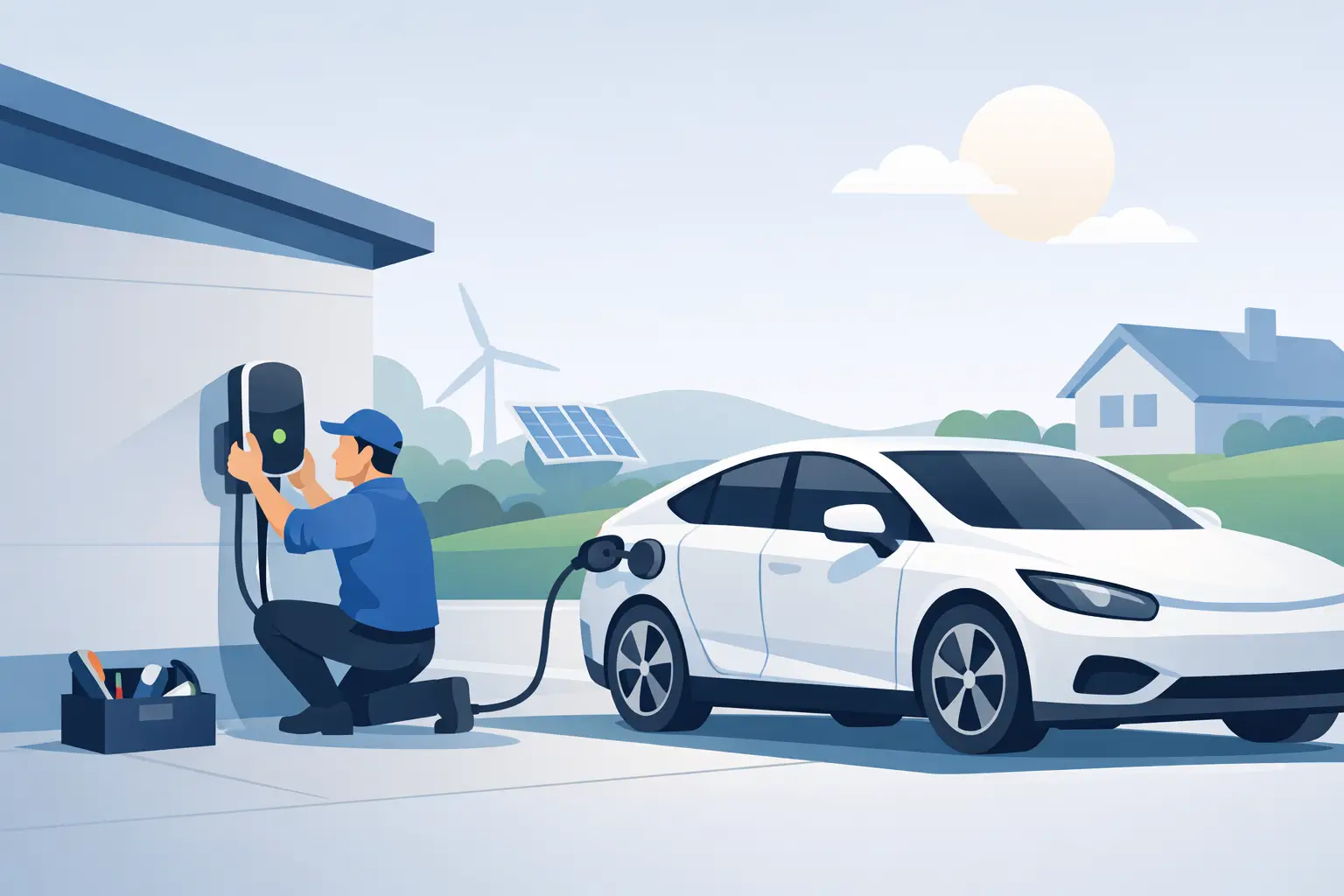
Home EV Charger Installation Done Right
Pulling into your driveway with 20 miles left and knowing your vehicle will be ready by morning is the real advantage of home EV charger installation. Public charging still has a place, but most EV owners quickly realize that charging at home is what makes daily driving easier. The key is making sure the charger, circuit, and electrical service are matched to your home and your driving habits.
For homeowners in Gulf Shores, Orange Beach, and nearby Baldwin County communities, that decision often involves more than just picking a charger off the shelf. Coastal homes, older panels, condo parking setups, and growing household power demands can all affect the scope of the job. A proper installation is about safety, code compliance, and dependable performance over time.
Why home EV charger installation matters
A standard wall outlet can charge an EV, but it is slow. For some drivers, especially those with short daily commutes, Level 1 charging may be enough for a while. For many households, though, it becomes limiting fast. If you drive farther, own a larger battery EV, or share charging between multiple vehicles, waiting on a basic outlet is not practical.
Home EV charger installation usually means adding a Level 2 charger on a dedicated 240-volt circuit. That setup can cut charging time dramatically and make overnight charging realistic. It also gives you a more consistent, purpose-built solution than relying on an extension cord or an outlet that was never intended for frequent, high-load use.
There is also a long-term value question. Installing a charger can make a home more functional for current owners and more appealing for future buyers as EV adoption continues to grow. It is not the right upgrade for every property at the same moment, but for many households it becomes one of the most useful electrical improvements they make.
What to expect during home EV charger installation
The first step is usually a site evaluation. That means looking at your main electrical panel, available capacity, charger location, parking layout, and the distance between the panel and where the charger will be mounted. Those details affect labor, materials, permitting, and whether additional upgrades are needed.
A straightforward installation might involve mounting the charger in a garage near the panel and adding a new dedicated breaker. That is often the simplest and most cost-effective version of the job. If the charger needs to be installed on an exterior wall, at a carport, or farther from the electrical service, the project can require more conduit, longer wire runs, weather-rated equipment, and additional labor.
Some homes also need panel work before the charger can be added safely. If your electrical service is already close to capacity, the right answer may be a load calculation, a panel upgrade, or a load management solution. That is where working with a qualified electrical contractor matters. A charger should not be added by guesswork.
Choosing the right charger and amperage
Bigger is not always better. Many homeowners assume they need the fastest charger available, but the best charger depends on your vehicle, driving routine, and electrical system. A 40-amp or 48-amp charger is a strong fit for many households, but that does not mean every home should be set up the same way.
If your EV sits parked overnight for eight to ten hours, you may not need the highest charging speed possible. On the other hand, if you have a long commute, limited charging windows, or more than one EV at home, a higher-capacity setup may make sense. The charger also needs to match what the vehicle can accept. Installing beyond that point may add cost without delivering much practical benefit.
There is also the question of hardwired versus plug-in chargers. A hardwired unit often provides a cleaner, more permanent installation and can support higher amperage in some cases. A plug-in charger offers flexibility if you plan to replace or relocate the unit later. The right choice depends on your goals, your panel capacity, and the installation location.
Panel capacity, service upgrades, and older homes
One of the most common surprises during home EV charger installation is learning that the charger itself is not the only part of the project. The home has to be able to support the added load. If you already have electric water heating, a pool pump, HVAC equipment, a range, dryer, and other high-demand appliances, your available capacity may be tighter than expected.
That does not automatically mean you need a full service upgrade, but it does mean the numbers need to be checked. In some homes, a load calculation shows there is enough capacity for the charger as planned. In others, the safer path may involve upgrading the panel or coordinating usage with an energy management system.
Older homes deserve extra attention here. Panels may be full, grounding may need correction, or previous electrical work may not meet current standards. This is especially relevant in a market with a mix of long-standing homes, remodeled properties, and investment properties. A charger installation can be a good time to address electrical issues that would eventually need attention anyway.
Coastal conditions and outdoor charger placement
In coastal Alabama, environment matters. Salt air, humidity, wind-driven rain, and storm exposure can all influence equipment selection and placement. If your charger will be installed outdoors or in a semi-exposed area, the materials and mounting approach need to fit those conditions.
That usually means using properly rated equipment, weather-resistant enclosures where needed, and installation methods designed for long-term durability. It also means choosing a location that is convenient without exposing the charger and cable to unnecessary wear. A charger mounted in the wrong spot may still work, but it can be less secure, less convenient, and more vulnerable over time.
For condos, multi-unit properties, and shared parking areas, the planning can be more involved. Questions about ownership, meter access, approvals, and routing power to the assigned parking space often need to be addressed early. The electrical work is only part of the equation.
Permits, code, and why professional installation matters
A home EV charger is not a plug-and-play appliance in the way many people assume. It is a continuous electrical load, and that matters for circuit sizing, breaker selection, conductor sizing, disconnect requirements in some setups, and overall code compliance. Skipping those steps can create overheating risks, nuisance tripping, or equipment damage.
Professional installation helps make sure the charger is installed to code, permitted when required, and inspected as needed. It also helps protect the investment in both the charger and the home. If something goes wrong with a DIY or improvised install, the cost of correcting it can easily exceed what was saved upfront.
Reliable workmanship matters even more when the charger is tied into broader electrical work such as a service upgrade, subpanel addition, or parking area expansion. This is the kind of project where doing it correctly the first time saves time and frustration.
Cost factors and what can change the price
Homeowners naturally want to know what home EV charger installation will cost, and the honest answer is that it depends on the property. The charger model is only one part of the price. Panel capacity, wire length, wall access, conduit routing, permit requirements, and whether any upgrades are needed all affect the final cost.
A simple garage installation near the electrical panel is usually more affordable than an exterior install with a long run across the property. If the panel is undersized or outdated, costs rise because the job becomes a broader electrical upgrade. That is not bad news by itself. In many cases, that added work improves the safety and usefulness of the home beyond just EV charging.
For larger projects, financing can also make sense. When a charger install overlaps with a service upgrade or other major electrical improvements, spreading out the cost may be more practical than delaying the work.
Planning for how you actually live
The best charger setup is the one that fits your day-to-day routine. If you back into the garage every night, charger placement should reflect that. If your household may add a second EV in the next few years, it is smart to think ahead now rather than redo work later. If you own a rental or vacation property, the charging setup may need to balance convenience, access, and control.
This is where local experience helps. A contractor who regularly works in Gulf Shores and Orange Beach will understand the housing mix, the environmental conditions, and the practical concerns property owners face here. MNE Electric approaches these projects with that local perspective, along with the technical side needed to install chargers safely and correctly.
A good EV charger should feel easy to use from day one. When the circuit is sized properly, the equipment is placed where it makes sense, and the installation is built for the property, charging becomes one less thing to think about – which is exactly the point.