
How to Schedule Electrical Inspection for Your Home
A breaker that trips repeatedly, a warm outlet, or lights that dim when the air conditioner starts are not problems to put off until a convenient time. Knowing how to schedule electrical inspection service gives you a clear path to identify the cause before a small warning sign turns into damage, downtime, or a safety concern.
An electrical inspection is not only for homes being sold or renovated. It can be a practical service call for a condo owner with an older panel, a property manager preparing for peak rental season, or a business owner adding equipment that places new demands on the electrical system. The right time to schedule one depends on what is happening at your property and what you plan to do next.
Start With the Reason for the Inspection
The first step is to identify why you need the inspection. This helps the electrician arrive prepared, allows the office to schedule the appropriate amount of time, and keeps the visit focused on the areas that matter most.
For example, a safety-focused inspection may be needed after a breaker has tripped several times, an outlet has stopped working, or you have noticed buzzing, burning odors, heat, discoloration, or flickering lights. These symptoms can point to loose connections, overloaded circuits, damaged wiring, or equipment that needs repair. If you smell burning or see smoke, turn off power to the affected area if it is safe to do so and seek prompt professional help.
You may also need an inspection before a planned project. Common examples include installing an EV charger, adding a generator, remodeling a kitchen, upgrading service capacity, replacing an electrical panel, or adding circuits for new appliances. An inspection early in the process can reveal whether the existing system has enough capacity and whether upgrades are needed before installation begins.
For homes and commercial properties in coastal Alabama, storm readiness is another reason to have the system reviewed. Moisture, salt air, wind-driven rain, and power interruptions can expose weaknesses in outdoor equipment, connections, surge protection, and backup-power arrangements. The scope should match the situation rather than treating every inspection as the same service.
How to Schedule Electrical Inspection Service
Call, text, or submit a service request with a qualified electrical contractor. When scheduling, explain the property type, the concern you are seeing, and whether the issue is affecting a single room, the entire building, or a specific piece of equipment. Mention any recent work, storm damage, renovations, or new appliances that may be related.
Be ready to provide the property address and your preferred appointment windows. If access requires coordination with a tenant, gate attendant, condo association, or business manager, say so up front. A clear scheduling conversation prevents delays and helps make sure the electrician can reach the panel, attic access, mechanical areas, exterior equipment, and any outlets or fixtures connected to the concern.
It also helps to ask what type of inspection you are scheduling. There is a meaningful difference between an electrician’s diagnostic or safety inspection and an inspection performed by a local building department or other authority as part of a permit process. A licensed electrician can assess your system, explain concerns, perform repairs, and help prepare work for required permitting. Government or third-party inspections are generally tied to code compliance for permitted work and may need to be scheduled through a separate process.
If your project requires permits, ask who will coordinate them. The answer can vary based on the work, the local jurisdiction, and whether the project is residential or commercial. Getting this clear before work starts protects your schedule and avoids assumptions about who is responsible for the next step.
Share the Details That Help an Electrician Diagnose the Problem
You do not need electrical training to make a service visit more productive. A few observations can give the technician useful context. Note when the problem occurs, what was running at the time, and whether it started after a storm, power outage, appliance installation, or renovation.
If a breaker trips, avoid repeatedly resetting it to keep power on. Instead, write down the breaker label, the rooms or equipment it serves, and what happened just before it tripped. If lights flicker, note whether the issue affects one fixture, one circuit, or several areas of the property. Photos of visible discoloration or damaged equipment can also be helpful, but never remove panel covers or touch exposed wiring to investigate further.
For a planned upgrade, gather basic information about the equipment you want to add. The make and model of an EV charger, generator, HVAC unit, or major appliance can help determine electrical requirements. For commercial properties, include expected operating hours, equipment load, and any future expansion plans. The goal is not to overcomplicate the appointment. It is to give the electrician enough information to evaluate the full picture rather than only the immediate symptom.
Prepare the Property Before the Appointment
On the day of the inspection, make the electrical panel and affected areas easy to access. Move stored items away from the panel, clear access to outlets or fixtures involved in the issue, and secure pets. If the attic, crawl space, utility room, or exterior disconnect may need to be reviewed, make sure those areas are available as well.
For rental, condo, and commercial properties, confirm that the person meeting the electrician can approve access and answer basic questions about the building. If the property has multiple panels, meters, units, or locked utility rooms, identify them in advance. A technician can work more efficiently when the site is ready, which can reduce interruptions for residents, guests, employees, and customers.
You should also plan for the possibility of a temporary power interruption. Not every inspection requires one, but testing, repairs, panel work, and certain upgrades may require circuits or the main power to be shut off briefly. Ask about this when you schedule, especially if the property relies on medical equipment, refrigeration, security systems, servers, or essential business operations.
Know What Happens During an Electrical Inspection
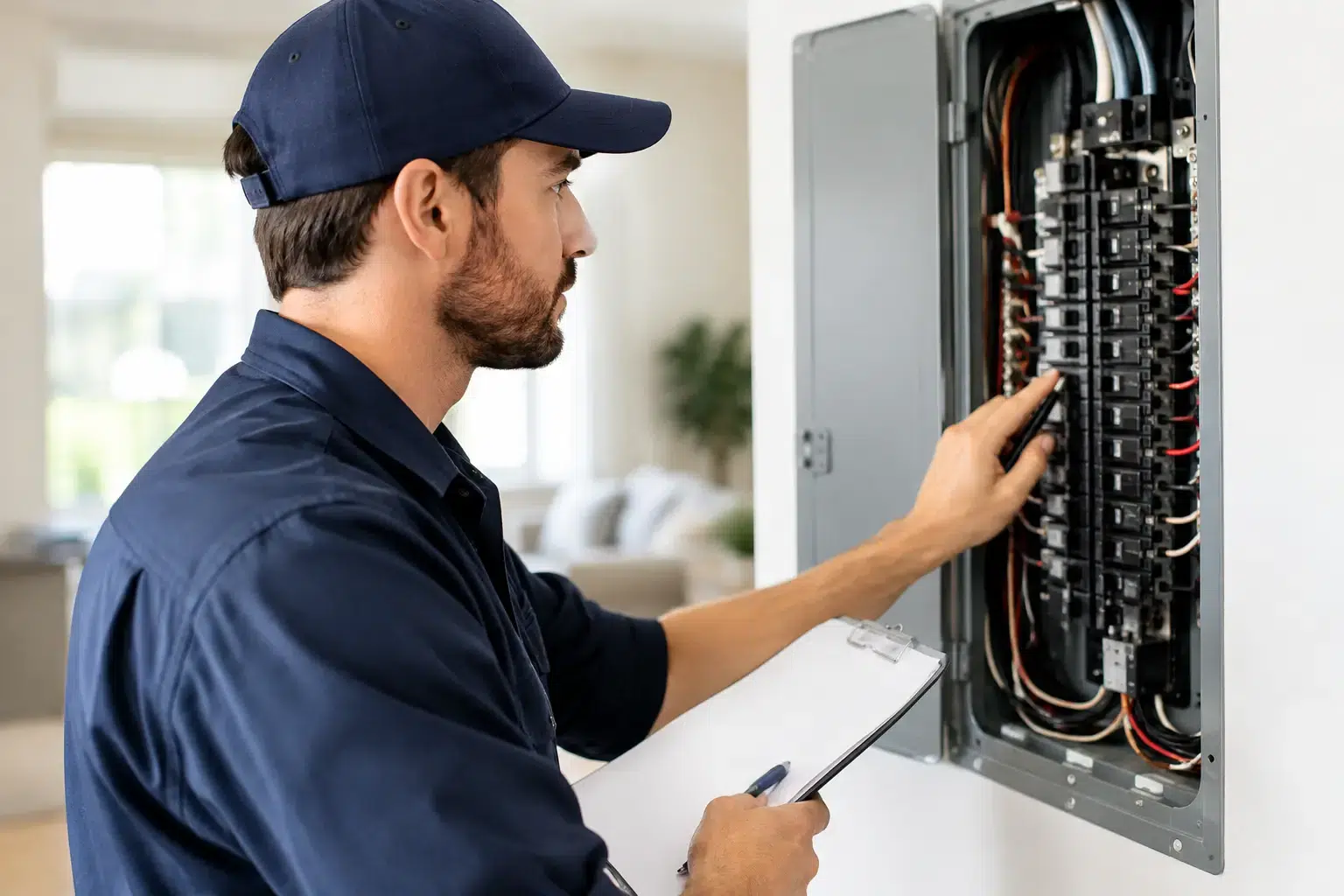
A thorough inspection begins with listening. The electrician should understand the symptoms, the property’s age and use, recent changes, and your goals for the visit. From there, the evaluation may include the panel, breakers, grounding and bonding, visible wiring, outlets, switches, GFCI protection, exterior equipment, service connections, and circuits related to the reported concern.
The exact scope depends on access and the reason for the appointment. An inspection for a single malfunctioning outlet will not look the same as an assessment before a service upgrade or whole-home generator installation. In some cases, hidden wiring or equipment cannot be fully evaluated without additional diagnostic work. A dependable contractor will explain that limitation rather than make assumptions.
After the inspection, ask for a plain-language explanation of the findings. You should understand what is functioning properly, what needs attention now, what may be worth planning for, and what options are available. Safety repairs should take priority over convenience upgrades, but not every recommendation is an emergency. A good electrician will distinguish between an immediate hazard, a code-related correction tied to a project, and an improvement that can be scheduled later.
When Should You Schedule an Inspection Immediately?
Do not wait for a routine appointment if you notice burning smells, visible sparks, smoke, repeated shocks or tingling from fixtures, a hot electrical panel, melted outlet covers, or frequent breaker trips with no clear cause. Turn off power to the affected circuit if you can do so safely and contact a qualified electrician promptly. For active fire or immediate danger, call emergency services.
You should also schedule an inspection soon after significant water intrusion near electrical equipment, major storm damage, or an unexplained partial power loss. Coastal weather can affect exterior components and connections even when the rest of the property appears normal.
Questions to Ask Before You Confirm the Appointment
Ask whether the contractor is licensed and qualified to perform the type of work you need, whether the visit is a diagnostic inspection or part of a larger project estimate, and what access is required. For upgrades, ask whether permits, utility coordination, or follow-up inspections may apply.
It is also reasonable to ask how findings will be communicated and whether the electrician can provide options if repairs or upgrades are recommended. Major work such as panel replacements, generators, and EV charging infrastructure may require planning beyond the initial visit. That is normal. The inspection gives you the information needed to make a sound decision instead of guessing.
For homeowners, property managers, and businesses in Gulf Shores and nearby communities, MNE Electric can help assess electrical concerns, explain the next steps, and complete needed work with certified local expertise. Scheduling an inspection before a problem grows is often the simplest way to protect the people, equipment, and plans that depend on reliable power.