
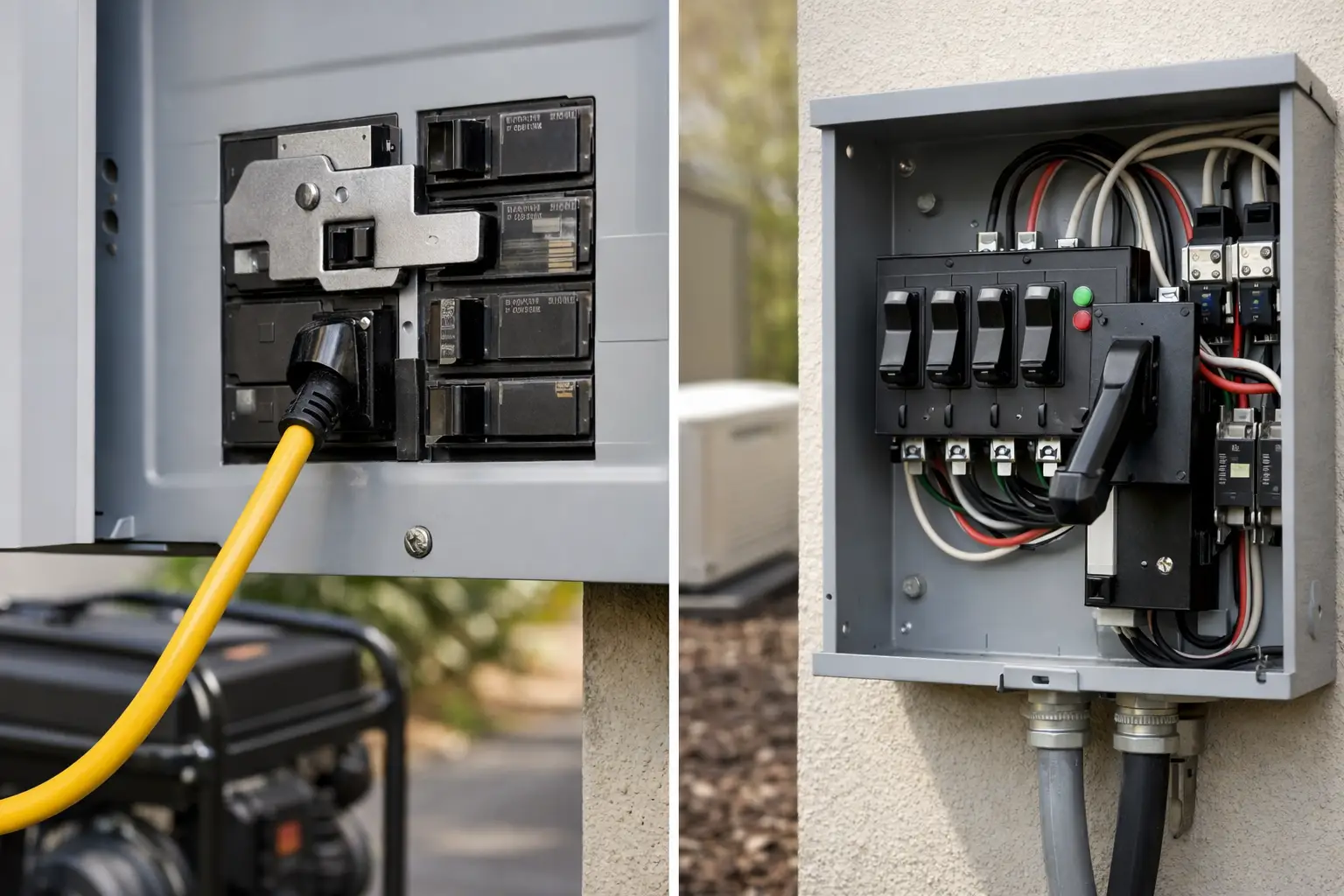
Generator Interlock vs Transfer Switch
When the power goes out on the Gulf Coast, the question is usually not whether you want backup power. It is how you want that power connected. For many property owners, generator interlock vs transfer switch is the real decision, because both can safely connect a portable generator to your electrical system when they are installed correctly.
The right choice depends on your generator size, which circuits you want to run, how much convenience you expect during an outage, and what your panel can support. There is no one-size-fits-all answer. A setup that works well for a small home may be a poor fit for a condo, a rental property, or a business that needs more predictable backup power.
Generator interlock vs transfer switch: the core difference
A generator interlock is a mechanical device installed on your main electrical panel. Its job is simple. It prevents the main breaker and the generator breaker from being on at the same time. That matters because it helps prevent backfeeding, which can endanger utility workers, damage equipment, and create serious code and safety issues.
With an interlock, your generator feeds the panel through a designated breaker, and you manually choose which household loads to run by turning individual branch breakers on and off. That gives you flexibility, but it also means you need to manage the electrical load carefully.
A transfer switch is a separate switching device that moves selected circuits, or in some cases the whole service, from utility power to generator power. In a manual transfer switch setup, you physically switch the power source during an outage. In an automatic transfer switch setup, the switch senses the outage and transfers power without you having to intervene, usually with a standby generator rather than a portable unit.
So the short version is this: an interlock uses your existing panel and requires manual breaker management, while a transfer switch provides a more dedicated and controlled way to switch power sources.
How a generator interlock works in real life
For homeowners with a portable generator, interlocks are often attractive because they are straightforward and usually less expensive than a transfer switch. If your panel accepts a listed interlock kit, an electrician can install the generator inlet, breaker, and interlock so your generator can safely supply the panel during an outage.
Once connected, you start the generator, connect it at the inlet, slide the interlock into position, switch off the main breaker, and turn on the generator breaker. From there, you decide what to power. You may choose the refrigerator, a few lights, a ceiling fan, a garage door opener, and maybe a small window AC or microwave, depending on generator capacity.
That flexibility is the interlock’s biggest advantage. You are not limited to a fixed set of circuits wired into a subpanel. If your priorities change during an outage, you can turn one load off and another on.
The trade-off is convenience. Someone has to understand the panel and manage the load correctly. If you overload the generator, you can trip breakers or stall the unit. For some households, that is manageable. For others, especially when outages happen at night or during severe weather, it can be less than ideal.
How a transfer switch compares
A manual transfer switch gives you more structure. Instead of energizing the full panel and manually balancing loads, it feeds a selected group of circuits that were chosen during installation. Those might include refrigeration, kitchen receptacles, internet equipment, a sump pump, lighting, and one HVAC component if the generator is sized for it.
That setup is cleaner for many property owners because it reduces guesswork. During an outage, you operate the switch and your critical circuits are ready to go. You are less likely to accidentally exceed generator capacity because the system is designed around a known load.
An automatic transfer switch takes convenience even further. This is commonly paired with a permanently installed standby generator. When utility power drops, the generator starts and the switch transfers power automatically. For households with medical equipment, frequent travelers, vacation homes, or businesses that need continuity, that level of automation can be worth the added investment.
The downside is cost and complexity. Transfer switches usually involve more equipment, more planning, and more installation labor than an interlock. Automatic systems are the most convenient, but they also represent the biggest upfront investment.
Safety and code compliance matter more than price alone
When customers compare generator interlock vs transfer switch, cost usually comes up first. That makes sense, but safety should lead the conversation.
Neither option is safe as a do-it-yourself shortcut if it is not listed for the equipment, properly sized, and installed to code. A portable generator should never be connected through a dryer outlet or another improvised method. That kind of backfeeding is dangerous and illegal.
A properly installed interlock can be a safe code-compliant solution, but only if the panel supports a listed interlock device and the rest of the installation is done correctly. Not every panel is a candidate. Older panels, damaged panels, or panels without approved interlock kits may push the decision toward a transfer switch or even a service upgrade.
Transfer switches also have to be matched correctly to the system. The electrician needs to evaluate amperage, available load, generator type, grounding and bonding requirements, and the circuits you actually need during an outage. For coastal properties, equipment location and weather exposure also matter.
Which option costs less?
In many cases, a generator interlock setup costs less than a transfer switch. It often uses the existing main panel, so there is less additional equipment involved. That can make it appealing for homeowners who want a practical backup power connection for a portable generator without a major project.
A manual transfer switch typically costs more because it adds a separate switching device and circuit reconfiguration. An automatic transfer switch, especially as part of a standby generator installation, costs significantly more than either manual option.
But lower upfront cost is not always better value. If you want a simple outage routine for family members, guests, tenants, or staff, a transfer switch may be the better long-term choice. If you only need occasional backup and do not mind manually managing loads, an interlock may be the more economical fit.
The best choice depends on how you use backup power
For a primary residence, an interlock often makes sense when the owner is comfortable operating the system and the generator is used for short-term outages. It gives flexibility and keeps costs down.
For condo owners or second-home owners, convenience may carry more weight. If the property sits empty part of the year, a more controlled setup can be easier for caretakers or family members to use. For rental properties, simplicity matters even more. The fewer operational steps involved, the better.
For commercial properties, the conversation changes. Business continuity, equipment protection, and predictable power restoration usually matter more than keeping the initial installation cost as low as possible. A transfer switch, and in many cases an automatic one, is often the better fit where downtime directly affects operations.
This is also where generator size becomes important. If your generator can only support essential loads, a manual interlock or manual transfer switch may be enough. If you are planning for whole-home or whole-building backup, you are typically looking at a larger generator and a transfer switch system designed for that level of service.
Questions worth asking before you decide
Before choosing either option, it helps to think through a few practical points. How often do outages happen at your property? Who will operate the system during bad weather? Do you want to power only essentials, or do you want broader coverage? Is your existing panel in good condition and compatible with an interlock? Are you planning around a portable generator now but expecting to move to standby power later?
Those answers tend to clarify the path pretty quickly. In some homes, the interlock is the obvious answer. In others, the convenience and control of a transfer switch more than justify the added cost.
A qualified electrician can usually tell you early in the process whether your panel and generator plans support one option cleanly or whether another approach will serve you better. That is especially important in areas like Gulf Shores and Orange Beach, where storm preparation is not theoretical. The equipment has to work when you need it.
If you are weighing backup power options, focus less on which product sounds better and more on which setup fits your property, your generator, and the way you actually live or work. The best system is the one that keeps power safe, manageable, and ready when the next outage shows up.