
Backup Power Planning Guide for Coastal Homes
A power outage at the beach is rarely just an inconvenience. It can mean a hot home without air conditioning, a spoiled refrigerator, a sump or well pump that cannot run, interrupted security systems, or a business that cannot open. This backup power planning guide helps homeowners, condo owners, and property managers make a practical plan before the next outage puts equipment, comfort, and operations at risk.
The right setup is not always the largest generator available. It is the system that safely powers the equipment you truly need, fits the property’s electrical capacity, and can be operated with confidence when conditions are difficult.
Start With What Must Stay On
Backup power planning begins with priorities, not generator size. Walk through the property and separate electrical loads into three categories: essential, useful, and optional.
For many homes, essential loads include the refrigerator, a few lighting circuits, internet equipment, phone charging, a garage door opener, a security system, and selected outlets. In coastal Alabama, air conditioning is often part of the conversation as well, but a central HVAC system can require considerably more power than basic emergency circuits. Some homeowners choose to power one smaller HVAC unit, a mini-split, or a dedicated bedroom rather than attempting to run the entire house.
For businesses and rental properties, priorities may include emergency lighting, point-of-sale equipment, network equipment, access controls, refrigeration, pumps, elevators where applicable, and critical office systems. A property with tenants, guests, or perishable inventory may need a more detailed plan than a single-family home.
This step matters because every additional load increases the size, cost, fuel use, and electrical work required. A generator that supports essential circuits for several days may provide more real value than a larger system that is rarely operated at full capacity.
Understand Generator Options Before Choosing One
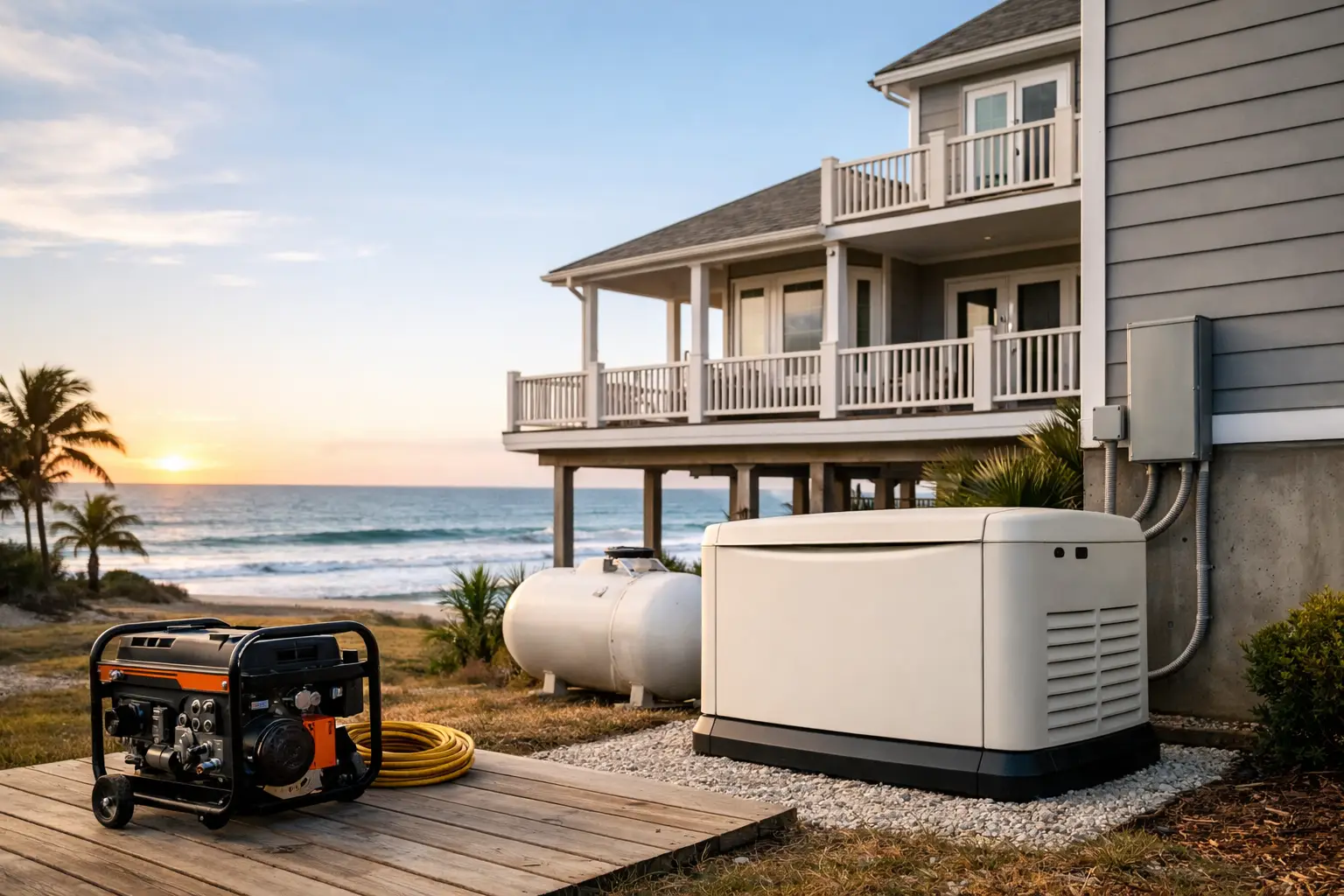
Portable generators and permanently installed standby generators solve different problems.
A portable generator is typically less expensive up front and can be useful for selected circuits during shorter outages. It requires hands-on setup, proper outdoor placement, fuel storage, and manual connection through approved equipment. It may be a sensible choice for homeowners who want to keep a refrigerator, lights, and a few outlets running without investing in a whole-property system.
A standby generator is permanently installed outside the home or business. It can start automatically when utility power fails and transfer selected loads to generator power through a transfer switch. Standby systems are often the better fit for owners who travel, manage rental properties, need dependable refrigeration, or cannot be present to start a portable generator during a storm.
There is also a middle ground. A professionally installed generator inlet and manual transfer switch can allow a portable generator to power chosen circuits safely. This option gives the property a permanent, organized connection point without the cost of a fully automatic standby system.
The best choice depends on outage frequency, how long interruptions typically last, whether someone will be available to operate the equipment, and how much of the building must remain powered.
A Backup Power Planning Guide to Load Calculations
Generator capacity is measured in watts or kilowatts, but nameplate numbers alone do not tell the whole story. Motors, compressors, pumps, and HVAC equipment can draw more power when starting than when running. A system that appears large enough on paper may overload when a refrigerator compressor and an air conditioner start at the same time.
A qualified electrician can identify the running and starting loads of the equipment you want to support. This process also accounts for whether certain appliances can be managed so they do not run together. Load management equipment may allow a generator to serve larger loads in sequence rather than requiring a generator sized for every possible appliance at once.
For example, a smaller essential-load system may cover lights, refrigeration, electronics, a microwave, and a few convenience outlets. A larger system may add a well pump, pool equipment, electric water heating, or central air conditioning. Each decision affects generator size, fuel consumption, transfer equipment, and the electrical panel work involved.
Avoid sizing a system based on a neighbor’s generator or an online estimate alone. Homes and commercial properties vary widely in panel configuration, appliance loads, service size, and existing electrical condition.
Never Backfeed Power Into a Panel
One of the most dangerous mistakes during an outage is attempting to power a building by plugging a generator into a standard receptacle or using an improvised cord arrangement. This is called backfeeding. It can energize utility lines, create a serious hazard for utility workers and neighbors, damage equipment, and create a fire risk.
A safe installation uses listed, properly rated equipment that isolates generator power from utility power. Depending on the system, this may include a manual transfer switch, an automatic transfer switch, a generator inlet, a dedicated generator panel, and correctly sized conductors and breakers.
The installation should also address grounding, bonding, overcurrent protection, generator placement, and local code requirements. These details are not optional extras. They are what make backup power safe for the people using the property and the people working around it.
Plan for Fuel, Placement, and Coastal Conditions
Fuel planning is just as important as electrical planning. Portable generators commonly use gasoline, while standby generators may use natural gas, propane, or diesel. Every fuel source has trade-offs.
Gasoline is readily available but can be difficult to obtain after widespread storm damage, and it must be stored carefully. Propane can support longer-term planning when the tank is appropriately sized, but runtime depends on generator load and available fuel capacity. Natural gas may be convenient where service is available, although severe events can still affect utility infrastructure. Diesel is common for some commercial applications but requires fuel maintenance and appropriate storage.
Generator placement needs careful attention in Gulf Shores, Orange Beach, and surrounding coastal communities. Equipment must be outdoors and positioned to keep exhaust away from doors, windows, soffit vents, and HVAC intakes. Flood exposure, salt air, wind-driven rain, corrosion, clearance requirements, and service access should all be considered before installation.
A generator should never run in a garage, enclosed porch, storage room, or near an open window. Carbon monoxide is odorless and can become deadly quickly. Battery-powered carbon monoxide alarms are a wise addition wherever generators are used.
Check the Electrical System You Already Have
Backup power can reveal issues that existed long before an outage. An older panel, undersized service, crowded breaker layout, corroded exterior equipment, or outdated wiring may limit the type of generator system a property can support.
Before committing to a generator, have the service equipment and electrical panel evaluated. A professional inspection can determine whether the panel has room for transfer equipment, whether the service size is appropriate, and whether any upgrades should be completed first. For a commercial property, the review may also include three-phase equipment, emergency systems, refrigeration loads, and operational requirements.
This is especially valuable for condos and multi-unit properties. Individual unit generators are not always practical or permitted, and shared electrical infrastructure may require coordination with an association, property manager, or building owner. The right solution could be limited backup for common areas, a dedicated system for critical equipment, or a building-wide design based on actual needs.
Build a Plan You Can Use During an Outage
Even an automatic generator needs occasional attention. Owners should know what the system powers, where the shutoffs are located, how to recognize an alert, and who to call if it does not start. Portable generator owners need an even clearer operating plan, including safe startup procedures, fuel handling, cord management, and a list of circuits or appliances to use.
Keep the plan simple and available. Document the generator model, fuel type, transfer switch location, maintenance schedule, and emergency contact information. If the property is a vacation home or rental, make sure the people responsible for the building understand what they can and cannot operate during an outage.
Maintenance should not wait until hurricane season. Standby generators need scheduled exercise, oil and filter service, battery checks, and inspections. Portable generators should be started periodically, kept dry, and tested with the equipment they are expected to power. Fuel should be managed according to the generator manufacturer’s recommendations.
Make the Investment Fit the Property
A backup power system can range from a focused essential-circuit solution to an automatic standby system that supports most of a home or commercial operation. The practical choice comes down to risk, budget, and the consequence of being without power.
If a refrigerator, a few lights, and reliable communication are enough, a portable generator with professionally installed transfer equipment may be the right answer. If outages threaten a rental property, medical equipment, refrigeration, security, or business continuity, automatic standby power may justify the higher initial investment. MNE Electric can help evaluate the electrical system, identify priority loads, and install backup power equipment correctly for the property.
The best time to make these decisions is when the power is on, the panel is accessible, and there is time to choose safety and reliability over a rushed workaround.