
Is Knob and Tube Wiring Dangerous in Older Homes?
A home can look perfectly maintained and still have an electrical system built for a very different era. If you are asking, is knob and tube wiring dangerous, the honest answer is: it can be, especially when it has been altered, covered, overloaded, or allowed to deteriorate over decades.
Knob and tube wiring is not automatically an emergency simply because of its age. Some older systems remain intact and have served homes for many years. But it was designed before central air conditioning, large kitchen appliances, computers, EV chargers, and the electrical demands of modern coastal homes. A qualified inspection is the right way to determine whether the wiring is still serviceable, needs targeted repairs, or should be replaced.
What knob and tube wiring is
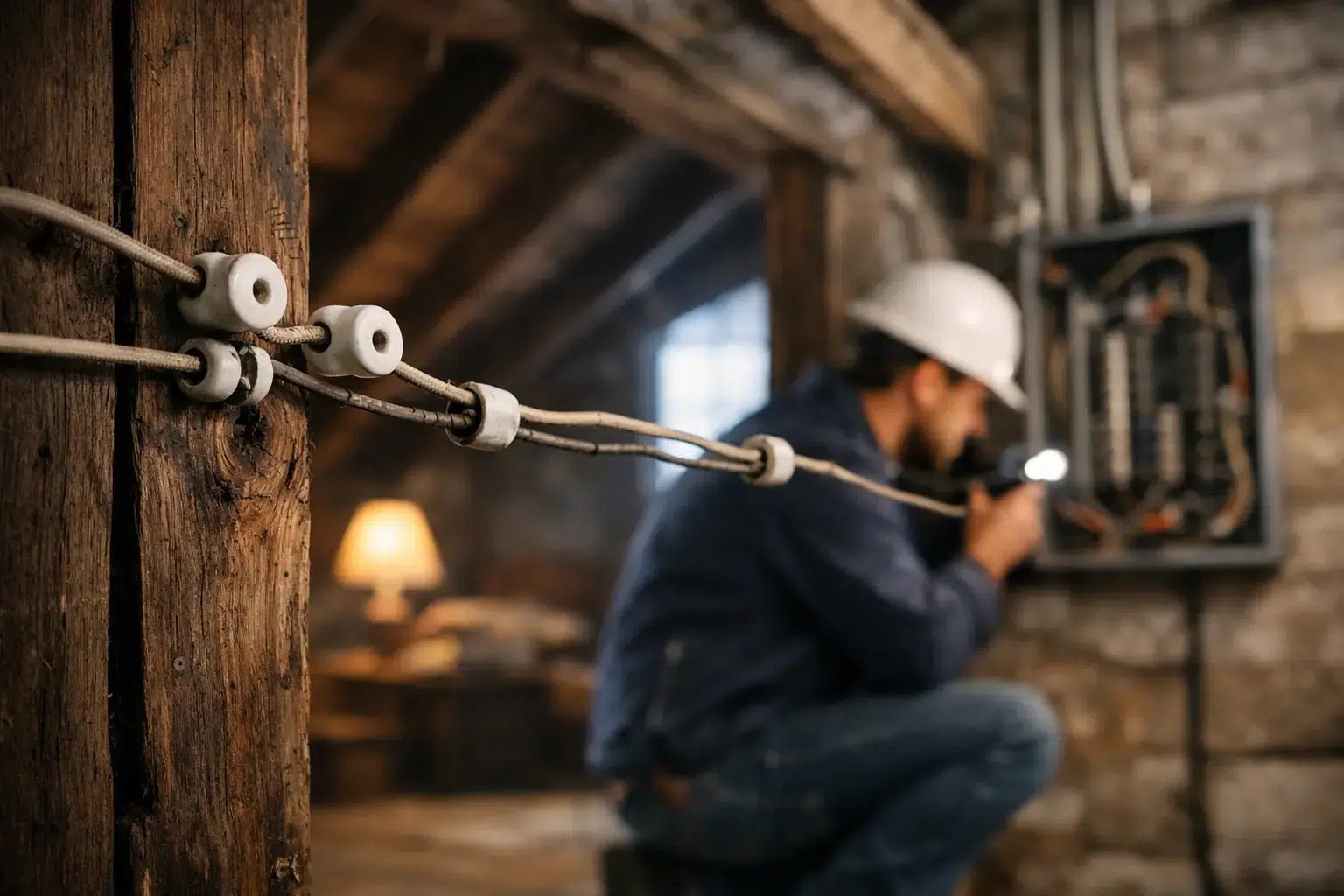
Knob and tube wiring was commonly installed in homes from the late 1800s through the 1940s. It uses individual copper conductors that run separately through open air. Ceramic knobs support the wires, while ceramic tubes protect them where they pass through framing.
Unlike modern cable, knob and tube wiring generally has no equipment grounding conductor. It also relies on older insulation materials that can become brittle, crack, or fall away over time. Those limitations matter far more now than they did when a home may have had only a few lights and outlets.
The system was not necessarily poorly made when installed. In fact, its open-air design helped wires shed heat. The concern is how the wiring has aged and whether later renovations have changed the conditions it needs to operate safely.
Is knob and tube wiring dangerous today?
Knob and tube wiring becomes dangerous when its original design has been compromised or when it is asked to carry more electrical load than it was intended to handle. The wiring itself is only part of the picture. Connections, insulation, panel condition, past repairs, and the number of devices on each circuit all affect the level of risk.
One major issue is the lack of grounding. Modern three-prong outlets, surge protectors, appliances, and electronics are designed around grounded electrical systems. Replacing an old two-prong receptacle with a three-prong outlet does not create a ground. If that change was made without proper rewiring or approved protection, it can create a misleading and potentially unsafe setup.
Another concern is insulation. Knob and tube wiring was intended to be installed in open cavities where heat could dissipate. When attic insulation, wall insulation, or foam insulation is placed over it, the wires may retain more heat. This does not mean every insulated older home has an immediate hazard, but it does warrant evaluation by a licensed electrician.
Problems caused by past modifications
Many risks come from work completed long after the original installation. Over the years, homeowners, handymen, and contractors may have added outlets, light fixtures, ceiling fans, or new circuits. Splices may be hidden inside walls, made without proper junction boxes, or connected to newer wiring in ways that do not meet current safety standards.
Rodents, moisture, heat, and simple age can also damage the insulation around conductors. In Gulf Shores and nearby coastal communities, humidity and storm-related moisture make it especially wise to take any signs of electrical trouble seriously. Electrical systems in older homes should be checked carefully after water intrusion, roof leaks, or major renovation work.
Warning signs that need an electrical inspection
A home with knob and tube wiring does not always show obvious symptoms. Still, certain signs deserve prompt attention. Flickering lights, breakers or fuses that trip repeatedly, buzzing sounds, warm outlets, a burning odor, or discolored outlet covers can indicate an active electrical problem.
You should also schedule an inspection if you notice two-prong outlets throughout the home, an older fuse panel, extension cords used as permanent solutions, or rooms with very few outlets. These conditions can encourage overloading, particularly in bedrooms, kitchens, offices, and living spaces where modern devices compete for limited circuits.
Home purchases and renovations are another appropriate time to evaluate older wiring. Before opening walls, adding insulation, installing a generator connection, or planning an EV charger, it helps to understand the home’s electrical foundation. A new high-demand system should never be added to an electrical setup that has not been assessed for capacity and safety.
When repair may be possible and when replacement makes more sense
There is no single answer for every older property. An electrician may find that a limited area of knob and tube wiring has been safely isolated, remains in good condition, and is not serving major loads. In some cases, targeted rewiring can address a specific concern while preserving portions of an older home’s structure and finishes.
Full replacement is often the better long-term choice when the wiring is widespread, insulation is deteriorated, circuits are overloaded, grounding is absent where it is needed, or the home is undergoing substantial remodeling. Replacement can also make sense when insurance coverage is difficult to obtain or when the property needs more outlets and capacity for modern living.
A properly planned rewiring project is more than swapping old wires for new ones. It may include a service or panel upgrade, grounded receptacles, GFCI and AFCI protection where required, dedicated circuits for appliances, improved exterior power, surge protection, and a cleaner path for future additions. The exact scope depends on the home, its age, its condition, and how the space is used.
Do not rely on quick fixes
Older wiring can tempt people toward inexpensive workarounds. Power strips, extension cords, adapter plugs, oversized fuses, and ungrounded three-prong outlets may appear to solve a convenience problem, but they do not correct the wiring behind the wall.
Avoid covering a concern with cosmetic upgrades. A new outlet cover, fresh paint, or a modern light fixture does not make an aging circuit safer. Likewise, do not assume a circuit is safe because it has worked for years. Electrical failures often develop gradually, and warning signs may not appear until a connection has already overheated.
If a breaker trips or a fuse blows, treat it as useful information. The electrical system is telling you that a circuit may be overloaded or faulty. Resetting the breaker once may be reasonable after unplugging devices, but repeated trips call for professional troubleshooting.
What a professional inspection should include
A thorough inspection of knob and tube wiring should look beyond what is visible in the attic or basement. An electrician can assess the panel, branch circuits, receptacles, visible conductors, splices, grounding, signs of overheating, and whether insulation has been installed over older wiring.
The goal is not to pressure a homeowner into replacing every wire immediately. The goal is to identify actual hazards, explain the condition of the system in plain language, and provide practical options. That may mean monitoring an intact area, repairing a damaged section, installing needed safety devices, or planning a phased upgrade that fits the property and budget.
For rental homes, condos, and commercial properties, documentation matters as well. Property owners need a clear understanding of what serves each space, where electrical capacity is limited, and what improvements can reduce interruptions and safety concerns for occupants.
Plan the upgrade around the home’s future
If replacement is recommended, consider the electrical improvements you may need over the next several years. A kitchen remodel, workshop equipment, pool equipment, backup generator, HVAC replacement, or EV charger can all affect circuit and service requirements. Planning ahead can prevent opening walls twice or paying for avoidable changes later.
MNE Electric helps homeowners and property managers in the Gulf Shores area evaluate aging electrical systems and make informed decisions about repairs and upgrades. A clear assessment gives you a better starting point than guessing what may be hidden behind walls.
Older homes have character worth protecting, but electrical safety should not depend on hope or temporary fixes. Having knob and tube wiring evaluated before it becomes a larger problem is a practical way to protect the people, property, and plans that matter most.