
Best Backup Power Options for Coastal Alabama
When a coastal storm takes out power, the problem is rarely limited to lights. Refrigerators begin warming, sump pumps and well pumps may stop, HVAC systems go quiet, security equipment can go offline, and businesses can lose the ability to serve customers. Choosing among the best backup power options means deciding what must stay running, how long you need it to run, and how much convenience and protection your property requires.
For homeowners and businesses in Gulf Shores, Orange Beach, and surrounding Baldwin County communities, backup power planning should account for hurricane season, salt-air exposure, extended outages, and the electrical demands of modern properties. The right system is not always the largest generator. It is the system that safely supports the loads that matter most.
Best Backup Power Options for Different Needs
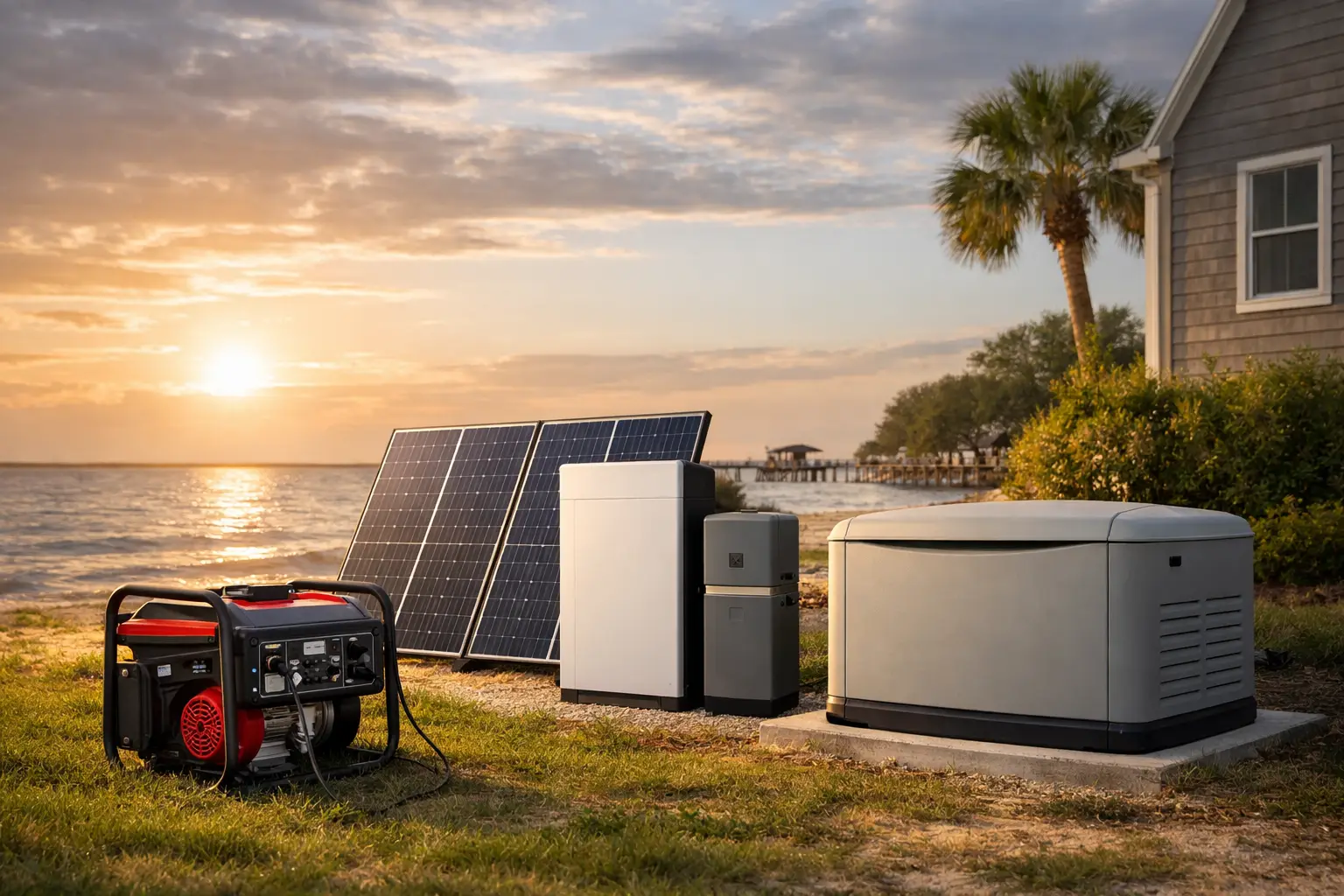
Backup power generally falls into three categories: portable generators, permanently installed standby generators, and battery backup systems. Each can be the right answer, but they serve different priorities.
Portable generators: lower upfront cost, more hands-on work
A portable generator can be a practical choice for a homeowner who wants to power a refrigerator, a few lights, internet equipment, a small window AC unit, or selected outlets during an outage. These units are typically fueled by gasoline, propane, or dual-fuel arrangements, and they can offer meaningful protection at a lower initial cost than a whole-home system.
The trade-off is involvement. Someone must move the generator into position, maintain a safe outdoor location, manage fuel, start it, and connect it properly. It also has a limited capacity compared with a standby generator. A small portable unit may keep essentials running, but it will not usually handle central air conditioning, electric water heating, an electric range, and the rest of a fully powered home at the same time.
Most importantly, a portable generator should never be connected directly to a home’s electrical panel without approved equipment. That practice can backfeed utility lines, creating a serious shock hazard for utility workers and damaging equipment when power returns. A licensed electrician can install a transfer switch or generator interlock that allows a portable generator to supply selected circuits safely.
Inverter generators: a quieter portable option
Inverter generators are a type of portable generator designed to produce cleaner, more stable power. They are often quieter than conventional portable units and are a strong fit for sensitive electronics, RV use, condos where permitted, and smaller essential-load plans.
Their smaller size can be a benefit, especially where storage space is limited. However, capacity remains the deciding factor. An inverter generator may be ideal for communications, refrigeration, lighting, and charging devices, while a larger property may require more power than one unit can provide. Parallel-capable models can increase output, but the final setup still needs to be planned around the circuits you intend to operate.
Standby generators: automatic protection for major outages
A standby generator is permanently installed outside the home or commercial building and connected to the electrical system through an automatic transfer switch. When utility power fails, the system detects the outage, starts the generator, and transfers the selected electrical loads automatically. When utility service returns, it transfers power back and shuts down the generator.
For coastal homeowners who travel, manage rental properties, or want protection without being present, this automation is a major advantage. A standby system can keep a refrigerator, lighting, HVAC equipment, security systems, internet equipment, medical devices, and other essential circuits running with little interruption. Larger systems can support most or all of a home’s electrical load, depending on the property and generator size.
Standby generators typically run on natural gas or propane. Natural gas can be convenient where service is available, while propane offers a dependable on-site fuel option for properties outside natural gas service areas. Fuel availability, tank size, expected runtime, local setbacks, and maintenance access should all be reviewed before installation.
The trade-off is cost. A properly installed standby generator requires electrical work, transfer equipment, fuel connections, permits, site preparation, and ongoing maintenance. It is a long-term property investment, not simply a piece of equipment placed outside.
Battery backup systems: quiet power with important limits
Battery backup systems store electricity for use during an outage. They operate quietly, require no combustion fuel, and can provide immediate power with no generator startup delay. Many systems can also work with solar panels, allowing batteries to recharge during daylight when the solar system is designed for backup operation.
Batteries can be an excellent fit for homeowners who need quiet support for essential circuits, such as refrigeration, lighting, communications, garage doors, and medical equipment. They can also help businesses protect network equipment, point-of-sale systems, and limited critical loads during short outages.
Still, batteries are not automatically a whole-home solution. Their runtime depends on battery capacity and how much electricity the property uses. Air conditioning, electric resistance heat, pool pumps, electric water heaters, dryers, and ranges can drain stored power quickly. A battery system can be designed for those loads, but doing so may require a larger and more expensive installation.
For extended storm outages, a battery-only system may need solar charging or another charging source to remain useful for several days. In some cases, a battery and generator combination offers the best balance: batteries handle brief interruptions quietly, while a generator supplies longer-duration power.
Start With the Loads You Cannot Lose
The most reliable way to choose a backup system is to identify essential loads before looking at generator sizes or battery capacity. A family with refrigerated medication, a well pump, and a medical device has different needs from a vacation condo owner who mainly wants to protect food, lighting, and internet access.
For a home, essential loads commonly include refrigeration, kitchen outlets, a few lighting circuits, Wi-Fi equipment, garage door openers, security systems, and one HVAC system or a mini-split. Some properties also need a lift station, well pump, septic pump, or sump pump. For a business, priorities may include emergency lighting, security, communications, computer systems, refrigeration, cash registers, servers, or specific production equipment.
A load calculation matters because equipment ratings can be misleading. Motors and compressors often need extra power when starting. Central air conditioning can have a substantial startup demand, even when its normal running demand is lower. An electrical professional can evaluate these requirements and determine whether load management equipment can reduce the generator size needed.
Whole-Home Power vs. Essential-Circuit Backup
A whole-home generator system is designed to support nearly everything in the building. It provides the highest level of convenience and is often appropriate for larger homes, medically necessary equipment, high-end properties, businesses, and owners who need the building to operate normally during an outage.
Essential-circuit backup focuses on selected loads. It costs less, uses a smaller generator or battery, and encourages practical energy use during an outage. For many households, this approach provides the protection they need without paying to run every high-demand appliance.
Neither approach is universally better. If your priority is keeping the home livable for a day or two, essential-load backup may be the smart choice. If the property must remain operational, is frequently vacant, or supports critical equipment, whole-home or broader building coverage may justify the investment.
Coastal Installation Details Matter
Backup power equipment installed near the Gulf needs more than a standard placement decision. Salt air, wind-driven rain, flooding risks, and storm debris can affect equipment life and safe operation. Generator placement must follow manufacturer clearance requirements, local code rules, fuel requirements, and safe distances from doors, windows, vents, and combustible materials.
A system should be installed on a suitable base, positioned with service access in mind, and protected from drainage issues. Electrical connections, transfer switches, grounding, and surge protection should be addressed as part of the overall design. Whole-home surge suppression is especially worthwhile because power restoration after an outage can bring voltage irregularities that put sensitive appliances and electronics at risk.
Condo owners and commercial property managers may also need to consider association rules, noise expectations, shared electrical infrastructure, and the responsibility for common-area equipment. Planning these details early can prevent costly changes later.
Do Not Overlook Maintenance and Fuel Planning
Backup power only helps when it is ready to run. Portable generators need periodic exercise, fresh fuel management, oil checks, and safe storage. Standby generators should be professionally maintained according to the manufacturer’s schedule, including inspection of batteries, filters, oil, electrical connections, and automatic transfer operation.
Fuel planning deserves the same attention as equipment selection. Gasoline is widely available but can become difficult to obtain after a widespread storm. Propane requires enough stored fuel for the expected runtime. Natural gas is convenient but depends on continued utility service. There is no perfect fuel source for every property, which is why local conditions and outage expectations should guide the decision.
Get a Backup Power Plan Built for Your Property
The best backup power options are the ones sized for your real electrical needs, installed with approved transfer equipment, and maintained before storm season arrives. A professional evaluation can identify the circuits that matter, confirm panel capacity, review fuel choices, and recommend a system that fits the property rather than a generic package.
MNE Electric can help homeowners and businesses evaluate safe generator and backup power solutions for coastal Alabama properties. A well-planned system does more than keep a few lights on. It gives you a dependable way to protect comfort, safety, and the equipment your property relies on when utility power is unavailable.