
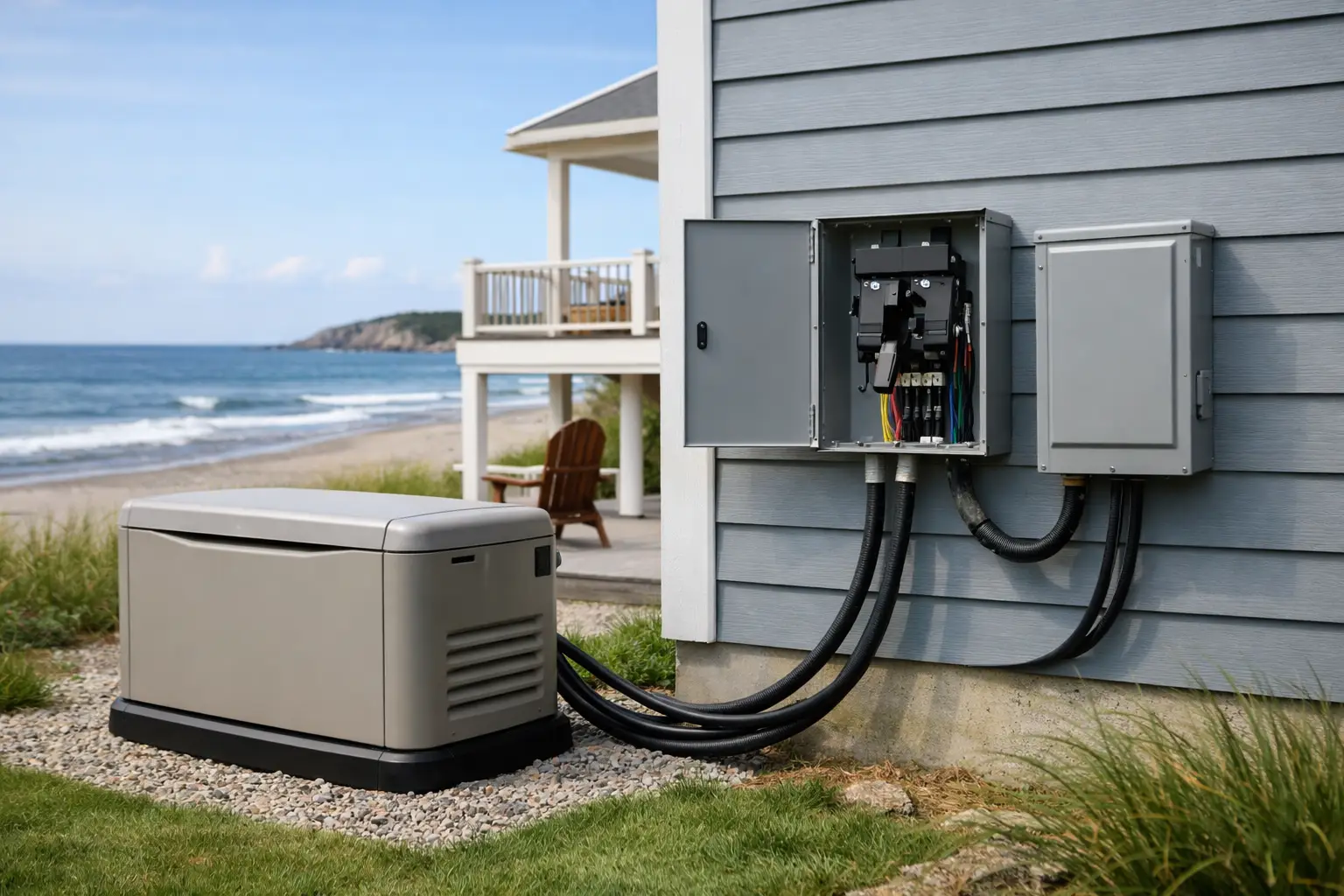
Generator Transfer Switch Guide for Coastal Homes
A generator can keep a refrigerator cold and critical systems running after a storm, but only if it is connected safely. This generator transfer switch guide explains the equipment that makes backup power practical without putting your home, utility workers, or electrical system at risk.
For homeowners along the Alabama coast, the goal is rarely to power every circuit indefinitely. Most want dependable power for the essentials during an outage, with a setup that is easy to operate when conditions are stressful. The right transfer switch is what makes that possible.
What a Transfer Switch Does
A transfer switch safely moves selected electrical loads from utility power to generator power. When utility service is restored, it moves those loads back. It keeps the generator and the utility supply separated so electricity cannot flow back onto power lines.
That separation matters. Connecting a portable generator directly to a dryer outlet, wall outlet, or other improvised connection can backfeed the electrical system. Backfeeding can seriously injure utility crews, damage equipment, create a fire hazard, and violate electrical code. It is never a safe substitute for a properly installed transfer switch.
A complete backup-power connection typically includes a transfer switch or approved interlock, a weather-rated generator inlet box outside the home, correctly sized wiring, and the appropriate breakers. The generator connects to the inlet with a generator cord, not with an extension cord run through an open door or window.
Manual vs. Automatic Transfer Switches
The best choice depends on the type of generator you own, the loads you want to run, and how hands-on you want the system to be during an outage.
Manual Transfer Switches
A manual transfer switch is commonly paired with a portable generator. When power fails, you wheel the generator to a safe outdoor location, start it, connect the cord to the inlet, and move the selected circuits to generator power at the transfer switch.
This approach is usually more affordable than a whole-home standby system and gives homeowners control over which circuits receive power. It works well for a refrigerator, lights, internet equipment, a garage door opener, a few receptacles, and possibly a small HVAC load if the generator and electrical system are sized for it.
The trade-off is that someone must be present to set it up. You also need to manage fuel, monitor generator capacity, and shut the unit down safely before refueling.
Automatic Transfer Switches
An automatic transfer switch is generally installed with a permanently located standby generator. When utility power drops, the system detects the outage, starts the generator, and transfers power automatically. When utility service returns and stabilizes, the system transfers back and shuts the generator down.
Automatic systems are especially useful for second homes, rental properties, businesses, medical needs, or anyone who may not be home when an outage occurs. They can be designed to supply selected essential circuits or, with sufficient generator capacity, much of the building.
The higher cost reflects more than convenience. Standby systems require generator placement planning, fuel supply considerations, load calculations, electrical installation, permits, and ongoing maintenance. For many coastal properties, the added peace of mind is worth it. For others, a portable generator with a manual transfer switch is the more sensible fit.
Choosing Between an Essential-Load and Whole-Home Setup
The most useful question is not, “What is the biggest generator I can buy?” It is, “What needs to keep operating during an outage?” That answer guides the transfer switch design.
An essential-load setup supports the circuits that protect food, comfort, communication, and basic safety. Common selections include the refrigerator, kitchen receptacles, selected lighting, a microwave, internet equipment, a security system, garage door opener, and a bedroom or living-area circuit. Sump pumps, well pumps, and medical equipment may also be priorities depending on the property.
Whole-home backup is different. It may support central air conditioning, electric water heating, larger appliances, and more of the home at once, but it requires a much larger generator and careful load management. Even a whole-home system may be programmed to delay or manage heavy loads so equipment is not overloaded when the generator starts.
Air conditioning deserves particular attention in Gulf Shores and Orange Beach. Cooling is a major comfort and humidity-control concern, but central systems can require substantial starting power. A qualified electrician can evaluate the equipment, available generator capacity, and options such as load-shedding controls or soft-start devices. Do not assume that a generator rated for a certain number of watts can automatically run every appliance in the house.
Sizing the Switch and Generator Correctly
Transfer switch sizing is based on electrical capacity and the loads it will serve, not simply on the physical size of a generator. A professional evaluation considers the home’s panel, selected circuits, voltage requirements, generator output, and the starting demand of motors in appliances and HVAC equipment.
Portable generators are often rated in running watts and starting watts. Running watts are needed continuously, while starting watts cover the brief surge required by motors. A refrigerator, pump, or air conditioner can require much more power at startup than while operating.
A generator that is too small can trip breakers, strain the equipment, or leave you choosing between necessary loads. One that is oversized may cost more to purchase and operate than your actual needs justify. The best system is sized around a realistic outage plan, not a guess.
For homes with 120/240-volt service, the generator and transfer equipment also need to support the type of loads you intend to run. Some small portable generators provide only 120 volts. They may power lights and receptacles but cannot operate 240-volt equipment such as many well pumps, ranges, dryers, or central HVAC systems.
Transfer Switch vs. Panel Interlock
A transfer switch is a dedicated device that directs power to selected circuits or, in some systems, to a larger portion of the panel. A panel interlock is a listed mechanical device installed on a compatible electrical panel. It physically prevents the utility main breaker and generator breaker from being on at the same time.
Both can be safe when correctly selected and professionally installed. A transfer switch offers clear circuit-by-circuit control and is often straightforward for homeowners using a portable generator. An interlock can be a practical option when you want flexibility to energize different circuits from the main panel, provided the generator capacity is managed carefully.
Compatibility is critical. An interlock must be designed for the specific panel model, and the installation must include a properly rated generator inlet, breaker, wiring, labeling, and grounding arrangement. Generic parts and improvised workarounds are not acceptable.
Coastal Installation Details Matter
Salt air, wind-driven rain, humidity, and storm debris are hard on outdoor electrical equipment. Generator inlet boxes, disconnects, conduits, fittings, and mounting hardware should be selected and installed for the environment. Exterior equipment needs appropriate weather protection and secure mounting, while generators need a stable location that allows proper ventilation and service access.
A portable generator must operate outdoors, well away from doors, windows, vents, and attached structures. Carbon monoxide can enter a home quickly and without warning. Never run a generator in a garage, under a carport, inside a shed, or near an open window, even for a short time.
Plan ahead for the practical details too. Know where the generator will sit, how the cord will reach the inlet without creating a trip hazard, where fuel will be stored safely, and who will operate the equipment if you are away. Property managers should make these procedures clear for staff and tenants before storm season arrives.
What Professional Installation Should Include
A proper installation begins with a discussion of outage priorities and an assessment of the electrical panel and generator plan. The electrician should identify suitable circuits or load-management options, verify equipment compatibility, determine wiring and breaker requirements, and review placement for the outdoor inlet or standby generator.
The finished system should be clearly labeled so there is no confusion during an outage. You should understand how to transfer power, what loads can run together, how to shut down safely, and when to refuel. For standby systems, you should also know the maintenance schedule and how the exercise cycle works.
Permits and inspections may apply, depending on the scope and local requirements. They are part of protecting the property and confirming that the equipment is installed to applicable code, not an unnecessary extra step.
Keep the System Ready Between Storms
Backup power equipment is only helpful if it works when needed. Test a portable generator according to the manufacturer’s instructions, keep fresh fuel treated for storage when appropriate, and inspect cords for damage. Run the transfer procedure occasionally when conditions are calm, so operation is familiar before a real outage.
For standby generators, schedule routine service and address warning indicators promptly. Keep the area around the unit clear and make sure landscaping, stored items, or debris do not restrict airflow.
MNE Electric can help homeowners and property operators evaluate a transfer switch, inlet, interlock, or standby-generator installation based on the way the property is actually used. A well-planned setup does more than provide power during an outage – it gives you a clear, safe procedure when the next storm puts that preparation to the test.