
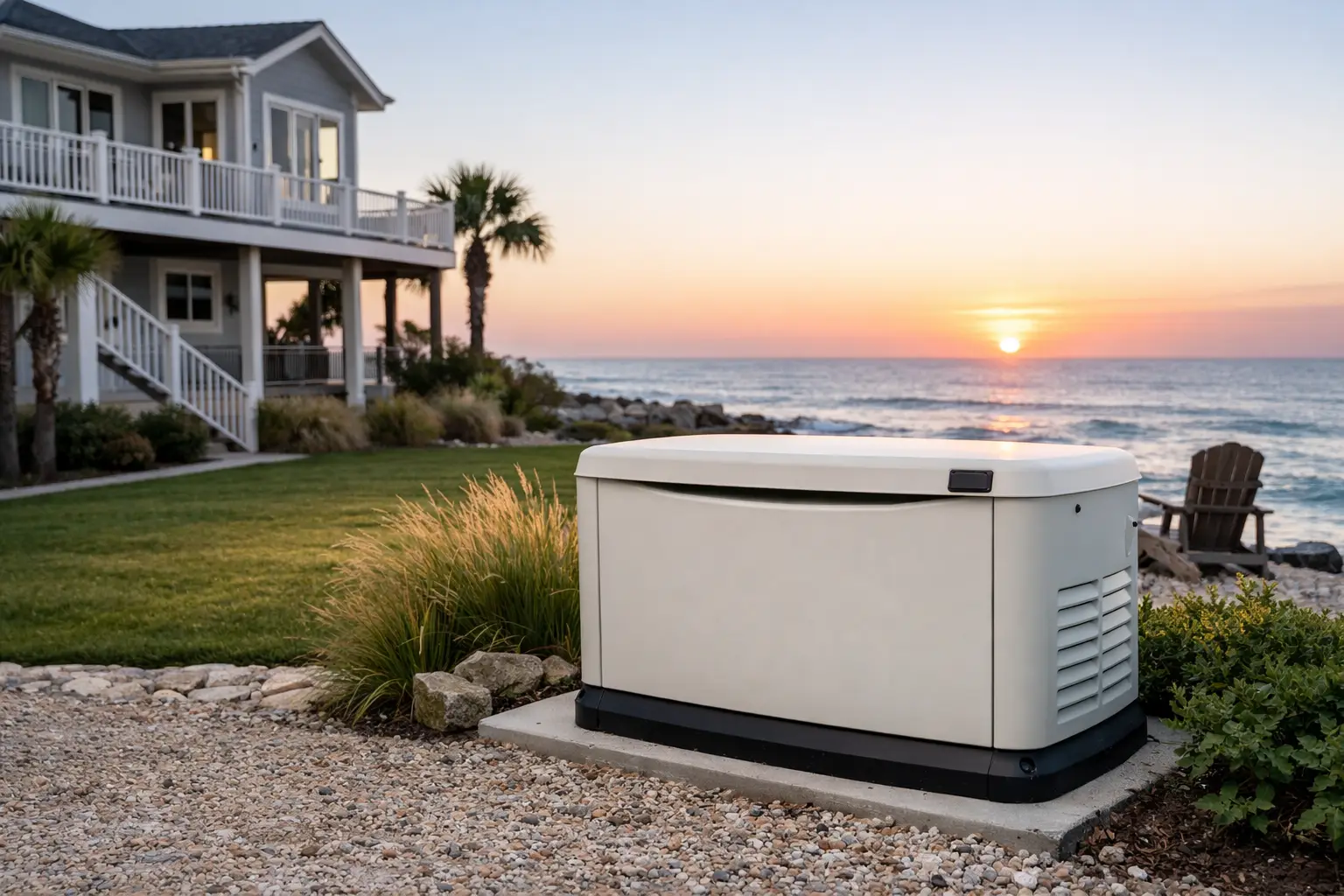
Standby Generator Brands Review for Coastal Homes
A standby generator is not a purchase most property owners think much about until the lights go out, the air conditioning stops, or a refrigerator full of food is at risk. This standby generator brands review focuses on the questions that matter after the sales brochure: Will the unit support the loads you need? Can it handle coastal conditions? Is qualified service available when the system needs attention?
For homes, condos, rentals, and businesses along the Alabama coast, the right answer is rarely just the brand with the largest advertising budget. Generator reliability depends on the equipment, proper sizing, fuel supply, installation quality, and ongoing maintenance working together. A dependable local electrician can help turn a good generator into a system you can count on.
What a Standby Generator Brand Can – and Cannot – Tell You
Well-known standby generator manufacturers generally offer a range of air-cooled residential units and larger liquid-cooled units for demanding homes and commercial properties. Brands such as Generac, Kohler, Briggs & Stratton, Cummins, and Champion are often considered during the selection process. Each has product lines designed for automatic backup power, but the best fit varies by property and priorities.
A brand can indicate expected features, engine options, warranty terms, enclosure design, monitoring capabilities, and the availability of parts. It cannot determine whether a generator is correctly connected to your electrical system, whether the gas line can supply enough fuel, or whether the selected capacity matches your actual needs. Those decisions require an on-site evaluation.
That distinction matters in Gulf Shores, Orange Beach, and nearby communities. A generator installed for a primary residence may need to carry central air conditioning, well equipment, a pool pump, or medical equipment. A vacation property may prioritize refrigeration, internet, lighting, security systems, and limited cooling between visits. A restaurant, office, or condominium has a different load profile again.
Standby Generator Brands Review: The Main Differences
Generac: Broad Availability and Familiar Controls
Generac is one of the most recognized names in residential standby power. Its wide range of home generator sizes and established dealer network make it a frequent choice for homeowners who want an automatic system with familiar controls and remote monitoring options.
The advantage is accessibility. Many electrical contractors are experienced with Generac equipment, and replacement parts and service knowledge are commonly available. The trade-off is that popularity alone should not drive the decision. Confirm who will perform warranty work and routine maintenance locally, how quickly service can be scheduled, and whether the proposed model has the capacity and features your property requires.
Kohler: Premium Positioning and Commercial Experience
Kohler generators are often considered by homeowners and businesses looking for premium build quality, larger-capacity options, or established commercial generator experience. The company offers residential standby equipment as well as solutions for more complex applications.
For a large home or commercial property, Kohler may be worth comparing when load requirements, engine type, and long-term service planning justify the investment. The key question is not whether one name is universally better than another. It is whether the local installation and service plan supports that specific unit for years after it is installed.
Briggs & Stratton and Champion: Options Worth Evaluating Carefully
Briggs & Stratton and Champion also offer home standby generator options that may fit certain budgets and power needs. These brands can be appealing where a homeowner wants automatic backup power without paying for more capacity or features than the property needs.
Before selecting either, ask direct questions about local parts availability, authorized service coverage, warranty administration, and the model’s fuel and noise specifications. A lower purchase price can be a smart choice, but only if the unit is sized correctly and there is a practical plan for maintenance and repairs.
Cummins: A Strong Consideration for Higher-Demand Systems
Cummins has a long history in engine and commercial power generation. Its standby equipment is often considered for larger residences, critical loads, and commercial applications where durability, capacity, and service support are central concerns.
Cummins may be a strong match when a project needs more than a typical air-cooled home generator can deliver. That does not automatically make it necessary for every house. Larger equipment can bring higher initial costs, more involved installation requirements, and additional maintenance considerations. The generator should match the property, not simply exceed it.
Size the System Before Choosing the Nameplate
The most common generator mistake is choosing by square footage or generator rating alone. Electrical demand is shaped by what starts and runs at the same time. Air conditioners, electric ranges, water heaters, dryers, well pumps, pool equipment, and refrigeration can create very different demands from one property to the next.
A professional load calculation identifies the circuits and equipment that need backup power. Some owners want whole-home coverage, while others prefer essential-load coverage through a dedicated panel. Essential-load systems can reduce generator size and cost while still protecting the equipment that matters most during an outage.
Load management can also change the conversation. With properly designed controls, certain high-demand appliances may be prevented from starting at the same time. This can allow a property to operate more comfortably without oversizing the generator. It must be planned during design, not assumed after installation.
Coastal Conditions Deserve Extra Attention
Salt air, humidity, wind-driven rain, and extended storm outages place real demands on outdoor electrical equipment. Generator enclosures are built for exterior use, but coastal exposure still makes placement, maintenance, and inspection especially important.
A generator should be installed according to manufacturer clearances, local code, and safe ventilation requirements. It needs a stable pad, correct electrical connections, and a location that allows technicians to access it for service. Placing equipment where salt spray, standing water, roof runoff, or debris buildup are ongoing problems can shorten its useful life.
Routine maintenance is not optional in this environment. A generator should be exercised as designed, inspected regularly, and serviced according to the manufacturer’s schedule. Battery condition, oil, filters, electrical connections, transfer switch operation, and enclosure condition all deserve attention. After major storms, a visual inspection can identify obvious damage before the next outage tests the system.
Fuel Supply and Transfer Switches Are Part of the Decision
Most residential standby generators run on natural gas or propane. Natural gas can be convenient where service is available and the gas utility can support the generator’s required fuel flow. Propane can work well in areas without natural gas, but tank size and fuel planning matter, especially during a longer outage.
Do not assume an existing gas line is adequate. A generator may require a dedicated line sized for its fuel demand and distance from the source. Fuel piping should be evaluated by qualified professionals as part of the installation plan.
The automatic transfer switch is equally important. It detects a utility outage, separates the generator from utility power, and transfers selected loads safely. The switch must be rated and configured for the electrical service and generator design. This is one reason a standby generator is different from plugging a portable unit into household wiring. Proper transfer equipment protects people, appliances, and utility workers.
Questions to Ask Before You Approve an Estimate
When comparing brands and proposals, look beyond the generator model number. Ask which loads will be backed up, whether the price includes the transfer switch and electrical work, and how fuel requirements will be handled. Ask who obtains permits, coordinates inspections, starts up the unit, and provides maintenance after installation.
It is also reasonable to ask about noise specifications, warranty coverage, monitoring options, expected service intervals, and local repair support. If a proposal is significantly less expensive than another, find out what is excluded. Site work, gas piping, panels, load management, concrete pads, and permit costs can affect the final project price.
For commercial owners and property managers, include operational priorities in the conversation. The right system may need to protect point-of-sale equipment, elevators where permitted and engineered, emergency lighting, refrigeration, communications, access control, or a limited set of business-critical loads. Planning those priorities before an outage is far less stressful than deciding during one.
A generator should provide confidence, not create another system you have to worry about. MNE Electric can evaluate your property, explain practical brand and sizing options, and install a code-conscious backup power system designed around the loads you need most. The best time to make those decisions is while utility power is still on and there is time to do the work correctly.