
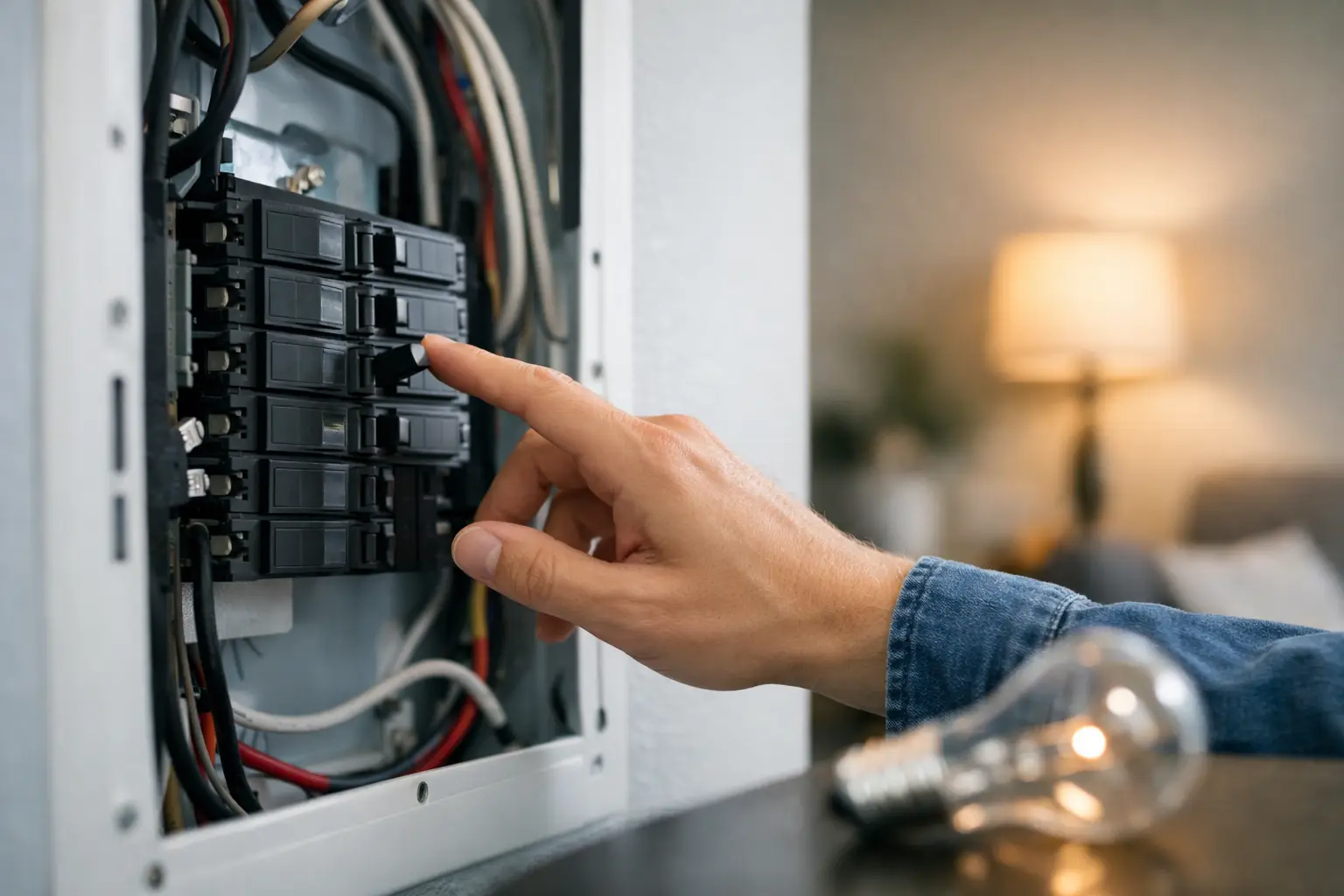
Why Do Breakers Keep Tripping at Home?
You reset the breaker, everything comes back on, and then a few minutes later it trips again. If you’re asking why do breakers keep tripping, the short answer is that your electrical system is detecting a problem and shutting that circuit off before wires overheat or equipment gets damaged. That shutdown is not the problem itself – it is the safety feature doing its job.
What matters is finding out what keeps triggering it. Sometimes the cause is simple, like too many appliances on one circuit. Other times, it points to a failing breaker, damaged wiring, moisture intrusion, or a more serious load issue that needs professional repair.
Why do breakers keep tripping in the first place?
A breaker trips when electrical current on a circuit exceeds what that circuit can safely handle, or when the breaker senses a fault condition. In practical terms, the breaker is there to stop heat buildup, arcing, or shock hazards before they become dangerous.
Not every trip means the same thing. A kitchen counter circuit that trips when the microwave and toaster run together is different from a bedroom breaker that trips randomly with very little plugged in. The pattern matters. What was running, how often it happens, whether it resets normally, and whether the panel feels hot all help narrow down the cause.
The most common reasons breakers trip repeatedly
Circuit overload
This is the most common cause in homes and small commercial spaces. A circuit overload happens when you ask one branch circuit to power more than it was designed for. Window AC units, space heaters, hair dryers, microwaves, air fryers, and portable dehumidifiers are common culprits.
In older homes especially, modern power use can outpace the original design. A circuit that was once enough for a few lamps and a television may now be feeding chargers, office equipment, entertainment systems, and a mini fridge. The breaker trips because the total demand is too high.
If the breaker only trips when certain appliances run at the same time, overload is likely. If it trips even with light use, the problem may be something else.
Short circuit
A short circuit happens when a hot wire contacts a neutral wire or another unintended conductor path. That creates a sudden surge of current, and the breaker trips quickly to prevent damage.
Short circuits can come from damaged cords, loose connections, worn insulation, failed appliances, or wiring issues inside walls, outlets, or fixtures. Signs can include a sharp trip the moment something turns on, a burnt smell, scorch marks, buzzing, or visible damage near an outlet or plug.
This is not a wait-and-see issue. A short circuit can escalate into a fire hazard if ignored.
Ground fault
A ground fault is similar to a short, but the electricity is taking an unintended path to ground. This is especially common in bathrooms, kitchens, garages, outdoor circuits, and other areas where moisture is present.
Along the Alabama coast, humidity, salt air, and weather exposure can make outdoor electrical equipment more vulnerable over time. If a breaker serving exterior outlets, pool equipment, lighting, or a detached area keeps tripping after rain or during damp conditions, moisture intrusion may be part of the problem.
Arc fault detection
Some breakers are designed to detect arcing, which is a dangerous condition where electricity jumps through air because of damaged wiring or loose connections. These AFCI breakers are more sensitive than standard breakers, and they may trip when they detect early warning signs of a wiring problem.
That can feel frustrating, but sensitivity is the point. If an AFCI breaker keeps tripping, it could be reacting to a damaged cord, a loose receptacle, a worn switch, or wiring deterioration behind the wall.
A failing breaker
Sometimes the circuit is not the real issue. Breakers can wear out, weaken, or become unreliable over time. If a breaker trips too easily, feels loose, will not reset properly, or shows signs of heat damage, the breaker itself may need replacement.
That said, a bad breaker should never be assumed without testing. Replacing a breaker without finding the underlying cause can leave the actual problem unresolved.
Appliance or equipment problems
The issue may be tied to one device rather than the entire circuit. Refrigerators, HVAC components, disposal units, washers, dryers, and older kitchen appliances can develop internal faults that cause a breaker to trip.
If the breaker trips only when one specific appliance starts up, that appliance may be drawing excessive current or shorting internally. Motors and compressors are especially common sources of this kind of problem.
What you can safely check before calling an electrician
There are a few reasonable steps a property owner can take without opening the panel or attempting repairs.
Start by noticing which breaker is tripping and what areas or equipment it controls. If you can identify a pattern, that saves time and helps with diagnosis. Unplug portable appliances on that circuit, then reset the breaker once. If it holds, plug items back in one at a time until the trip repeats.
You can also check for obvious warning signs such as scorched outlets, buzzing switches, warm cover plates, flickering lights, or cords with damaged insulation. If an outdoor circuit is involved, look for weather-exposed devices, loose covers, or signs that water may be getting where it should not.
If a GFCI receptacle has tripped, resetting that device may restore power to part of the circuit. Even then, repeated tripping still points to a fault that should be addressed.
What you should not do is keep forcing a breaker back on, swap breakers around, replace a larger breaker to stop the trips, or ignore a burning odor. Those are the moments when a nuisance issue can turn into a safety problem.
When repeated tripping means you need professional service
If a breaker trips more than once under normal use, it deserves attention. If it trips instantly, trips with nothing plugged in, will not reset, or affects critical systems like refrigeration, HVAC, or business equipment, it is time to bring in a licensed electrician.
A proper diagnosis may include load testing, breaker testing, inspection of receptacles and connections, evaluating the panel condition, and checking whether the circuit is undersized for current needs. In some cases, the best fix is a straightforward repair. In others, the right answer is adding a dedicated circuit, replacing a worn panel component, or upgrading service to match how the property is actually used now.
That last point matters more than many owners realize. Homes and commercial spaces often evolve faster than their electrical systems. New appliances, EV chargers, hot tubs, outdoor kitchens, office equipment, and backup power systems all add demand. A breaker that keeps tripping may be telling you the system needs more than a quick reset.
Why older panels and coastal conditions can complicate things
Not every tripping issue starts with one bad outlet or appliance. In older properties, the panel itself may be part of the problem. Corrosion, loose terminations, aging breakers, and outdated equipment can all contribute to unreliable performance.
In coastal areas like Gulf Shores and Orange Beach, salt air and humidity can speed up wear on outdoor gear, service equipment, disconnects, and exposed connections. That does not mean every tripped breaker is due to the environment, but it is one more reason a local electrician should look at the full picture instead of treating each trip as a one-off event.
Repair or upgrade? It depends on the cause
Sometimes the fix is simple – move high-demand appliances to different circuits, replace a faulty receptacle, repair a damaged wire, or swap out a failed breaker with the correct part.
Other times, repeated tripping is a sign that the circuit layout no longer works for the property. Kitchens may need dedicated appliance circuits. Garages may need capacity for tools or freezers. Commercial spaces may need better load distribution. Homes adding generators or EV chargers often need panel evaluation to make sure the system can support those upgrades safely.
A good electrician will not jump straight to the biggest job. The right approach is to identify the actual cause, explain the options clearly, and make the repair or upgrade that fits the load, code requirements, and long-term reliability of the property.
A breaker tripping is a warning, not an inconvenience
It is easy to treat a tripped breaker like a minor annoyance, especially if resetting it gets the lights back on. But when breakers trip repeatedly, they are usually pointing to heat, fault current, damaged equipment, or a circuit being pushed beyond its design.
That is why the safest next step is not guesswork. It is getting the circuit evaluated before the problem affects wiring, appliances, or the safety of the people using the space. If you are dealing with a breaker that will not stay on, prompt service now is usually far easier than emergency repairs later.