
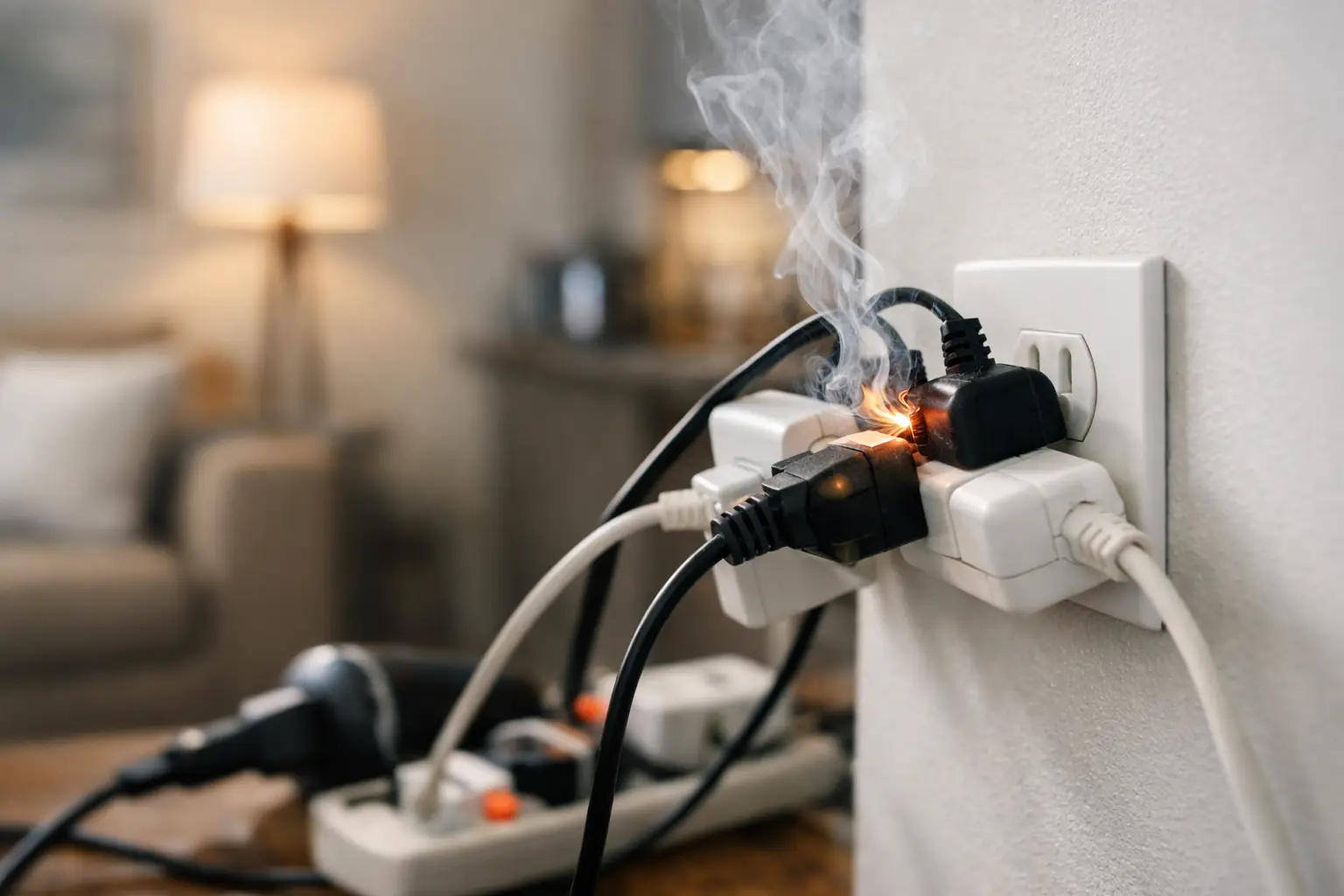
How to Spot Overloaded Circuits at Home
That breaker that trips every time the microwave and coffee maker run together is not just a daily annoyance. It is often one of the first clues when you are figuring out how to spot overloaded circuits in your home or commercial space.
An overloaded circuit happens when more electrical demand is placed on a circuit than it was designed to handle. Sometimes the signs are obvious, like a breaker that keeps tripping. Other times they are easier to miss, such as warm outlets, flickering lights, or a room that slowly adds more devices over time until the wiring is under constant strain. In older homes, rental properties, condos, and even newer buildings with added equipment like EV chargers or portable AC units, this can become a real safety issue.
How to Spot Overloaded Circuits Before They Become Dangerous
The most common sign is a breaker that trips repeatedly. Breakers are designed to shut power off when a circuit draws too much current. If you reset a breaker and it trips again during normal use, that is your system telling you something is wrong. A single trip after an unusual surge in demand may not mean much. Repeated trips on the same circuit usually do.
Lights that dim or flicker when an appliance starts are another warning sign. You might notice the bathroom lights dip when the hair dryer comes on, or the kitchen lights blink when the microwave starts. That brief change in brightness can point to a circuit that is being pushed too close to its limit.
Warm switch plates or outlets also deserve attention. Electrical devices naturally create some heat, but outlet covers and switches should not feel hot. If they are warm to the touch, especially during regular use, there may be too much current flowing through that part of the circuit or a loose connection adding resistance. Both call for professional evaluation.
Buzzing sounds, a faint burning smell, or discolored outlets are more urgent signs. Those symptoms can indicate overheating or damaged wiring. At that point, the concern is no longer just inconvenience. It is a potential fire hazard.
Extension cords and power strips can offer clues too. If a room depends on several strips, adapters, and cords because there are not enough usable outlets, there is a good chance that the original circuit layout no longer matches how the space is being used. That does not automatically mean the circuit is overloaded every day, but it does mean the risk goes up.
Why Circuits Get Overloaded
In many properties, the issue is not one large appliance by itself. It is the combined load of several devices running at once. Kitchens are a good example. A refrigerator, microwave, toaster, coffee maker, and countertop appliances can quickly crowd the same branch circuit if the wiring is outdated or the room has been modified over the years.
The same pattern shows up in bedrooms, living rooms, and offices. Televisions, gaming systems, space heaters, printers, computers, chargers, and window units all add up. Commercial properties often face a similar problem when equipment is added without reviewing circuit capacity.
Older electrical systems are especially vulnerable. Homes built decades ago were not designed around modern power demands. Even if the wiring was acceptable when installed, today’s appliances and electronics can push those older circuits harder than intended. On the Alabama coast, it is also common for owners to upgrade comfort and convenience features over time, from dehumidification equipment to backup power components, without fully rebalancing the electrical system.
It also depends on which devices share the same circuit. A single lamp and phone charger are minor loads. Add a portable heater, mini fridge, or hair dryer to that same line and the situation changes fast.
What You Can Check Safely
If you suspect an overloaded circuit, start with observation rather than trial and error. Note which breaker trips and what was running at the time. If the same breaker controls outlets or lights in a particular room, look for patterns. Does it happen during meal prep, morning routines, or when certain equipment starts up?
You can also unplug nonessential devices and reduce the load temporarily. If the problem stops when high-demand appliances are no longer running together, that is useful information. It does not fix the underlying issue, but it helps confirm that the circuit capacity is part of the problem.
Pay attention to where power strips are doing too much work. A surge strip for a TV and a few chargers is one thing. A strip supporting a microwave, portable AC, or space heater is another. High-draw appliances should not be used that way.
What you should not do is keep resetting a breaker without understanding why it tripped. You also should not replace a breaker with a larger one in hopes of stopping nuisance trips. That can create a much more dangerous condition by allowing wiring to carry more current than it was designed for.
How to Spot Overloaded Circuits Versus Other Electrical Problems
Some warning signs overlap with other electrical issues, so the diagnosis is not always simple. Flickering lights, for example, can point to an overloaded circuit, but they can also come from a loose connection, failing fixture, voltage fluctuation, or service issue. A breaker that trips might be responding to overload, a short circuit, or a ground fault.
That is why context matters. If the problem appears only when several appliances run together, overload is more likely. If the breaker trips instantly every time you switch on one device, a fault in the appliance or wiring may be the better explanation. If outlets are warm and there is any sign of odor or discoloration, the safest move is to stop using that circuit and have it inspected.
For property owners, this is one of the biggest reasons not to guess. The symptom may seem minor, but the cause can vary.
When an Upgrade Is the Right Answer
Sometimes the solution is simple load management. Spreading appliance use across different times of day may reduce the immediate strain. That can help in the short term, especially if the overload is tied to one occasional pattern.
But in many cases, the better answer is an electrical upgrade. If a panel is outdated, if rooms do not have enough dedicated circuits, or if the property has added modern electrical demands, the system may need to be expanded or reworked. This is especially true when installing large loads such as EV chargers, generators, or new commercial equipment.
A licensed electrician can evaluate how the panel is set up, whether circuits are properly sized, and whether dedicated lines are needed for heavy-use appliances. In some homes and businesses, the issue is not just one overloaded branch circuit. It is that the overall service no longer matches the building’s real power needs.
Why Fast Action Matters
Overloaded circuits do not always fail dramatically. More often, they create repeated stress over time. Wiring heats up, devices operate inconsistently, breakers wear from repeated trips, and hidden weaknesses become more serious. Waiting until there is a strong burning smell or complete power loss is not a good strategy.
For homeowners, that can mean avoidable repair costs and a higher fire risk. For property managers and business owners, it can also mean tenant complaints, equipment disruption, and liability concerns. In coastal communities like Gulf Shores and Orange Beach, where many properties serve as second homes, rentals, or busy commercial spaces, electrical problems can go unnoticed longer if no one connects the early warning signs.
A professional inspection gives you clarity. It tells you whether the issue is simple overload, aging components, improper circuit distribution, or something more serious. It also gives you a path forward that is based on the actual system rather than guesswork.
If you are noticing breakers tripping, warm outlets, flickering lights, or rooms that seem to be running out of electrical capacity, it is worth getting the system checked before a small warning turns into a larger repair. Reliable power should feel boring, not unpredictable.