
What Size Generator for House Backup Power?
The wrong generator size usually shows up at the worst possible time – right after the power goes out, the air conditioner tries to start, and everything bogs down. If you’re asking what size generator for house backup, the answer depends on what you want to keep running, how your home is wired, and whether you want basic emergency power or near-normal comfort.
For some households, a portable unit that handles the refrigerator, a few lights, and a window AC is enough. For others, especially in coastal Alabama where storm outages can last longer than anyone wants, a standby generator sized for central air, water heating, and other major loads makes more sense. The key is matching the generator to the real electrical demand instead of guessing.
What size generator for house use depends on your goals
Start with one question: during an outage, what absolutely needs to stay on?
That sounds simple, but it changes the entire recommendation. A small generator may be enough if your goal is food preservation, basic lighting, phone charging, internet, and perhaps a microwave. A much larger system is needed if you want to run one or two central air systems, an electric water heater, kitchen appliances, well pump, laundry equipment, and the rest of the home as usual.
This is why there is no single answer to what size generator for house applications. A 2,000-square-foot home with gas heat and a gas water heater may need less backup power than a smaller home with all-electric appliances. Square footage helps a little, but connected load matters more.
The two numbers that matter: running watts and starting watts
Generators are sized in watts or kilowatts. Running watts are what equipment uses during normal operation. Starting watts, sometimes called surge watts, are the extra power some motors need for a few seconds at startup.
This is where many sizing mistakes happen. A refrigerator may run at a modest wattage most of the time, but it needs more power when the compressor kicks on. The same goes for air conditioners, pumps, and some power tools. If the generator can handle running load but not startup surge, equipment may fail to start or the generator may trip offline.
Air conditioning is often the biggest factor. A central AC system can demand a large surge current when the compressor starts. That is one reason a home generator should be sized by actual load calculations and equipment data, not rough online averages.
A practical way to estimate generator size
If you want a ballpark starting point, divide your needs into two categories: essential circuits and whole-home backup.
Essential circuit backup usually includes the refrigerator, freezer, some lights, internet equipment, phone charging, garage door opener, microwave, and maybe one small cooling or heating option. Homes in this category often land somewhere around 5,000 to 10,000 watts, though the real number may be higher if you have a sump pump, well pump, or larger startup loads.
Whole-home backup is a different conversation. If you want your central air conditioning, kitchen, water heater, laundry, and most normal household functions available during an outage, many homes need 14kW to 24kW or more. Larger homes or all-electric homes may need even more, especially if multiple large appliances can run at once.
These are not final recommendations. They are planning ranges. The safe choice comes from adding actual loads and reviewing how the home will transfer power.
Typical appliance ranges to think about
A refrigerator or freezer often runs in the hundreds of watts, but startup can be much higher. Microwaves are typically around 1,000 watts or more while operating. Electric water heaters are often around 4,500 watts. Electric dryers and ovens can be several thousand watts each. Central air can vary widely depending on tonnage, efficiency, and startup characteristics.
If your house uses natural gas or propane for heat, cooking, or water heating, your backup power needs may drop substantially. If the home is all electric, generator sizing usually climbs fast.
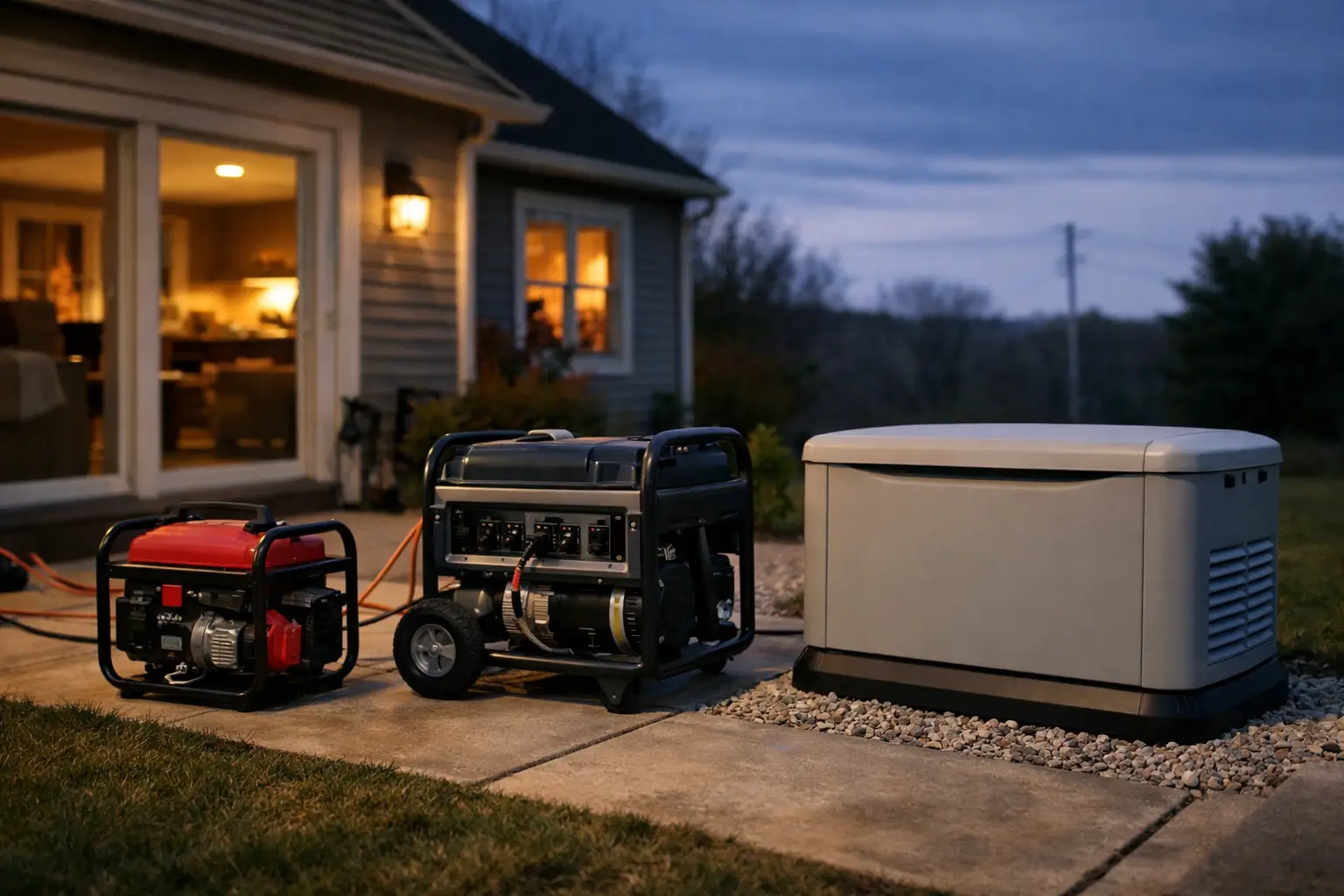
Portable vs standby generator sizing
Portable generators and standby generators solve different problems.
A portable generator is often a good fit when you only need temporary power for a limited number of circuits or extension-cord-connected items. It can be more budget-friendly up front, but it requires manual setup, proper fuel storage, safe placement outdoors, and careful load management. You also need a proper transfer method. Backfeeding a panel is dangerous and never acceptable.
A standby generator is permanently installed and usually connected to natural gas or propane. It turns on automatically during an outage through an automatic transfer switch. For homeowners who want a dependable backup solution with less manual effort, standby systems are often the better long-term choice.
Sizing is different too. Portable units are commonly chosen for essential loads. Standby units are more often selected for larger sections of the home or full-home operation.
Why transfer switches and load management matter
The generator itself is only part of the system. How the power is transferred to your home matters just as much.
A manual or automatic transfer switch isolates your home from utility power during an outage. That protects utility workers, your equipment, and your electrical system. It also determines which circuits are powered and whether the generator is expected to serve the whole panel or only selected loads.
Load management can reduce the size of generator you need. For example, a properly designed standby setup may prioritize the air conditioner and essential household circuits while temporarily shedding other heavy loads like an electric water heater. That can allow a smaller generator to perform well without overloading.
This is one area where professional design pays off. A slightly smaller generator with smart load control can be a better value than simply installing the biggest unit that fits the budget.
Coastal homes often need a more careful approach
In Gulf Shores, Orange Beach, and nearby areas, backup power planning should account for more than just wattage. Salt air, storm exposure, flood considerations, and longer outage risks all affect the right installation.
A generator has to be placed in a code-compliant location with proper clearances, ventilation, and service access. Fuel source matters too. Natural gas offers convenience if service remains available. Propane can be an excellent option where natural gas is not available, but tank sizing and refueling logistics should be part of the plan.
For condos, rental properties, and second homes, reliability and automation are often especially important. If no one is there to wheel out a portable unit and connect it properly, a standby system may be the more practical answer.
Common generator sizing mistakes
The most common problem is undersizing. Homeowners often total only the running wattage and forget startup surge, especially for air conditioning and pumps. The result is a generator that looks adequate on paper but struggles in real use.
Oversizing can be an issue too. Bigger is not always better if it means unnecessary fuel use, higher installation cost, and a system that is not matched well to the home’s actual demand. The goal is not maximum generator. The goal is reliable generator performance.
Another mistake is ignoring future load changes. If you plan to add an EV charger, renovate the kitchen, install a pool system, or convert appliances from gas to electric, that should be part of the discussion now. It is easier to plan for growth than to redo the system later.
Finally, some people focus only on the generator unit and overlook the electrical service. The panel condition, service capacity, grounding, and transfer equipment all need to be evaluated together.
So what size generator for house backup is right?
If you only want the basics, a smaller generator in the 5kW to 10kW range may be enough. If you want a standby system for selected circuits and one major comfort load, you may be looking more in the 10kW to 16kW range. If your goal is whole-home backup with central air and normal daily function, many homes land between 18kW and 24kW or higher.
Those ranges are useful, but they are still only ranges. The right answer comes from a load calculation based on your equipment, your lifestyle during outages, and your home’s electrical layout.
That is why professional sizing matters. A qualified electrician can review your panel, identify essential and non-essential loads, calculate starting and running demands, and recommend a transfer setup that works safely. For homeowners making a long-term investment, that process is what prevents frustration later.
At MNE Electric, generator planning starts with how you actually use your home, not with a generic chart. That helps you avoid paying for capacity you do not need while making sure the system can handle the loads that matter most when the lights go out.
If you’re considering backup power, think beyond the generator label. The best system is the one that starts when it should, carries the loads you care about, and fits your home safely the first time.