
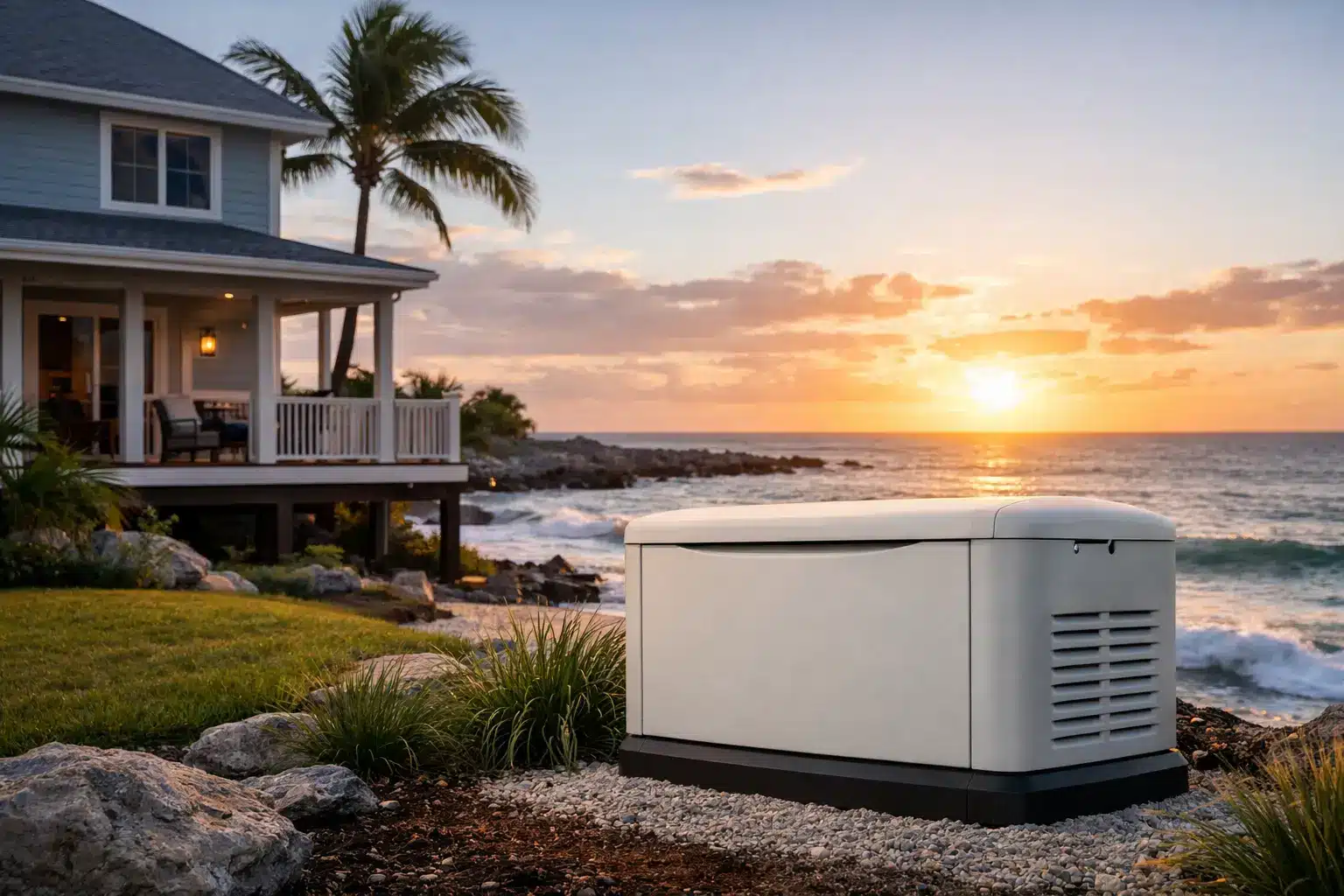
Whole House Generator Review for Coastal Homes
When the power goes out on the coast, the problem usually goes beyond a few dark rooms. Refrigerators warm up, sump and lift systems can stop, security systems lose coverage, and HVAC becomes a real concern in Alabama heat. That is why a whole house generator review should focus on more than brand names. The right system has to match your home, your electrical load, and the conditions that come with storms, salt air, and extended outages.
For homeowners in Gulf Shores, Orange Beach, and nearby communities, backup power is not a luxury purchase for many properties. It is a practical upgrade that protects comfort, safety, and in some cases the building itself. The question is not simply which generator is “best.” The better question is which generator setup makes sense for your property and how it will perform when the utility power is down for hours or days.
What a whole house generator review should actually cover
A lot of generator reviews lean too hard on brochure features. In real-world use, the most important factors are sizing, fuel supply, transfer equipment, installation quality, and service support. A generator with impressive specs on paper can still be a poor fit if it is oversized, undersized, installed in the wrong location, or paired with an electrical system that has not been evaluated properly.
For most homes, a whole house generator is a permanently installed standby unit connected to either natural gas or propane. It starts automatically during an outage and works through an automatic transfer switch that isolates your home from the utility line. That automatic operation is a major advantage over portable units. You do not have to haul equipment out in bad weather, refuel every few hours, or manage extension cords around the house.
Still, not every standby system powers every circuit equally. Some homes are set up for full-home coverage. Others are configured to prioritize essentials such as HVAC, refrigeration, lighting, internet, garage doors, and critical outlets. That is why any honest review has to include load planning.
Whole house generator review: what matters most
The first thing to look at is generator size. Bigger is not always better. An oversized unit can cost more up front and may cycle in ways that are less efficient for the home. An undersized unit creates a different problem – it may struggle when large loads like air conditioning, water heaters, ovens, or pool equipment start at the same time.
A proper load calculation helps determine whether your home needs something in the 14 to 18 kilowatt range, or whether a larger 22 to 26 kilowatt model is more appropriate. Larger homes, vacation properties, homes with multiple HVAC systems, or homes with electric-heavy appliances often need more capacity. On the other hand, a well-planned load management strategy can reduce generator size without giving up the circuits that matter most.
Fuel type is the next major factor. Natural gas offers convenience where utility gas is available because you do not have to refill tanks during an outage. Propane works well in many coastal and rural properties, but runtime depends on tank size and fuel availability after a storm. If you rely on propane, the tank planning deserves as much attention as the generator itself.
Transfer switch quality also matters. This equipment is what shifts your home safely from utility power to generator power. A properly selected and installed transfer switch helps protect your home, your appliances, and utility workers. It also determines whether you are backing up the whole service or only selected circuits.
Brand comparisons are useful, but installation matters more
There are several reputable standby generator manufacturers on the market, and most offer solid residential options. The real differences tend to show up in warranty terms, noise level, engine design, serviceability, and dealer support. Those points matter, but they should not overshadow the quality of the installation.
A well-known brand installed poorly can create years of headaches. Problems often show up as nuisance shutdowns, weak performance under load, code issues, drainage problems around the pad, or corrosion concerns that were not addressed from the start. In coastal Alabama, placement and protection are especially important because salt air, wind-driven rain, and storm debris are not minor considerations.
Noise is worth discussing too. Most homeowners ask about decibel ratings, and that makes sense, especially in neighborhoods or condo-style properties where equipment placement affects nearby living areas. Quieter models can be a better fit, but placement, barriers, and distance from occupied spaces can make just as much difference as the published rating.
Coastal conditions change the review
A standby generator in a coastal setting should be reviewed a little differently than one installed inland. Corrosion resistance, airflow, elevation, drainage, and access for maintenance all carry more weight. Salt exposure can shorten the life of metal components if the system is not chosen and installed with the environment in mind.
This is also where local code compliance and permitting become more than paperwork. Generator installations involve electrical work, fuel connections, clearance requirements, and structural considerations for the pad location. Homes in flood-prone or storm-prone areas may have added site constraints. A local contractor who understands the region can spot issues before they become expensive corrections.
For property owners in places like Gulf Shores and Orange Beach, outage planning may also include part-time occupancy. If the home is empty during a weather event, automatic backup power can help protect refrigerated food, monitored systems, and climate-sensitive interiors without someone being onsite to start equipment manually.
Cost expectations and where the money goes
The installed cost of a whole house generator varies widely because the generator itself is only part of the project. Electrical upgrades, transfer switch selection, gas line work, pad preparation, permits, and labor all affect the final number. Homes with older panels or service limitations may need additional work before backup power can be added safely.
That is why a low advertised generator price can be misleading. It does not tell you much about the actual installed cost for your home. A realistic review looks at total project value instead of only equipment cost. Paying less for the wrong setup is not a savings if it leaves out critical loads, creates reliability issues, or requires expensive changes later.
Maintenance should also be part of the cost discussion. Standby generators need periodic service, testing, battery checks, and manufacturer-recommended maintenance intervals. If a homeowner is comparing systems, service access and long-term upkeep should be part of the decision.
Who should consider a whole house generator
Not every property needs full-home backup. Some homeowners are better served by a smaller standby unit that covers essential circuits. But a whole house approach makes strong sense when outages are frequent, when the home has medical or mobility needs, when refrigeration and climate control are critical, or when storm recovery delays are common.
It also makes sense for larger homes, vacation rentals, condos with key building systems, and businesses that cannot afford to lose power during extended outages. If you have ever tried to get fuel for a portable generator after a storm, the value of automatic standby power becomes easier to measure.
A generator is also worth serious consideration if your electrical demands have grown over time. Added HVAC loads, remodeled kitchens, home offices, lifts, security systems, and EV chargers can all change what your backup plan needs to support. The right review considers the home as it is used now, not just as it was built years ago.
The best review ends with a site-specific plan
The most useful whole house generator review is not a generic ranking. It is a site-specific recommendation based on your home, your fuel options, your outage risks, and the circuits you cannot afford to lose. For one home, that may mean full coverage with automatic load management. For another, it may mean a smaller system that protects the basics reliably and keeps the budget in line.
A good contractor should walk through your priorities, inspect the existing electrical service, and explain the trade-offs clearly. If your panel needs work, if your fuel setup needs to be expanded, or if your preferred generator size is more than the home actually requires, you should hear that upfront. Straight answers are part of a good installation.
For coastal homeowners, the right backup power system should do one thing above all else: work when the weather turns and the grid does not. If you are considering a standby unit, start with a careful evaluation rather than a product list. The equipment matters, but the fit matters more, and getting it right the first time is what makes the investment pay off.