
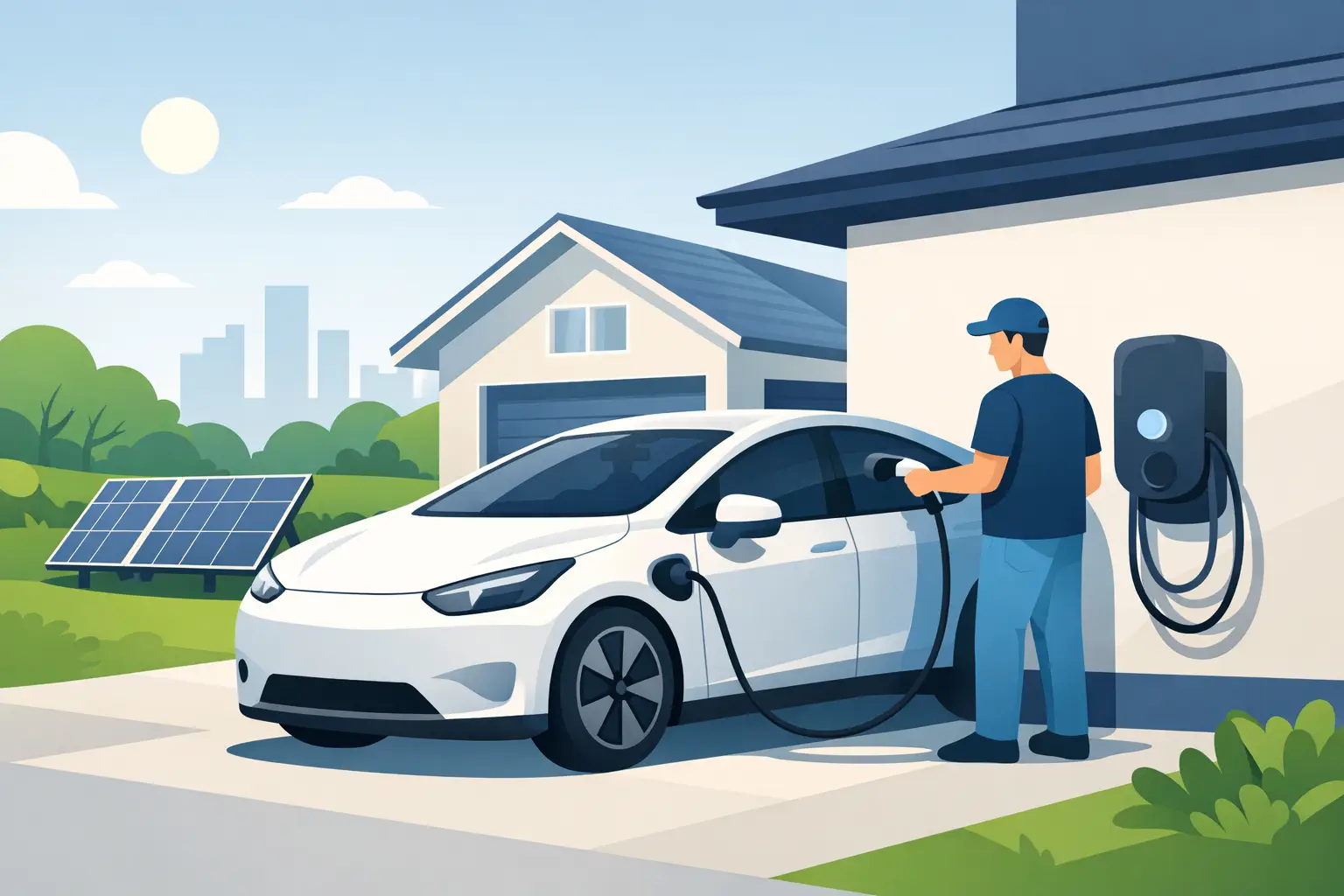
EV Charger Installation Guide for Homeowners
Most EV charger problems start before the charger is even mounted. The issue is usually the panel, the circuit capacity, or choosing equipment that does not fit how the vehicle is actually used. A good EV charger installation guide helps you avoid that kind of expensive guesswork and get a setup that works day after day.
For most homeowners, the goal is simple. You want reliable overnight charging, safe electrical work, and a system that fits your house without creating future problems. That means looking beyond the charger itself and paying attention to your service size, panel space, placement, permitting, and the condition of the wiring that will support the new load.
What this EV charger installation guide should help you decide
The first decision is whether you really need a Level 2 charger. Some drivers can get by with Level 1 charging from a standard household outlet, especially if they drive short distances and have plenty of time to recharge. But if you drive daily, own a larger battery EV, or want shorter charging times, Level 2 is usually the practical choice.
Level 2 chargers use a 240-volt circuit, similar to what powers larger appliances. That allows the vehicle to charge much faster than a standard 120-volt outlet. The exact speed depends on the charger rating, the vehicle’s onboard charging capability, and the electrical capacity available at the property.
This is where a lot of homeowners run into trade-offs. A higher-powered charger sounds better, but it is not always necessary. If your driving habits only require a moderate overnight charge, a lower-amperage setup may cost less to install and still meet your needs. Bigger is not always smarter if it forces a panel upgrade you do not actually need.
Start with your electrical system, not the charger
Before choosing a charger brand or app features, the electrical system needs to be evaluated. A licensed electrician should confirm whether your panel has enough capacity for a dedicated EV circuit and whether there is physical space for the required breaker.
In some homes, installation is straightforward. The panel has available capacity, the parking area is close by, and the charger can be mounted with a short, direct run. In other homes, the panel may already be near its limit, especially in properties with electric water heaters, HVAC systems, pool equipment, or recent additions.
If the panel is full or undersized, you may need a service upgrade, a subpanel, or load management equipment. The right answer depends on the home and how power is used across the property. A qualified electrician can calculate the load rather than guessing based on the age of the home or the size of the panel alone.
Older homes and coastal properties often deserve a closer look. Corrosion, weather exposure, and previous electrical modifications can all affect how easy or complicated the installation becomes. In Gulf Shores and Orange Beach, that matters because outdoor electrical equipment has to hold up in heat, humidity, and salt air.
Hardwired or plug-in charger?
This is one of the most common questions in any EV charger installation guide, and the answer depends on your priorities.
A hardwired charger is connected directly to the electrical circuit. This option is often preferred for durability, a cleaner finished look, and fewer points of failure. It can also make sense for higher-amperage installations or for outdoor applications where equipment strength and weather resistance matter.
A plug-in charger connects to a properly installed 240-volt receptacle. That can make replacement easier later, and some homeowners like the flexibility of unplugging the charger if needed. But the receptacle and plug must be rated correctly, installed properly, and matched to the charger’s power requirements. This is not a place for shortcuts.
If the charger will live outdoors, your electrician may recommend one option over the other based on exposure, code requirements, and long-term reliability. The best choice is not just about convenience. It is about safety, performance, and the environment where the charger will be used.
Where the charger should go
Placement affects daily convenience more than many people expect. The charger should be close enough to the vehicle’s charging port without stretching the cable tight across walkways, garage doors, or drive areas. A clean install is not just about appearance. It helps reduce wear on the cable and lowers the chance of damage.
Garage installations are often simpler because the equipment is protected from weather. Outdoor installations can work just as well when the charger is rated for that environment and mounted correctly. The location should allow safe access, proper clearances, and practical cable management.
For condos, rental properties, and commercial sites, placement gets more complicated. Shared parking, access control, metering, and future expansion all need to be considered early. A charger that works for one assigned parking space may not be the right long-term solution if multiple users will need charging later.
Permits, code, and inspection matter
A professional EV charger installation is not just a convenience upgrade. It is an electrical addition that must meet code. Permits and inspections help make sure the circuit, breaker sizing, wiring method, grounding, and equipment installation are done safely.
Skipping that process can create real problems. It may affect homeowner insurance, complicate a home sale, or leave hidden hazards behind the wall or at the panel. A charger draws a sustained electrical load, and that is exactly why code compliance matters.
A licensed contractor should know what is required locally and handle the work accordingly. For homeowners, that means fewer surprises and more confidence that the installation is being done correctly the first time.
What affects EV charger installation cost
There is no one-price answer because every property is different. The charger itself is only one part of the total cost. The bigger variables are often labor, circuit length, panel condition, and whether any upgrades are needed.
A basic installation is usually less expensive when the electrical panel is close to the parking area, capacity is available, and the wall is easy to access. Costs rise when the wiring run is long, trenching is required, drywall or finish surfaces must be opened and repaired, or the panel needs modifications.
Panel upgrades can change the budget significantly, but sometimes they are the right investment. If a home is already showing signs that electrical demand has outgrown the existing service, adding EV charging may simply bring that issue to the surface. In that case, upgrading the service does more than support the charger. It improves the safety and usability of the whole property.
Choosing the right charger for how you live
Not every homeowner needs the same setup. If you drive a modest daily commute and charge overnight, a standard residential Level 2 charger may be more than enough. If you have two EVs or expect to add another one soon, it may be worth planning for shared charging capability or a system that can be expanded later.
Smart charger features can also be useful, but only if you will actually use them. Scheduling, usage tracking, and app controls can help manage charging times and energy use. Still, reliability should come first. A simple, dependable charger is often the better choice than one loaded with features that add complexity without much benefit.
For businesses and multifamily properties, the decision usually goes beyond charging speed. Access control, billing options, user management, and future infrastructure needs become part of the conversation. A charger that suits a single-family garage may not fit a property where several users need access.
Why professional installation is the safer choice
Installing an EV charger is not comparable to swapping a light fixture or outlet. It involves sustained load calculations, dedicated circuit design, breaker sizing, conductor selection, proper terminations, equipment mounting, and code compliance. Mistakes can lead to nuisance tripping, charging failures, overheated components, or fire risk.
Professional installation also helps you avoid common planning mistakes, like placing the charger where the cable will not comfortably reach, choosing an amperage level the home cannot support, or overlooking the need for surge protection. These details matter because EV charging is something you will rely on regularly, not occasionally.
When the work is done by certified electricians who understand both residential systems and modern charging equipment, you are far more likely to end up with a setup that performs the way it should.
Preparing for your estimate
If you are scheduling an estimate, it helps to know your vehicle model, where you usually park, whether the charger will be indoors or outdoors, and if you expect to add another EV later. Photos of the panel and parking area can also make the first conversation more productive.
A good contractor will look at the full picture, not just the charger on the wall. That includes your electrical capacity, the layout of the home or property, the installation path, and the best way to deliver safe, dependable charging with as little disruption as possible.
If you are planning a home EV charger in Gulf Shores or nearby, working with a local electrical contractor like MNE Electric can be especially valuable when weather exposure, coastal conditions, and existing system limitations are part of the job. The right installation should feel simple once it is finished, even if careful planning is what made that possible.
The best EV charger setup is not the one with the most power or the most features. It is the one that fits your property, supports your driving habits, and works safely every time you plug in.