
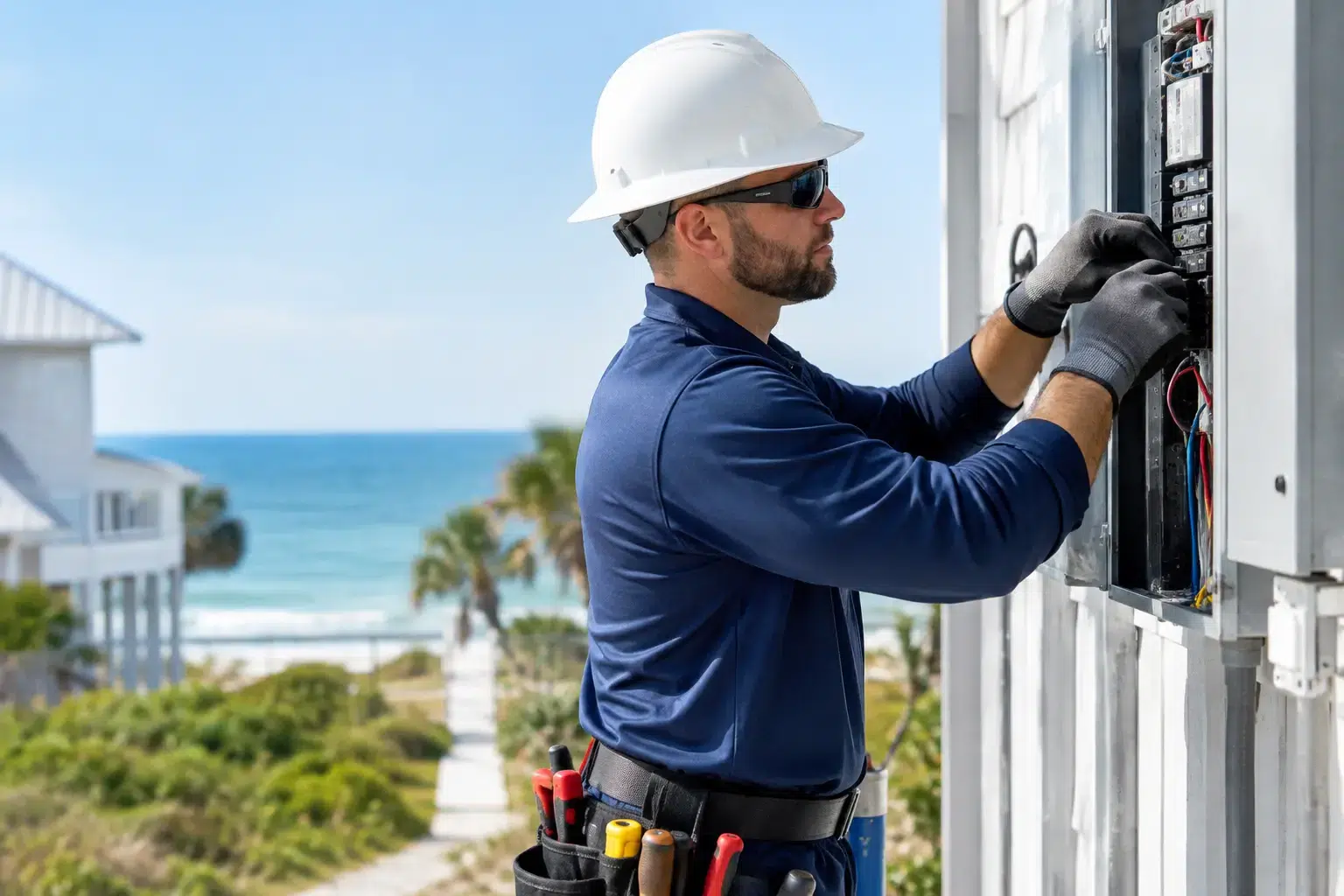
How to Choose the Best Gulf Shores Electricians
A tripped breaker after a busy rental turnover, lights that flicker when the air conditioner starts, or a panel that cannot support a new EV charger are not problems to put off. When searching for the best Gulf Shores electricians, property owners need more than someone who can make the immediate symptom disappear. They need a qualified local professional who can identify the cause, protect the property, and complete the work correctly.
That standard matters on the Alabama coast. Homes, condos, rental properties, and businesses face high electrical demand, humidity, salt air, storm exposure, and frequent renovation work. Electrical decisions that seem small at first can affect safety, insurance requirements, equipment life, and a property’s ability to stay operational.
What the Best Gulf Shores Electricians Should Provide
The right electrical contractor should be able to handle both the service call in front of them and the larger question behind it. For example, a repeatedly tripping breaker may point to an overloaded circuit, a failing appliance, loose wiring, or an issue inside the panel. Resetting it without diagnosing the reason is not a lasting repair.
Look for an electrician who communicates clearly about what they find, what needs attention now, and what can be planned for later. A good recommendation should make practical sense for the property, its age, its electrical load, and how it is used. This is especially valuable for owners balancing safety needs with a renovation budget or a busy rental schedule.
Availability matters, but fast service should not mean rushed work. Dependable electricians arrive prepared, troubleshoot methodically, explain the scope before moving forward, and leave the work area in order. For a homeowner, that means confidence that the repair supports safe daily use. For a property manager or business owner, it means fewer repeat calls and less disruption.
Start With Qualifications, Insurance, and Clear Accountability
Electrical work is not a place to choose solely on the lowest quote. The cost of correcting improper wiring, a failed inspection, damaged equipment, or a safety hazard can be far greater than the difference between estimates.
Ask whether the contractor is properly licensed and insured for the work being performed. Confirm that the people completing the job are qualified to work on your system and that permits and inspections will be handled when the project requires them. A professional contractor should be comfortable answering these questions directly.
It also helps to ask who will be responsible if the scope changes after troubleshooting begins. Older coastal homes and remodeled properties can reveal hidden issues once a panel, wall, attic, or exterior connection is accessed. There is no way to predict every condition in advance, but a trustworthy electrician explains the finding, the available options, and the cost before proceeding with additional work.
Ask for a Scope That Matches the Actual Need
A clear estimate should identify the work being proposed rather than relying on vague descriptions. If the project involves a panel upgrade, generator connection, EV charger, or new commercial equipment, the electrician should consider capacity, circuit requirements, placement, code requirements, and future expansion.
For smaller repairs, the scope may be straightforward. Replacing a damaged receptacle or repairing a faulty switch usually does not require a major design discussion. But when a problem keeps returning, it is worth paying for proper diagnosis instead of repeatedly replacing the visible component.
Choose Local Experience That Fits Coastal Properties
Gulf Shores electrical needs are not identical to those in every inland market. Exterior equipment, service connections, outdoor lighting, pool systems, HVAC equipment, and backup power components all live with coastal weather conditions. Moisture and corrosion can affect connections and enclosures over time, while storms can expose weaknesses in equipment that seemed fine during normal conditions.
Local experience also helps when scheduling work around occupancy. Condo owners, vacation rental managers, and hospitality businesses often need repairs completed promptly between guests or during lower-traffic hours. The contractor does not need to promise an unrealistic timeline, but they should understand that clear scheduling and communication protect revenue and avoid inconvenience.
For commercial properties, ask whether the contractor can work with your facility needs rather than treating the job like a simple residential call. Retail spaces, offices, restaurants, and multifamily properties may have specialized loads, tenant coordination needs, lighting requirements, or operational constraints. The right partner can perform repairs while also helping plan upgrades that support the business over time.
Know When an Upgrade Is Smarter Than Another Repair
Repairs are often the right answer. A damaged outlet, failed ceiling fan, loose connection, or faulty fixture can usually be corrected without changing the rest of the electrical system. However, some warning signs indicate that a larger improvement may be the more responsible long-term choice.
Frequent breaker trips, warm outlets, flickering lights, burning odors, corrosion at electrical equipment, and a panel with no room for new circuits all deserve professional attention. Do not ignore these signs or assume that replacing a breaker will solve the issue. An electrician should investigate the source and determine whether the system can safely handle current demand.
Service and panel upgrades are often considered when a property adds major equipment such as a central HVAC system, hot tub, pool equipment, remodeled kitchen, workshop tools, or an electric vehicle charger. The decision depends on the existing service size, calculated electrical load, condition of the panel, and anticipated future use. A thoughtful contractor will not automatically recommend the largest possible upgrade. They will recommend the solution that safely fits the property.
EV Chargers Need More Than a Convenient Outlet
EV charging is a good example of why electrical planning matters. A dedicated charger can make daily driving easier, but installation requires a review of the available electrical capacity, the distance from the panel, charger specifications, parking layout, and whether the owner expects to add another electric vehicle later.
For businesses and multifamily properties, the planning is broader. Charging access, billing considerations, user demand, and infrastructure for future expansion can all affect the design. Working with an electrician who understands EV charger installation helps avoid installing a system that is undersized, inconvenient, or costly to modify later.
Evaluate Generator and Surge Protection Recommendations Carefully
Backup power can be valuable for full-time residents, businesses, and properties where outages create real disruption. Yet generator solutions vary widely. Some owners need a portable-generator connection for selected circuits, while others need an automatic standby system that supports essential loads or much of the home.
The best approach starts with a conversation about what must remain powered during an outage. Refrigeration, medical equipment, internet service, lighting, pumps, security systems, and HVAC needs are not the same for every property. A properly designed generator installation considers those priorities, fuel source, transfer equipment, placement, and the electrical load the generator can safely support.
Whole-property surge suppression is another upgrade worth discussing, particularly where sensitive electronics, appliances, HVAC controls, and business equipment are involved. It is not a substitute for good wiring or proper grounding, and it cannot prevent every type of damage. Still, when installed as part of a sound electrical system, it can add a useful layer of protection against electrical surges.
Compare Estimates Beyond the Bottom Line
If you receive several estimates, compare the materials, scope, warranty terms, permitting responsibilities, and timeline – not just the total price. A lower estimate may exclude work that another contractor has included, such as correcting code issues, replacing damaged components, or completing final testing.
Ask how the contractor handles changes, whether they provide written documentation, and how they communicate during the project. For projects above $1,000, financing may also make an important safety or modernization project more manageable. Financing should support a sound decision, not pressure you into work that has not been clearly explained.
Reviews and referrals can be helpful, particularly when they describe communication, punctuality, cleanliness, and the contractor’s response when an unexpected issue arose. Still, your own conversation matters most. You should feel comfortable asking questions and confident that the electrician respects both your property and your budget.
A Practical Partner for Repairs and Planned Projects
The best Gulf Shores electricians earn trust by being useful before, during, and after the work. That means responding to urgent concerns, giving straightforward recommendations, and having the capability to take on more complex needs when the property requires them.
MNE Electric serves homeowners, property managers, and businesses with electrical repairs, installations, upgrades, inspections, backup power, surge protection, EV charging, engineering, and energy-management solutions. The goal is simple: provide dependable local service and complete electrical work correctly the first time.
When an electrical issue appears, take it seriously, especially if you notice heat, odors, sparking, repeated breaker trips, or water near electrical equipment. Turn off power to the affected area if it is safe to do so, avoid makeshift repairs, and have a qualified electrician assess the condition. Prompt, professional attention can protect the people who use your property and help prevent a small concern from becoming a larger interruption.