
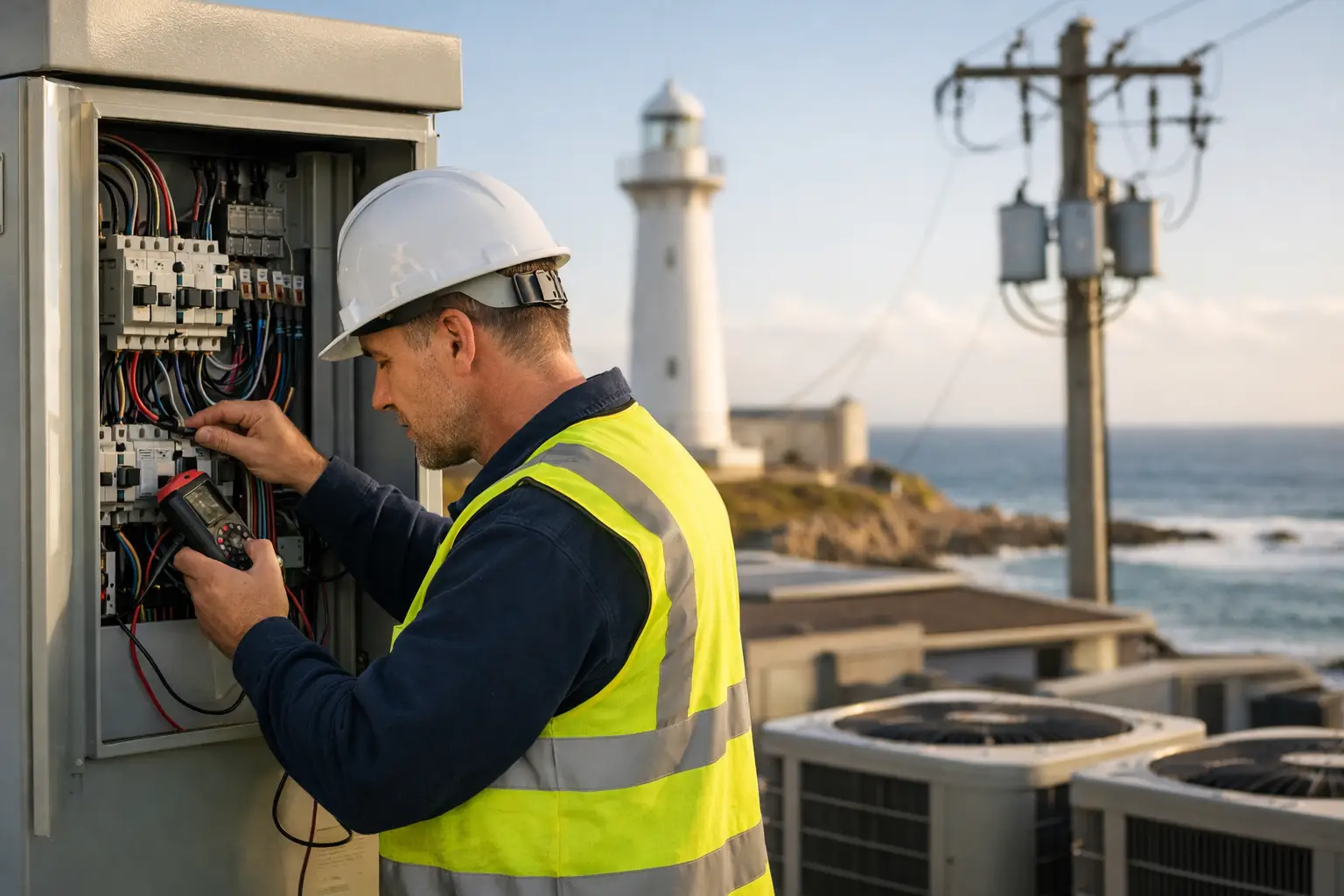
Commercial Electrical Maintenance Guide for Coastal Sites
A tripped breaker at a retail shop is disruptive. A failed panel, overheating disconnect, or corroded outdoor connection can stop operations, damage equipment, and create a serious safety concern. This commercial electrical maintenance guide helps business owners and property managers plan the routine attention that keeps electrical systems safe, reliable, and ready for daily demand.
For commercial properties along the Gulf Coast, maintenance deserves even closer attention. Salt air, humidity, wind-driven rain, and seasonal storms can accelerate corrosion and expose weaknesses in equipment that might otherwise last for years without trouble. A maintenance plan is not about finding work to do. It is about identifying small problems before they turn into an outage, a failed inspection, or an expensive emergency repair.
Start With a Clear Picture of Your Electrical System
Effective maintenance begins with knowing what is installed, what it serves, and how heavily it is used. Many commercial buildings have expanded over time, adding refrigeration, kitchen equipment, HVAC loads, signage, point-of-sale systems, security equipment, tenant improvements, or EV charging. The original electrical system may still be carrying a load it was not designed to support.
Keep current records for the main service, distribution panels, subpanels, disconnects, generators, transfer equipment, exterior lighting, and major equipment circuits. Panel directories should be accurate and readable. If a breaker is labeled only as “back room” or “lights,” employees may lose valuable time during an outage or accidentally shut down the wrong equipment.
A qualified electrician can also help establish a baseline by documenting panel condition, available capacity, voltage readings, grounding and bonding conditions, and visible concerns. This is especially useful when purchasing a building, taking over a condo association, planning renovations, or adding high-demand equipment.
Build Maintenance Around Risk, Not a Calendar Alone
There is no single schedule that works for every commercial property. A small office with stable loads has different needs than a restaurant, marina facility, condominium, medical office, or vacation rental complex. The right frequency depends on equipment age, operating hours, moisture exposure, electrical load, and the cost of downtime.
A practical approach is to separate regular visual checks from professional inspections and testing. Staff can watch for obvious changes during normal operations. A licensed commercial electrician should handle energized equipment, panel interiors, load testing, repairs, and any work involving code compliance.
What Staff Can Watch For
Employees and facility teams should report flickering lights, frequent breaker trips, warm outlets or switches, buzzing sounds, burning odors, damaged cords, loose receptacles, and water near electrical equipment. These are not conditions to ignore or work around.
Exterior equipment also needs regular attention. Check that electrical enclosures are closed and secured, weatherproof covers are intact, and landscaping, storage, or trash has not blocked access to disconnects and panels. Water intrusion, rust, and damaged seals should be addressed promptly, particularly after heavy rain or a tropical weather event.
What a Professional Inspection Should Include
Professional maintenance should focus on the condition and performance of the system, not just a quick visual review. Depending on the building and its equipment, an electrician may inspect panelboards and breakers, tighten connections where appropriate, look for overheating or corrosion, verify grounding and bonding, test safety devices, and evaluate electrical loads.
Thermal imaging can be valuable for larger or heavily used systems. It helps identify abnormal heat at breakers, lugs, conductors, disconnects, and electrical connections. Heat can point to loose connections, overloaded components, or failing equipment before a visible failure occurs. It is a useful diagnostic tool, but results still need to be evaluated by a qualified professional.
Focus on the Equipment That Can Shut You Down
Not every circuit carries the same business risk. A maintenance plan should give extra attention to equipment whose failure would stop revenue, affect safety, or cause property damage.
For a restaurant, that may include refrigeration, cooking equipment, ventilation, and point-of-sale circuits. For a condo or hospitality property, it may include common-area lighting, elevators, gates, pool equipment, life-safety systems, and building access controls. For offices and retail spaces, networking equipment, server rooms, HVAC, exterior signage, and security systems can be essential.
Identify critical equipment and confirm which panel and breaker serve it. Then consider what happens if that circuit fails. Some equipment may need surge protection, a dedicated circuit, backup power, or a planned replacement rather than repeated repairs. The best solution depends on the equipment, the building’s electrical capacity, and how long the operation can tolerate an outage.
Do Not Treat Breaker Trips as Normal
A breaker is designed to trip when it detects a condition that could damage wiring or equipment. Resetting it once may be appropriate after identifying a clear temporary cause. Repeated trips are a signal to investigate, not a routine inconvenience.
Common causes include overloaded circuits, failing appliances, damaged conductors, loose connections, moisture intrusion, and incorrect breaker sizing. Replacing a breaker with a larger one without a proper load and wiring evaluation can create a dangerous condition. The breaker must protect the conductors and equipment connected to it.
Frequent trips in older commercial spaces are often tied to changing electrical demand. A circuit that once served a few office devices may now support printers, chargers, monitors, portable heaters, and specialized equipment. In those cases, adding properly designed circuits may be safer and more dependable than continuing to redistribute plug loads.
Protect Equipment From Surges and Coastal Conditions
Surges do not come only from lightning. Utility events, switching operations, large motors, HVAC equipment, and generator transfers can all create voltage disturbances. Sensitive electronics, controls, networking equipment, and modern appliances are more vulnerable than many older systems.
Whole-building surge protection installed at the service or distribution equipment can reduce exposure, while point-of-use protection may still make sense for certain sensitive devices. The best setup depends on the building’s layout and the value of the equipment being protected. Surge devices also have a service life, so they should be inspected as part of ongoing maintenance rather than installed and forgotten.
Coastal properties should also prioritize the condition of outdoor enclosures, disconnects, service equipment, conduit connections, and lighting. Salt-laden air can corrode metal components and compromise seals. The issue is not always dramatic. A rusted screw, deteriorated gasket, or loose cover can allow moisture to reach components that should stay dry.
Keep Electrical Rooms Safe and Accessible
Electrical rooms and panel locations should not become storage areas. Boxes, cleaning supplies, furniture, and inventory can block access, increase fire risk, and slow a response when power must be shut off quickly. Required working clearances must remain open around electrical equipment.
Good housekeeping also makes problems easier to spot. Water staining, pest activity, corrosion, unusual heat, and damaged conduit are more visible when equipment is not hidden behind stored materials. Make sure staff know which areas must remain clear and who has authority to access electrical panels.
If a panel is located in a damp, hot, or difficult-to-access area, ask an electrician whether relocation, enclosure upgrades, or additional protection is appropriate. This can be particularly worthwhile during a remodel or planned property improvement, when access is already available.
Plan Ahead for Growth and Storm Readiness
Electrical maintenance should inform capital planning. If inspection findings show limited capacity, obsolete equipment, recurring repairs, or signs of corrosion, it may be more cost-effective to plan an upgrade than wait for a failure during peak season.
Businesses adding EV chargers, commercial kitchen equipment, new HVAC systems, expanded tenant spaces, or backup generation should start with a load calculation and service evaluation. These projects can affect transformer capacity, panel space, feeder sizing, and utility coordination. Planning early helps avoid costly redesigns and prevents overloading an existing system.
Storm preparation also has an electrical side. Before severe weather, confirm that panels are accessible, exterior covers are secured, generators are maintained according to their requirements, and key contacts are current. After a storm, do not energize equipment that has been flooded or shows visible damage. Have it evaluated first.
Create a Maintenance Record That Supports Better Decisions
A simple maintenance log can prevent repeated guesswork. Record inspection dates, findings, repairs, breaker trips, equipment failures, surge events, and any changes to major electrical loads. Include photos of corrosion or damaged equipment when helpful.
Over time, this record shows whether a problem is isolated or recurring. It also gives property managers useful documentation for budgeting, insurance discussions, tenant communication, and future renovations. For multi-site operators, consistent records make it easier to compare conditions and prioritize spending where risk is highest.
When a concern involves heat, water, damaged equipment, repeated trips, or loss of power, prompt professional service is the right next step. MNE Electric helps businesses across Gulf Shores and nearby coastal communities assess electrical conditions, make safe repairs, and plan upgrades that support reliable operation. The goal is straightforward: keep small electrical issues from becoming the problem that interrupts your business day.