
Coastal Property Electrical Safety Guide
Salt air can corrode a connection long before it looks like a serious problem. A summer storm can expose a weak panel, damaged exterior outlet, or aging surge protector in minutes. This coastal property electrical safety guide helps homeowners, condo owners, and property managers recognize the conditions that put Gulf Coast electrical systems under added strain – and know when a licensed electrician should take a closer look.
Coastal living brings real advantages, but electrical equipment near the water works harder than equipment in inland homes. Humidity, wind-driven rain, flooding risk, lightning, heavy seasonal use, and salt exposure all affect wiring, panels, outdoor fixtures, and connected equipment. A safe property starts with understanding those risks before they become an outage, damaged appliance, or electrical hazard.
Why coastal electrical systems need more attention
Salt moisture in the air is conductive and corrosive. It can settle on metal enclosures, terminals, screws, disconnects, and outdoor equipment. Over time, that corrosion can compromise connections, create heat at a connection point, or make equipment harder to operate safely. The issue is not limited to homes directly on the beach. Properties in Gulf Shores, Orange Beach, Fort Morgan, and nearby communities can all experience coastal exposure, especially during storms and periods of high humidity.
Moisture creates a separate concern. Water does not need to flood a room to cause trouble. Condensation inside an outdoor enclosure, rain entering through a cracked cover, or a leaking conduit connection can affect electrical components. Equipment may continue to function for a while, which can make the problem easy to miss.
Demand is another factor. Rental homes, condos, and vacation properties often have more air conditioning load, kitchen appliances, outdoor lighting, pool equipment, and charging devices than the electrical system was originally designed to support. A panel that was adequate years ago may now be working close to its limit during peak season.
Start with the electrical panel and service equipment
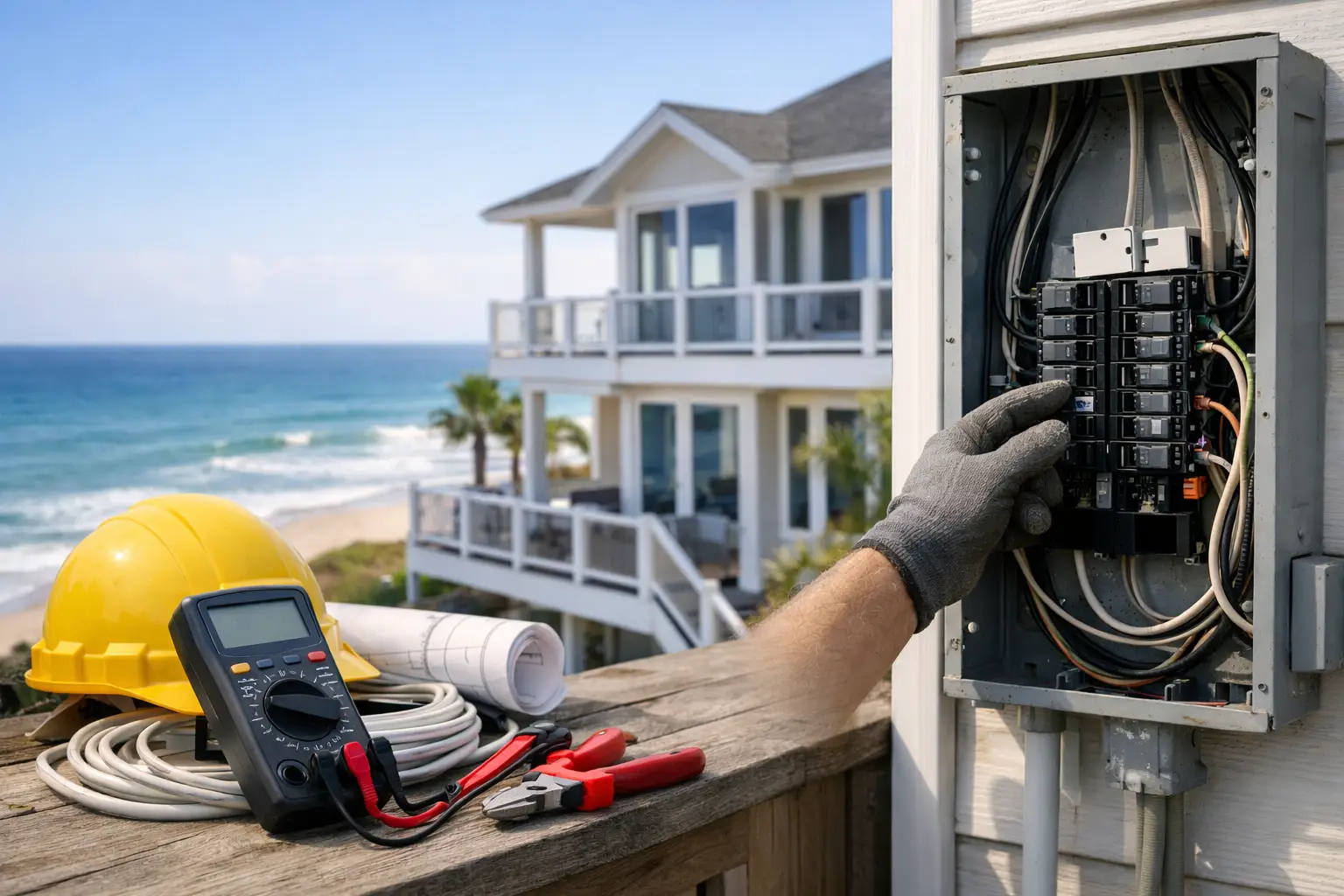
The main electrical panel is the control center for the property. It should be dry, accessible, properly labeled, and free from visible corrosion or heat damage. Rust on the panel enclosure, water staining around it, breakers that trip repeatedly, buzzing sounds, or a warm panel cover all warrant professional attention.
Repeated breaker trips are not an inconvenience to solve by simply resetting the breaker. A breaker trips because it detects an overload, short circuit, ground fault, or other condition that needs to be identified. Resetting it once after a known temporary overload may be reasonable. Resetting it again and again can allow a developing problem to continue.
Older homes and units may also have panels with limited capacity for current needs. This becomes especially relevant when adding a hot tub, HVAC equipment, a boat lift, an EV charger, electric appliances, or a standby generator. A licensed electrician can evaluate the service size, available panel space, load requirements, grounding, and the condition of existing equipment before an upgrade or new installation begins.
Keep access clear and labels accurate
Do not store supplies, furniture, or maintenance materials in front of the panel. In an emergency, occupants or first responders need safe, immediate access. Breaker labels should identify the areas or equipment they control. For rental and commercial properties, accurate labels also reduce confusion when a maintenance issue occurs after hours.
Protect outdoor outlets, lighting, and equipment
Outdoor electrical components are exposed to the worst coastal conditions. Receptacles on decks, patios, garages, pool areas, and exterior walls should be protected by weather-resistant covers designed to keep water out even when a cord is plugged in. A standard hinged cover may not provide enough protection for equipment that stays connected outdoors.
Ground-fault circuit interrupter, or GFCI, protection is essential in areas where electricity and moisture may meet. This commonly includes bathrooms, kitchens, garages, exterior outlets, crawl spaces, laundry areas, pools, docks, and wet-bar locations. GFCIs are designed to shut off power quickly when they detect a ground fault. Test buttons can help verify operation, but a device that will not reset or trips without an obvious cause should be inspected rather than bypassed.
Exterior lighting deserves attention as well. Loose fixtures, cracked lenses, damaged seals, and corroded mounting hardware can allow moisture into a fixture or junction box. If lights flicker after rain, trip a breaker, or show signs of discoloration, turn off the circuit and arrange service. Replacing a bulb will not correct a damaged connection or water intrusion.
Pool, spa, dock, and boat-lift systems require especially careful installation and maintenance. These systems have specific grounding, bonding, disconnect, and equipment requirements. Because the consequences of a fault near water can be severe, this work should not be treated as a general handyman repair.
Use surge protection for more than lightning
Coastal Alabama storms bring lightning risk, but surges can also come from utility switching, power restoration after an outage, or large equipment cycling on and off. A single surge may damage electronics immediately. Smaller repeated surges can shorten the life of HVAC controls, appliances, televisions, routers, security systems, and smart-home equipment over time.
Whole-home surge protection installed at the electrical panel provides a first layer of defense. Point-of-use surge protectors can add protection for sensitive electronics, but they are not a substitute for a properly installed panel-level device. The best approach depends on the property, its equipment, and the condition of its electrical service.
Surge protection is also not a guarantee that every device will survive a direct lightning event. It is a practical risk-reduction measure, not an excuse to ignore damaged wiring, poor grounding, or deteriorated equipment.
Prepare before storms and inspect after them
Before hurricane season or a major weather event, check that exterior electrical covers are secure, generator equipment is maintained, and important circuits are understood. If a generator is part of the plan, it must connect through approved equipment such as a transfer switch or interlock installed for that purpose. Never run a portable generator in a garage, enclosed porch, or near doors and windows, even if the door is open. Carbon monoxide is a serious hazard.
Never connect a generator directly to a wall outlet. This practice, often called backfeeding, can energize utility lines and create a deadly risk for utility workers, neighbors, and the property itself. It can also damage electrical equipment when normal power returns.
After a storm, do not assume power is safe simply because the lights come back on. Watch for damaged service equipment, leaning poles, downed lines, wet outlets, water around electrical panels, or appliances that were exposed to floodwater. Keep clear of downed lines and treat them as energized. If water reached electrical equipment, have it evaluated before using it again. Flood exposure can leave corrosion and contamination inside devices that appear normal from the outside.
Warning signs that should not wait
Some electrical issues can be scheduled during regular maintenance. Others call for a prompt professional response. Contact a qualified electrician if you notice burning odors, sparking, smoke, shocks or tingling from appliances, flickering lights throughout the property, frequently tripped breakers, discolored outlets, or a panel that feels hot.
For property managers, a report of a warm outlet, intermittent power, or a breaker that will not stay on should be documented and addressed quickly, even if the tenant says the issue has stopped. Intermittent problems often return under higher load or wet conditions.
Do not cover an outlet or switch that feels warm, replace a repeatedly tripping breaker with a larger one, or use extension cords as a permanent solution for inadequate outlet access. These temporary fixes can hide the problem while increasing the risk.
A practical maintenance schedule for coastal properties
A professional electrical inspection is a sound investment when buying a coastal property, completing a renovation, adding major equipment, or taking responsibility for an older rental or commercial space. It is also wise after significant storm damage or flooding. The inspection can identify worn devices, insufficient GFCI protection, panel concerns, grounding issues, overloaded circuits, and code-related safety updates.
Between inspections, property owners can make a habit of checking exterior covers, watching for corrosion, keeping panel access clear, and responding early to changes in how the electrical system performs. Seasonal properties should receive a visual check before heavy occupancy begins, since a small issue can become a disruptive service call when guests, heat, and appliance use all increase at once.
MNE Electric helps coastal Alabama property owners assess aging equipment, correct safety concerns, install surge protection, upgrade services, and prepare for backup power needs. The right solution depends on the property and its exposure, but timely attention is almost always less disruptive than waiting for a failure. If something looks damaged, feels warm, trips repeatedly, or has been exposed to water, treat that signal as a reason to get it checked.