
Top Signs of Electrical Problems You Shouldn’t Ignore
A breaker that trips once after a storm may be an inconvenience. A breaker that keeps tripping, lights that dim when the air conditioner starts, or an outlet that feels warm is a different kind of message. The top signs of electrical problems are often easy to dismiss at first, but they can point to overloaded circuits, failing connections, damaged wiring, or equipment that needs professional attention.
For homeowners, condo owners, and business operators along the Gulf Coast, electrical concerns deserve a timely response. Humidity, salt air, storms, aging properties, and increasing power demands can all put extra pressure on an electrical system. Knowing what to watch for helps you act before a small repair becomes a disruption, a damaged appliance, or a serious safety risk.
Top Signs of Electrical Problems in a Property
Breakers that trip repeatedly
A circuit breaker is designed to shut off power when it detects an overload, a short circuit, or another abnormal condition. One trip after plugging too many high-demand devices into the same circuit can happen. Repeated trips are not something to reset and forget.
The cause may be a circuit carrying more load than it was designed for, a failing appliance, damaged wiring, or a loose connection. In a home, this may show up when a microwave, hair dryer, portable heater, or window unit runs. In a commercial space, it may happen when equipment, lighting, refrigeration, or office devices share an undersized circuit.
Avoid repeatedly resetting the breaker. If it trips again, leave it off and have the circuit evaluated. A properly sized circuit or a targeted repair may solve the issue, but the right answer depends on what is causing the trip.
Flickering, dimming, or unusually bright lights
A single flickering bulb may simply need to be tightened or replaced. But lights that flicker in several rooms, dim when large equipment turns on, or suddenly become brighter than normal can indicate a wiring or service issue.
Dimming lights when a major appliance starts can sometimes point to heavy electrical demand on a shared circuit. More widespread flickering can be associated with loose connections, a failing fixture, panel concerns, or a problem with the electrical service feeding the building. In coastal properties, corrosion and moisture exposure can also affect connections over time.
Pay attention to the pattern. Does it happen in one room or throughout the property? Does it occur during storms, when the HVAC system runs, or at random? Those details help an electrician identify whether the concern is isolated or part of a larger issue.
Warm, discolored, loose, or buzzing outlets and switches
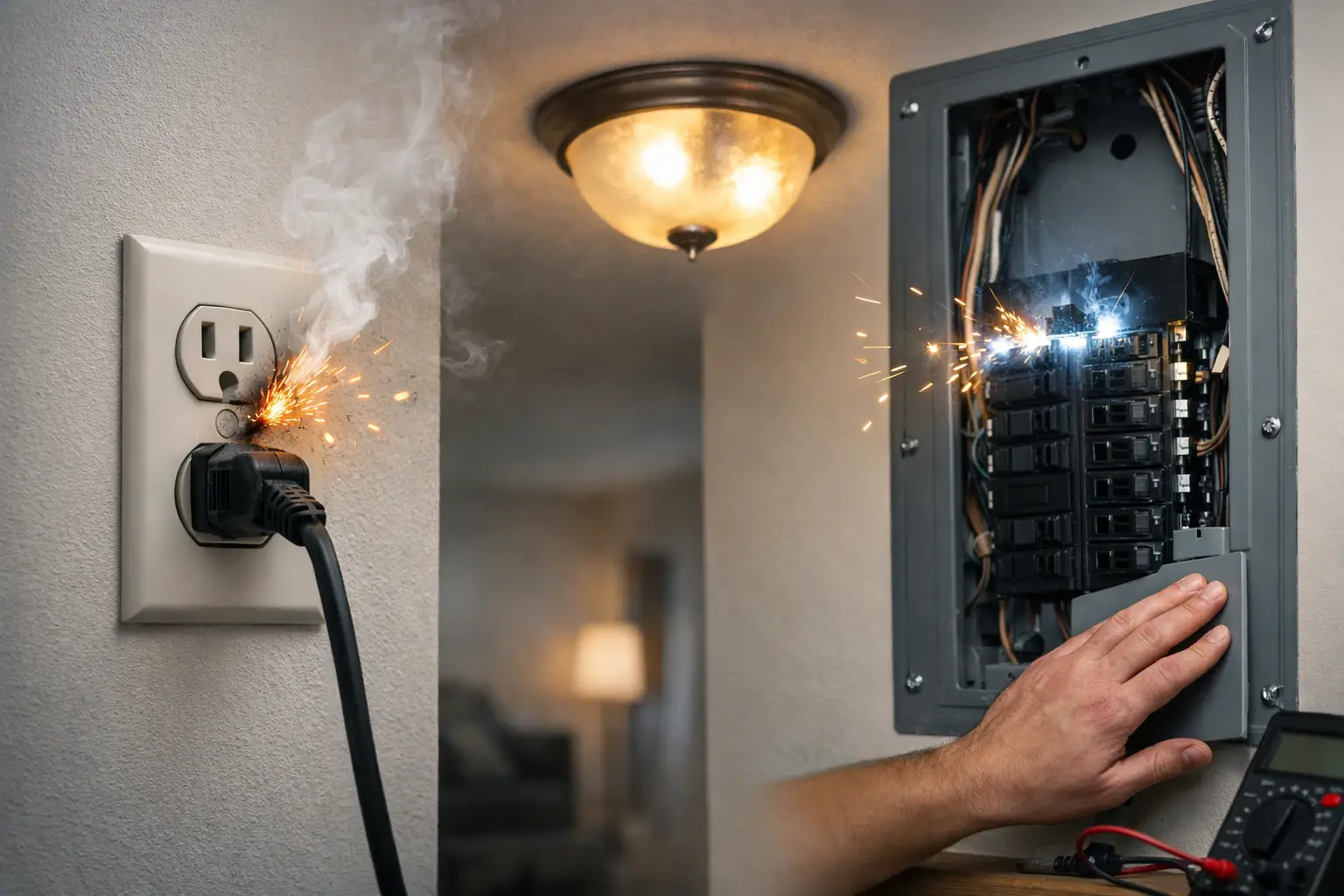
Outlets and switches should not feel hot during normal use. A little warmth from a charging device itself is one thing, but heat at the outlet cover, a burning odor, discoloration, sparking, buzzing, or crackling calls for immediate attention.
These symptoms can be caused by loose wiring, a worn-out receptacle, an overloaded connection, or internal arcing. Arcing occurs when electricity jumps across a gap instead of traveling safely through its intended path. It can create heat inside a wall or electrical box, where the problem is not always visible.
Stop using the outlet or switch if you notice these warning signs. If there is smoke, a strong burning smell, visible sparking, or fire, move to safety and call emergency services. For non-emergency concerns, a licensed electrician should inspect the device and the wiring behind it rather than simply replacing the faceplate.
Frequent blown bulbs or damaged fixtures
Light bulbs do not last forever, especially in high-use areas. Still, bulbs that burn out much sooner than expected, fixtures that buzz, or lights that fail soon after replacement can suggest more than a bulb problem.
The fixture may have a poor connection, the wrong bulb type or wattage, excessive heat, or a voltage issue. Older recessed fixtures and exterior lighting deserve particular attention because heat, moisture, and weather exposure can affect their components. Using the correct bulb matters, but it does not fix an electrical connection that has deteriorated.
Outlets that do not work or only work sometimes
A dead outlet can be caused by a tripped breaker or a tripped GFCI outlet. GFCI protection is common in bathrooms, kitchens, garages, laundry areas, exterior locations, and other places where moisture is a concern. If resetting the appropriate GFCI or breaker safely restores power and the issue does not return, the cause may have been temporary.
If an outlet still does not work, cuts in and out, holds plugs loosely, or loses power when another device is used, schedule a professional inspection. Loose outlets can lead to poor plug contact and heat buildup. Intermittent power may indicate a damaged receptacle, loose wiring, or a problem farther back on the circuit.
Shocks, tingling, or static-like sensations
A small static discharge after walking across carpet is usually not an electrical system problem. A shock or tingling sensation when touching an appliance, switch, outlet, faucet, or metal surface is different. Treat it as a warning that something may not be properly grounded or connected.
This is especially concerning around water, outdoors, near pools, or in bathrooms and kitchens. Do not keep testing the area to see if it happens again. Stop using the affected equipment when possible and arrange for an electrician to locate the source.
A panel that is outdated, noisy, or showing signs of damage
Your electrical panel is the control center for the property. Rust, moisture, scorching, a hot panel cover, buzzing sounds, damaged breakers, missing labels, or breakers that will not stay in position all deserve attention. An older panel is not automatically unsafe, but age can matter when it no longer supports the property’s needs or contains components with known reliability concerns.
Modern homes use more electricity than many older systems were designed to handle. Added appliances, home offices, larger HVAC equipment, smart devices, electric vehicle chargers, and backup power systems can change the load on a panel significantly. Businesses may see similar demand growth through new equipment, expanded tenant needs, or upgraded lighting and technology.
An electrical service upgrade is not always necessary, but an assessment can determine whether the existing panel, grounding, and service capacity are appropriate. It is better to make that decision based on actual load and condition than on assumptions.
Signs That Call for Faster Action
Some electrical issues can wait for a scheduled service visit. Others should be handled promptly because the risk of overheating, shock, or fire is higher. Turn off power to the affected area if it is safe to do so and contact a qualified electrician quickly when you notice burning odors, smoke, repeated sparking, melted outlet covers, a hot panel, exposed wiring, water near electrical equipment, or a shock from an appliance or fixture.
After a storm, inspect the property from a safe distance for damaged service equipment, fallen lines, water intrusion, or damaged exterior fixtures. Do not touch downed lines, damaged meter equipment, or wet electrical panels. Coastal weather can create problems that are not obvious until power is restored or equipment begins operating again.
Why Electrical Problems Often Start Small
Electrical systems rarely announce every problem with a complete power outage. More often, the early clues are inconvenient: a charger that falls out of an outlet, a light that pulses, a breaker that trips only when the coffee maker runs, or a switch that makes a faint sound. Those small symptoms can be the first visible sign of wear, poor connections, improper loading, or a system that has outgrown the property.
There is also a practical trade-off in deciding what to repair and what to upgrade. Replacing one faulty receptacle may be the right solution for a localized issue. If several circuits are overloaded, the panel is aging, or the property is being prepared for an EV charger, generator, renovation, or additional equipment, a larger improvement may provide better long-term reliability. A professional evaluation helps separate a simple repair from a capacity issue.
Protecting Your Home or Business Before Problems Grow
Routine electrical inspections are particularly valuable before buying an older property, beginning a renovation, adding major appliances, installing an EV charger, or preparing for backup power. They can also help property managers identify issues across rental units, common areas, exterior lighting, and service equipment before residents or tenants are affected.
Avoid relying on extension cords and power strips as permanent solutions for insufficient outlets. Use equipment rated for its purpose, keep electrical components dry, and avoid overloading receptacles with high-demand devices. Most of all, do not attempt repairs inside a panel, outlet box, or fixture unless you are qualified to do the work safely.
When the warning signs are present, prompt service is the practical choice. MNE Electric can assess the condition of the system, explain what is causing the concern, and complete repairs or upgrades with the care local homes and businesses expect. A quiet, dependable electrical system is easy to take for granted – and worth protecting before it gives you a reason not to.