
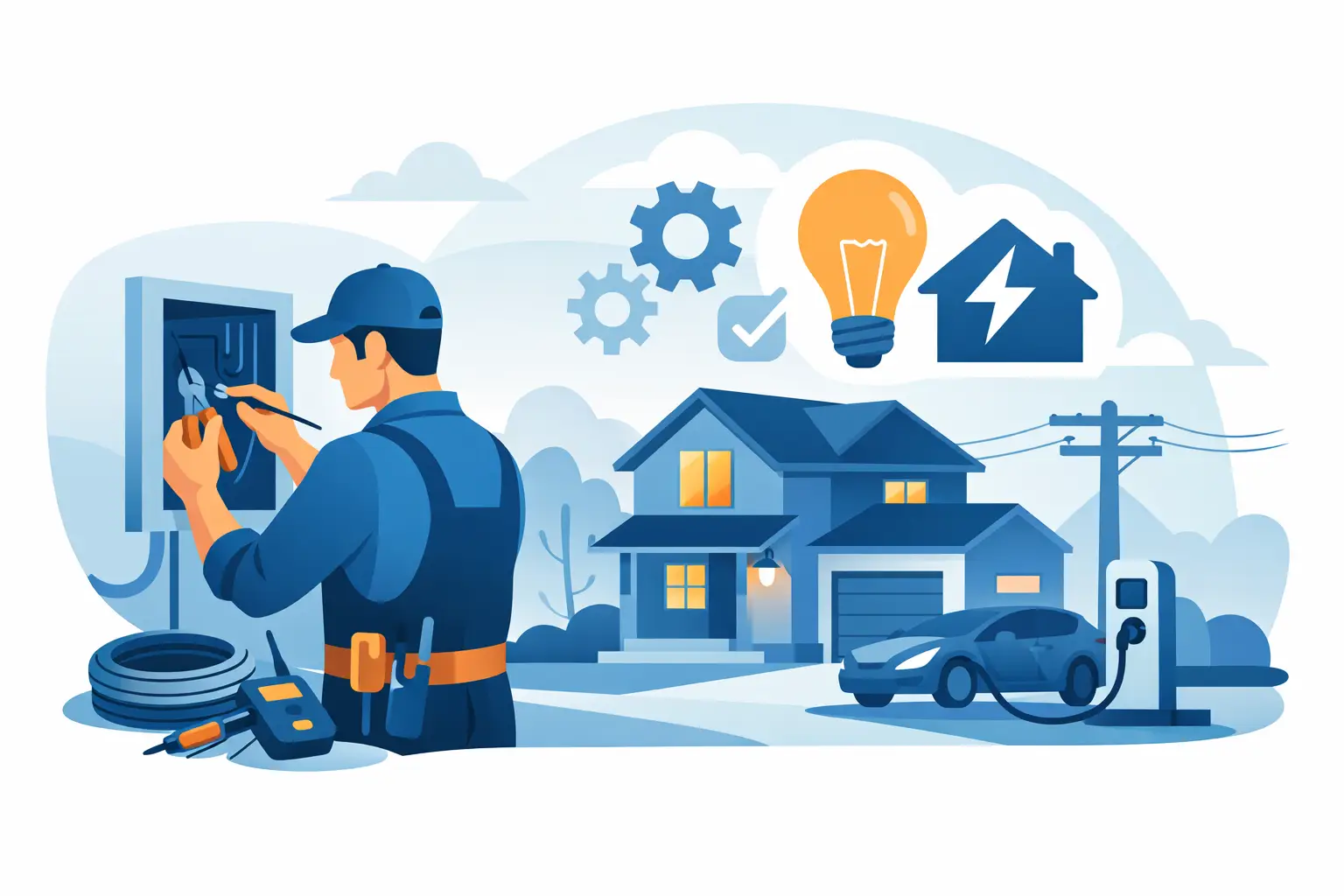
Residential Electrician Services That Matter
A breaker that trips once may be a nuisance. A breaker that trips every week is your home telling you something is wrong. That is where residential electrician services matter most – not just when the power goes out, but when your wiring, panel, outlets, or equipment are no longer keeping up with the way you live.
For homeowners, condo owners, and property managers, electrical work is rarely about one isolated fix. A flickering light can point to a loose connection. A dead outlet may be tied to a larger circuit issue. A new appliance, EV charger, or generator may require more than a quick installation. Good electrical service means identifying the real problem, correcting it safely, and making sure the system supports your home now and in the years ahead.
What residential electrician services actually cover
Most people call an electrician when something stops working. That is understandable, but residential work usually falls into a few broader categories: repairs, installations, upgrades, safety improvements, and planning for new power demands.
Repairs are the most immediate need. These include outlets that have stopped working, light switches that fail, breakers that trip repeatedly, partial power loss, damaged wiring, and fixtures that buzz, spark, or overheat. In older homes, even a small symptom can trace back to worn connections, outdated components, or circuits that were never designed for modern loads.
Installations are often driven by home improvement projects or changes in daily life. That might mean adding recessed lighting, ceiling fans, dedicated circuits for appliances, outdoor lighting, or new outlets in more useful locations. In coastal homes and rental properties, dependable installation matters because electrical systems are expected to handle heavy seasonal use and changing occupancy without trouble.
Upgrades are where many homeowners get the most long-term value. If your panel is undersized, your service is outdated, or your home has added larger equipment over time, a repair alone may not solve the underlying issue. Panel upgrades, service upgrades, surge suppression, and code-conscious improvements help a home operate more safely and more reliably.
When a repair is enough and when it is not
One of the most common misconceptions about residential electrical problems is that the visible symptom is the whole issue. Sometimes it is. A worn switch can simply be a worn switch. But often, the part you notice is only where the problem shows up.
If an outlet stops working after years of use, replacing the outlet may be the correct fix. If multiple outlets fail, or the replacement also shows signs of heat damage, the issue may involve the circuit, the wiring connection, or the panel. The same goes for light fixtures that flicker. The cause could be a bad bulb, but it could also be a loose neutral, incompatible dimmer, or overloaded circuit.
This is why experienced residential electrician services focus on diagnosis first. A fast response matters, but so does getting the work right the first time. Homeowners are not served well by temporary fixes that leave hidden hazards in place.
Residential electrician services for modern homes
The average home uses more power today than it did even ten years ago. That shift is changing what homeowners need from their electrical contractor.
Kitchen appliances are larger and more specialized. Home offices add daily load. HVAC systems, tankless water heaters, security systems, pool equipment, and smart home devices all place demands on the electrical system. Then there are newer needs that were not part of residential planning in older homes at all, especially EV chargers and backup power.
EV charger installation at home
An EV charger is one of the clearest examples of why electrical work should be planned, not improvised. Charging from a standard outlet may be slow and impractical for daily driving. Installing a Level 2 charger can make ownership much easier, but it usually requires evaluation of panel capacity, breaker space, wiring path, and charger location.
The right setup depends on the vehicle, the home, and how the owner uses it. Some homes can support a charger with minimal changes. Others need a panel upgrade or load management solution first. A qualified electrician will look at the full system, not just mount the equipment.
Generator installation and backup power
Storm preparedness is a practical concern for many coastal Alabama homeowners. Generator installation is not just about convenience. It can protect refrigeration, medical devices, communications, and basic comfort during outages.
The trade-off is cost and complexity. Portable generator connections and whole-home standby systems serve different needs. A smaller solution may cover essentials at a lower upfront cost, while a standby generator offers broader coverage and automatic operation. The right choice depends on your budget, your risk tolerance, and what you need powered when the grid goes down.
The value of service upgrades and panel work
A surprising number of residential issues trace back to a panel that is simply too old, too small, or too stressed. If your home has frequent breaker trips, limited room for expansion, signs of overheating, or known outdated equipment, a service upgrade may be the smarter move than repeated repairs.
This is especially true when homeowners are planning several improvements at once. If you are adding an EV charger, replacing major appliances, updating lighting, and considering a generator connection, it makes sense to assess overall capacity before installing piece by piece.
Panel and service work is not glamorous, but it is foundational. It gives the rest of the home a safer and more stable electrical base. It also reduces the chance that future projects will be delayed by capacity issues.
Safety improvements that homeowners often put off
Electrical hazards are easy to ignore when everything appears to work. That can be a mistake. Many safety improvements are not dramatic projects. They are targeted corrections that reduce risk in kitchens, bathrooms, garages, outdoor areas, and older parts of the home.
Ground fault protection, arc fault protection, proper grounding, surge suppression, weather-resistant devices, and code-conscious repairs all play a role. These updates are especially relevant after renovations, storm damage, or a home purchase. An inspection can reveal issues that do not show up in daily use but still need attention.
For rental properties and condos, this matters even more. Owners and managers are responsible for providing safe, reliable systems to occupants. Waiting until a complaint becomes an emergency usually costs more and creates more disruption.
Choosing the right residential electrician services
Homeowners do not need a sales pitch. They need confidence that the company entering their home knows what it is doing, communicates clearly, and stands behind the work.
That starts with certified, experienced technicians who can handle both small service calls and larger projects. It also means being realistic about scope. Sometimes a quick repair is all that is needed. Other times, the honest answer is that the home would benefit from a larger upgrade. Good contractors explain the difference in plain language so customers can make informed decisions.
Responsiveness matters too. If power is out in part of the house or a panel is showing warning signs, waiting days for a callback is frustrating at best and risky at worst. A dependable local electrical contractor should be prepared to respond promptly, assess the issue carefully, and provide a clear path forward.
In Gulf Shores and nearby communities, that local knowledge adds real value. Coastal conditions, storm exposure, second-home occupancy patterns, and seasonal use can all affect how electrical systems are maintained and upgraded. A contractor familiar with those realities is often better equipped to recommend practical solutions.
Planning larger projects without cutting corners
Some residential electrical projects are easy to delay because they feel optional. A panel upgrade, generator installation, or whole-home surge protection may not seem urgent until there is a failure or outage. The challenge is that waiting often narrows your options.
Planning ahead gives homeowners more control over budget, scheduling, and design. It also allows the electrician to look at related needs together. For example, if a panel upgrade, EV charger, and surge suppression are all likely within the next year, coordinating them can reduce repeat labor and avoid piecemeal decisions.
Cost is part of the conversation, and it should be. Larger projects are meaningful investments. In some cases, financing can make the right long-term solution more realistic than settling for a short-term patch. What matters is choosing work that matches how you actually use the home, not just what seems cheapest in the moment.
The best residential electrician services are not about selling the biggest job. They are about making sure your home is safe, properly powered, and prepared for what comes next. If something in your electrical system has been giving you reason to wonder, that is usually enough reason to have it checked before it becomes a bigger problem.