
Portable Generator Transfer Switch Review Guide
When a Gulf Coast storm takes out power, a portable generator can keep a refrigerator, lights, internet equipment, and a few critical comforts running. But the generator itself is only part of the plan. This portable generator transfer switch review focuses on the equipment that connects backup power to a home safely, without extension cords across doorways or dangerous power feeding back into utility lines.
A transfer switch is not a one-size-fits-all purchase. The right choice depends on the generator’s output, the circuits you need during an outage, the layout and age of your electrical panel, and whether salt air and moisture are part of the installation environment. A properly designed system is more valuable than the most expensive switch on the shelf.
What a Transfer Switch Does
A transfer switch creates a controlled path for generator power to reach selected home circuits. When utility power is out, you move the switch from utility to generator power. This separation prevents the generator from energizing the utility lines outside your home, a condition called backfeeding.
Backfeeding is dangerous for utility crews and can damage electrical equipment when normal power returns. It is also why plugging a generator into a dryer outlet or another household receptacle is never an acceptable backup-power method.
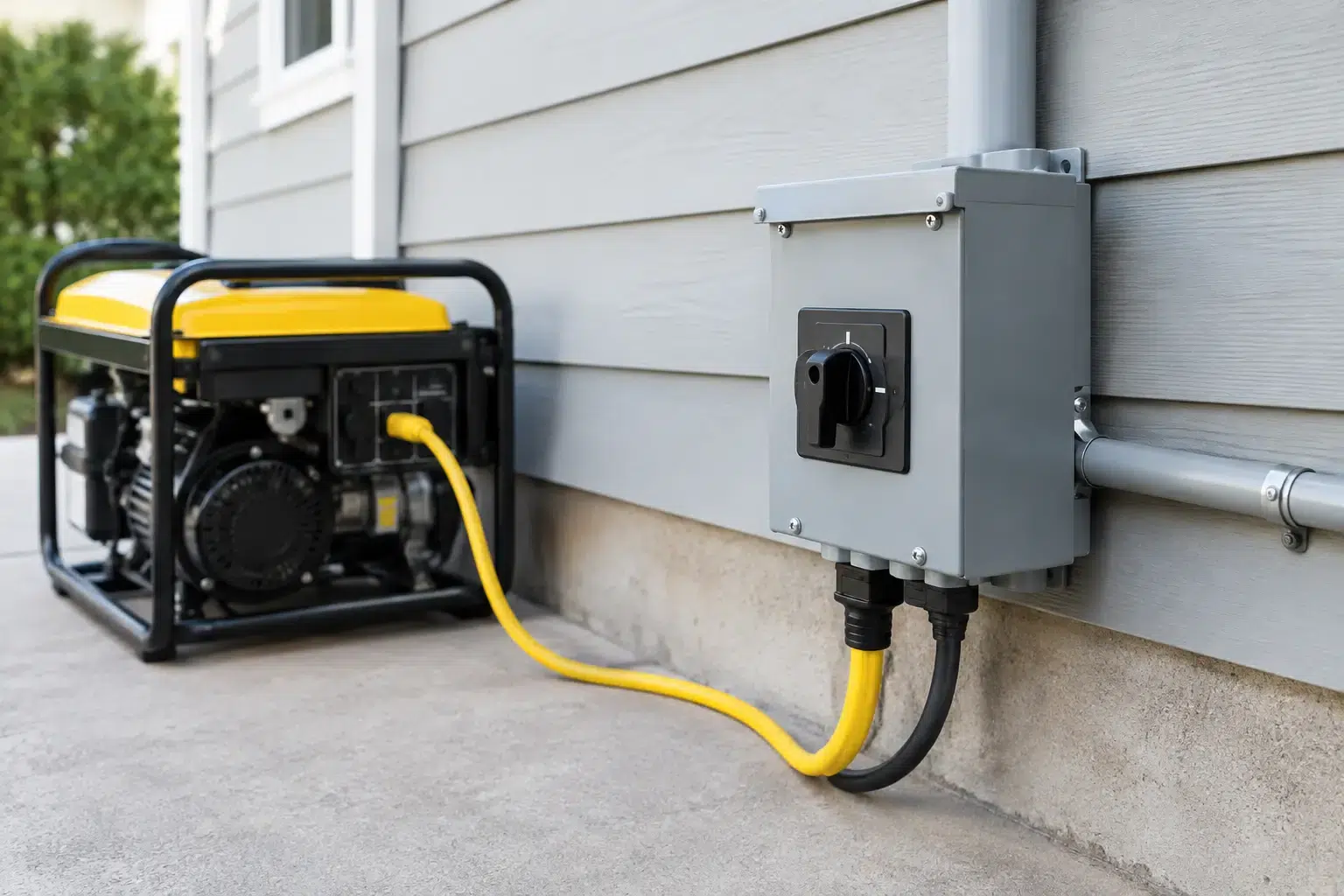
Most portable-generator systems use a manual transfer switch. The homeowner starts the generator outdoors, connects it to a dedicated inlet box with a generator cord, and moves the selected circuits to generator power. When utility power returns, the process is reversed. It is simple, dependable, and generally more cost-effective than an automatic standby-generator setup.
Portable Generator Transfer Switch Review: What Matters Most
The best transfer switch is not necessarily the unit with the most circuits. It is the one that safely matches the way you expect to use backup power. These are the factors that deserve the closest review.
Generator Capacity and Electrical Compatibility
Start with the generator’s running watts, not only its starting or surge watts. A portable generator may advertise 9,000 starting watts but provide significantly less power for continuous operation. Your transfer switch plan should be based on what the generator can sustain.
Many homes benefit from a 240-volt generator connection, especially when the goal is to power a well pump, selected central equipment, a range circuit, or other 240-volt loads. Smaller inverter generators are often 120-volt only. They can still support essential circuits, but the transfer equipment must be designed around that limitation.
A licensed electrician should also verify the generator’s neutral configuration and how it works with the home’s electrical system. This detail is not visible from the front of a switch, but it affects safe operation and code compliance.
Number and Type of Circuits
Transfer switches are commonly sized for a set number of individual circuits. A six-circuit model may be enough for a modest outage plan: refrigerator, kitchen receptacles, living-room lights, internet equipment, bedroom lighting, and a garage door opener. A larger switch gives you more flexibility, but only if the generator has sufficient capacity to support those circuits.
Consider what truly needs power during an outage. For many coastal homeowners, that may include refrigeration, lights, charging, a television or router, a medical device, and a small window air conditioner. For others, a well pump or septic system is the priority. Condo owners may have different options depending on building rules, available outdoor space, and the building’s electrical design.
Selecting too many circuits can encourage overload. Selecting too few can leave out equipment that matters when an outage lasts longer than expected. The best system is intentional, not oversized by default.
Power Management Features
Some transfer switches include watt meters, load meters, or clear circuit labeling that help homeowners manage generator capacity. These features are useful because power use changes throughout the day. A refrigerator may cycle on just as a microwave, coffee maker, or portable air conditioner is running.
A load meter does not make a small generator more powerful, but it can help prevent nuisance breaker trips and reduce the risk of overloading equipment. For households that expect to manage several essential circuits, this added visibility is often worth considering.
Enclosure Quality and Coastal Conditions
In Gulf Shores, Orange Beach, and nearby communities, electrical equipment often faces heat, humidity, wind-driven rain, and salt exposure. A transfer switch installed indoors is generally protected from the harshest conditions, but outdoor inlet boxes, conduit, fittings, and covers still require careful product selection and installation.
Look for equipment rated for its installation location and use. An outdoor generator inlet should have an appropriate weatherproof cover, secure mounting, and wiring methods suited to the environment. Corrosion-resistant components and regular inspection can make a meaningful difference near the coast.
A lower-priced component can become expensive if corrosion affects connections or allows moisture into the system. This is one area where workmanship and proper materials matter as much as the brand name on the enclosure.
Manual Transfer Switches Versus Panel Interlocks
A manual transfer switch is a dedicated enclosure that controls selected circuits. It is often a strong choice when a homeowner wants an easy-to-understand backup system with clearly labeled switches for essential loads.
A panel interlock is another option. It is a mechanical device installed at the main electrical panel that prevents the main breaker and generator breaker from being on at the same time. With an interlock, the generator can potentially power more of the panel, but the homeowner must actively manage which appliances are on.
Neither approach is automatically better. A transfer switch can be more straightforward for a defined list of critical circuits. An interlock can be practical for households that want broader flexibility and understand how to manage electrical demand. The panel must be compatible, and the installation must meet current electrical requirements.
For example, a homeowner who only wants refrigeration, lighting, and communications may prefer a dedicated transfer switch. A homeowner with a larger portable generator who wants to choose between a well pump, kitchen loads, and HVAC equipment may find an approved interlock arrangement more useful.
Installation Details That Should Not Be Overlooked
A safe portable-generator connection includes more than the transfer switch. It requires a properly sized generator inlet, correctly rated cord, appropriate breakers, suitable wiring, grounding and neutral considerations, and permanent circuit labeling. The location of the inlet also matters. It should be convenient enough for generator use while keeping generator exhaust safely away from doors, windows, vents, and occupied areas.
Portable generators must operate outdoors in an open area. Never run one in a garage, under a home, in a shed, or near openings where carbon monoxide can enter the building. Install working carbon monoxide alarms in the home, and follow the generator manufacturer’s clearance instructions.
A professional installation also accounts for the home’s panel capacity, local permitting requirements, and the condition of existing electrical equipment. Older panels, storm-damaged components, or crowded breaker spaces can change the scope of the project.
Common Mistakes When Choosing a System
The most common mistake is buying equipment before deciding which loads need to run. A better process begins with an outage plan, then matches the generator and transfer equipment to that plan.
Other costly mistakes include using a generator cord that is too small, assuming every portable generator supports 240-volt loads, overlooking the generator’s continuous wattage rating, and choosing an outdoor inlet location without considering exhaust safety. Some homeowners also assume a portable generator can run central air conditioning. It may be possible in certain cases, but it depends on the generator size, the HVAC equipment, starting load, and whether a soft-start solution is appropriate.
Choosing the Right Level of Backup Power
Portable generator transfer switches are an excellent fit for homeowners who want reliable essential power without the cost and fuel requirements of a permanently installed standby generator. They are also useful for rental properties and small commercial spaces where a planned outage strategy protects refrigeration, communications, lighting, or basic operations.
If frequent outages, whole-home air conditioning, automatic operation, or extended occupancy are priorities, a standby generator may be the better long-term investment. The right answer depends on how much power you need and how involved you want to be during an outage.
For a safe, practical backup-power plan, begin by identifying the circuits that matter most, then have the system sized and installed for your specific generator and property. A properly installed transfer switch gives you more than convenience when the lights go out – it gives you a clear, safe way to keep essential parts of your home running.